Japanese Stationery: A Culture of Detail and the Art of Writing
A deep dive into Japanese stationery: Midori, Hobonichi, Pilot, Tombow, washi and stationery lovers, a daily art of detail that has become a global cult.
La rédaction Kotoba Interactive
Studio éditorial
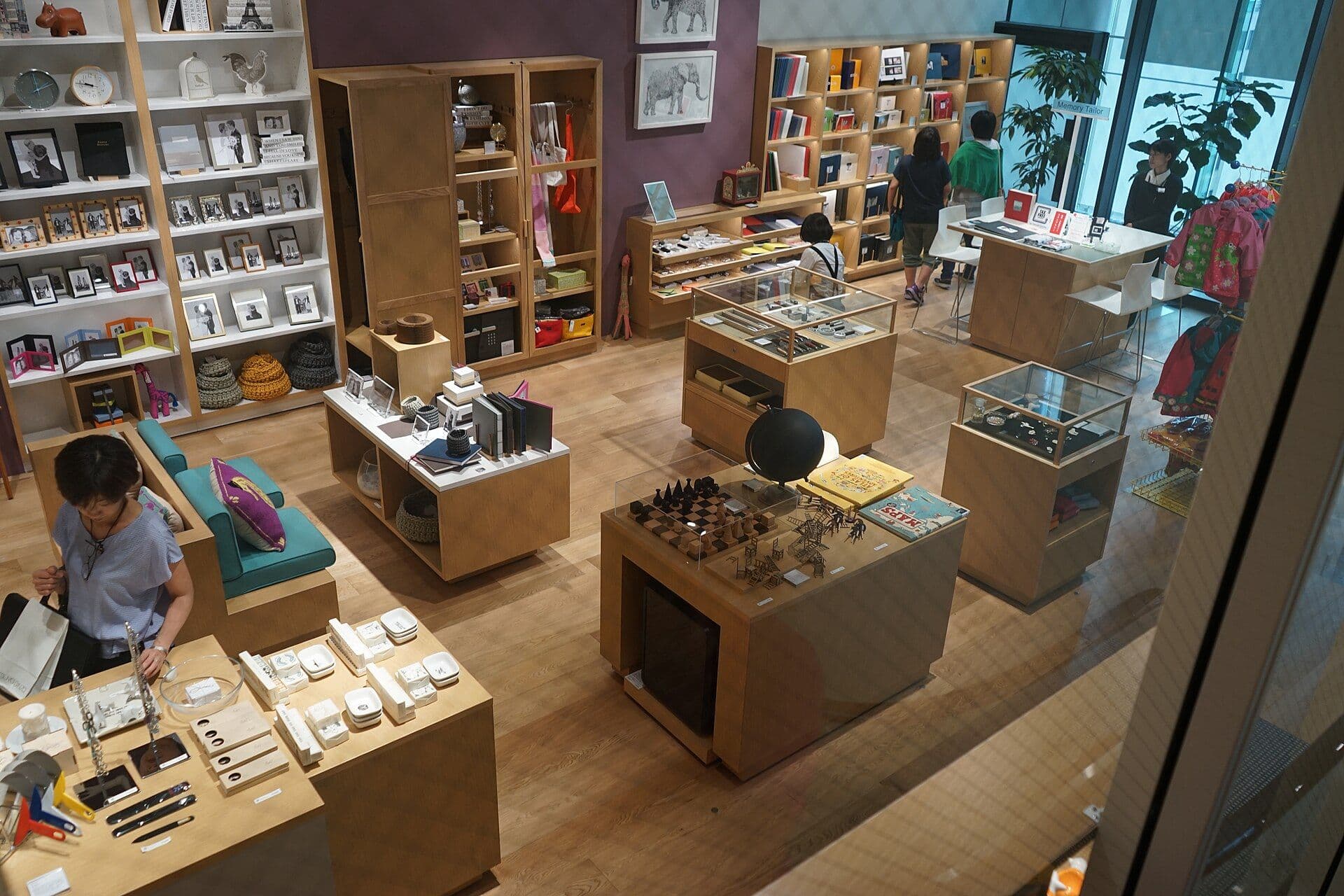
At the department store in Tokyo's Ginza district, shoppers compare fountain pens on Tomoe River paper, notebooks, pencils. Founded in 1904 by Katsutarō Itō, Itō-ya spans twelve floors and more than 150,000 references, from the 60-yen pencil to the 300,000-yen Pilot Custom Urushi fountain pen. This devotion to paper, pen, ink and notebook has a name: , shaping Japanese life for centuries and winning over millions worldwide in two decades.
Roots: Washi Paper and Calligraphy#
Washi, a National Treasure#
Japanese stationery was born in the seventh century, when paper arrived from China via Korea. Japanese craftsmen created from the fibers of three shrubs: , and .
The process, spanning several weeks, involves bark peeling, soaking, beating, maceration in cold spring water, then hand-sieving sheet by sheet: a paper thin, strong, translucent, lasting more than a thousand years without yellowing. In 2014, UNESCO inscribed three washi techniques, those of Echizen (Fukui), Mino (Gifu) and Hosokawa (Saitama), on the Intangible Cultural Heritage of Humanity list.
Washi also makes the sliding partitions and , the umbrellas, lanterns, fans and wrapping papers: the raw material of a civilization where writing and decoration intertwine.
Calligraphy as Spiritual Discipline#
Alongside paper developed . Introduced from China in the sixth century with Buddhism, it became a court art in the Heian period (794 to 1185): a discipline its masters compared to Zen meditation, in which each stroke, the , is laid down in a single movement, with no retouching.
Its four tools, the , are the brush, the ink stone, the ink stick and the paper. Where writing has always been an art and a meditation, the smallest pen, notebook or paperclip naturally became an object of care.
The Meiji Era and the Modernization of the Office#
The Arrival of the Western Pen#
In the Meiji era (1868 to 1912), Japan opened to the West and imported fountain pens, graphite pencils and leather-bound notebooks, which Japanese craftsmen made their own and perfected.
was founded in 1918 in Tokyo by and Masao Wada, as the Namiki Manufacturing Company. Its fountain pens hand-lacquered in sold to the imperial court and abroad; collaborations with Dunhill in the 1930s made them famous across Europe. The brand took the name Pilot in 1938.
was founded in 1913 by Harunosuke Ogawa to import German pencils, before launching its own production in 1914. Its Tombow Mono 100 pencil (1967) is still considered one of the best graphite pencils; Tombow also invented in 1969 the Dual Brush Pen highlighter and in 1971 the Mono correction tape.
, founded in 1887 by Niroku Masaki, was one of Japan's first industrial pencil manufacturers, and remains, under the Uni-ball brand, one of the world leaders in gel ballpoint pens.
Itō-ya and the Birth of the Stationery Department Store#
In 1904, Katsutarō Itō opened a small Western office-supply shop in Ginza, which became the essential address for salarymen, writers, civil servants and tourists. The current building, rebuilt in 2015, organizes floors by specialty: paper, pens, notebooks, postcards, gift wrapping, calligraphy, school supplies. An art gallery exhibits works on washi, a hydroponic garden on the eleventh floor supplies the store's restaurant, and a bookstore offers every calligraphy manual.
Other major houses: , , . Every major Japanese city has several giant stationery stores that are tourist destinations in their own right.
Behind every notebook lies a language to decode: 文房具 (bunbōgu, "office supplies"), 和紙 (washi, "Japanese paper") and 書道 (shodō, "the way of writing"). Learn to read these words in their original script with JapaneseSRS and its spaced repetition, turning each visit to Itō-ya into living reading.
Major Contemporary Japanese Brands#
| Brand | Founded | Specialty | Signature product |
|---|---|---|---|
| 1918 | Fountain and ballpoint pens | FriXion (erasable ink) | |
| 1913 | Pencils and markers | Mono 100 (graphite pencil) | |
| 1887 | Ballpoint pens and mechanical pencils | Jetstream (oil-based ink) | |
| 1950 | Notebooks | Traveler's Notebook | |
| 1905 | School and office notebooks | Campus Notebook |
Pilot: Mastery of Ballpoint and Fountain Pens#
Japan's leading fountain pen maker and one of the top three worldwide, Pilot ranges from the disposable Pilot V-Ball ballpoint (sold in billions) to the Pilot Custom 823 with vacuum filling, to the Pilot Urushi, a hand-lacquered maki-e fountain pen selling for 200,000 to 500,000 yen.
The , launched in 2006, is an ink pen erasable by heat from a special rubber. With more than 2 billion units sold by 2023, it is among the best-selling pens in the world.
Tombow, Zebra, Mitsubishi Pencil, Uni#
Other Japanese brands dominate the global market. produces the Sarasa Clip, a popular gel pen in Asia and the United States. Uni-ball makes the Jetstream, cited by stationery lovers as one of the best oil-based ballpoint pens, and the Kuru Toga, a mechanical pencil whose rotary system turns the lead 9 degrees with each press to keep a sharp point, patented in 2008.
Midori and Kokuyo: The Notebooks#
, founded in 1950 by Designphil Inc., is emblematic for stationery lovers. Its , launched in 2006, is a modular notebook in raw Italian leather with interchangeable paper inserts, cult in the international bullet journal and journaling community. More than a hundred limited editions have appeared, some trading for hundreds of euros on the secondary market.
, founded in 1905, is the giant of Japanese school and office notebooks. Its Campus Notebook, the best-selling glue-bound notebook in Japan since 1975, is a symbol of student life. Its Osaka plant produces more than 500 million notebooks a year.
Hobonichi Techo: The Cult Planner#
Launched in 2001 by the Hobonichi company (founded by Shigesato Itoi, a copywriter and creator of the video game EarthBound), the is an A6 planner with one page per day, printed on , 52 g/m², which holds up to fountain pens, gel pens and markers without bleeding or ghosting. Each yearly edition sells hundreds of thousands of copies; numbered, limited leather or fabric editions sell out in hours. It is the cult planner of journaling, meditative productivity and personal writing, in Japan then worldwide.
Contemporary Washi and Artisanal Paper#
Washi enjoyed a revival in the twenty-first century. Artisans in Echizen (Fukui), Mino (Gifu), Ogawa-machi (Saitama) and Shikoku adapt millennia-old techniques to new uses: luxury stationery, high-end packaging, binding, scrapbooking, gift wrapping, Bible covers and art editions in Europe.
The brand, founded in Tokushima prefecture, exported washi for photographic uses: it is used by Hiroshi Sugimoto, Annie Leibovitz or Sebastião Salgado for their art prints, and the Museum of Modern Art in New York holds works printed on Awagami.
, popularized from 2006 by the brand, became a global obsession of stationery lovers. Used for decoration, scrapbooking, wrapping and labeling, mt tapes now exist in more than 3,000 patterns and collaborations with artists, designers, museums and brands. The brand holds mt festivals every year in Kurashiki and Tokyo where collectors queue for hours for limited editions.
Stationery Culture: A Social Phenomenon#
Specialty Shops#
Beyond Itō-ya, Japan has hundreds of small specialty shops: in Kyoto, Kyukyodo (founded in 1663) sells washi, incense and calligraphy brushes; in Osaka, Eureka restores vintage fountain pens; in Yokohama, Bunguya sells more than 400 bottles of fountain pen ink, some made by hand by the owner.
A Japanese specialty is the , where you write, test pens, browse catalogs and buy on the spot. The Bunbogu Café in Omotesandō, Tokyo, opened in 2013, is a pilgrimage site for stationery lovers worldwide.
Fairs and Events#
Japan hosts several annual fairs. The International Stationery & Office Products Fair Tokyo (ISOT), held since 1990, brings together more than 400 exhibitors and tens of thousands of professional visitors. The , in Tokyo, draws a massively female public: more than 80,000 visitors in three days in 2024. TOKYO Stationery Press is a bimonthly magazine documenting new releases and trends.
Stationery Lovers Around the World#
Since the 2000s, an international community of stationery lovers has formed around Japanese products. The American blog The Pen Addict (founded in 2007 by Brad Dowdy), the British blog Bleistift and the American store JetPens (founded in 2005) brought Pilot, Uni, Pentel, Tombow, Kokuyo, Midori and Hobonichi to the Americas and Europe. On Instagram and TikTok, the hashtags #stationery, #bujo (bullet journal), #hobonichi, #pentube have millions of posts; influencers like Hideyuki Ohno (stationery YouTuber) and Ritsuko (modern calligrapher) have over a million followers. The community organizes stationery meet-ups in Tokyo, New York, London, Berlin and Paris.
Japanese stationery is not a collection of functional objects. It is a silent philosophy: that of giving each gesture of daily life, including the most ordinary, the attention and beauty it deserves.
Why Does Japanese Stationery Fascinate So Much?#
The Cult of Detail#
In Japanese culture, the smallest object deserves attention: cooking (ichiju sansai, one bowl of rice, one soup, three dishes), clothing (kimono folds), architecture (tatami proportions). Stationery embodies it: a Jetstream pen contains a hidden tungsten ball, a patented oil-ink system and an ergonomic body, for 150 yen; a Campus notebook has a grid calibrated for each school level.
The Relation to Time#
In a digital world, handwriting becomes ritual. Hobonichi Techo users spend dozens of minutes each day filling their planner: writing, drawing, pasting tickets, applying masking tapes, sketching with watercolor. A daily meditation, a counterweight to the screen.
Endless Diversity#
Where the Western market standardized around a few products (Bic, Paper Mate, Moleskine), the Japanese market preserves extreme diversity: hundreds of paper formats, thousands of inks (Pilot's Iroshizuku offers 24 colors named tsuki-yo "moon night" or kon-peki "azure sky"), dozens of lead thicknesses (0.28 mm to 1.4 mm). This fuels desire, comparison, collection.
Accessible Prices#
Even prestigious products remain affordable. A Pilot FriXion costs 220 yen (about $1.50), a Hobonichi Techo 3,850 yen (about $25), a Kokuyo Campus notebook 210 yen. This lets stationery culture reach every social class, unlike luxury leather goods or watches.
Entering Itō-ya in Ginza brings a moment of vertigo: twelve floors, 150,000 references, thousands of pens, hundreds of washi tapes, handmade scissors, bamboo rulers, leather planners, colored pencils for children, lacquered fountain pens for corporate presidents. A 50-yen pen is displayed with the same dignity as a 500,000-yen one: a child's tool is worth a CEO's as long as it is well thought out, well made, well finished. The 32-year-old who fills her Hobonichi every evening with a Pilot Custom 823 performs a silent act of resistance, and Tomoe River washi retains everything for a century to come.
Photo credits: images used in this article come from Pexels and Unsplash and are royalty-free.
In this article
The cultural terms covered here, each with a short definition.
- Japanese stationery
- Japanese culture of fine paper and writing supplies, refined down to the smallest detail.
- Washi
- Traditional handmade Japanese paper made from plant fibers.
Tatsuro Yamashita and Mariya Takeuchi, the city pop couple
Sugar Babe, RIDE ON TIME, Variety, Plastic Love: the story of the couple who defined the Japanese city pop sound and of its global rebirth through YouTube.
Cover image: Antonio Rubio · Antonio Rubio, via Wikimedia Commons · CC BY 2.0