Chinese memes and internet slang: a survival manual
666, yyds, 躺平, 吃瓜群众: where Chinese memes come from, how to read pinyin acronyms and why numbers stand in for words.
La rédaction Kotoba Interactive
Studio éditorial
A typical Chinese comment looks like this: "666 yyds 笑死". Three digits, a four-letter acronym, two characters. No textbook will let you read it, and yet it is perfectly clear to eight hundred million people. Translation: "amazing, greatest of all time, I'm dying of laughter".
Chinese internet slang draws on three resources English does not have: a tonal language full of homophones, a keyboard that goes through pinyin before producing characters, and a censorship regime that makes allusion profitable. The result is one of the most inventive digital slangs in the world, with its own word for itself.
is the Chinese word for "meme", in the sense of a joke repeated on loop. It comes from 哏 (gén), a term from xiangsheng, the Chinese comic dialogue art, meaning the mechanism of a gag. The verb 玩梗 (wán gěng), "to play a gěng", describes exactly the act of reusing a reference to signal that you belong.
Why numbers stand in for words#
Mandarin has relatively few distinct syllables, and the names of digits sound like plenty of other words. Writing a number is therefore faster than writing the phrase, on a keyboard as on the numeric keypad of a 2000s phone, the era when the habit set in.
| Code | Pronunciation | What it means |
|---|---|---|
| 666 | liù liù liù | "So skilled", from 溜 (liū), smooth, deft |
| 233 | èr sān sān | Laughter, from an emoticon number on the Mop forum |
| 555 | wǔ wǔ wǔ | Crying, imitating the sound 呜呜呜 |
| 520 | wǔ èr líng | "I love you", close to 我爱你 |
| 1314 | yī sān yī sì | "A whole lifetime", from 一生一世 |
| 88 | bā bā | "Bye bye" |
| 995 | jiǔ jiǔ wǔ | "Help me", from 救救我 |
For that reason alone, 20 May (20/05) has become a parallel lovers' day in China, with a spike in registry office weddings and in money transfers of 520 yuan. A play on sounds created a commercial date.
Pinyin acronyms#
The second engine is the keyboard. To write a character, a Chinese user types its pinyin then picks from a list. Typing only the initials and stopping there has become a form of writing in itself.
- yyds = 永远的神 (yǒngyuǎn de shén), "the eternal god", the equivalent of GOAT.
- xswl = 笑死我了 (xiào sǐ wǒ le), "laughing myself to death".
- awsl = 啊我死了 (ā wǒ sǐ le), "ahh I'm dead", faced with something too cute.
- nsdd = 你说得对 (nǐ shuō de duì), "you're right".
- u1s1 = 有一说一 (yǒu yī shuō yī), "to be fair", with the digit 1 standing for 一.
- zqsg = 真情实感 (zhēnqíng shígǎn), "genuine feeling", to say you are really moved.
- dbq = 对不起 (duìbùqǐ), "sorry".
This writing has a side effect: it is unreadable to a moderation engine looking for characters. That is not an accident.
The grass mud horse and the river crab#
In 2009, a series of invented creatures circulated on the Chinese web, among them the 草泥马 (cǎonímǎ), literally "grass mud horse", a perfectly harmless alpaca whose name is an exact homophone of an insult. In the same family, the 河蟹 (héxiè), the "river crab", is the homophone of 和谐 (héxié), "harmony", the official word used when content is taken down. Saying a post "got crabbed" means it was deleted.
These inventions belong to an old art: substituting a homophone character to say what cannot be written. The Chinese web industrialised it, and moderation has been running behind for fifteen years.
On the Chinese web, a pronunciation joke is also an avoidance technique.
Three words from this slang open up a Chinese thread: 梗 (gěng, the meme), 笑死 (xiàosǐ, "dying of laughter") and 吃瓜 (chīguā, watching the show). ChineseSRS, our spaced repetition app, installs that vocabulary and the everyday Chinese that goes with it.
The words that describe a generation#
Some terms outgrew the joke and became social categories, picked up by the press and debated by sociologists.
内卷 (nèijuǎn), "involution", comes from anthropology, where it described farming that intensifies without ever producing more per head. Around 2020, Chinese students seized on it to name a competition that exhausts everyone with no collective benefit: studying harder for the same ranking.
躺平 (tǎngpíng), "lying flat", answered it in 2021. It is the refusal of the race: minimum work, no mortgage, no children, no declared ambition. The term was widely debated, including in official media, which criticised it.
摆烂 (bǎilàn), "letting it rot", pushed the reasoning further around 2022: not only do you stop running, you let the situation decay without even pretending to try.
打工人 (dǎgōngrén), "the worker", took hold in 2020 as an ironic self-description, from delivery rider to finance executive, in a single morning greeting: "Good morning, workers".
The words for other people#
The Chinese web has a very precise lexicon for classifying online behaviour.
| Term | Pinyin | Literal sense | Use |
|---|---|---|---|
| 吃瓜群众 | chīguā qúnzhòng | The melon-eating crowd | Spectators of a scandal |
| 键盘侠 | jiànpánxiá | The keyboard knight | The brave who only act online |
| 杠精 | gàngjīng | The lever demon | Someone who contradicts on principle |
| 社畜 | shèchù | Corporate cattle | The overworked employee, borrowed from Japanese |
| 佛系 | fóxì | Buddha-type | Someone nothing can rile |
The melon image deserves a word: it comes from sellers of sunflower seeds in popular theatres, where the audience nibbled while watching the drama. Eating melon means following an affair without taking part.
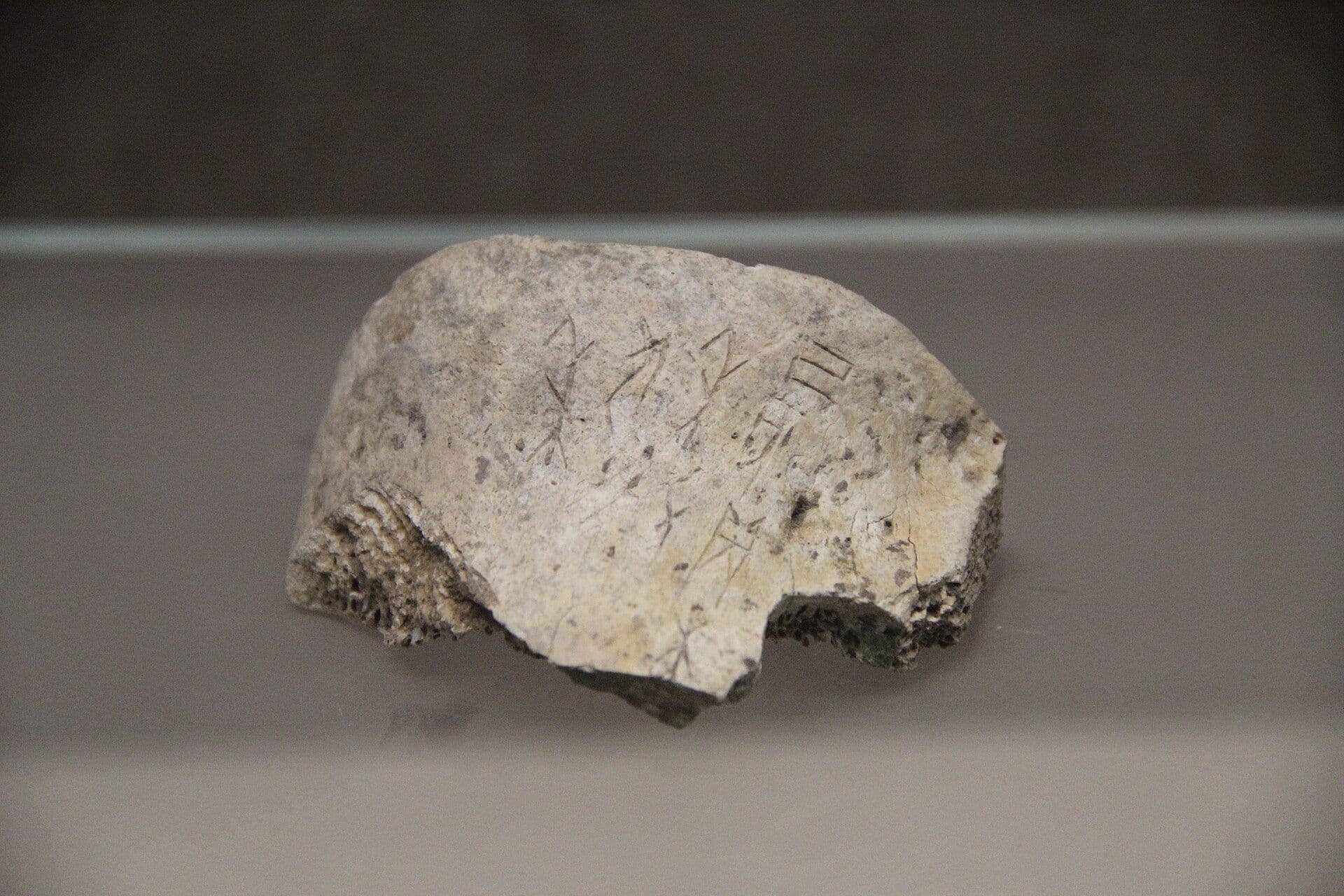
The character 囧 (jiǒng) is an old ideogram meaning "bright window". Around 2008, Chinese internet users adopted it as an emoticon, because it looks like a dismayed face, eyebrows down and mouth open. A character more than two thousand years old thus became an emoji.
Where memes are made today#
Each platform has its speciality. remains the place for scandal and trending topics. Bilibili produces youth slang, notably through its comments scrolling over the video, the 弹幕 (dànmù), borrowed from Japanese. Douyin manufactures viral catchphrases, and consumption trends.
In January 2025, that last app went through an unexpected episode: when a possible TikTok ban in the United States was announced, hundreds of thousands of American users signed up to Xiaohongshu calling themselves "TikTok refugees". For a few weeks, two audiences that never met exchanged memes, cat photos and language homework corrections.
The magazine 咬文嚼字 (Yǎowén Jiáozì), founded in 1995 and devoted to correct Chinese usage, publishes its list of the year's ten expressions every December. It is the simplest way to date a slang word, and to see how fast it ages.
Read alsoChengyu: Four-Character Idioms That Tell the Story of ChinaFour-character set phrases, the other layer of allusive Chinese.
The app where most of these conversations end up.
FAQ#
What exactly does 666 mean? It is a compliment of admiration for a performance, inherited from gaming vocabulary. It comes from 溜 (liū), "smooth, deft", which sounds close to 六 (liù), six. It has nothing to do with the Western symbolism of the number.
Are these words used in speech? Some are, such as yyds, nèijuǎn or tǎngpíng, spoken as they are in conversation. Others stay purely written, notably the pinyin acronyms, which have no natural pronunciation.
Do you need them to speak Chinese? Not as a priority, but ignoring them makes any online content after 2015 unreadable. A learner benefits from knowing twenty or so, and above all from recognising the mechanisms that produce them.
Is this slang censored? Political terms are, often within days of appearing, which pushes users to invent more. Social words like tǎngpíng were not banned but were criticised by official media, which did not slow their use.
How do you keep up? The annual list from Yaowen Jiaozi, Weibo's trending rankings and Bilibili's scrolling comments are the three best entry points. The average lifespan of a term rarely exceeds two years.
Photo credits: the images in this article come from Wikimedia Commons and are under free licences.
Hanzi: Understanding Chinese Characters and Their Logic
How hanzi, the Chinese characters, work. Origins on oracle bones, the six categories, radicals, phonetic compounds, and how many you really need to know.
Cover image: Lhzss8 · Lhzss8, via Wikimedia Commons · CC BY-SA 4.0