Light novel: the Japanese illustrated novel explained
The light novel (ライトノベル), a manga-styled illustrated Japanese novel: origins, the Haruhi and Sword Art Online turning points, the narou pipeline and media mix explained.
La rédaction Kotoba Interactive
Studio éditorial
An English portmanteau that does not exist in English. The term "light novel" is a wasei-eigo, a fake anglicism manufactured in Japan, which appeared on the Nifty-Serve discussion forums in the early 1990s to describe those small pocket novels with covers crowded by big eyes and colorful locks of hair. The Japanese say raito noberu (ライトノベル), often shortened to ranobe. The thing itself sells by the tens of millions of copies and feeds half the anime you are watching this season.
Behind the airy layout and the illustrations signed by star artists lies a precise publishing industry, with its imprints, its recruitment contests and its web pipeline turned isekai machine. Understanding the light novel means understanding where Sword Art Online, Re:Zero and Mushoku Tensei came from before they became global animated series. It also means grasping a very Japanese way of making popular fiction: fast, serial, a hybrid of text and image.
What a light novel actually is#
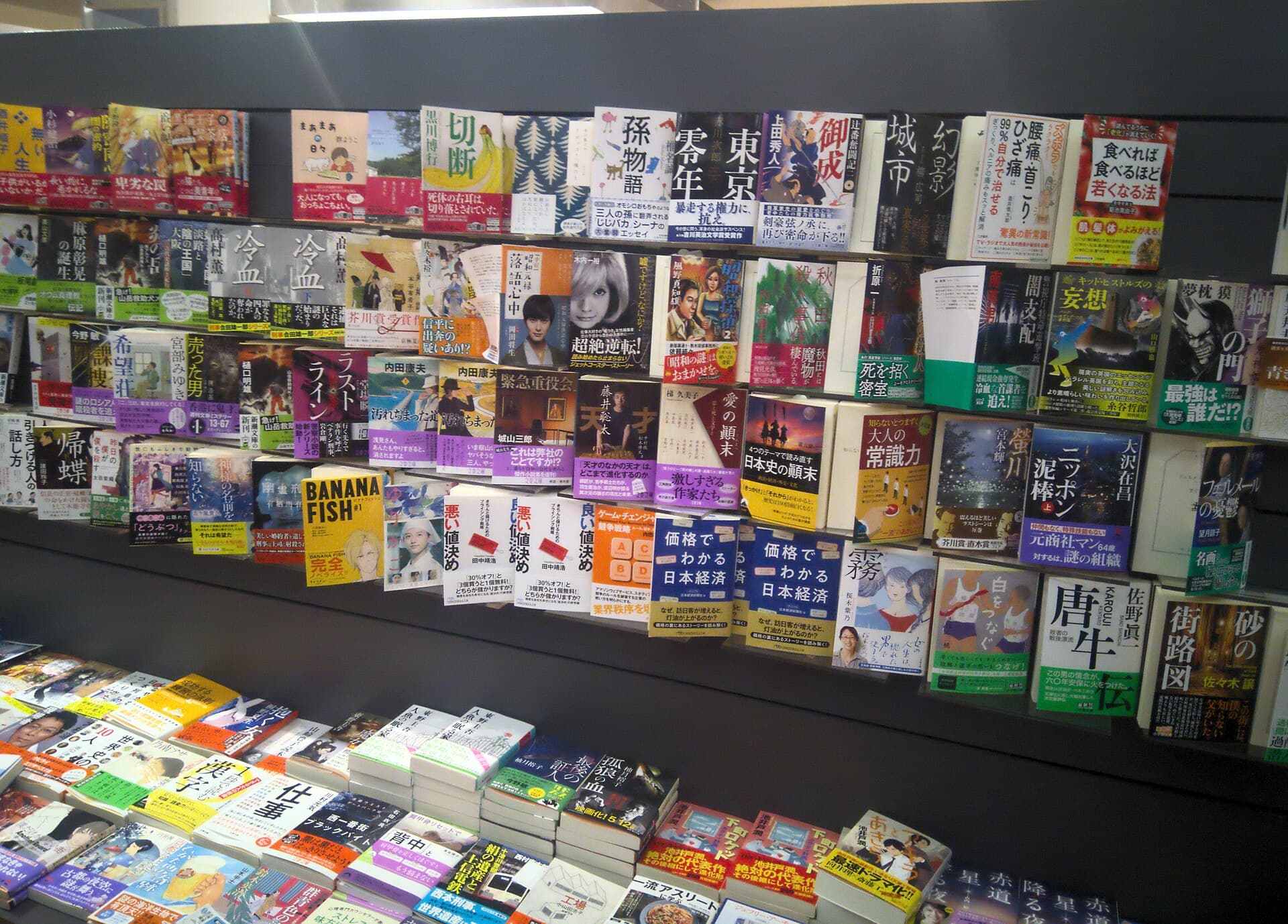
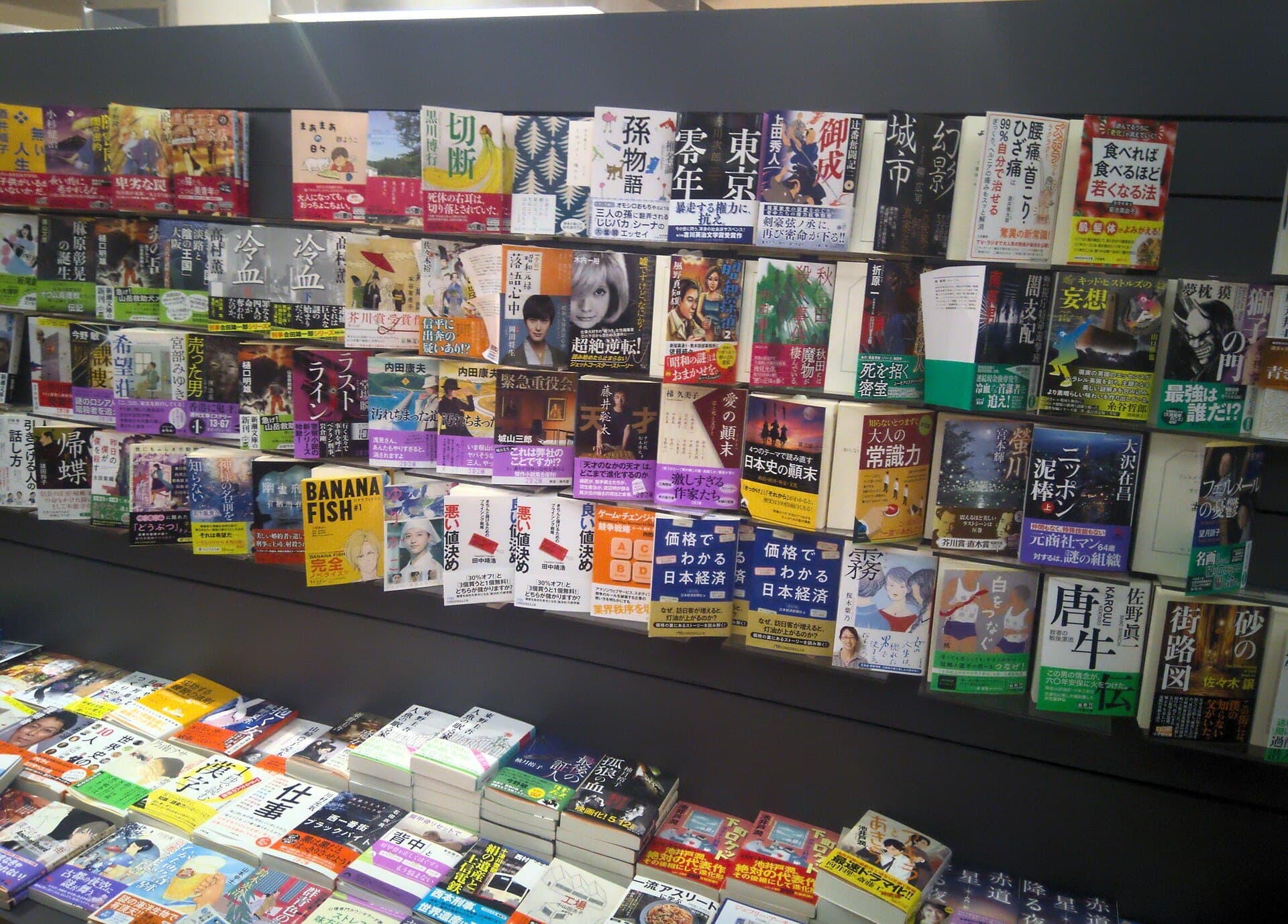
A light novel is a short prose novel, generally 40,000 to 50,000 words, published in the bunkobon (文庫本) format, the Japanese pocket book that fits in one hand. Three traits set it apart from an ordinary novel: a cover and around a dozen interior illustrations drawn in manga style, the sashie (挿絵), light prose full of dialogue, and a target readership that skews teenage and young adult.
The light novel is not defined by a genre but by a publishing circuit. It appears in specialized imprints, the bunko labels, the most powerful of which are Dengeki Bunko (founded by MediaWorks in 1993), Kadokawa Sneaker Bunko and MF Bunko J. Each imprint runs its own manuscript contests to recruit new authors, a system that shapes the entire profession. The winner earns a publication, a dedicated illustrator and a spot on the shelf.
The light novel is not a subgenre of the novel: it is a publishing format, recognizable at a glance in any Japanese bookstore.
The illustrator is not decoration. On the cover, the author's name and the artist's name often appear at equal size. The character design fixed by the illustrator becomes the visual identity of the series, reused as is in the anime and the merchandise. Noizi Ito for Haruhi, abec for Sword Art Online: those names matter as much to readers as the names of the novelists.
Light novel (ライトノベル, raito noberu) is a wasei-eigo, a pseudo-anglicism forged in Japan. "Light" refers to light, quick reading, "novel" to the novel form. The word has no everyday equivalent in English, where the borrowing "light novel" is precisely what gets used.
From postwar pulps to Slayers#
The direct ancestor of the light novel goes back to 1975, with the creation of the Sonorama Bunko imprint at Asahi Sonorama. This imprint published popular science fiction and horror for a young audience, launching the careers of authors such as Hideyuki Kikuchi (Vampire Hunter D) and Baku Yumemakura. The link to juvenile fiction and postwar pulp is clear: cheap adventure novels, quick print runs, an uninhibited genre imagination.
The shift toward the modern light novel plays out in the 1980s and especially the 1990s. In 1988, Record of Lodoss War popularized fantasy inspired by tabletop role-playing games. Then came the series that set the codes: Slayers (スレイヤーズ) by Kanzaka Hajime. The first volume appeared in January 1990 with Fujimi Fantasia Bunko, after winning the imprint's contest; the series ran until 2000 across fifteen volumes, carried by humor, action and the sorceress heroine Lina Inverse. Slayers proved that an illustrated novel for teenagers could sustain an entire universe and spill over into anime.
It was in this wake that MediaWorks launched Dengeki Bunko in 1993, an imprint that would become the heavyweight of the sector. The vocabulary took shape in parallel: the term raito noberu circulated on online forums from the early 1990s before establishing itself as a commercial category and a bookstore shelf in its own right.
Reading these novels in the original means recognizing ライトノベル (raito noberu, the light novel), the 挿絵 (sashie, interior illustrations) and the 文庫本 (bunkobon, pocket format). Review kana, kanji and vocabulary with JapaneseSRS, the spaced repetition that anchors the writing for good.
Haruhi, Sword Art Online and the great takeoff#
June 6, 2003 marks a turning point: Kadokawa Shoten published the first volume of The Melancholy of Haruhi Suzumiya (涼宮ハルヒの憂鬱), written by Nagaru Tanigawa and illustrated by Noizi Ito. The series became the first Japanese light novel to pass a million copies, and its 2006 anime adaptation by Kyoto Animation set off a cultural phenomenon. Haruhi established the light novel as the engine of the media mix, the strategy in which a single property circulates at once as novel, manga, anime, game and merchandise.
The following decade amplified the movement with a generation of titles that became global franchises. Sword Art Online by Reki Kawahara, Re:Zero by Tappei Nagatsuki, Overlord by Kugane Maruyama, KonoSuba by Natsume Akatsuki and Mushoku Tensei by Rifujin na Magonote: they often share the same narrative engine, the isekai (異世界), literally "other world," in which an ordinary protagonist is transported or reincarnated into a fantasy universe.
The narou pipeline#
What sets this wave apart is its digital origin. Many of these stories are not born in an imprint but on Shosetsuka ni Naro (小説家になろう, "Let's Become Novelists"), an online self-publishing platform founded in 2004. Authors post there for free, chapter after chapter; readers vote; publishers spot the hits and offer an illustrated print edition. The whole body of works drawn from this pool is called narou-kei (なろう系).
Mushoku Tensei perfectly illustrates this circuit. The web novel by Rifujin na Magonote began publication on Naro on November 22, 2012, became a founding pillar of the genre there, then appeared as a light novel with MF Books in January 2014 with illustrations by Shirotaka. The word narou-kei itself took hold around 2012 to 2014, just as Sword Art Online exploded and the web-to-paper-to-anime model became the production norm.
The success of the Naro platform pushed publishers to reverse their logic: instead of betting on unpublished manuscripts, they harvest the online reading rankings. A novel can thus rack up millions of free views before the first illustration is even drawn.
Key dates, from postwar pulp to the web pipeline:
| Year | Milestone |
|---|---|
| 1975 | creation of Sonorama Bunko at Asahi Sonorama, the format's direct ancestor |
| 1988 | Record of Lodoss War popularizes fantasy inspired by tabletop role-playing games |
| 1990 | first volume of Slayers with Fujimi Fantasia Bunko: the codes are set |
| 1993 | MediaWorks launches Dengeki Bunko, the sector's future heavyweight |
| 2003 | The Melancholy of Haruhi Suzumiya, the first light novel to pass a million copies |
| 2004 | founding of Shosetsuka ni Naro, the online self-publishing platform |
| 2012 | Mushoku Tensei begins its web publication on Naro |
| 2014 | Mushoku Tensei is published by MF Books; the term narou-kei takes hold |
The economics of the media mix#
The light novel works as a cheap incubator of intellectual property. Producing a novel costs a fraction of what an anime costs; the publisher therefore tests dozens of series on paper, then adapts only those that find an audience. This logic explains the visible overproduction on Japanese shelves, where hundreds of titles appear each year, of which only a handful will reach the screen.
When a series takes off, the media mix machinery kicks in: manga adaptation, animated series, video games, drama CDs, figurines, events. Each format points back to the others and extends the commercial lifespan of the universe. The Dengeki Bunko imprint, with franchises such as A Certain Magical Index and Sword Art Online, illustrates this vertical integration in which novel, image and license feed one another.
The pocket format serves this economy. The bunkobon, inexpensive and portable, matches fast, serial consumption: a reader can follow twenty volumes of the same saga without going broke. Print runs for the top sellers reach hundreds of thousands of copies per volume, and the audience, long perceived as teenage and male, has broadened toward an adult and female readership as the genres diversified.
The question of literary quality#
The line between light novel and general fiction remains blurry, and it is an openly debated point in Japan. Some titles stand out for their stylistic ambition, while others embrace functional writing in the service of action. A book's classification often depends less on its content than on the imprint that publishes it and on the presence, or absence, of manga-style illustrations.
Critics accuse the genre of standardization, notably the proliferation of isekai with identical devices: overpowered hero, harem, video-game mechanics transposed into fiction. Others, on the contrary, point to the vitality of a format that has managed to absorb online self-publishing and constantly renew its pool of authors. The debate over the "literary value" of the light novel resembles the one that long surrounded comics: a cultural hierarchy that shifts as the readership ages and the standout works pile up.
Read alsoSeinen vs Shōnen: Understanding Manga DemographicsThe light novel shares with manga a logic of imprints targeted by age and audience: understanding the demographics sheds light on the whole structure.
When a light novel becomes an anime, it is the seiyu who give voice to these paper heroes: a dive into the voice-acting profession in Japan.
FAQ#
What is the difference between a light novel and a manga? A manga is a comic: the story is told through panels and drawing. A light novel is a prose novel, carried by the text but illustrated here and there with a few manga-style drawings. You read one like a comic, the other like a book enriched with images.
What is an isekai? Isekai (異世界) means "other world." It is a narrative device in which an ordinary character is transported or reincarnated into a fantasy universe, often inspired by video games. Popularized by light novels from the Naro platform, the isekai became a dominant subgenre of the 2010s.
Where are light novels published? They appear in specialized pocket imprints, called bunko labels: Dengeki Bunko, Kadokawa Sneaker Bunko, MF Bunko J, Fujimi Fantasia Bunko. Many are first born online on Shosetsuka ni Naro before being spotted and then published in an illustrated print version.
Can a Japanese beginner read a light novel? Not easily at first. The prose stays simple but assumes knowledge of kana, several hundred kanji and everyday vocabulary. The abundant dialogue helps, and some youth-oriented titles are more accessible. A structured study of vocabulary and writing remains the best preparation.
Why does the term "light novel" not exist in English? It is a wasei-eigo, a pseudo-anglicism forged in Japan out of English words. It was created on Japanese forums in the early 1990s. The English-speaking world ended up adopting the expression as is, for lack of an equivalent, to describe this specifically Japanese publishing format.
From the Sonorama pulps to the Naro rankings, the light novel turned a pocket read into a reactor of Japanese pop culture, a place where text, illustration and screen keep relaunching one another.
Photo credits: images in this article come from Wikimedia Commons under free licenses.
The light novels that changed the industry, from Haruhi to Mushoku Tensei
Eight novels that moved the lines of Japanese light novels: Slayers, Boogiepop, Haruhi, Spice and Wolf, Sword Art Online, Overlord, Re:Zero, Mushoku Tensei.
Cover image: VulcanSphere · VulcanSphere, via Wikimedia Commons · CC BY 4.0