Singles' Day (11.11): The World's Biggest Shopping Festival
Born among single students in Nanjing, November 11 became, thanks to Alibaba, the planet's largest shopping festival. The story of China's Double 11.
La rédaction Kotoba Interactive
Studio éditorial
At the stroke of midnight on November 11, a giant counter goes wild on a screen in Hangzhou: one hundred million yuan in eight seconds, one billion in under a minute. In warehouses the size of neighborhoods, conveyor belts jolt into motion, robotic arms sort parcels by the hundreds of thousands, and across the entire country hundreds of millions of fingers press the same "pay" button. What the Western world calls Singles' Day, the Double 11, began, barely a generation ago, as a dorm-room joke among boys with no girlfriend. Today it is the most lucrative commercial day humanity has ever staged.
The story of China's November 11 is one of dizzying reversal: a festival invented to console the single became the planet's symbol of mass consumption, an online-commerce laboratory where China invented formats (live-stream selling, deposit-based pre-orders, logistics on a billion-parcel scale) that the rest of the world eventually copied. To understand how four number "1"s could build an empire, we have to go back to the university campuses of the late 1990s.
Four "1"s and a bachelors' joke#
The Double 11 was born around 1993 on the campuses of Nanjing, as a bachelors' festival, the 光棍节 (Guānggùn jié), invented by students to mock, rather than endure, their partnerless lives. The date is no accident: 11/11 lines up four solitary sticks, four "1"s that in Chinese each evoke a lone person, a "bare stick."
literally means "bare stick" or "stripped branch"; by metaphor, the word refers in Chinese to a single, unattached man. 节 (jié) is the word for "festival." November 11 (11.11) visually stacks four of these solitary sticks, which is why the date was chosen for this "bachelors' festival."
The legend, for it is indeed an oral tradition, with no official birth certificate, places the origin at Nanjing University, in the men's residences, around 1993. Students are said to have decided to turn their loneliness into celebration: instead of moping, they got together with friends, treated themselves to a meal, and gently teased their own fate. The day's number, written with a shower of "1"s, lent itself perfectly to the joke. The idea was collegial, prankish, deeply anti-romantic: a homemade counter-Valentine's Day, cobbled together by those whom Valentine's Day left on the roadside.
What is striking, in hindsight, is the speed at which this custom spread. From campus to campus, carried by a generation of urban students, the festival fanned out across China's big cities throughout the 2000s. Singles "treated themselves" (a dinner, a gift, an outing) to mark the day. There already existed, before anything commercial, a small emotional economy of November 11: the comfort you give yourself. It is precisely that gesture, treat yourself, since no one else will, that a Hangzhou company would soon industrialize on an unheard-of scale.
2009: Alibaba turns a joke into a machine#
The tipping point dates to November 2009, when Alibaba decided to make November 11 a day of online promotions on its brand-new platform . The insight came from the Taobao Mall team, then led by , the group's future CEO: since single people are in the habit of consoling themselves with purchases, why not offer them a dedicated day of sales: a fixture between the autumn back-to-school season and the year-end holiday fever, when the Chinese commercial calendar is empty.
That first edition was modest: only twenty-seven merchants, revenue on the order of 50 million yuan, barely more than a clearance operation. But the idea worked. The following year, sales multiplied tenfold; the year after that, they exploded. Alibaba understood before anyone else that a symbolic date, a spectacular discount, and a single platform could concentrate into twenty-four hours what commerce usually spreads over weeks.
The genius of the Double 11 was not to invent a festival, but to convince an entire country that the best time to spend was the day meant to celebrate those who have no one to spend on.
The group pushed the logic to the point of claiming ownership of it: as early as 2012, Alibaba registered the trademark 双十一 (Shuāng Shíyī, "Double Eleven") with the Chinese authorities, attempting to bar its competitors from using the phrase in their campaigns. The move caused a scandal in the small world of e-commerce, which was ordered to find other slogans. It said everything about what was at stake: this day was no longer a shared custom, it was a commercial asset protected like a logo.
The name itself wavers depending on the audience. In China, people say Double 11 (Double Eleven) or, more colloquially, the "bachelors' festival." Internationally, Alibaba promoted the English label Singles' Day, more legible for foreign markets. The semantic shift is telling: from loneliness owned among students, we moved to a global marketing label where the word "single" is now no more than a folkloric relic.
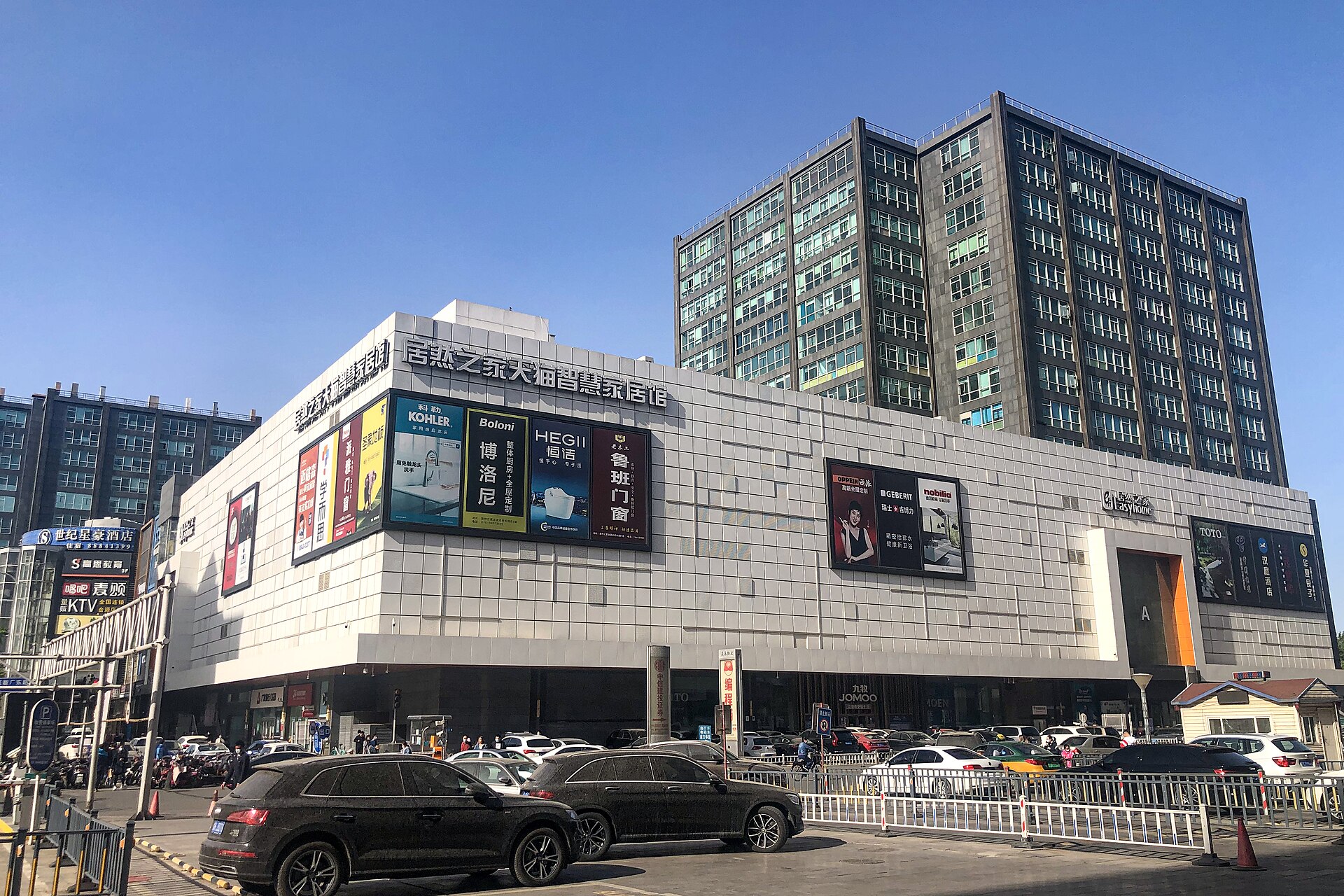
Just dived into the empire of the 双十一 (shuāng shíyī, Double Eleven)? Learn to read 购物 (gòuwù, to shop), 打折 (dǎzhé, discount), and 300 everyday Chinese words with ChineseSRS and its spaced repetition.
The vertigo of numbers: GMV records and a televised gala#
To measure the excess of the Double 11, a single indicator suffices: the GMV (Gross Merchandise Value, the gross value of goods sold), which analysts track minute by minute. The orders of magnitude are staggering. Where the 2009 edition weighed a few tens of millions of yuan, the 2019 edition crossed 268 billion yuan on Alibaba's platform alone in a single day; the 2021 edition topped 540 billion yuan, or several tens of billions of dollars moved in twenty-four hours. No other commercial day in the world, not the American Black Friday, not Cyber Monday, comes close to these volumes.
These figures call for caution. They come from Alibaba itself, are expressed in the value of orders placed (returns not deducted), and their calculation method has evolved over the years. From 2022 onward, the group actually stopped reporting a total real-time GMV, deeming the exercise less and less relevant in a saturated market. The race for the absolute record ran out of steam; but the event itself remains the annual peak of Chinese consumption.
The first "billion yuan" of the Double 11 once fell within a few dozen seconds after midnight. In 2018, Alibaba announced it had passed one billion yuan in sales in 1 minute and 47 seconds, a pace that pushed the platform to rethink its entire payment infrastructure to absorb hundreds of thousands of transactions per second.
Around the counter, an entire media ritual was built. Since 2015, Alibaba has staged every November 10 in the evening a televised gala, the "Tmall 11.11 Gala," the 猫晚 (Māo Wǎn, "Cat Night"), a show lasting several hours, mixing Chinese pop stars and international headliners, broadcast until the final countdown. Artists such as Taylor Swift, Mariah Carey, and film celebrities have graced its stage. At midnight, the countdown appears on giant screens and on the smartphones of hundreds of millions of viewers: consumption becomes spectacle, payment becomes fireworks. You are not watching a sale, you are watching a national ceremony of shopping.
The logistics of the impossible#
Behind the click lies a physical feat: delivering, within a few days, more than a billion parcels. The Double 11 is as much a logistical achievement as a commercial event, and this is perhaps where China has most impressed foreign observers. Where an ordinary seasonal peak makes delivery networks buckle, the Chinese ecosystem absorbs in a week volumes that other countries would take months to process.
The number of parcels generated by the single day of November 11 is counted in billions for the sector as a whole, a figure that crossed the one-billion mark by the mid-2010s and has kept growing. To orchestrate this deluge, Alibaba created in 2013 , a platform that does not own the trucks but coordinates, via its algorithms, a network of carriers, warehouses, and pickup points. Demand forecasting, pre-positioning of stock as close as possible to buyers, route optimization: the smart warehouse, populated by sorting robots and articulated arms, was born in large part from the pressure of the Double 11.
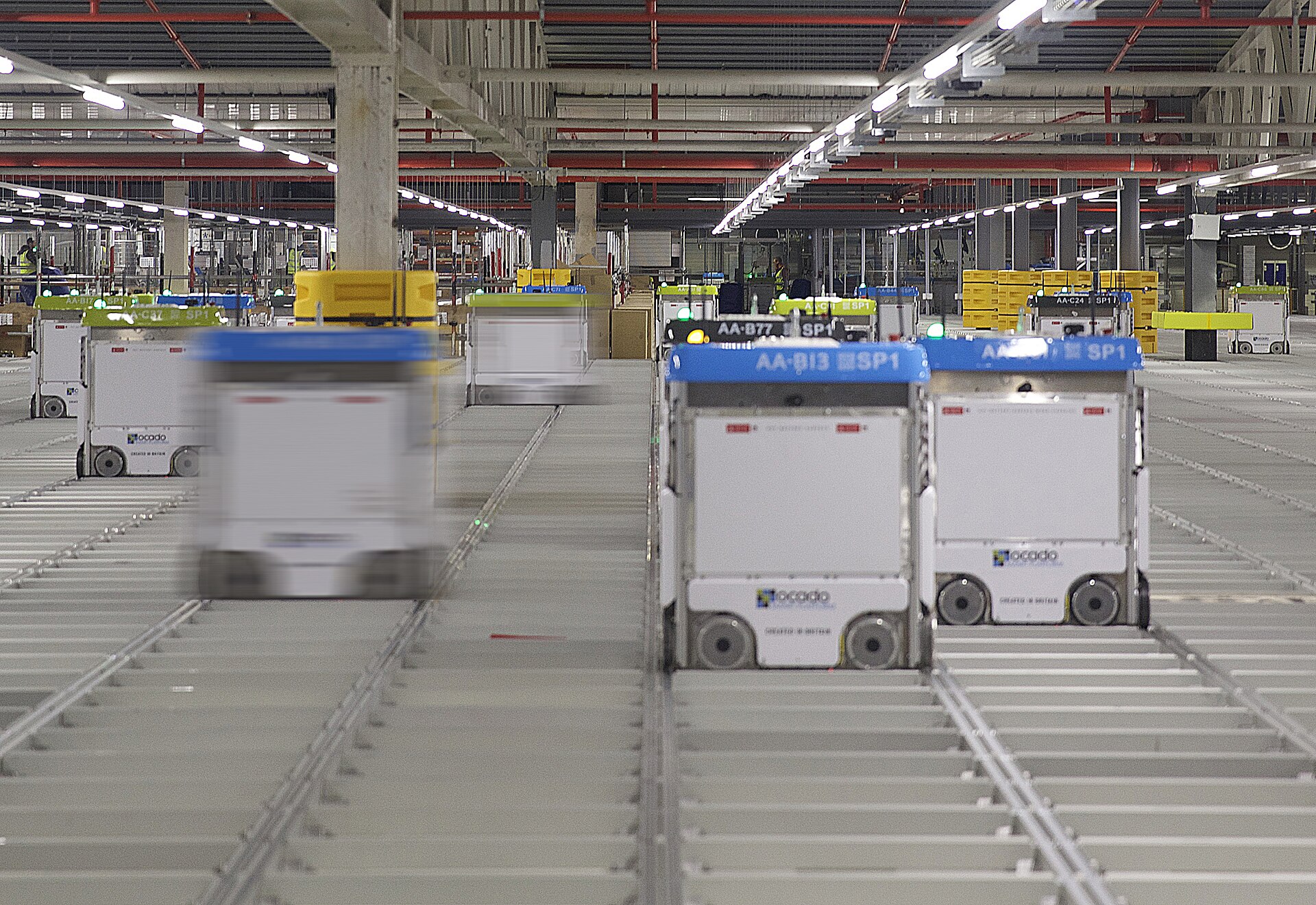
This machine employs, on the big day, armies of couriers: the 快递员 (kuàidìyuán), riders in colored vests who crisscross the cities on scooters, loaded like mules. The human side of the festival is very real: weeks of overload, punishing paces, sleepless nights in the sorting centers. The parcel that arrives as if by magic on the doorstep two days after purchase is the fruit of a work chain under extreme strain, one that goes largely unmentioned when the records are being celebrated.
Want to decipher the signs of these platforms? Learn 双十一 (shuāng shíyī, "Double Eleven"), 快递 (kuàidì, "express delivery"), and 500 everyday Chinese words with ChineseSRS (chinesesrs.com).
Pre-orders, livestream, and the platform war#
The Double 11 has never stopped reinventing itself, and two innovations have redrawn its rules: pre-order selling and live commerce. The first stretches the event over time; the second gave rise to an entirely new profession. Around Alibaba, three big platforms now fight over the November 11 spoils, each with its own signature.
| Platform | Group | Positioning | Double 11 edge |
|---|---|---|---|
| Tmall (天猫, Tiānmāo) | Alibaba | Official brands and retailers | Record GMV, deposit-based pre-order |
| Taobao (淘宝, Táobǎo) | Alibaba | Individual sellers and small shops | Mass livestream (直播, zhíbō) |
| JD.com (京东, Jīngdōng) | JD | Electronics and in-house logistics | Ultra-fast delivery |
| Pinduoduo (拼多多, Pīnduōduō) | PDD | Group buying at low prices | Rock-bottom prices, social app |
The deposit that stretches the festival#
Once concentrated on the twenty-four hours of November 11, the event overflowed its own day. From the mid-2010s onward, Alibaba generalized the : as early as late October, the buyer pays a small deposit to "reserve" an item at a slashed price, then settles the balance on November 11. This fearsomely effective mechanism locks in demand weeks in advance, smooths the payment peak, and turns the one-off festival into a long shopping season. The "day" of the Double 11 has, in effect, become a three-to-four-week campaign.
Livestream, or teleshopping on steroids#
The most spectacular innovation is . The principle: a host presents products in a live video, negotiates discounts in real time, answers questions in the chat, and triggers sales in waves with a cry of "3, 2, 1, go live!" Figures such as , nicknamed the "Lipstick King" for trying on hundreds of shades on air, have moved billions of yuan worth of goods in a single Double 11 pre-sale evening. Livestream fused entertainment, influence, and transaction into a single gesture, a format China exported and that TikTok, Amazon, and Instagram have since been trying to acclimatize.
JD.com, the Double 12, and the competition#
Alibaba is not alone. Its great rival , strong on its in-house logistics, contests the Double 11 each year with competing campaigns, while newer platforms like have upended the landscape with rock-bottom prices. To keep the fever from cooling, a was launched as a "reminder" of November 11, dedicated to small merchants and unsold stock, a lesser success, but revealing of a logic of inflating promotional dates. Around 11.11, China has invented a genuine autumn shopping season in which every player pushes its own peak.
The flip side of the festival: overconsumption, returns, and fatigue#
Behind the euphoria of the counters, the Double 11 drags along a criticism now firmly established even within Chinese society: that of an overconsumption machine. The first shadow over the picture is ecological and material. The billions of parcels generate mountains of packaging (cardboard, plastic, adhesive tape) whose recycling remains very partial. Every edition reignites the debate over waste, to the point that authorities and platforms now advertise "green" packaging and collection points, with uneven results.
Second flaw: returns. The flashy GMV announced at midnight says nothing about the goods sent back in the following days, sometimes massively: clothes ordered in several sizes, impulse buys regretted at daybreak. The return rate, rarely disclosed, cuts into the real figure and further burdens reverse logistics. The shopping festival breeds a returns festival.
Add a more intimate criticism: psychological pressure. The rhetoric of the bargain ("prices never seen before," countdowns, "limited" stock) pushes people to buy what they don't need, for fear of "missing" a good deal. This anxiety of scarcity, this race for sometimes illusory discounts (prices being quietly raised before being "slashed"), has fed in China a critical discourse carried by a younger generation. Some advocate "rational" consumption, or even boycott November 11. Double 11 fatigue has become, in its own way, a phenomenon as Chinese as the festival itself.
Read alsoNaicha: how bubble tea became a generational obsession in ChinaBubble tea, another empire of urban consumption born in China: the same pleasure-purchase logic, the same lines and the same brands turned cult.
Collectible figurines sold in "surprise boxes": Pop Mart applies to the toy the same orchestrated mechanics of desire and scarcity that the Double 11 applies to shopping.
A model that spills over borders#
The Double 11 is no longer only Chinese. Leaning on its international subsidiaries (AliExpress, Lazada in Southeast Asia, Trendyol in Turkey), Alibaba exported the November 11 date well beyond its borders, all the way to Europe and Latin America, where "Singles' Day" now features in the online-sales calendar. Amazon, the big Western retailers, and even luxury brands have joined in, grafting their promotions onto this imported date. A day born in a Nanjing dorm has morphed into a planetary rendezvous of e-commerce.
The distance traveled must be measured. In three decades, a consolation ritual among single students became the largest commercial event in human history, a barometer of the Chinese economy scrutinized by analysts worldwide, a laboratory of innovations (livestream, algorithmic logistics, instant mass payment) that the planet imitates. The Double 11 tells, better than any textbook, the rise of digital China: its ability to take a vernacular, almost intimate custom and turn it into global infrastructure. One question remains, one that China itself is beginning to ask aloud: by celebrating so loudly those who have no one to spend on, have we ended up forgetting that happiness, unlike parcels, cannot be delivered in two business days?
Read alsoWeChat: the super-app that does everythingThe super-app that turned the Chinese smartphone into a wallet, a store, and a network all at once: without WeChat Pay and Alipay, there would be no Double 11.
Behind the records of Chinese tech, the culture of "996": nine in the morning to nine at night, six days a week, including as November 11 approaches.
FAQ#
Why does Singles' Day fall on November 11? Because the date 11.11 lines up four number "1"s, which Chinese students in the 1990s associated with single people, "bare sticks" (光棍, guānggùn). The bachelors' festival was born from this visual play on the four solitudes of 11/11.
Who invented the commercial Double 11? The student custom appeared around 1993 in Nanjing. But it was Alibaba, with its Tmall platform, that transformed it in 2009 into a day of online sales. The team led by Daniel Zhang, the group's future CEO, was behind it.
Is the Double 11 bigger than Black Friday? Yes, by a wide margin. In sales volume (GMV), the single day of November 11 at Alibaba long surpassed, on its own, the entire American Black Friday and Cyber Monday combined, with tens of billions of dollars moved in twenty-four hours.
What is livestream shopping? 直播带货 (zhíbō dàihuò) is live selling: a host presents products in a live video, negotiates discounts, and triggers purchases in real time. Born in China around the Double 11, this format is now copied by TikTok, Amazon, and Instagram.
Does the Double 11 exist outside China? Yes. Through AliExpress, Lazada, and Trendyol, Alibaba exported the date to Southeast Asia, Europe, Turkey, and Latin America. "Singles' Day" now features in the global online-sales calendar, adopted even by Western retailers.
Photo credits: images in this article come from Wikimedia Commons and are under free licenses.
K-beauty, J-beauty, C-beauty: three schools of skincare compared
Routines, hero products, ingredients and business models: what really separates Korean, Japanese and Chinese cosmetics, without the marketing shortcuts.
Cover image: Thomas LOMBARD · Thomas LOMBARD, via Wikimedia Commons · CC BY-SA 3.0