Xianxia: the Chinese fantasy of immortals
Xianxia explained: Daoist roots, the founding 1932 serial, cultivation stages, Qidian web novels, dramas, and how it differs from wuxia and xuanhuan.
La rédaction Kotoba Interactive
Studio éditorial
Qi refining, foundation establishment, golden core, nascent soul. Millions of readers around the world know that ladder by heart, without always realising it comes from a Daoist alchemical vocabulary fifteen centuries old. It serves as the backbone of the most widely read literary genre on the Chinese internet: xianxia.
tells of humans seeking immortality through discipline, asceticism, combat and the accumulation of energy. It blends ancient mythology, Daoist religion, martial imagination and a progression mechanic inherited from video games. Born in the 1930s and industrialised by online fiction platforms in the 2000s, the genre now feeds big-budget television series, Chinese animation and a global community of translators.
Xianxia, wuxia, xuanhuan: do not confuse them#
Three neighbouring labels circulate, and mixing them up loses the thread. stays in the human world: exceptional fighters, rival schools, no true supernatural. adds immortality, deities, demons, magical objects and a Daoist cosmology. , "mysterious fantasy", designates a freer fantasy that borrows the xianxia power ladder but invents its own pantheons, sometimes tinged with Western references.
| Genre | Characters | Setting | Main engine |
|---|---|---|---|
| Wuxia | 武侠 | Historical China, the jianghu | Honour, revenge, martial mastery |
| Xianxia | 仙侠 | Daoist cosmology, heavens and realms | Cultivation of immortality |
| Xuanhuan | 玄幻 | Invented worlds, free pantheons | Power progression, conquest |
| Xiuzhen / Xiuxian | 修真 / 修仙 | A subset of xianxia | Methodical asceticism, sects, techniques |
joins , the Daoist immortal, and , the chivalrous hero. The verb that structures the genre is , "to cultivate, refine, train": hence , cultivating immortality, or , cultivating the true. The protagonist does not receive a power, he works it.
The roots: cultivate rather than pray#
Xianxia draws on an ancient conviction of religious Daoism: immortality is obtained through techniques. As early as the fourth century, the scholar devoted long passages of the Baopuzi (抱朴子) to elixirs, plants, breathing exercises and diets meant to extend life. Two paths coexist: external alchemy, , which makes pills, and internal alchemy, , which transmutes the body's energies.
That corpus supplies most of the genre's lexicon: , vital breath; , the "cinnabar field", the energy centre of the lower abdomen; , the golden core, culmination of internal alchemy. Ancient literature supplies the rest of the decor. The Classic of Mountains and Seas (山海经) catalogues impossible creatures and geographies; the Ming novel Investiture of the Gods (封神演义) stages immortals wielding fabulous weapons; Journey to the West (西游记) gives the model of the insolent disciple who defies heaven.
1932: the founding serial#
Modern xianxia has an identifiable starting point. From 1932 onwards, the writer , under the pen name , serialised Legend of the Swordsmen of the Shu Mountains (蜀山剑侠传). Continued into the late 1940s and never finished, the work exceeds four million characters and invents almost everything: immortal sects, flying swords, heavenly tribulations, hierarchies of power, hidden realms.
Banned in mainland China during the Maoist era, this material survived in Hong Kong and Taiwan, where it fed fantastical swordplay cinema and the first video games. The game , developed in Taiwan, transposed xianxia material into the RPG format and would supply the plot of the 2005 television serial that popularised the genre with the Chinese general public.
Qidian and the industrialisation of story#
The decisive shift was technological. With the rise of online literature platforms in the early 2000s, notably , an unprecedented model appeared: the author publishes a chapter a day, sometimes several, and earns money through paid chapters or reader tips. Xianxia, with its endless progression ladder, suits that never-ending format perfectly.
The novel that established the genre for that generation is , published online by from 2003: a dark tale in which cultivation saves nobody and the righteous sects are barely better than the demons. Monuments of length followed: A Record of a Mortal's Journey to Immortality (凡人修仙传) by , begun in 2008 and celebrated for a talentless hero who advances through caution; Shrouding the Heavens (遮天) by , launched in 2010; I Shall Seal the Heavens (我欲封天) by .
In a cultivation web novel the reader does not follow a plot: he follows a curve. Every chapter must leave the hero slightly less weak than the day before.
Xianxia vocabulary is quick to learn and useful everywhere: 仙 (xiān, immortal), 修 (xiū, to cultivate), 气 (qì, breath), 剑 (jiàn, sword), 宗 (zōng, sect). Learn them with ChineseSRS and its spaced repetition, and read novel and drama titles in their original language.
The power ladder as narrative engine#
The genre's formal signature is its system of stages, announced explicitly to the reader. Names vary between authors, but the frame is stable: the character accumulates spiritual energy, , condenses it, undergoes a trial, crosses a threshold, and discovers the stage he reached was only a beginning.
| Stage | Characters | What is at stake |
|---|---|---|
| Qi refining | 炼气 (liànqì) | First exercises, opening the meridians |
| Foundation establishment | 筑基 (zhùjī) | The body becomes able to hold energy |
| Golden core | 金丹 (jīndān) | A core condenses, longevity increases |
| Nascent soul | 元婴 (yuányīng) | A second spiritual form appears |
| Soul transformation | 化神 (huàshén) | Mastery of space, near divinity |
| Tribulation crossing | 渡劫 (dùjié) | Heavenly trial, the lightning of 天劫 (tiānjié) |
| Ascension | 飞升 (fēishēng) | Departure for the immortal realms |
Around that column unfolds a recognisable apparatus: , magical treasures; , hierarchical sects; , spirit roots that determine potential; , demonic beasts. And a dreaded accident, , the deviation of breath that drives mad anyone who cultivated too fast: the genre has its own burnout.
English-speaking readers imported the genre's tics wholesale: face-slapping for , the public humiliation of an arrogant rival, and young master for , the insufferable well-born son who provokes the hero by chapter three. These figures recur so regularly that they amount to a grammar, almost a reading contract.
Screens: dramas, donghua, games#
In the 2010s xianxia became the locomotive of Chinese costume fiction. The Journey of Flower (花千骨, 2015) and then Eternal Love (三生三世十里桃花, 2017), adapted from a novel by Tang Qi Gongzi, reached considerable online audiences. The Untamed (陈情令, 2019), drawn from by Mo Xiang Tong Xiu, exported the genre across Southeast Asia and then to the West. Love Between Fairy and Devil (苍兰诀, 2022) confirmed the formula.
Chinese animation, , also found favourite ground here, with the long-running adaptation of A Record of a Mortal's Journey to Immortality and series drawn from xuanhuan novels such as Soul Land (斗罗大陆). Video games have kept the link alive from Sword and Fairy to contemporary cultivation simulators, in which players manage their own advance from stage to stage.
These adaptations work within an attentive regulatory frame. Chinese broadcast authorities supervise the depiction of superstition and the supernatural, which leads productions to favour explicitly mythological settings and to take care with the moral import of their stories.
Read alsoWuxia: the wandering knights of the Chinese imaginationXianxia is the supernatural cousin of wuxia: to measure the gap you need to know the world of the jianghu and the codes of the wandering knight.
The whole vocabulary of cultivation comes from Daoism: breath, internal alchemy, longevity, harmony with the Dao.
An export driven by translation#
The genre crossed its borders through an unexpected channel: volunteer translation. In December 2014 a Chinese American who had worked in diplomacy, known by the pen name RWX, founded Wuxiaworld, a site translating Chinese online novels chapter by chapter, starting with Coiling Dragon. English-speaking readers discovered the format, settled into it, and demanded more than translators could produce.
The effect was twofold. Chinese platforms opened their own English portals and professionalised exports. Meanwhile a generation of Western authors now writes "cultivation novels" directly in English, complete with stages, sects and heavenly tribulations, in a genre readers call cultivation or progression fantasy.
Xianxia thus offers a rare case: a literary form born from a 1932 serial, revived by per-chapter sales, and turned into a global format without ever passing through Western print publishing. Its promise fits into a sentence its heroes keep repeating: what limits you today is only a stage.
FAQ#
What is xianxia? Xianxia (仙侠) is a Chinese fantasy genre in which humans seek immortality through cultivation, an energetic discipline inherited from Daoism. It combines ancient mythology, martial arts, rival sects and stages of power.
What is the difference between wuxia and xianxia? Wuxia stays in the human realm: exceptional fighters, honour, revenge. Xianxia adds immortality, deities, demons, magical objects and a full Daoist cosmology.
Which novel founded the genre? Legend of the Swordsmen of the Shu Mountains (蜀山剑侠传) by Huanzhulouzhu, serialised from 1932. Unfinished, it exceeds four million characters and set most of the genre's motifs.
What are the cultivation stages? Names vary by author, but the order is stable: qi refining (炼气), foundation establishment (筑基), golden core (金丹), nascent soul (元婴), soul transformation (化神), tribulation crossing (渡劫), then ascension (飞升).
Where should a newcomer to xianxia start? For novels, Zhu Xian (2003) and A Record of a Mortal's Journey to Immortality (2008) are the classic entry points. On screen, the series The Untamed (2019) and the animated adaptation of the second novel give direct access to the genre's codes.
Photo credits: the images in this article come from Wikimedia Commons and are under a free license.
Donghua: what really separates it from Japanese anime
The word, the source material, 3D, permitted themes, the markets: six concrete differences between Chinese and Japanese animation, and where to start.
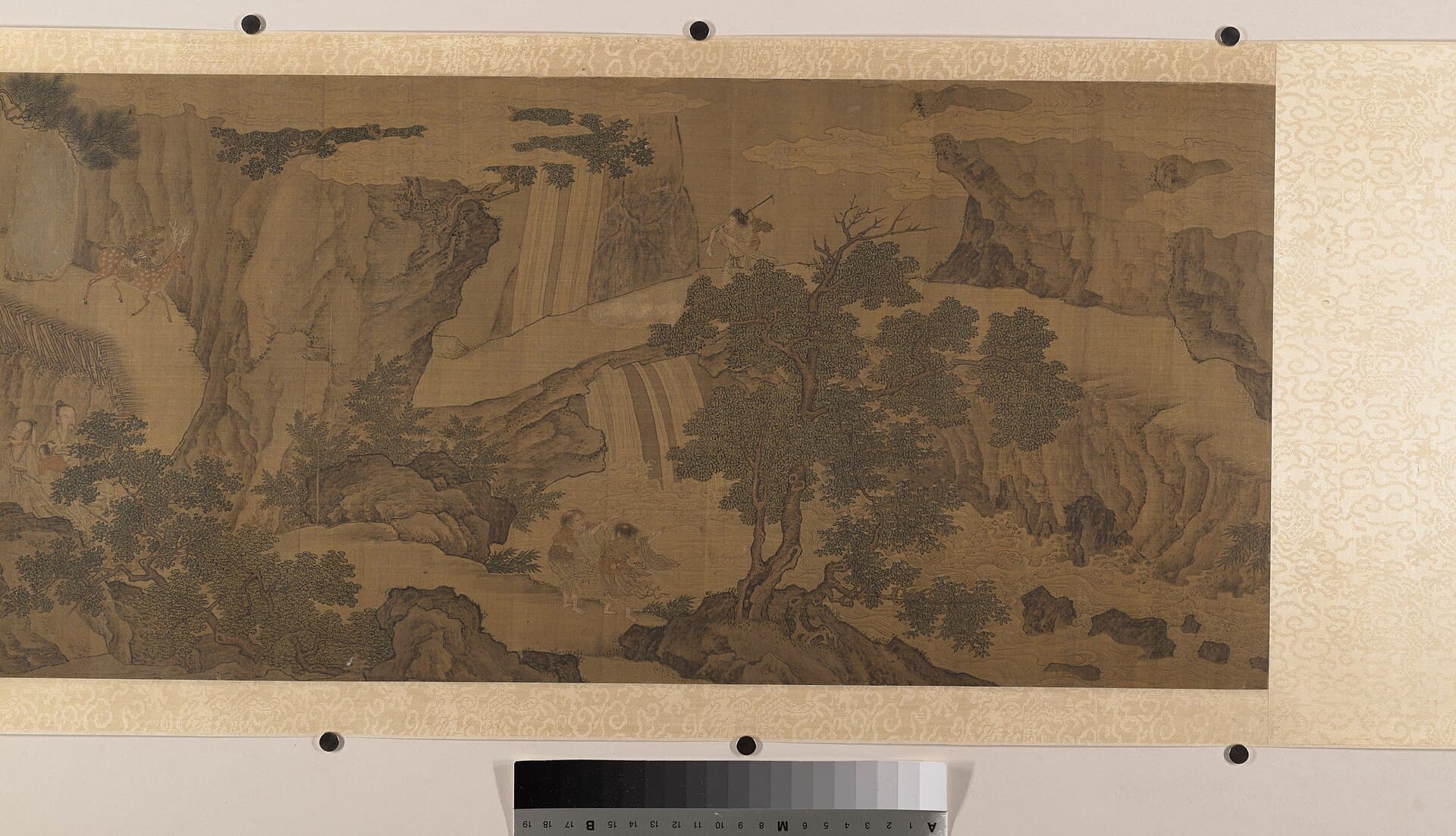
Cover image: Anonyme, dynastie Ming · Metropolitan Museum of Art, via Wikimedia Commons · CC0