The Japanese School System: From 6-3-3-4 to Juken
Inside the Japanese school system: the 6-3-3-4 structure, randoseru, kyūshoku, bukatsu, the juken exam war and juku. Equity, discipline and human costs, unflinchingly.
La rédaction Kotoba
Studio éditorial
Seven forty on an April morning. Beneath a row of cherry trees in full bloom, six-year-olds file forward, backs stiffened by rigid satchels almost as wide as their shoulders. Mothers adjust a collar, straighten a fluorescent yellow cap. Above the gymnasium entrance, a banner spells out, in large characters, 入学式 (nyūgakushiki), the entrance ceremony. Inside, the principal bows, the anthem swells, and each child hears for the first time the name of their class, a number and a letter that, for one year, will define their entire world.
The Japanese school system is among the most successful and most codified on Earth. It educates close to eighteen million pupils, achieves near-universal literacy, and routinely places Japan near the top of the OECD's PISA rankings. Yet behind this statistical triumph lies a social machine of rare intensity, where pupils learn as much about belonging to a group, cleaning their own school and surviving the exam war as they do about reading and arithmetic. It is this dual nature, remarkable equity, crushing pressure, that one must grasp to understand contemporary Japan.
Making sense of the 6-3-3-4 structure#
Japan's system rests on a four-tier architecture, the famous 6-3-3-4, set out in the 1947 Fundamental Law of Education during the American occupation and still administered by . Six years of elementary school, three of lower secondary, three of upper secondary, four of university: this is the spine of Japanese schooling.
takes children from six to twelve, from grade 1 to grade 6. The curriculum is generalist: Japanese, mathematics, science, social studies, music, art, physical education and, crucially, 道徳 (dōtoku), moral education, which became a formally graded subject in 2018. A single teacher, the 担任 (tannin), stays with the class for most of the day, blurring the line between instruction and character formation.
covers the next three years, from twelve to fifteen. This is where compulsory schooling ends: Japanese law mandates only nine years of education, through the end of chūgakkō. In theory, a teenager may leave the system at fifteen. In practice, almost no one does.
, from fifteen to eighteen, is not compulsory, and yet, according to MEXT data, more than 98 % of an age cohort attends it. Nearly all Japanese teenagers therefore pursue an education that the law does not require of them, but that social pressure does, with a force exceeding any statute.
crowns the structure with a four-year bachelor's degree, entry decided by the country's most feared examination. Alongside the daigaku sit the 短期大学 (tanki daigaku, two-year junior colleges, now in decline) and the 専門学校 (senmon gakkō, specialized vocational schools).
Why the school year begins in April#
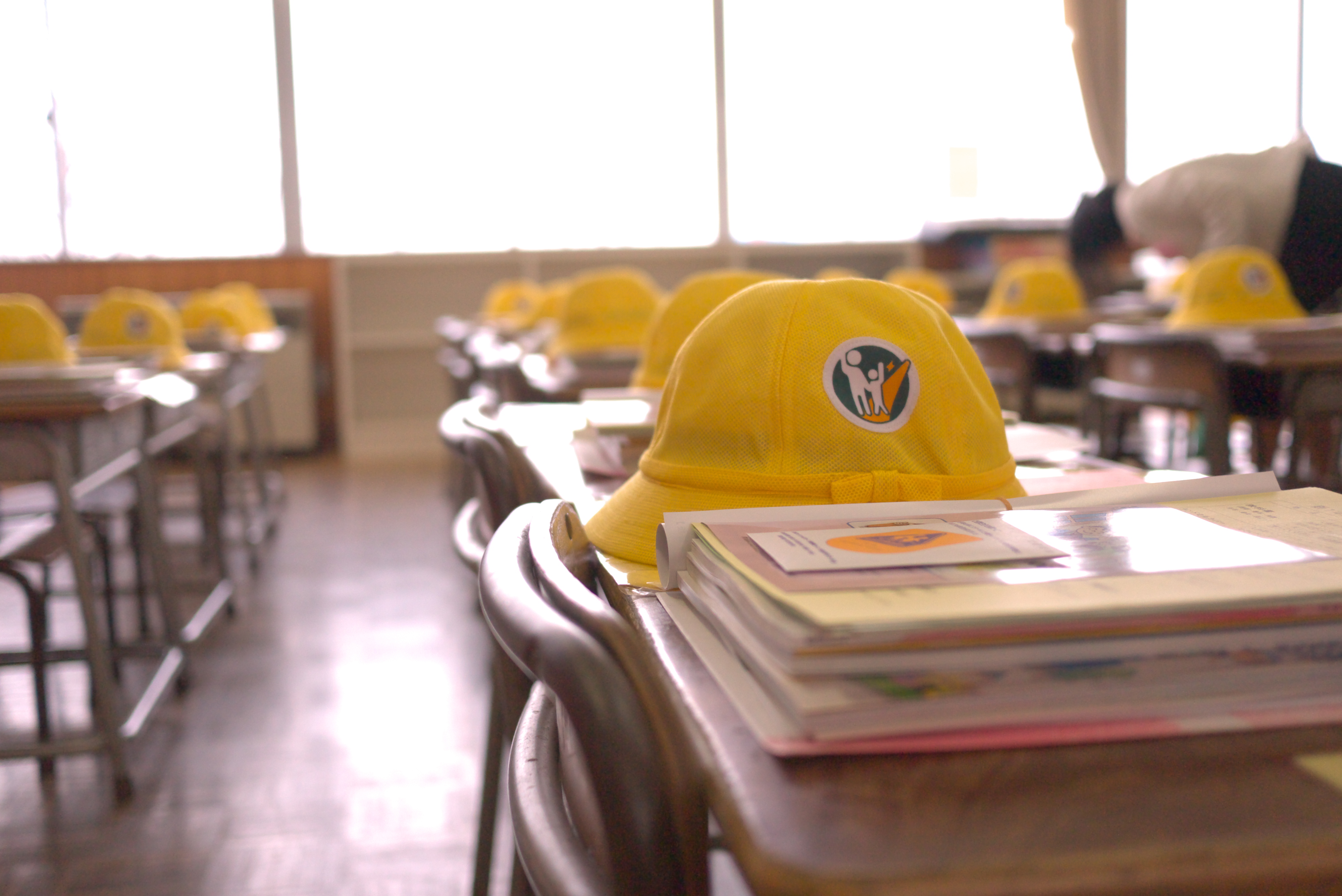
The Japanese school year starts on 1 April, at the height of the cherry blossom, and ends the following March. This calendar, unique among the major industrialized nations, makes the first day of class coincide with the most symbolically charged moment of the Japanese spring: the opening of the 桜 (sakura). The image of a child crossing the school gate beneath a fall of petals is among the most powerful in the national imagination.
The year is built around three terms (三学期, sangakki) punctuated by holidays: a long summer break in August, shorter breaks in winter and spring. The opening rite is the nyūgakushiki, a solemn ceremony in which new pupils, accompanied by parents in their Sunday best, are formally admitted. Its end-of-journey mirror is the 卒業式 (sotsugyōshiki), the graduation ceremony, often accompanied by the song Aogeba tōtoshi and collective tears.
In Japan, you do not enter school: you are admitted to a community. And you do not leave it: you are graduated from it, before everyone, with one final bow.
This seasonality has concrete consequences. Japanese companies also recruit in April, aligning the start of working life with the close of the school cycle. April's 新入社員 (shinnyūshain, new employee) is the direct continuation of the fresh graduate. School and the world of work breathe to the same rhythm, that of the cherry trees.
A pupil's day: satchel, uniform and lunch#
The daily life of a Japanese schoolchild follows a choreography of objects and rituals that often startle the foreign observer. The first of these is the satchel.
The randoseru, the thousand-euro backpack#
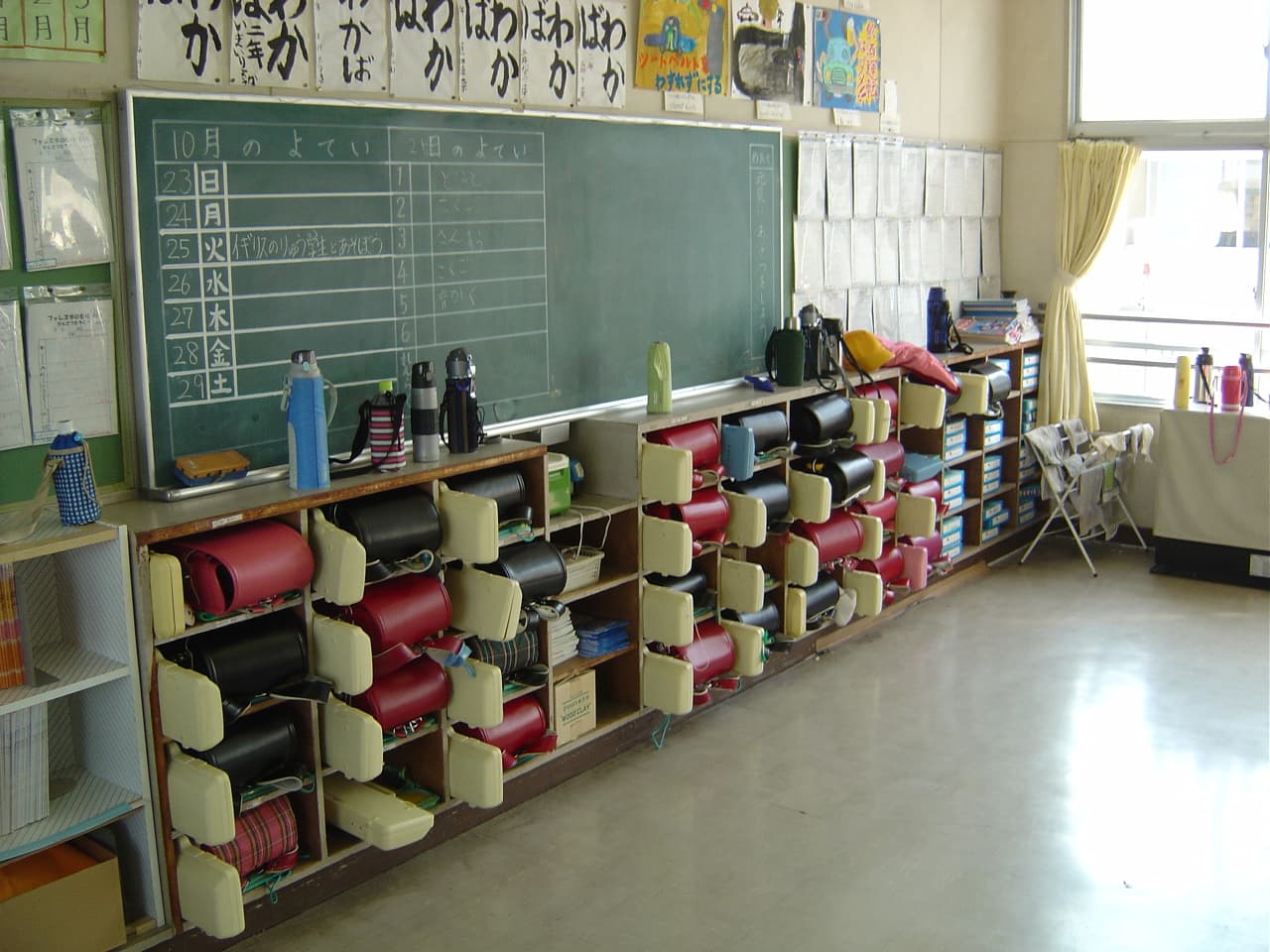
The ランドセル (randoseru) is the rigid leather or faux-leather satchel carried by almost every elementary pupil. The word derives from the Dutch ransel (a military knapsack), a legacy of contact between Japan and the Netherlands in the Edo era, and the object is said to have entered schools in the late nineteenth century, under the Meiji era. Built to last all six years, it frequently costs between 30,000 and 80,000 yen, several hundred euros. Traditionally red for girls and black for boys, it has diversified widely in colour since the 2000s.
The seifuku, a badge of belonging#
From middle school onward, the becomes near-universal. Boys often wear the 学ラン (gakuran), a dark, stand-collar jacket of Prussian military inspiration, while girls wear the sailor-style uniform (セーラー服, sērā-fuku) or a blazer-and-skirt set. Far from trivial, the uniform signals belonging to a specific school and, on the surface, erases differences in family wealth, an equalizing principle dear to the system.
Kyūshoku, the meal eaten in class#
The is eaten in the classroom, not in a canteen, and the pupils themselves serve it. Taking turns, dressed in apron and cap, the 当番 (tōban, pupils on duty) hand out trays to their classmates. The menu, balanced and designed by nutritionists, often accompanies a short lesson on where the food comes from. Eating together, serving others, finishing one's plate: the meal is itself a subject.
O-sōji, or the school you clean yourself#
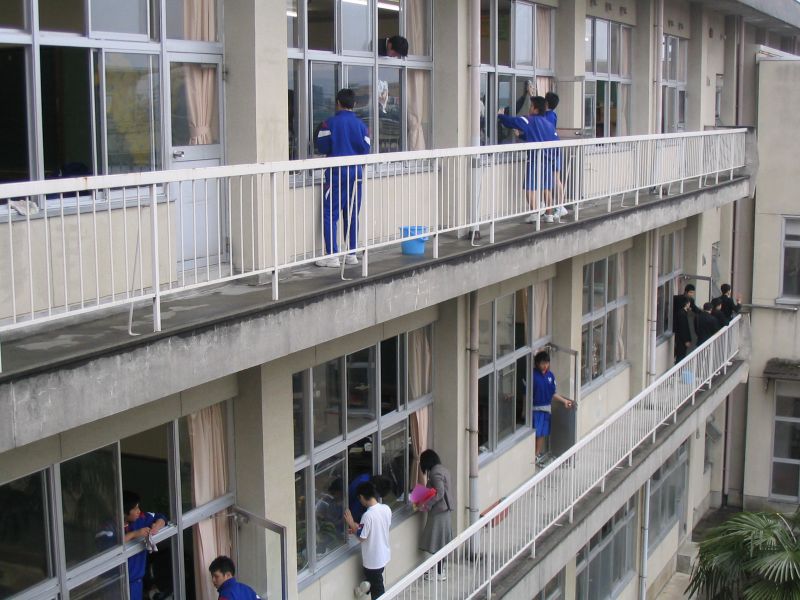
Every day, pupils clean their own buildings during the 掃除 (o-sōji). Brooms, mops, cloths: for fifteen minutes or so, children and teenagers scrub classrooms, corridors and toilets. In most schools there is almost no cleaning staff. The idea, drawn partly from Zen Buddhism, where cleaning is a spiritual discipline, is that caring for the shared place teaches respect and collective responsibility.
The class as a social cell#
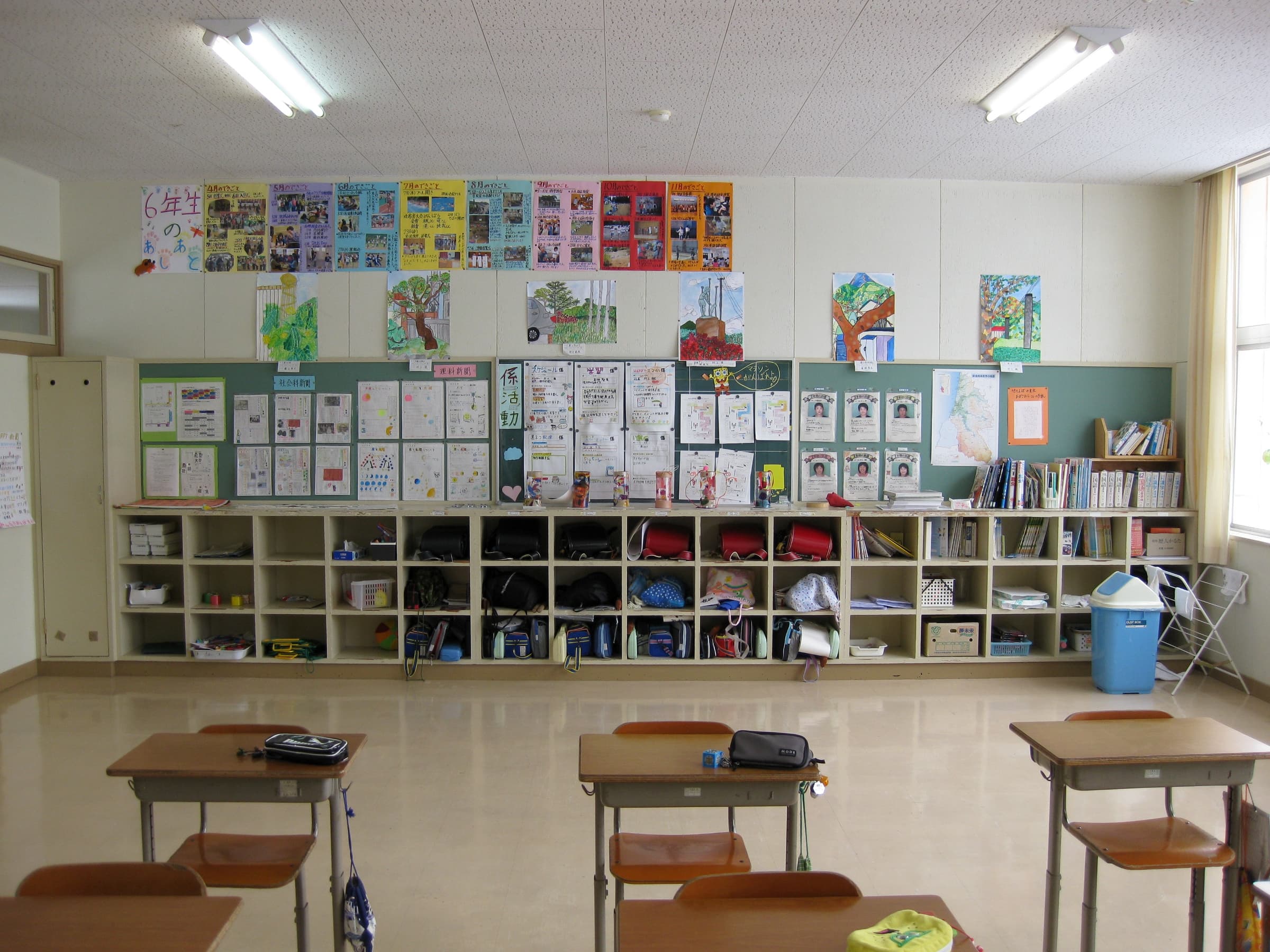
In Japan, the 学級 (gakkyū), or class, is no mere administrative grouping: it is the fundamental social unit of schooling. A pupil belongs to a class, "1 組," "2 組", that follows the same timetable, shares the same assigned room, eats together and cleans together. It is the teachers who move between rooms, not the pupils.
The structures this belonging: a daily period devoted to group life, under the tannin's guidance, where the class's affairs are settled and the art of consensus is learned. The class organizes committees, elects representatives, prepares together for the 文化祭 (bunkasai, culture festival) and the 運動会 (undōkai, sports day), grand collective rituals in which each class defends its colours.
This logic rests on a central notion: the 集団 (shūdan), the group, and the harmony that must be preserved, 和 (wa). Moral education, dōtoku, runs through the whole journey: pupils learn punctuality, perseverance (頑張る, ganbaru), attentiveness to others, a sense of shared effort. Where some Western systems cultivate individual expression, the Japanese school shapes, first of all, a member of the group.
The flip side of this cohesion is harsh. When the group prizes sameness, stepping out of line becomes a fault. The proverb deru kui wa utareru, "the nail that sticks up gets hammered down", captures a pressure to conform that, as we shall see, carries a very real cost.
Bukatsu, a second school after school#
Club activities, , occupy an outsized place in the lives of Japanese middle and high schoolers. As soon as classes end, the vast majority of pupils join a sports or cultural club: baseball, kendō, athletics, but also brass band, calligraphy, drama or manga club. Participation, theoretically optional, is in practice an almost inescapable norm.
The time commitment is enormous. Many clubs train every day after school, on weekends and during holidays, sometimes for several hours a day. A high school's baseball club may train three hundred days a year, with its horizon the legendary national tournament, watched by the whole country. Bukatsu teaches the hierarchy of ages, the 先輩/後輩 (senpai/kōhai, senior/junior) relationship, endurance and loyalty to the group.
The club is not a hobby: it is a second schooling, sometimes more formative than the first, where one learns to push beyond one's limits and never to let one's own people down.
This intensity eventually became a problem. Endless training exhausts pupils and teachers alike, the latter often forced to supervise clubs without adequate pay. From 2018 MEXT issued guidelines to limit the duration of club activities and, in the late 2010s and early 2020s, launched a reform to gradually transfer bukatsu supervision to community structures, in order to ease the burden on teachers.
The exam war: juken, hensachi and juku#
The 受験戦争 (juken sensō, literally "examination war") refers to the fierce competition for entry into the best institutions, and it is surely the best-known, and most controversial, feature of the Japanese system. 受験 (juken) is the entrance exam: pupils sit them to get into certain middle schools, most high schools, and university, each test a bottleneck where part of one's social future is decided.
At the heart of this machinery sits the 偏差値 (hensachi), a standardized score measuring a pupil's position relative to the national mean. Every high school and university is assigned a reference hensachi: to target an institution is to target a number. Pupils and families reason in hensachi, rank schools by hensachi, choose their exam strategy by hensachi. The system thus reduces years of work to a single, brutally legible metric.
To clear these exams, millions of pupils attend a 塾 (juku) in the evenings and on weekends, private cram schools. The juku is a massive parallel industry: according to MEXT surveys, a large share of middle schoolers is enrolled, and some "elite juku" (the 進学塾, shingaku juku) are themselves selective. To this is added the 予備校 (yobikō), the prep school attended by 浪人 (rōnin), candidates who, having failed the university exam, devote one or more full years to retaking it. The term rōnin, borrowed from the masterless samurai, says much about the loneliness of that interlude.
The university entrance exam is built around a national test, the 大学入学共通テスト (Daigaku Nyūgaku Kyōtsū Tesuto, or Common Test), introduced in 2021 to replace the former Center Test that had been in force since 1990. The most prestigious universities, the University of Tokyo (東京大学, Tōdai) foremost among them, add their own examinations, and entry opens the doors to the great ministries and corporations. The hierarchy of universities thus durably structures professional trajectories.
The other side: ijime, futōkō and pressure#
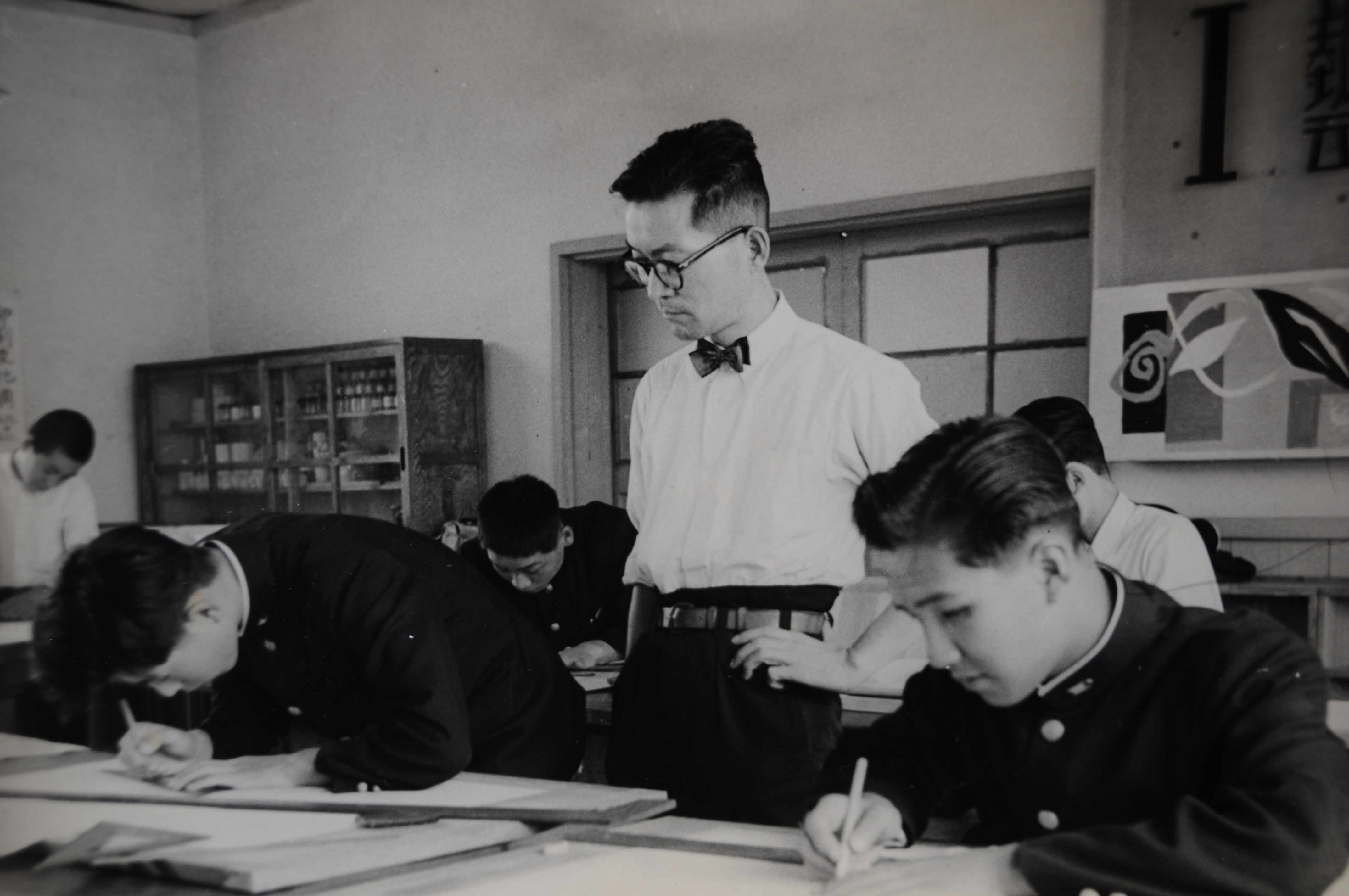
The Japanese system's performance carries a human price that neither MEXT nor society now denies. The first affliction, old and deep, is bullying, いじめ (ijime). In an environment that prizes sameness, the slightest difference, physical, social, behavioural, can mark a target, and the group that excludes turns its own cohesion inward. MEXT records hundreds of thousands of reported cases each year, rising steadily since the 2013 introduction of an anti-bullying prevention law, a sign both of better reporting and of a persistent problem.
To ijime there often answers 不登校 (futōkō), school refusal or avoidance: pupils who, out of anxiety, bullying or exhaustion, stop attending school for weeks or months. The phenomenon has reached record levels in recent years, with MEXT counting a growing number of children affected in primary and secondary education. Futōkō has become a subject of national debate, exposing the limits of a model in which a pupil's absence is felt as a flaw in the whole.
Added to this is sheer academic pressure, that of the juken sensō, which weighs on teenagers' mental health. Japan suffers a troubling rate of youth suicide, and the start of September, after the summer holidays, has been identified as a moment of heightened risk, prompting institutions and associations to multiply support and listening services. Conformity, finally, sometimes stifles the temperaments that will not be poured into its mould: the pupil "who sticks up" pays dearly for their deviation.
It would be unfair, however, to reduce the Japanese school to its shadows. The same system produces a remarkable equity: wherever they live, rich or poor, a Japanese child receives an education of comparable quality, in premises they maintain themselves, taught by respected teachers. Literacy is near-universal, gaps between institutions far narrower than elsewhere, and collective discipline yields a civility to which clean streets and punctual trains bear witness.
Reforms underway: English, digital and overwork#
Since the turn of the 2020s MEXT has launched several reforms to adapt a system often deemed too rigid. The first concerns English. Long taught in a bookish, belated way, it is now introduced earlier: under the curriculum reform applied in 2020, English became a graded subject from grade 5 of elementary school, the stated aim being to correct Japan's persistent weakness in oral communication, regularly flagged in international English-proficiency rankings.
The second project is digital. The GIGA School programme, launched by MEXT in 2019 and sharply accelerated by the 2020 pandemic, sought to equip every pupil with a tablet or laptop and to roll out high-speed connectivity across schools, a catch-up effort for a system that had remained, in the main, faithful to paper, chalk and textbook.
The third front, quieter but crucial, is the fight against teacher overwork. Japanese teachers rank, according to OECD surveys, among the most overburdened in the world, weighed down by administrative tasks, bukatsu supervision and the management of class life. The reforms transferring clubs to the community and reducing overtime are part of this effort to make the profession sustainable.
These developments say one thing: Japan knows the strengths and the faults of its school and is trying, cautiously, to reform it without abandoning what makes it singular. The path remains narrow between collective excellence and respect for the individual.
The six-year-old who crossed the gate that April morning, beneath the cherry trees, carries on their shoulders far more than a randoseru: they carry an entire social contract, made of discipline, equality and effort, but also of a weight that the country is slowly learning to acknowledge and to lighten. To understand the Japanese school is to understand how a nation chooses to make its citizens, and at what cost.
Frequently asked questions#
Until what age is schooling compulsory in Japan? Compulsory schooling covers nine years, from six to fifteen, that is, the end of lower secondary school (中学校, chūgakkō). High school (高校, kōkō) is not compulsory, but more than 98 % of teenagers attend it, according to MEXT.
Why does the Japanese school year begin in April? The Japanese school calendar starts on 1 April and ends in March, aligning the new year with the cherry blossom and the entrance ceremony (入学式, nyūgakushiki). Companies recruit on the same rhythm, in April.
What is a juku? A 塾 (juku) is a private evening and weekend school where pupils prepare for entrance exams. It is a massive industry tied to the "examination war" (受験戦争, juken sensō), with a large share of middle schoolers enrolled.
Why do pupils clean their own school? The daily cleaning, 掃除 (o-sōji), is a teaching practice drawn partly from Zen: caring for the shared place teaches respect, responsibility and group spirit. Most schools employ almost no cleaning staff.
Is the Japanese school system high-performing? Academically, yes: Japan scores excellently on the OECD's PISA rankings and achieves near-universal literacy, with great equity between institutions. But these results come with real human costs (bullying, school refusal, pressure).
In this article
The cultural terms covered here, each with a short definition.
- Bukatsu
- Japanese after-school club activities, central to student life and discipline.
- Futōkō
- Japanese term for prolonged school refusal or absenteeism by students.
- Ijime
- Bullying within Japanese schools, often through group exclusion.
- Juken
- The high-stakes ordeal of sitting Japan's competitive entrance exams.
- Juku
- Japanese private cram school where pupils study after regular class hours.
- Randoseru
- Sturdy firm-sided backpack carried by Japanese primary-school children.
Juku: The Cram Schools That Rule Japan's Nights
Inside Japan's juku (塾), the private after-school cram schools. Definition, types, history from the terakoya, major chains, costs and the debate over academic pressure.
Cover image: Douglas P Perkins · Douglas P Perkins · CC BY 3.0