Studio Ghibli: A Guide to Every Film
A complete guide to every Studio Ghibli film, from Nausicaä to The Boy and the Heron. History, directors, timeline, themes and a recommended viewing order.
La rédaction Kotoba
Studio éditorial
A train glides over a sea that has swallowed the tracks, soundless, beneath a milky sky. A little girl in a red dress watches translucent shadows step off at platforms half-drowned in water. There is no swelling score, no dialogue: only the hum of the wheels and the small piano figure of . In eighty seconds, explaining nothing, has made you understand grief, passage, a child's afterlife. No other animation studio on earth can do that.
Founded in 1985, Studio Ghibli has produced some two dozen feature films over forty years that redefined what animation could say. This guide walks through the entire filmography, every film dated, its director, its place in the body of work, to give you a complete map of a universe where nature breathes, where people fly, where heroines decide, and where childhood always, eventually, comes to an end.
How a studio is born: 1985, after Nausicaä#
Studio Ghibli was founded on 15 June 1985 in Kichijōji (Tōkyō) by , and producer , with financial backing from the publisher Tokuma Shoten. The catalyst was the success of Nausicaä of the Valley of the Wind (風の谷のナウシカ), released in 1984: directed by Miyazaki before the studio existed, the film drew more than 900,000 viewers and proved that ambitious, adult animation could find an audience in Japan.
The name itself hides a geography. comes from the Italian name of a Second World War reconnaissance aircraft, the Caproni Ca.309 "Ghibli," the word itself borrowed from a Libyan Arabic term for a hot Saharan wind. Miyazaki, an aviation obsessive, chose it with the idea that the studio would "blow a new wind" through the animation industry. A wry detail noted by studio historians: the correct Italian pronunciation would be closer to "gibli," but Japanese usage froze the soft "ji."
"I wanted to make a film that tells children: it is good to be alive." That line, which Miyazaki repeated in several interviews, captures the studio's ethic better than any analysis.
Two sensibilities coexisted from the start. Miyazaki, a prodigious draftsman, chased wonder, movement, flight. Takahata, who did not draw himself but directed, aimed at social realism, the patient observation of everyday life, restrained emotion. That fertile tension, the dreamer and the moralist, runs through the whole of Ghibli's history.
The foundations: 1986-1991#
These early years laid down the studio's visual and thematic grammar, swinging between adventure tale and intimate chronicle.
Castle in the Sky (天空の城ラピュタ, Tenkū no Shiro Rapyuta, 1986), directed by Miyazaki, is officially the first Ghibli film. This steampunk epic, in which young Sheeta and the boy Pazu seek the floating island of Laputa, coveted by pirates and the army, already distills all of Miyazaki: flying machines, ruins reclaimed by nature, a refusal of militarism. Hisaishi composed an orchestral score that would become the studio's sonic signature.
Two films were released on the same day, 16 April 1988, as a double bill, a risky commercial decision that would remain unique. Grave of the Fireflies (火垂るの墓, Hotaru no Haka), directed by Takahata, depicts the slow death of two orphans in the bombed-out Japan of 1945. Quietly merciless, with no concessions, it is one of the most devastating war films ever made, animated or not; critic Roger Ebert ranked it among the greatest films about war of any kind. Beside it, Miyazaki's My Neighbor Totoro (となりのトトロ, Tonari no Totoro) offers the exact opposite: the luminous encounter of two little girls with a roly-poly forest spirit in 1950s rural Japan. A box-office failure on release, Totoro became, through merchandise and television, the very emblem of Ghibli; its plush figure is now the studio's logo.
Kiki's Delivery Service (魔女の宅急便, Majo no Takkyūbin, 1989), by Miyazaki, follows a thirteen-year-old apprentice witch who moves alone to a seaside town to earn her keep delivering parcels on her broom. The studio's first major commercial hit (over 2.6 million admissions), it is a fable about independence, a first job, and creative block: Kiki temporarily loses her powers, a clear metaphor for artistic doubt.
With Only Yesterday (おもひでぽろぽろ, Omoide Poro Poro, 1991), Takahata moved radically away from the fantastical. A twenty-seven-year-old Tōkyō office worker travels to the countryside to work and, in flashback, relives her 1960s childhood. No monsters, no magic: just the melancholy of a life that might have gone another way. The film was the top-grossing Japanese release of 1991, proving an adult audience existed for introspective animation.
The classic age: 1992-2001#
The studio then strung together masterpieces and, with Spirited Away, achieved worldwide recognition.
Porco Rosso (紅の豚, Kurenai no Buta, 1992), by Miyazaki, stars an Italian flying ace turned into a pig, a bounty hunter over the Adriatic between the wars. Melancholy, anti-fascist, in love with seaplanes, this deeply personal film, onto which Miyazaki projects himself openly, declares that "I'd rather be a pig than a fascist." It drew more than 3 million viewers in Japan.
Pom Poko (平成狸合戦ぽんぽこ, Heisei Tanuki Gassen Ponpoko, 1994) handed Takahata an ecological fable: , the shape-shifting raccoon dogs of Japanese folklore, fight the urban sprawl devouring their forest near Tōkyō. Tragic and bawdy, mixing scatological gags with despair, it remains one of the studio's most deeply Japanese works.
Whisper of the Heart (耳をすませば, Mimi wo Sumaseba, 1995) marked the directing debut of , a star animator widely seen as Miyazaki's heir. This delicate chronicle of a schoolgirl who dreams of writing and falls for a trainee violin-maker is one of the finest films about adolescence and vocation. Kondō's early death in 1998, at forty-seven, robbed Ghibli of its natural successor.
Then came the earthquake. Princess Mononoke (もののけ姫, Mononoke Hime, 1997), by Miyazaki, plunges into a mythic medieval Japan where Prince Ashitaka tries to mediate the war between the gods of the forest and the humans of the ironworks. Dark, violent, with no clear heroes or villains, the film shattered the Japanese box-office record and turned Ghibli into a national phenomenon. Hisaishi delivered one of his most grandiose scores.
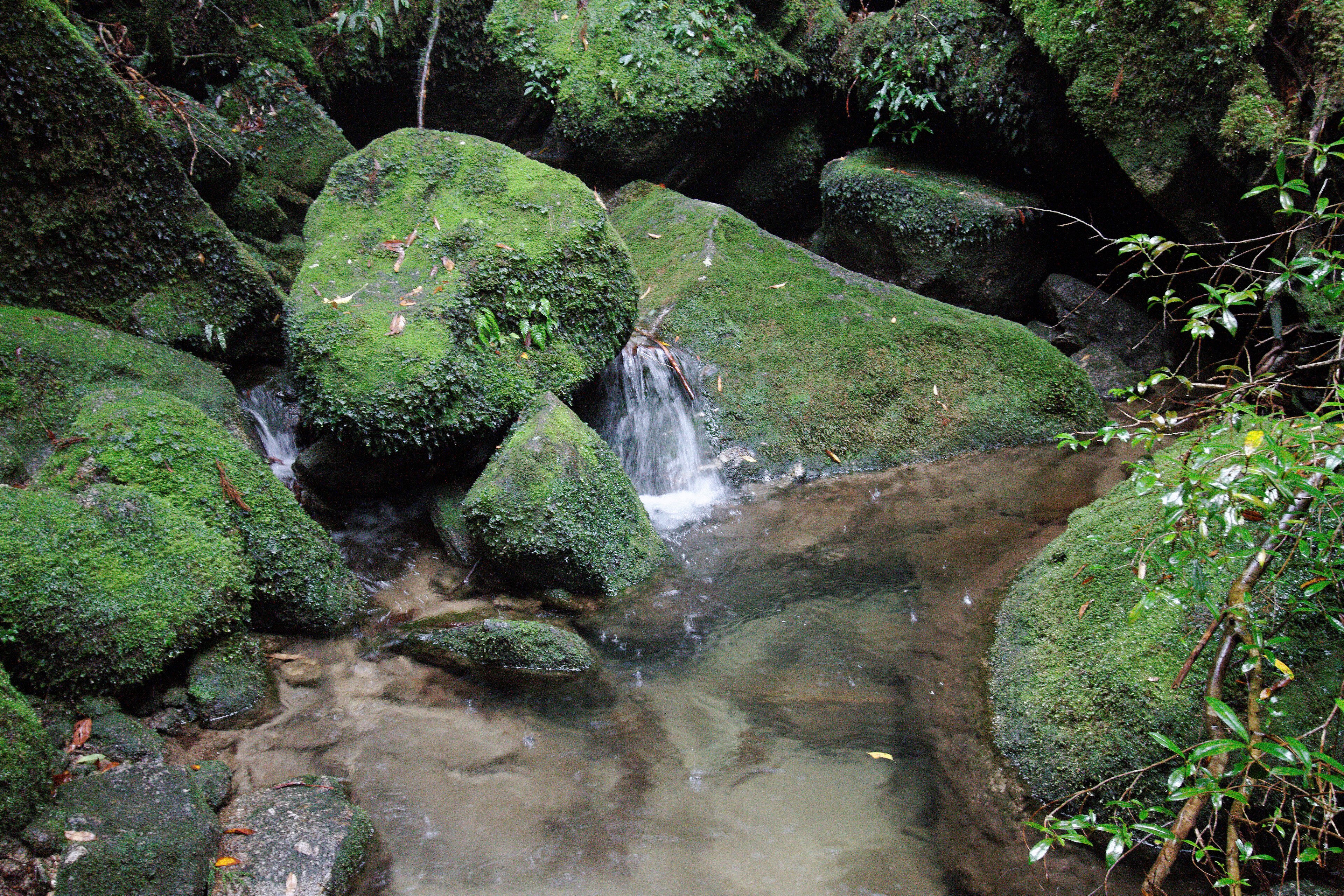
Takahata answered with a wholly contrarian work: My Neighbors the Yamadas (ホーホケキョ となりの山田くん, Hōhokekyo Tonari no Yamada-kun, 1999), a family comedy in minimalist watercolor, the studio's first fully digital film. A commercial flop, it was a manifesto: proof that one could animate the tender banality of an ordinary family in the style of a newspaper cartoon.
And in 2001, the summit: Spirited Away (千と千尋の神隠し, Sen to Chihiro no Kamikakushi), by Miyazaki. A ten-year-old girl, Chihiro, sees her parents turned into pigs and must work in a bathhouse full of spirits to save them. The film became the highest-grossing in the history of Japanese cinema: over 30 billion yen, a record it would hold for two decades. Above all, it won the Academy Award for Best Animated Feature in 2003 and the Golden Bear in Berlin. Ghibli was no longer a Japanese treasure: it was a global institution.
"Chihiro is not beautiful, she is not especially brave. She is an ordinary child. That is exactly why children can believe in her." (Miyazaki Hayao)
Diversification: 2002-2011#
Ghibli then broadened its palette, launched new directors and explored lighter or more experimental registers.
The Cat Returns (猫の恩返し, Neko no Ongaeshi, 2002), directed by , is a light fantasy that grew out of a short-film project. A high-school girl saves a cat and finds herself swept into the feline kingdom, threatened with being turned into a cat herself. A spin-off of Whisper of the Heart, it is charming entertainment and content to be exactly that.
With Howl's Moving Castle (ハウルの動く城, Hauru no Ugoku Shiro, 2004), Miyazaki adapted the novel by the British author Diana Wynne Jones. A young hat-maker, Sophie, turned into an old woman by a witch, takes refuge in the walking castle of the wizard Howl against a backdrop of absurd war. Openly pacifist at the time of the Iraq War, the film drew over 15 million viewers in Japan.
Tales from Earthsea (ゲド戦記, Gedo Senki, 2006) marked the difficult debut of , Hayao's son, a landscape designer by training thrust into directing an adaptation of Ursula K. Le Guin's novels. Poorly received by critics, and by Le Guin herself, who was lukewarm, the film exposed father-son tensions but launched a new generation nonetheless.
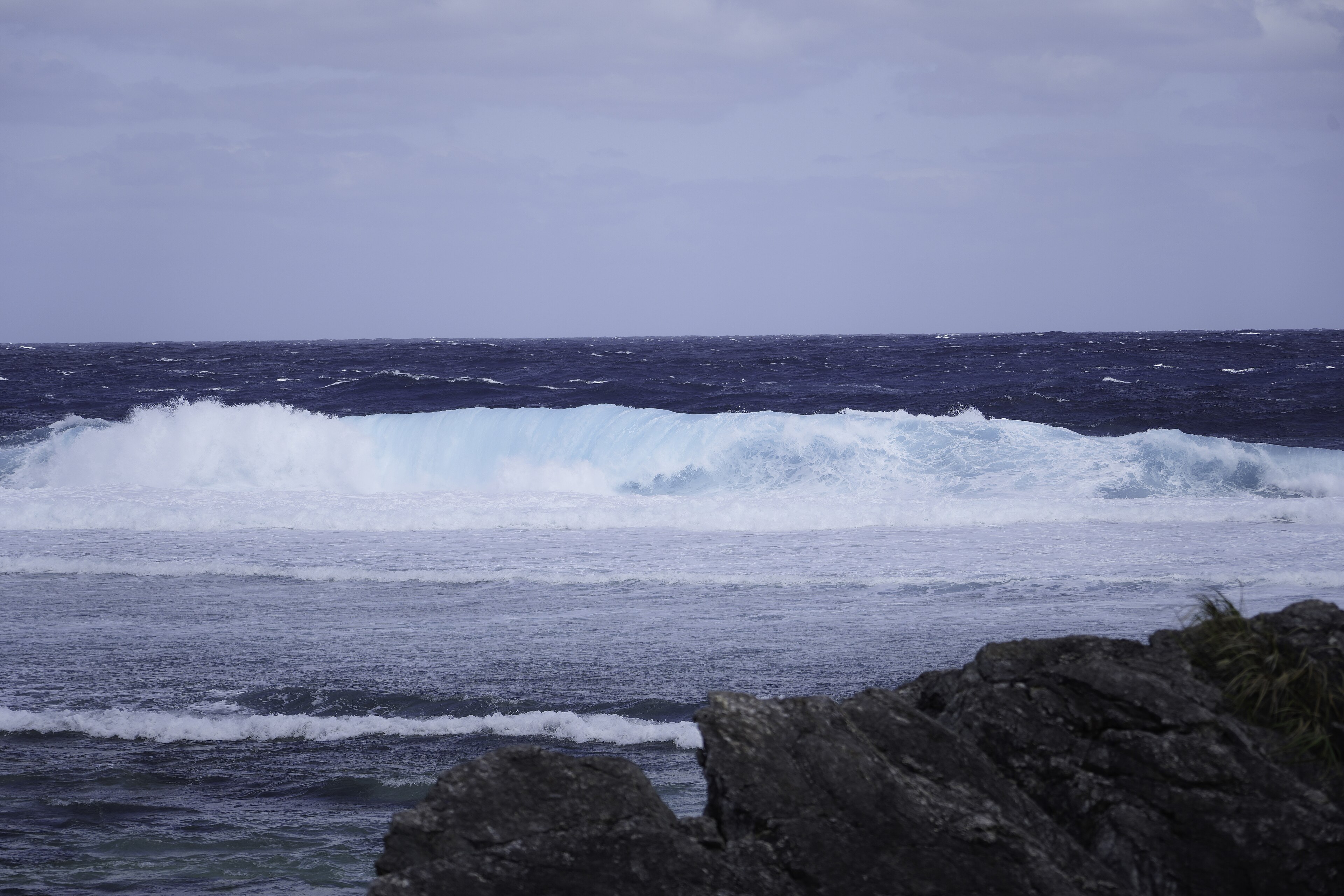
Ponyo (崖の上のポニョ, Gake no Ue no Ponyo, 2008), by Miyazaki, returned to entirely hand-drawn animation (170,000 drawings) to tell the story of a magical goldfish who wants to become human to stay near a little boy. Inspired by The Little Mermaid, all flat vivid colors and living waves, it is a film made for the very young, brimming with freshness.
Arrietty (借りぐらしのアリエッティ, Karigurashi no Arietti, 2010) handed , the youngest director in the studio's history, the adaptation of Mary Norton's novel The Borrowers. A family of tiny people lives beneath a house's floorboards and "borrows" from humans. Delicate and miniaturist, it was a major hit at the 2010 Japanese box office.
From Up on Poppy Hill (コクリコ坂から, Kokuriko-zaka Kara, 2011), Gorō Miyazaki's second film, on a screenplay by his father, redeemed the failure of Earthsea. This high-school romance set in 1963 Yokohama, on the eve of the Tōkyō Olympics, is steeped in nostalgia for a Japan in full reconstruction.
The masters' twilight: 2013-2014#
In 2013, the two founders delivered, almost simultaneously, what felt like their artistic testaments.
The Wind Rises (風立ちぬ, Kaze Tachinu, 2013), by Miyazaki, is his fictionalized biography of , the engineer who designed the Mitsubishi A6M "Zero" fighter. A twilight, ambiguous work (how do you celebrate the beauty of a machine destined for war?), the film was announced as Miyazaki's last (before he returned). It was nominated for an Oscar and drew over 9 million admissions in Japan.
The Tale of the Princess Kaguya (かぐや姫の物語, Kaguya-hime no Monogatari, 2013) is Takahata's swan song, his final film, released eight months after The Wind Rises. An adaptation of the oldest Japanese narrative, The Tale of the Bamboo Cutter (10th century), it recounts the life of a princess born from a bamboo stalk and fated to return to the Moon. Animated in a revolutionary style of charcoal line and watercolor, like a living painted scroll, it was nominated for an Oscar and remains, for many, the purest aesthetic summit of the studio. Takahata died in April 2018, at eighty-two.
When Marnie Was There (思い出のマーニー, Omoide no Mānī, 2014), by Yonebayashi, adapts an English novel by Joan G. Robinson. A lonely, asthmatic teenager, sent to relatives by the sea, befriends the mysterious Marnie. This delicate study of childhood depression and friendship was the last Ghibli film before a long production hiatus, and was itself Oscar-nominated.
The rebirth: 2020-2023#
After six years without a feature, the studio was reborn, first through a technical experiment, then through a thunderous return.
Earwig and the Witch (アーヤと魔女, Āya to Majo, 2020), by Gorō Miyazaki, is Ghibli's first fully 3D computer-animated film, adapted from another Diana Wynne Jones novel. The orphan Earwig, placed with a cantankerous witch, eventually manipulates her. First broadcast on Japanese television, the film was coolly received, its 3DCG look clashing with the studio's hand-drawn tradition: an experiment more than a classic.

Then came the master's return. The Boy and the Heron (君たちはどう生きるか, Kimitachi wa Dō Ikiru ka, literally "How Do You Live?", 2023), by Miyazaki, is a testament film of dizzying richness. Mahito, a boy grieving his mother's death in wartime Tōkyō, is lured by a talking heron into a fantastical world where the living and the dead mingle. Released in Japan with no trailer at all (a radical marketing gamble engineered by Suzuki), the film won the Academy Award for Best Animated Feature in 2024, making Miyazaki, at over eighty, the only director to win that statuette twice for hand-drawn films, as well as the Golden Globe.
Beyond the films: museums, parks and music#
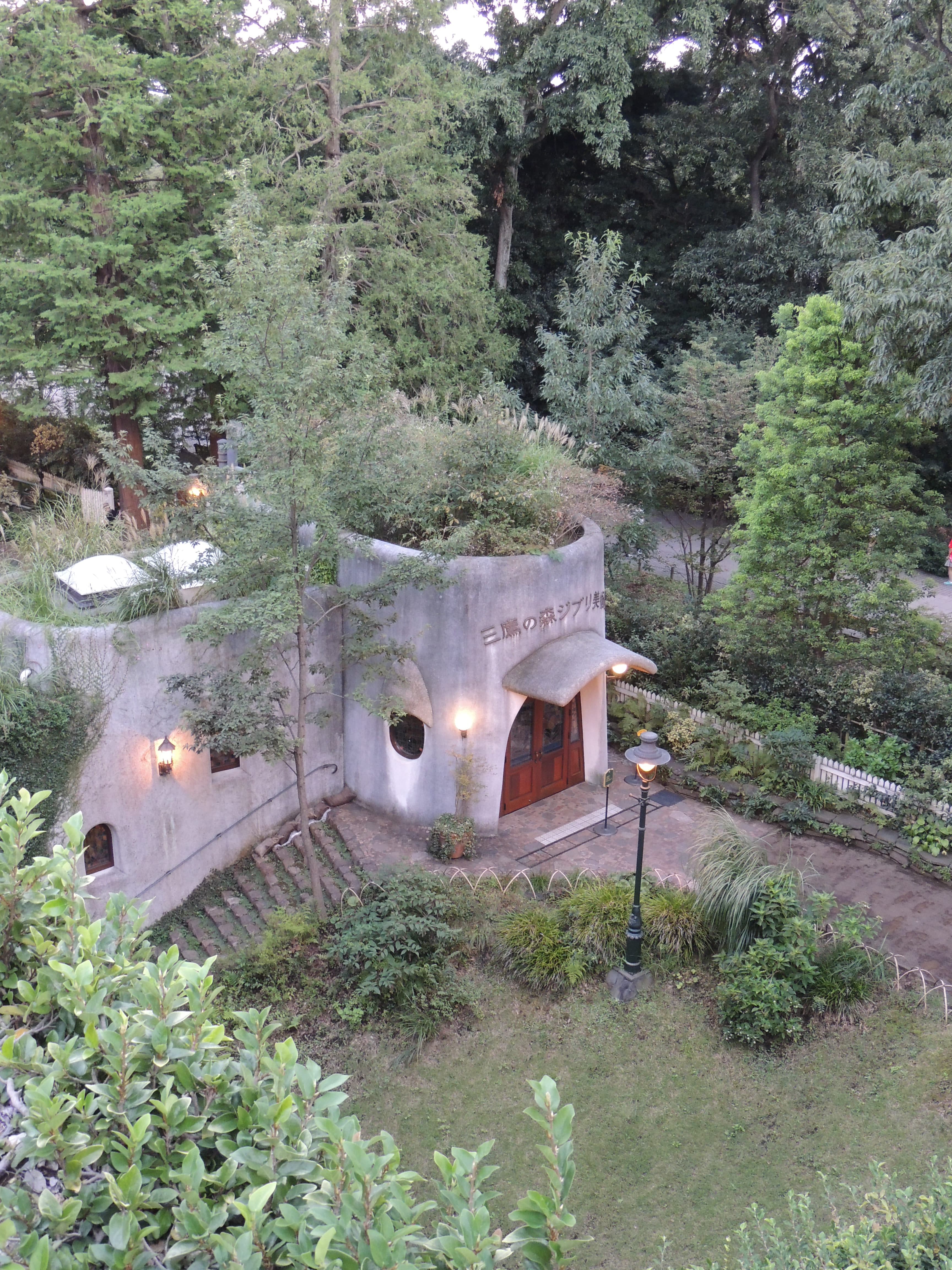
The Ghibli universe spills far beyond the cinema. The opened in 2001 in Mitaka, in Tōkyō's western suburbs, designed by Miyazaki himself as a joyful labyrinth with no fixed route, where visitors find a reconstructed studio, a giant Laputa robot on the roof and exclusive short films seen nowhere else. Tickets, capped and dated, sell out months in advance.
In 2022 came the , built in Aichi Prefecture on the site of the 2005 World Expo. With no rides or thrill attractions, a deliberate choice, the park invites visitors to wander through recreated film settings: the house from My Neighbor Totoro, the bathhouse from Spirited Away, the Valley of the Wind.
No portrait of the studio would be complete without , composer of nearly every Miyazaki score since Nausicaä. His piano themes, at once childlike and profoundly melancholy, have become inseparable from the Ghibli emotion; the "One Summer's Day" (Ano Natsu e) motif from Spirited Away is one of the most-played melodies in the contemporary Japanese repertoire.
A studio's obsessions#
Behind the diversity of the films runs a cluster of recurring themes that let you recognize a Ghibli film within a few shots. Nature and ecology first: the forest of Princess Mononoke, the sea of Ponyo, the pollution of Nausicaä all pose the same question of humanity's right relationship to the living world. Then flight, brooms, planes, gliders, winged creatures, an expression of a freedom that Miyazaki, the son of an aircraft-parts manufacturer, has pursued since childhood.
Comes pacifism, a deep conviction born in two men who lived through the defeat of 1945 as children: war, in Ghibli, is never glorious, only absurd or tragic. The heroines, above all: Nausicaä, Kiki, San, Chihiro, Sophie, Sheeta, active, courageous girls and women, never reduced to a love interest, at a time when world animation sorely lacked them. And everywhere, as an undercurrent, the end of childhood, that bittersweet passage embodied by each hero on the threshold of adulthood.
There remains the founding duality. Where Miyazaki sought flight, wonder and hope, Takahata dug into the ground of the real, memory and loss, from Grave of the Fireflies to Kaguya. Two opposing gazes, one shared refusal to take children for fools. It is from this dialogue that Ghibli draws its depth.
Where to begin? An order for newcomers#
For anyone discovering the studio, it is best not to start with the most demanding works. Begin with My Neighbor Totoro, the ideal gateway, gentle and luminous, then Kiki's Delivery Service for its energy and its universal theme of independence. Move on to Spirited Away, the studio's summit and the perfect film to measure its genius, before Howl's Moving Castle for its romantic magic.
Then comes the time for the powerful works: Princess Mononoke for its epic sweep, then Grave of the Fireflies, to be saved for a moment when you are ready to weep. Finish with the connoisseurs' jewels, The Tale of the Princess Kaguya for its graphic daring and The Boy and the Heron for its enigmatic testament. By then, the urge to see everything will have done the rest.
Forty years after that wind blew in from the Sahara, Studio Ghibli has not merely produced films: it has taught entire generations, everywhere on the planet, to look at a forest, a cloud or a train on the water as if for the first time.
Who founded Studio Ghibli, and when? The studio was founded on 15 June 1985 in Tōkyō by director Miyazaki Hayao, director Takahata Isao and producer Suzuki Toshio, following the success of Nausicaä of the Valley of the Wind (1984).
Where does the name "Ghibli" come from? It comes from the Italian Ghibli, the name of an Italian reconnaissance aircraft, itself borrowed from a Libyan Arabic word for a hot Saharan wind. Miyazaki, an aviation enthusiast, wanted to "blow a new wind" through animation.
How many Ghibli films have won an Oscar? Two: Spirited Away (Best Animated Feature, 2003) and The Boy and the Heron (2024), both directed by Miyazaki Hayao, the only filmmaker to win that category twice for hand-drawn films.
Which Ghibli film should I watch first? My Neighbor Totoro (1988) is the most accessible entry point, gentle, short and universal, followed by Kiki's Delivery Service and then Spirited Away, considered the studio's summit.
What is the difference between Miyazaki and Takahata? Miyazaki favored wonder, flight and hope (Totoro, Spirited Away); Takahata sought social realism, memory and loss (Grave of the Fireflies, The Tale of the Princess Kaguya). Their dialogue is the foundation of the studio's identity.
Photo credits: images from Wikimedia Commons, under a free license.
In this article
The cultural terms covered here, each with a short definition.
- Hayao Miyazaki
- Co-founder of Studio Ghibli and director of its most beloved films.
- Isao Takahata
- Co-founder of Studio Ghibli, director of Grave of the Fireflies.
- Joe Hisaishi
- Composer of the music for most of Hayao Miyazaki's Ghibli films.
- Spirited Away
- Miyazaki's Oscar-winning 2001 film about a girl trapped in a spirit world.
- Studio Ghibli
- Acclaimed Japanese animation studio behind Spirited Away and My Neighbor Totoro.
Magical Girl: From Sailor Moon to Madoka
A history of the mahō shōjo genre, from Mahōtsukai Sally in 1966 to Madoka Magica. Origins, the henshin codes, Sailor Moon, Cardcaptor Sakura and the great deconstruction.
Cover image: Madame Tatillonne · Madame Tatillonne · CC BY-SA 4.0