Touhou Project: The Cult Indie Bullet-Hell Saga
The story of Touhou Project, the cult danmaku series built single-handedly by ZUN. PC-98 origins, Gensōkyō, music, dōjin policy and the world's largest fan ecosystem.
La rédaction Kotoba
Studio éditorial
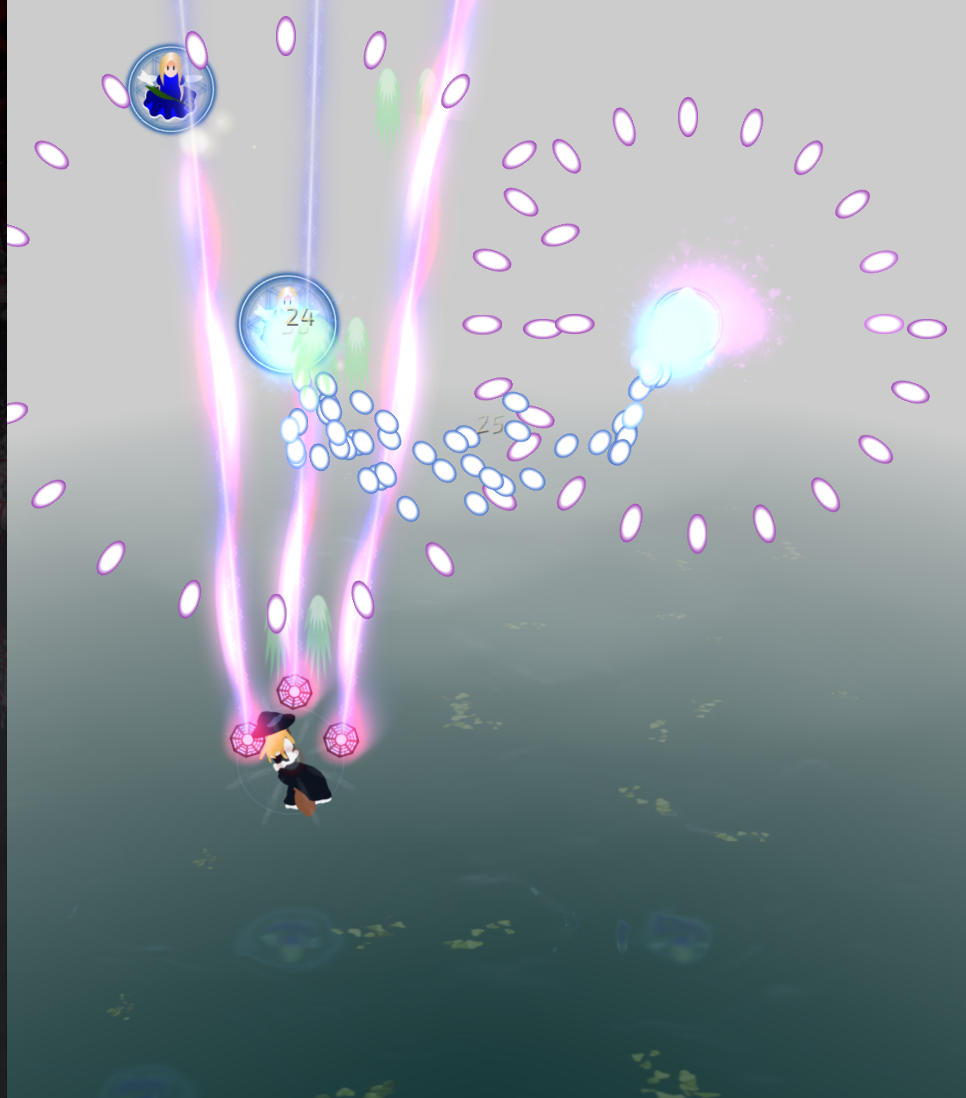
The screen floods with bullets. Hundreds of luminous orbs (red, blue, gold) bloom into giant geometric flowers, cross paths, trace hypnotic spirals that swallow almost the entire playfield. In the middle of this deluge, a tiny sprite in a red-and-white shrine outfit threads its way pixel by pixel, its collision point shrunk to a single grain of rice. A wash of synthetic music, melancholy and insistent, scores the deadly choreography. You are playing 東方Project (Tōhō Project), and everything on that screen (the code, the art, the music, the story) was made by one man, in his spare time, with a can of beer within reach.
Touhou Project is the unlikely story of a niche game that became a global phenomenon with no publisher, no marketing and no capital. A series of in an extreme strain, the , built by a single creator, which spawned one of the largest amateur creative ecosystems the world has ever seen. To understand Touhou is to understand how one author's generosity can light a cultural wildfire.
ZUN, the one-man band of Team Shanghai Alice#
Touhou Project is the work of a single creator: ZUN, real name 太田順也 (Ōta Junya), born on 18 March 1977 in Nagano Prefecture. Programmer, artist, writer and composer, he handles every part of each game in the main series alone. His "studio," 上海アリス幻樂団 (Shanghai Alice Gengakudan, "Team Shanghai Alice"), is merely a dōjin circle name behind which there is no one but him. The name blends the cosmopolitan exoticism of Shanghai, the character Alice and the idea of a "fantastical musical ensemble," a nod to the central role of music.
ZUN discovered programming and arcade games as a teenager, then studied at the Tokyo University of Technology. In the mid-1990s he worked at the publisher Taito (the studio that had once released Space Invaders) as a programmer, before leaving the company to focus on his personal projects. The contrast is striking: an employee of a historic shoot'em up giant chose to build his own games, alone, at the margins of the industry.
I make the games I want to make, the way I want to make them. If other people have fun with them, that's a bonus.
ZUN has repeated this philosophy in a thousand forms across his interviews. It explains the fierce coherence of the series: no committee, no market research, no compromise. A single sensibility, carried across nearly three decades.
From PC-98 origins to the Windows rebirth#
The series began in 1996 on the PC-98, an NEC desktop computer then ubiquitous in Japan but virtually unknown in the West. The first instalment, 東方靈異伝 (Tōhō Reiiden, "Highly Responsive to Prayers"), shipped in late 1996 and early 1997: a hybrid game, part shoot'em up, part brick-breaker, in which you bounce an energy orb with a paddle. It already introduced 博麗霊夢 (Hakurei Reimu), the Shinto shrine maiden who would become the face of the saga.
Four more games followed on PC-98 between 1997 and 1998: Story of Eastern Wonderland, Phantasmagoria of Dim.Dream, Lotus Land Story and Mystic Square. These five titles, retrospectively called the "PC-98 era," laid the foundations: the setting, several key characters, the aesthetic blending Japanese folklore with aerial combat. But the platform aged, and these games stayed confidential.
The decisive turn came on 11 August 2002, the day 東方紅魔郷 (Tōhō Kōmakyō, "Embodiment of Scarlet Devil") launched at the summer Comiket. The first Windows instalment, it is the game that defined modern Touhou: 640×480 resolution, the spell card system, a production rhythm aligned with dōjin conventions, and above all a graphical accessibility that opened the door to a far wider audience. Embodiment of Scarlet Devil, often shortened to EoSD by fans, is the true birth certificate of the phenomenon.
From there, ZUN delivered main instalments at a steady pace: Perfect Cherry Blossom (2003), Imperishable Night (2004), Mountain of Faith (2007), Subterranean Animism (2008) and many more, alongside fighting games, photography spin-offs and versus titles. Each release became an awaited event, almost always revealed at a Comiket.
Danmaku: the deadly beauty of the bullet curtain#
is a subgenre of the shoot'em up in which the screen fills with extremely dense bullet patterns that the player must cross by slipping through the gaps. The word, borrowed from military vocabulary ("barrage fire"), captures the feeling perfectly: a moving wall of bullets that must be read like a musical score. Touhou did not invent the genre (studios such as Cave, with DonPachi and Mushihimesama, have their own lineage), but it became its most famous ambassador.
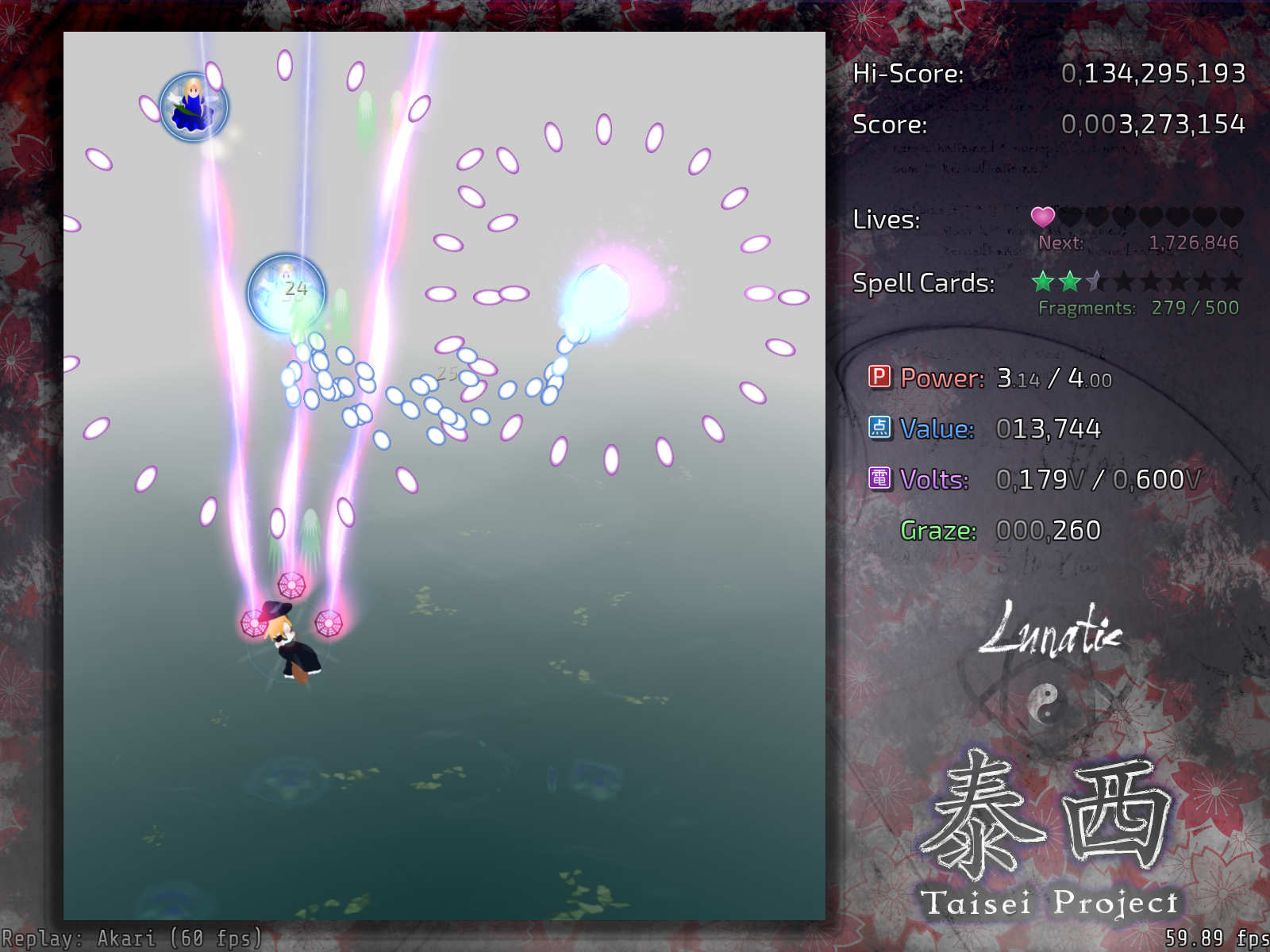
The key to the genre lies in a technical paradox: the character's hitbox (collision zone) is tiny, often reduced to a single point at the centre of the sprite. You can therefore graze projectiles without dying, which turns dodging into a dance of precision. Where a classic shoot'em up rewards rate of fire, danmaku rewards reading, anticipation and composure in the middle of visual chaos.
The spell card system#
Touhou's signature innovation is the スペルカード (superu kādo, "spell card"), introduced with Embodiment of Scarlet Devil in 2002. Each boss does not merely attack: it "declares" named spells, displayed on screen like cards, each tied to a unique, choreographed bullet pattern. These attacks carry poetic or theatrical names that turn them into genuine authored set pieces.
The system has two effects. First, it ritualises the confrontation: the fight becomes a codified duel, almost an exchange of lethal courtesies, rooted in the fiction of a Gensōkyō where conflicts are settled through "danmaku duels" rather than raw violence. Second, it makes every attack memorable and nameable, and therefore quotable, shareable and remixable by the community. The hardest spell cards have become legends among players.
Gensōkyō, sealed land of the yōkai#
The Touhou universe unfolds in 幻想郷 (Gensōkyō, "the land of illusions"), a remote region of Japan cut off from the outside world by a magical barrier raised at the end of the 19th century. Inside that border, everything modernity has banished from Japan, from the to spirits, forgotten deities and unexplained phenomena, continues to exist. Gensōkyō is less a setting than a refuge for the imagination, a land where ghosts still have a place.
The saga is populated by a vast cast, made up overwhelmingly of female characters. At its centre stands 博麗霊夢 (Hakurei Reimu), priestess of the Hakurei shrine, guardian of the barrier and recurring protagonist: laid-back, a little mercenary, but unbeatable. Beside her is 霧雨魔理沙 (Kirisame Marisa), a human witch brimming with energy, a compulsive thief of grimoires, recognisable by her big black hat and her overpowered shot. The two form the saga's emblematic duo.
Around them orbits a gallery of cult yōkai: the vampire レミリア・スカーレット (Remilia Scarlet) and her sister フランドール・スカーレット (Flandre Scarlet), the magician アリス・マーガトロイド (Alice Margatroid), and the wandering soul 西行寺幽々子 (Saigyōji Yuyuko). Each character has a history, powers and a personality detailed by ZUN, often expanded in the booklets that accompany the games and in the series' official manga and novels.
In Gensōkyō, you do not kill your opponents: you settle your differences with danmaku. Violence becomes a spectacle, almost a festival.
This narrative density (dozens of characters, a coherent cosmology, tangled relationships) provides the raw material of fan creation. Anyone can pick up a character and invent a life for them.
Music, a pillar of Touhou's identity#
All of Touhou's music is composed by ZUN himself, and it is arguably the most powerful pillar of the series' identity. The themes, catchy, often melancholy melodies over unmistakable synthesiser arrangements, are so distinctive that people speak of a genuine "ZUN style." Many fans discover Touhou through its soundtrack before ever touching the games.
ZUN, a self-taught musician who plays trumpet, writes his compositions in MIDI format and then reworks them. Every important character has their own leitmotiv, played during their battle, which anchors the music in the storytelling. Flandre Scarlet's theme, titled U.N. Owen Was Her?, has become one of the most famous tracks in all of Japanese video game culture, covered, remixed and reworked endlessly.
This centrality of music partly explains the explosion of the remix scene around the series. ZUN's themes are designed as strong, self-contained melodies: exactly the soil an arranger community needs to build thousands of reinterpretations.
Why Touhou became a cult: the dōjin spirit#
The fundamental reason for the Touhou phenomenon comes down to one word: 同人 (dōjin), the Japanese culture of works self-published by amateurs and semi-professionals. Touhou was, from the start, a dōjin product, sold hand to hand at conventions, with no commercial middleman. But ZUN went further: he adopted a deliberately permissive policy toward derivative works, broadly allowing fans to create, sell and distribute their own productions inspired by his universe.
In practice, ZUN published guidelines encouraging fan creation as long as it respects a few simple principles: do not pass it off as the official work, do not damage the image of the series, stay within reasonable bounds. This openness, exceedingly rare in a Japanese industry usually fierce about intellectual property, turned Touhou into a near-commons, a collective playground.
Comiket and Reitaisai#
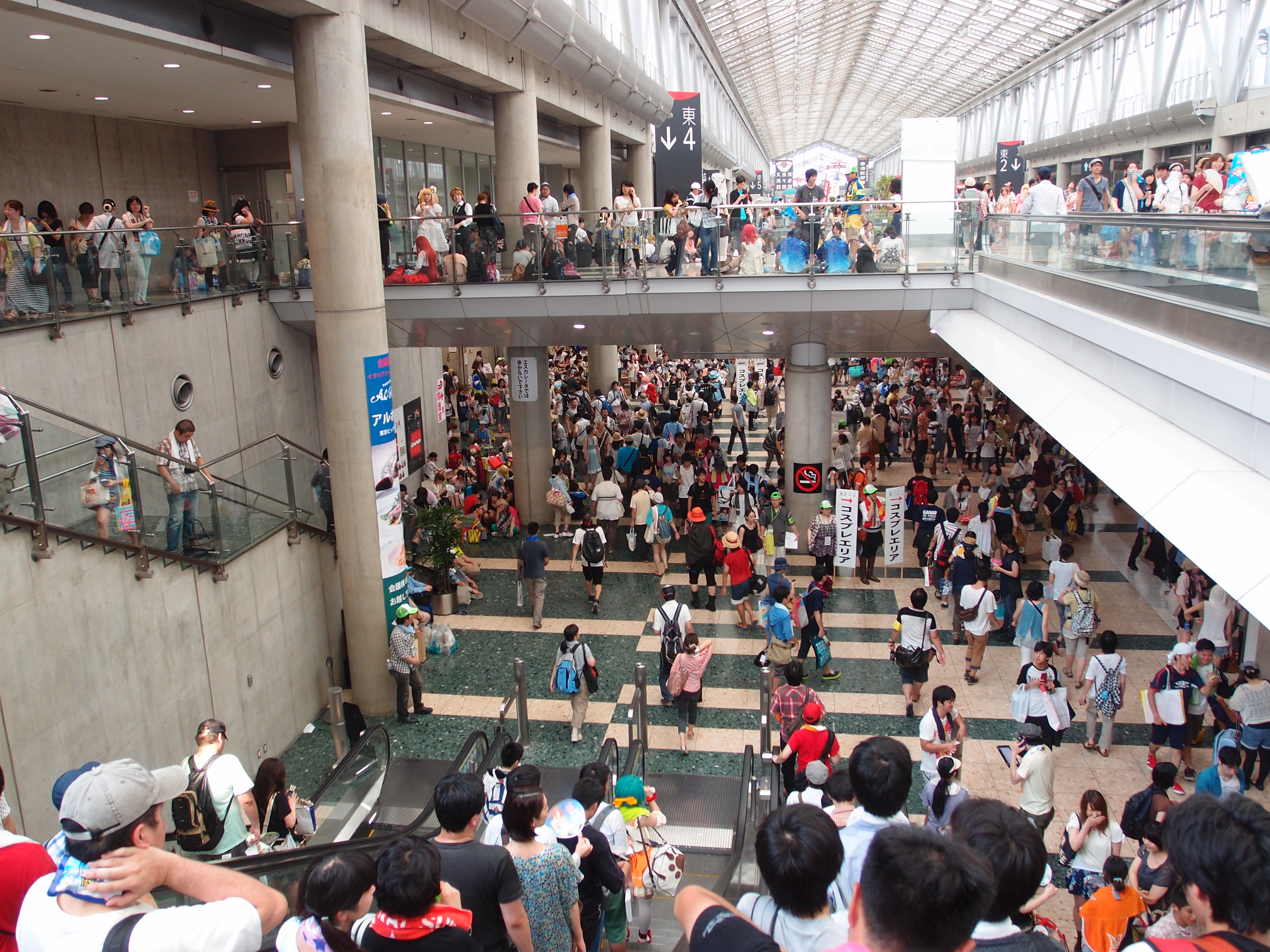
Touhou occupies a colossal place at , the world's largest dōjinshi convention, which gathers hundreds of thousands of people twice a year in Tokyo. For years, Touhou ranked among the most represented franchises there by number of circles, often surpassing series backed by major studios.
The community even created its own dedicated convention: 博麗神社例大祭 (Hakurei Jinja Reitaisai, "Hakurei Shrine Grand Festival"), launched in 2004. This event devoted entirely to Touhou brings together thousands of circles presenting music, manga, illustrations, games and merchandise. Few franchises, and far fewer independent ones with no publisher, can boast their own annual festival.
A fan ecosystem on a planetary scale#
The scale of fan creation around Touhou is without equal. The series earned a Guinness World Records recognition as the franchise with the largest number of fan-made video games, a distinction that sums up the spirit of the phenomenon: here, it is not only official works that multiply, but a decentralised, global, perpetual collective output.
This ecosystem takes every conceivable form. Musical arrangements by the thousands, ranging from metal to jazz to electro to folk, carried by circles that have become famous in their own right. Manga and illustrations in industrial quantities. Animations made entirely by fans. Derivative video games in every genre (platformer, RPG, fighting, puzzle), some of which, like the fighting fan-games developed in semi-official collaboration, have achieved near-canonical status.
Two fan creations have become global memes. The first is Bad Apple!!, originally a musical theme from the PC-98 era, transformed by fans into a silhouette-animation music video ("PV") of striking fluidity, which went viral and is now used as a technical demo on the unlikeliest hardware: calculators, oscilloscopes, all manner of old machines. The second is Flandre Scarlet's theme U.N. Owen Was Her?, which became a shared reference far beyond the circle of Touhou players.
The result is a magnificent paradox: a demanding shoot'em up, made by one man for a handful of enthusiasts, transformed into a global franchise sustained not by a company but by a crowd of anonymous creators. Touhou belongs to no publicly traded studio; it belongs, in a sense, to everyone who keeps it alive.
The legacy: proof through free creation#
Nearly thirty years after the first PC-98 game, Touhou Project keeps growing, carried both by ZUN's new instalments and by an unbroken tide of derivative works. ZUN still releases new games regularly, faithful to his rhythm and his solitary method, while the community produces thousands of creations every year.
What Touhou demonstrates goes beyond video games. It proves that a work offered generously to its community can generate a vitality that no marketing strategy could buy. Where the industry locks down its licences, ZUN opened his, and it is precisely that openness that turned Touhou into a colossus. Permissiveness did not dilute the work: it multiplied it.
Touhou Project is, at its core, a manifesto. The manifesto of an independent creator who refused the rules of the industry and, in doing so, invented a model where the author and the crowd create together, with no hierarchy, no single owner. Every remix, every fanzine, every amateur game extends one original gesture: make what you love, and let others play with it.
Frequently asked questions about Touhou Project#
Who created Touhou Project? Touhou is the work of a single man, ZUN (太田順也, Ōta Junya), born in 1977. Under the circle name Team Shanghai Alice, he has programmed, drawn, written and composed every game in the main series himself since 1996.
What is danmaku? Danmaku (弾幕, "bullet curtain") is a type of shoot'em up in which the screen fills with very dense bullet patterns the player crosses by slipping through them. The character's hitbox is tiny, which turns dodging into an exercise in extreme precision.
Why does Touhou have so many fans? Because of its dōjin nature and ZUN's very permissive policy on derivative works. Fans can freely create music, manga, animation and games, which spawned one of the largest amateur creative ecosystems in the world, recognised by Guinness World Records.
Do you need to play the games to enjoy Touhou? No. Many people discover the universe through the music, memes like Bad Apple!! or fan works, without ever finishing a single one of the series' notoriously difficult shoot'em ups.
In this article
The cultural terms covered here, each with a short definition.
- Bullet hell
- Shoot 'em up subgenre flooding the screen with bullets to dodge, the Western name for danmaku.
- Comiket
- Huge twice-yearly Tokyo fair where doujin creators sell self-published manga and games.
- Danmaku
- 'Bullet curtain': dense patterns of projectiles that define bullet-hell shooters.
- Dōjin
- Self-published, fan-made work; doujin games are sold outside the commercial industry.
- Gensōkyō
- Fictional secluded land where the Touhou Project's stories and characters live.
- Otaku
- Devoted fan of manga, anime or games, and the subculture built around that passion.
- Touhou Project
- Long-running doujin bullet-hell shooter series with a vast fan-made universe of music and art.
- ZUN
- Pen name of Jun'ya Ōta, sole creator of the Touhou Project games and their music.
City Pop: The Global Revival of a Forgotten Sound
The story of Japanese city pop, the bubble-era sound resurrected by YouTube and TikTok. From Takeuchi Mariya to Matsubara Miki, a worldwide revival decades later.
Cover image: しんぎんぐきゃっと · しんぎんぐきゃっと · CC BY-SA 4.0