Vending Machines in Japan: Why Are They Everywhere?
Four million machines, from city corners to mountain trails. The history, the reasons, and the wild variety of Japan's vending machines.
La rédaction Kotoba
Studio éditorial
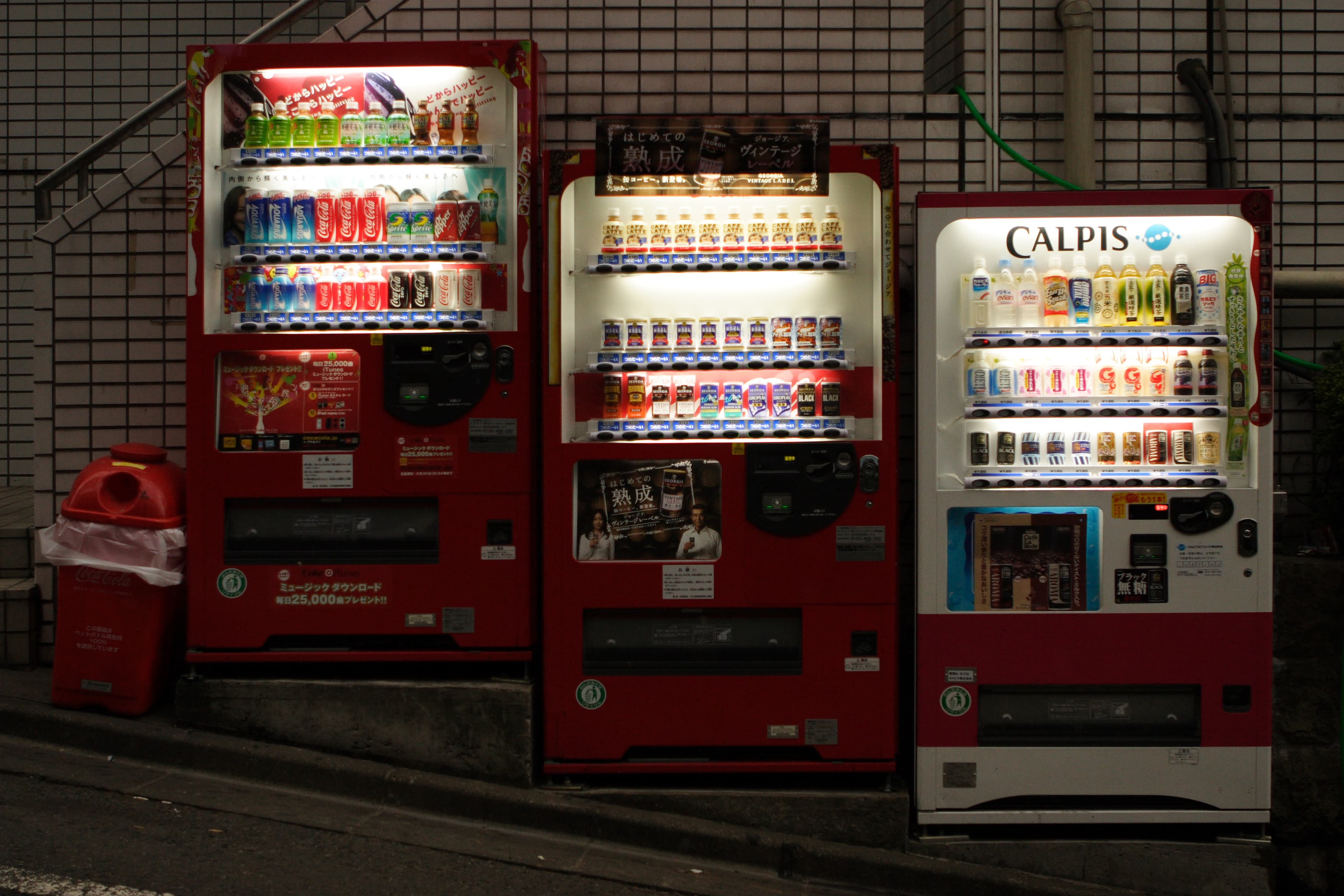
It is past midnight in a Kyōto back alley. Not a single shop open, not a soul on the street. And yet, at the foot of a concrete wall, a row of glowing boxes hums softly, casting a bluish light across the wet asphalt. You slot in a hundred-yen coin, a can drops with a dull thud, and it is scalding hot in your palm: a sweet milky coffee, to be drunk standing up, in the silence of the night. No one has opened the cash box. No one is watching. This machine, stuffed with coins, has spent the night outside, alone, and it will spend the next one out there too.
That scene plays out millions of times a day across the archipelago. The vending machine, , shortened to in everyday speech, is no gadget in Japan: it is infrastructure, a piece of street furniture as natural as a lamppost. To understand why they are everywhere is to read an entire society between the lines: its density, its relationship with cash, its collective trust, and its obsession with frictionless service.
Four million machines: the scale of it#
Japan had roughly four million vending machines in operation at the end of 2023, according to the annual figures of the . Against a population of about 125 million, that works out to roughly one machine for every thirty people, one of the highest densities on earth, frequently cited as the highest among large countries.
The number has actually fallen from its peak: there were more than 5.5 million units in the early 2000s. The decline reflects manufacturer consolidation, the end of open-access cigarette machines, and competition from , the convenience stores open around the clock. Yet the density remains staggering, and the sector's annual turnover runs into the trillions of yen.
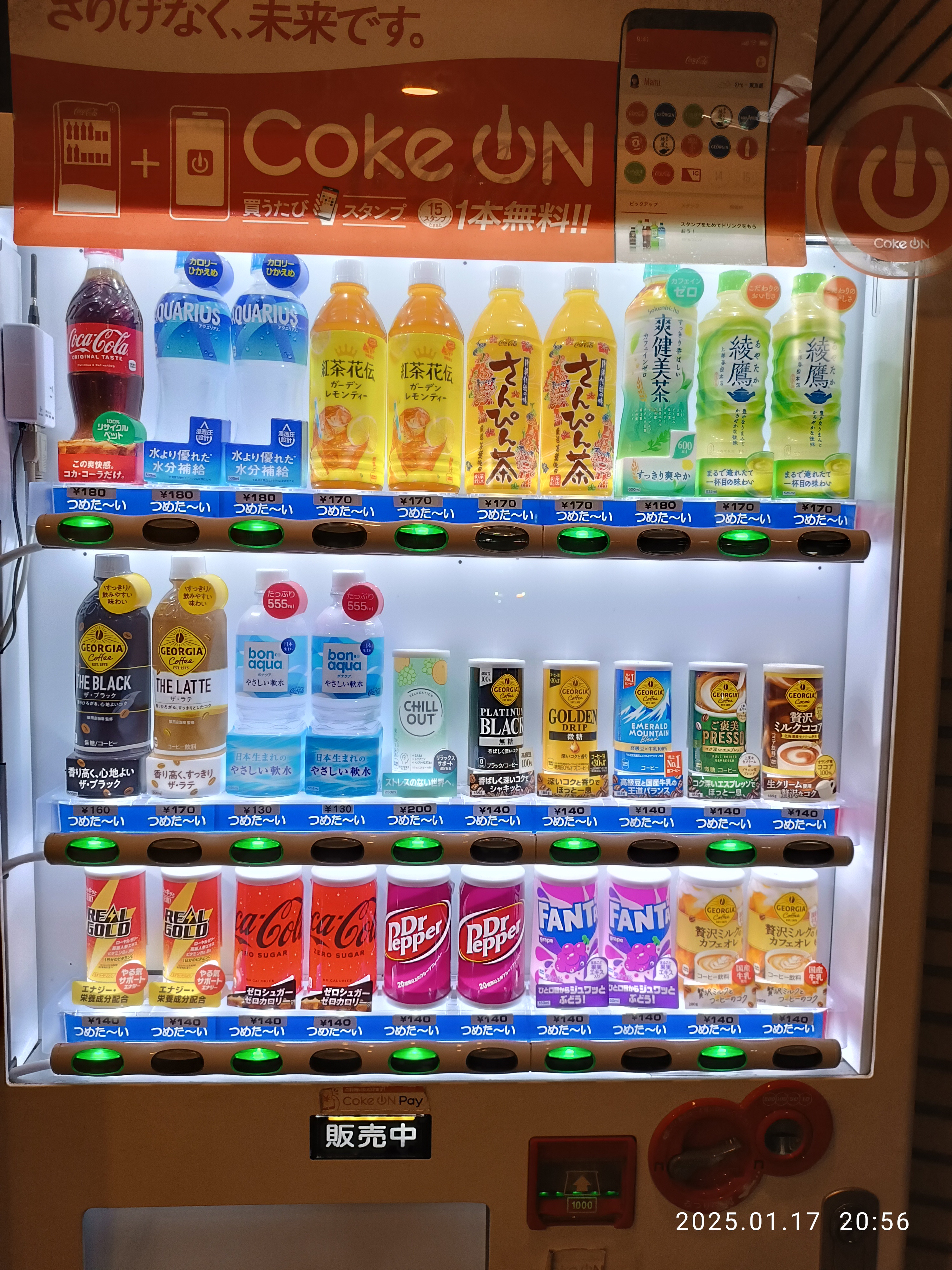
What stuns is not the number alone, but the geographic ubiquity. You find jihanki on the corners of Tōkyō, of course, but also at the top of a hiking trail, beside a deserted rice paddy, in front of a rural Shintō shrine, on a forgotten station platform, at the foot of Mount Fuji. Where elsewhere there would be nothing, Japan plants a glowing box that sells hot tea.
Where the machines came from: a century of history#
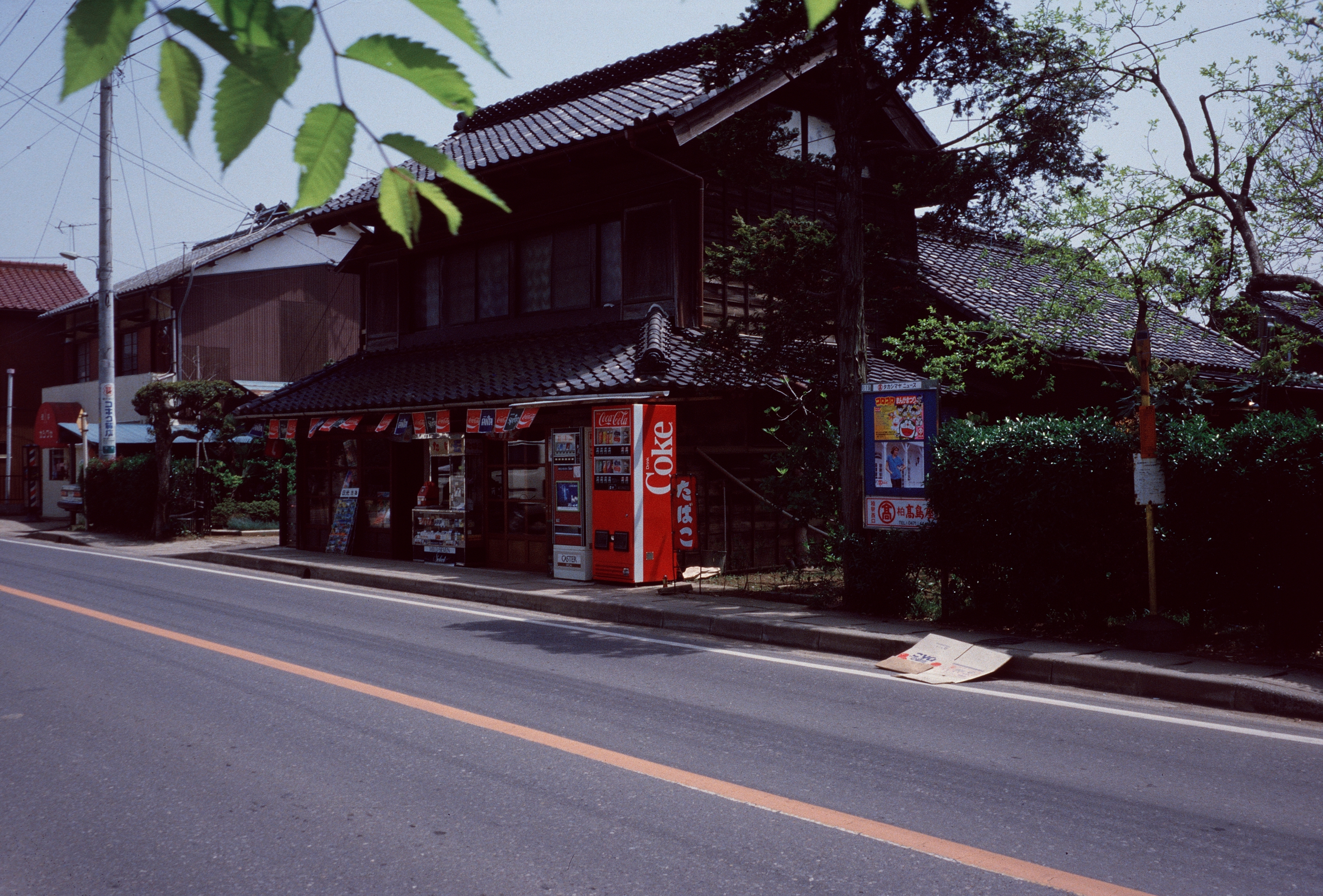
The first patented vending machine in Japan dates to 1888: designed a tobacco dispenser, then in 1904 a stamp-and-postcard machine still preserved as a historical artifact. But the object stayed marginal for decades, a mere curiosity in a country still largely agricultural.
The turning point was the postwar era, and above all the 1960s. In 1962, Coca-Cola introduced its bottle machines to Japan, igniting the craze for drink dispensers. The real cultural shift came with two Japanese innovations. First, in 1967, the monetary reform that popularized the cupronickel hundred-yen coin: a reliable, durable currency, perfect for machines. Then, the invention of the heated can.
It was that, in 1973, launched the first hot canned coffee, followed by machines able to hold drinks at temperature. Then came the masterstroke: the hot & cold machine, capable of serving, in the same column, scalding cans in winter and ice-cold ones in summer. On the display, two labels dictate the choice by season: あったかい (attakai, "hot," often in red) and つめたい (tsumetai, "cold," in blue). Hot canned coffee (kan kōhī, 缶コーヒー) became one of the pillars of the trade.
Behind these machines rages a commercial war between beverage giants. Coca-Cola Japan, , , , and Pokka Sapporo carve up the sidewalks. DyDo, in particular, built its entire model on vending machines rather than supermarket shelves. Each places its own machines, negotiates the spot with the landowner, and pays a commission. The dispenser is not neutral: it is a branded point of sale, planted on the rival's turf.
Why Japan, and nowhere else: the six-variable equation#
Japan's density owes nothing to a single factor, but to a rare convergence of several conditions. The first, and the most cited, is public safety.
Low crime, untouched machines#
A machine crammed with coins and bills, outside, unguarded, all night long: anywhere else, the idea would border on recklessness. In Japan, one of the lowest crime rates among developed nations makes the operation viable. Vandalism and looting of dispensers do happen, but remain statistically marginal. This trust is not naivety: it rests on social cohesion, group pressure, and a neighborhood police presence (the famous kōban, 交番, local police boxes) that deters opportunism.
A vending machine left out all night, full of money, is one of the most honest barometers of a society's trust. In Japan, the needle points high.
Density, land value, and micro-retail#
Japan is one of the most densely populated countries, packed onto the narrow coastal plains between sea and mountains. That density means a constant human flow past every meter of sidewalk, exactly what a machine lives on. And the price of land, especially in cities, is exorbitant: opening a staffed shop is costly, whereas a dispenser occupies less than a square meter, never sleeps, and draws no wage. It is automated micro-retail with optimized margins.
Cash, labor, and aging#
Add three structural factors. Japan remains a cash-loving society: despite the recent rise of contactless payment, coins and bills hold a place they have lost elsewhere, and the hundred-yen coin remains the reigning unit of the dispenser. The country also faces a chronic labor shortage, worsened by an unmatched demographic aging: the machine replaces the employee who can no longer be found. Finally, a reliable electrical grid and a culture comfortable with frictionless automation (there is no one to talk to, and that suits everyone fine) complete the picture and make the jihanki feel natural.
The wild variety: far beyond drinks#
Beverages make up the overwhelming bulk of the fleet: coffee, green tea (o-cha, お茶), oolong tea, juices, sodas, water, energy drinks, even warm canned broth. But Japan's singularity lies elsewhere: in the depth of the catalogue, the dispenser sells just about anything that can drop into a tray.
From hot meals to fresh eggs#
Some machines serve hot meals: bowls of to reconstitute, canned (the winter hotpot simmered in dashi), curry, soups. In the countryside, farmers install dispensers of fresh eggs, rice, seasonal vegetables, or fruit, fully self-service, the customer slipping coins into an old-fashioned wooden honesty box or a modern refrigerated machine.
Umbrellas, batteries, ice cream, and the rest#
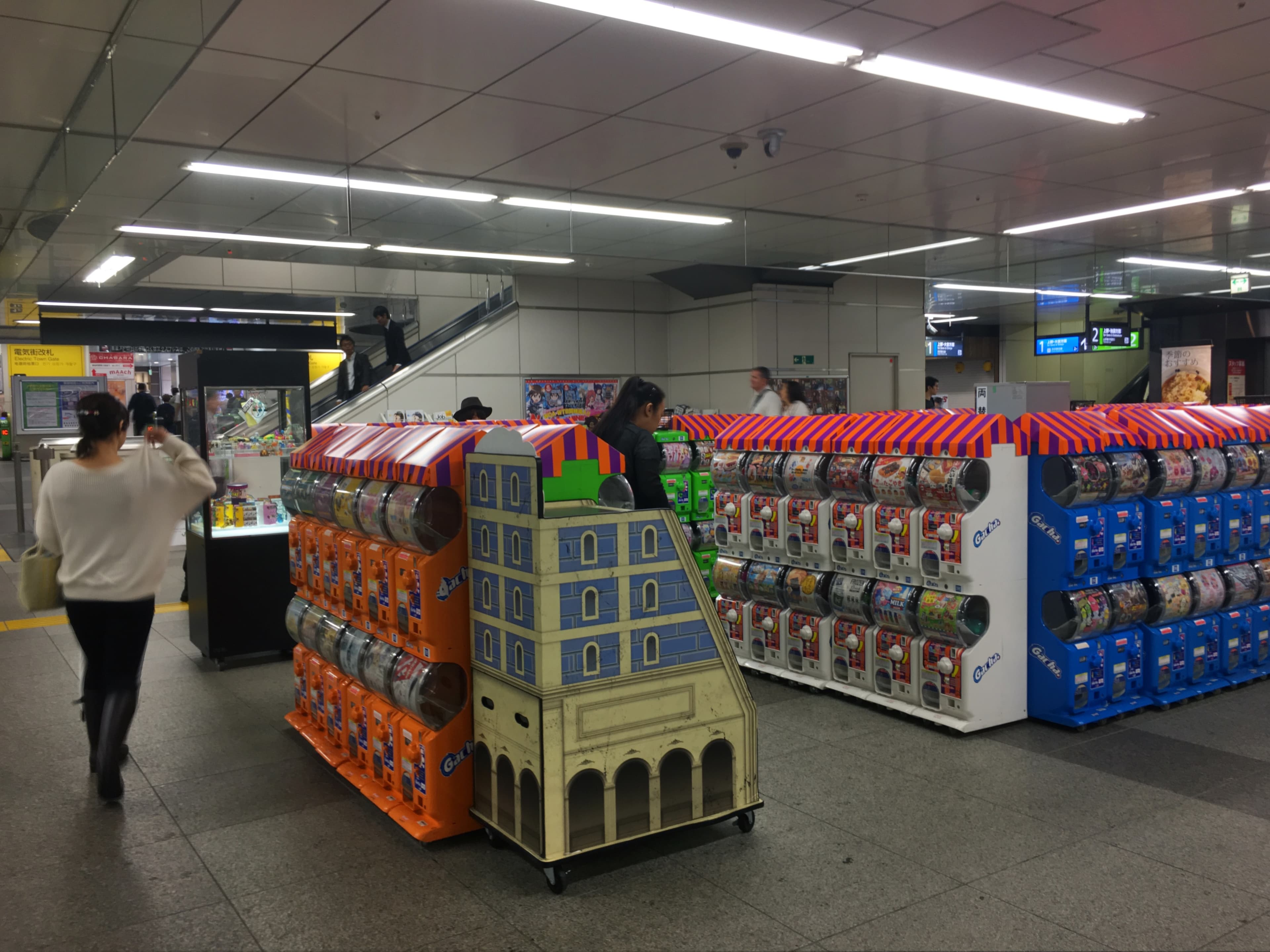
The rest of the catalogue verges on the inexhaustible: on rainy days, batteries, toys, ice cream, fresh flowers, neckties, premium dashi broth, sake, beer, and the inevitable galaxy of novelty machines that delight tourists: bananas, edible insects, toilet paper, fortune slips. This eccentricity is not the heart of the market, but it is its most-shared folklore online.
The frozen-food renaissance: reitō jihanki#
The most recent phenomenon is the boom in , the frozen-food dispensers. During the Covid-19 pandemic, from 2020, restaurants starved of customers began selling their dishes (high-end ramen, gyōza, concentrated dashi, wagyū beef, desserts) frozen, in large-locker machines, often the ど冷えもん (Do-Hie-Mon, launched by Sanden in 2021) brand. What began as a crisis workaround became a lasting sales channel, extending the life of neighborhood establishments.
The smart machine: payment, energy, disaster relief#
The Japanese dispenser did not stay the coin box of 1973. Contactless payment took hold: rechargeable IC cards, foremost among them , the transit card from JR East launched in 2001, let you buy with a single tap, as do Pasmo and QR-code or smartphone payments. The machine keeps the hundred-yen coin, but increasingly accepts tap-and-go.
On the energy front, manufacturers answered the criticism over consumption. Recent models shut off the compressor during peak grid hours, use LED lighting, and some "learn" foot-traffic cycles to heat or cool only as needed, a necessity in a country where drink machines were long singled out for their electrical appetite.
The most remarkable is the dispenser's civic role. Since the earthquake and tsunami of 2011, many machines are fitted with an : in a disaster, a municipal operator can unlock them to hand out their drinks free to those affected. Others build in a digital signage panel broadcasting alerts and instructions, a loudspeaker, even a defibrillator (AED). The box that sells coffee becomes, on the day of catastrophe, a public relief point.
On the day the earth shakes, the most ordinary machine in the neighborhood stops selling and starts giving. Few objects sum up the Japanese social contract so well.
What the machine says about Japan#
The jihanki is a mirror. Its presence on every street corner tells of a society that has made frictionless convenience a value: no queue, no exchange, no negotiation, just a coin and a hot can at any hour. It also tells of a rare trust: that sidewalk where money sleeps outdoors is a collective act of faith, renewed every night.
For the traveler, these machines become an accidental through-line: you photograph them at the foot of Fuji, marvel at hot coffee in winter, collect the oddities. They belong to Japan's mental landscape as surely as Shibuya's neon signs or the ticket machines outside the ramen-ya. But to the Japanese, they are precisely the opposite of spectacular: a fixture, a reflex, a background hum.
That may be their deepest lesson. The most accomplished technology is not the kind that dazzles, but the kind that dissolves into daily life until you no longer see it. The Japanese vending machine has reached that stage: it is noticed only by its absence. The next time a scalding can drops into your palm in the hollow of a silent night, remember that you are holding a century of industrial history, an impeccable piece of land-value arithmetic, and, above all, the quiet proof that a society can trust itself.
Frequently asked questions#
Why are there so many vending machines in Japan? The density stems from a convergence of very low crime (machines survive outdoors unguarded), high population density, expensive land that makes automated micro-retail profitable, a society attached to cash, a labor shortage, and a culture comfortable with automation.
How many machines are there in Japan? About four million at the end of 2023, according to the Japan Vending System Manufacturers Association, roughly one for every thirty people, one of the highest densities on earth. The fleet has shrunk from a peak of more than 5.5 million in the 2000s.
What can you buy besides drinks? Hot meals (ramen, canned oden), fresh farm eggs and vegetables, umbrellas, batteries, ice cream, flowers, dashi, and since the pandemic a boom of frozen-food dispensers (reitō jihanki) selling dishes from real restaurants.
What do あったかい and つめたい mean on the machines? Attakai (あったかい) means "hot" and tsumetai (つめたい) means "cold." Hot & cold machines serve scalding cans in winter and ice-cold ones in summer from the same column, distinguished on the display by these labels, often in red and blue.
Photo credits: images from Wikimedia Commons, under a free license.
In this article
The cultural terms covered here, each with a short definition.
- Jidōhanbaiki
- Japanese for 'vending machine,' the ubiquitous automats found on nearly every street.
- Jihanki
- Everyday short form of jidōhanbaiki, Japan's vending machines.
Maid Café: Origins and Codes of the Japanese Meido Kafe
History and rituals of the Japanese maid café (メイドカフェ): birth in Akihabara, moe culture, the okaerinasaimase welcome, cheki photos, etiquette and variants.
Cover image: mrhayata · mrhayata · CC BY-SA 2.0