Juku: The Cram Schools That Rule Japan's Nights
Inside Japan's juku (塾), the private after-school cram schools. Definition, types, history from the terakoya, major chains, costs and the debate over academic pressure.
La rédaction Kotoba
Studio éditorial
It is past eight in the evening on a Tōkyō street, and the building is lit from the ground floor to the seventh. Behind the glass, rows of dark-haired heads bend over notebooks, a teacher raps a marker against a whiteboard, pens race across pages. Outside on the pavement, a mother waits, umbrella folded, a bag of pastries in hand for the walk home. At the nearby subway station, uniformed middle-schoolers wolf down an onigiri before climbing back up, satchels on their backs, toward a second class. It is eight in the evening, and for millions of Japanese children, the real school day is only just beginning.
These illuminated buildings have a name: . They are the private after-school institutions, the parallel system that doubles up on public school and is sometimes called, not without irony, "the second school day." To understand how Japan manufactures its graduates, its engineers and its civil servants, you have to push open these particular doors, the ones that open just as the others are closing.
What exactly is a juku?#
A is a private educational establishment that students attend outside ordinary school hours, in the evenings and at weekends. The word, which once simply meant a private school, today covers a vast and stratified ecosystem. You go there to prepare for exams, to catch up, or to get ahead, depending on the type of school and a family's ambitions.
The basic distinction sets two great families apart. On one side, the , the academic cram schools focused on school subjects: mathematics, Japanese, English, science, social studies. On the other, the , lessons in non-academic "accomplishments": the abacus (soroban, 算盤), calligraphy (shodō, 書道), piano, swimming, martial arts. A single child often moves through both worlds in the same week: soroban on Monday, the maths juku on Wednesday and Friday.
Within the gakushū juku, two sub-types coexist and do not serve the same students. Remedial juku, or , address pupils who struggle to keep up with the curriculum and want to shore up the basics. Advanced juku, or , aim instead for performance: they drill the strongest students to pass the entrance exams of prestigious schools. Between the two lies a whole range of hybrid schools, adjusting their sales pitch to what parents demand.
One category stands apart, aimed at the top of the pyramid: the , prep schools specialized in university entrance exams. You will find final-year high-schoolers there, but above all a singular population: the , literally "wave men," a term once reserved for masterless samurai, now applied to candidates who failed the entrance exam and spend a full year outside the school system retaking it to try again.
From Edo's terakoya to a nighttime industry#
The juku's distant ancestor is the , the temple schools of the Edo period (1603-1868). The word means "temple children," because these elementary schools often began within Buddhist temple grounds before becoming secular. Run by monks, downwardly mobile samurai, doctors or simple scholars, they taught commoners' children, including girls and the sons of merchants and farmers, reading, writing and abacus arithmetic, summed up in the phrase .
Their spread partly explains Japan's remarkably high literacy rate on the eve of the Meiji era. Estimates vary and remain debated among historians, but according to the work of scholar Ronald Dore on education in Edo, tens of thousands of terakoya existed across the archipelago by the mid-nineteenth century. These private, fee-charging, competing schools already established the principle of supplementary education paid for by families and distinct from any state system.
The Meiji era (1868-1912) nonetheless swept this landscape away. In 1872, the new government promulgated the , the founding ordinance that established a national, centralized and compulsory school system inspired by the French and Prussian models. The terakoya were absorbed or abolished. The state took charge of instruction, and the private evening school seemed, for a time, condemned to oblivion.
Japan nationalized its schools in a single generation. But it never managed to nationalize parental anxiety, and it is in that gap that the juku returned.
That return came after the war. The 1947 education reform, imposed under the American occupation, established the so-called "6-3-3-4" system (six years of primary, three of middle school, three of high school, four of university). But by democratizing access to high school and university, it unleashed fierce competition for places at the best institutions. This is the famous , the "examination war." The entrance exam, the , became the bottleneck of an entire society.
The explosion of the 1970s-80s#
It was between the 1970s and 1980s that the juku went from a marginal phenomenon to a mass institution. Japan's dazzling postwar economic growth had swelled an urban middle class ready to invest heavily in its children's education, in which it saw, rightly, the surest ladder of social mobility. A degree from a good university, a hire at a major company, a job for life: the chain was clear, and it all began with the right exam.
The public school system, meanwhile, remained egalitarian by design: a uniform curriculum, a refusal of early selection, a pedagogy pitched at the class average. Yet the entrance exams demanded a level and techniques that ordinary school did not teach. This gap between what schools teach and what exams demand is the matrix of the juku: it thrives in exactly that space.
The Ministry of Education, then the , today MEXT, watched this rise with suspicion. As early as the 1980s, official surveys voiced alarm at the spread of juku attendance, seen as a burden on families and a driver of inequality. The figures nonetheless kept climbing, carried by a demand that no ministerial circular could stem.
The scale of the phenomenon today#
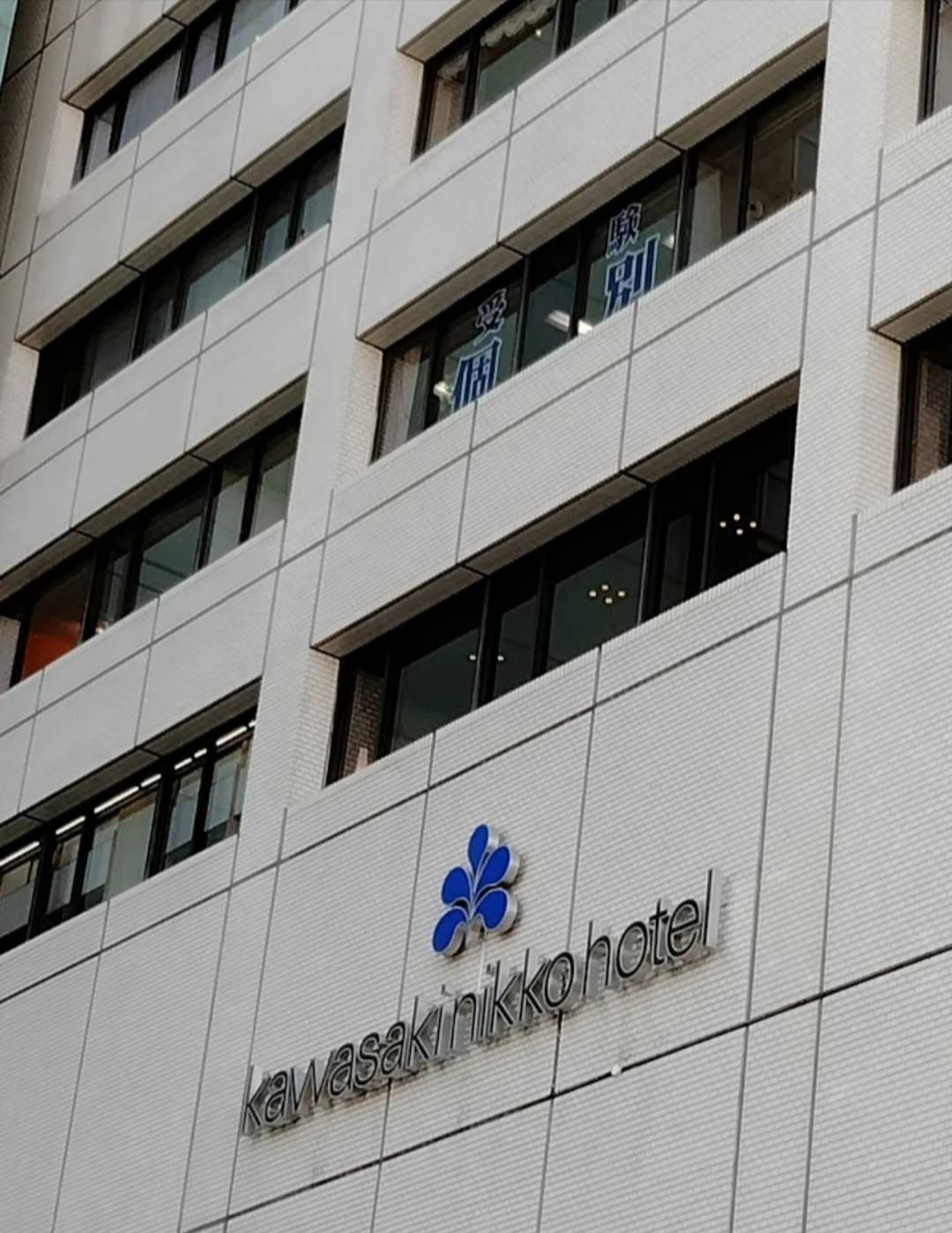
The juku is today an industry worth several trillion yen, the equivalent of tens of billions of dollars. According to MEXT's periodic surveys of family education spending (Kodomo no gakushūhi chōsa, 子供の学習費調査), a majority of middle-schoolers attend a juku, and the proportion rises further among third-year middle-school students as the high-school entrance exam approaches. Attendance is massive, almost normative: not sending your child to a juku becomes, in certain urban neighborhoods, the worrying exception.
The phenomenon reaches ever earlier into childhood. Children begin juku in elementary school, sometimes in the early grades, to prepare for the entrance exams of prestigious private secondary schools, an elite track that bypasses the local public middle school. This is called , with the honorific prefix o-, to denote these exams taken by the youngest, in which parents are assessed as much as children: a family interview, behavior, sometimes down to the choice of clothing on the day of the test.
At the other end of schooling, the yobikō welcomes university candidates, and the rōnin in particular. Failing the entrance exam of one's target university is not rare; many young people then choose to devote a full year, full-time, in a yobikō, to preparing a fresh attempt. The terms ichirō (一浪) and nirō (二浪) denote one or two years of retaking. This "wave year" has become an acknowledged, almost routine rite of passage for those aiming at the most selective faculties: medicine, law, the former imperial universities such as .
The big names of the night#
A handful of brands structure this immense market, from national chains to methods exported around the world.
Kumon, the method that went global#
is the best-known brand outside Japan. Born from the method devised in the 1950s by , an Ōsaka mathematics teacher who designed graded worksheets for his own son, the brand rests on a principle of self-direction: the pupil advances at their own pace, worksheet after worksheet, repeating until mastery. The network has spread across dozens of countries and counts millions of students worldwide, making it the most visible export of the Japanese juku model.
SAPIX, Nichinō and the race for elite middle schools#
For preparation toward the entrance exams of the most selective private middle schools, two names dominate. has established itself as the reference shingaku juku of the Tōkyō region, renowned for the difficulty of its content and its students' success rate at the best schools. is the other national giant of middle-school exam prep, with a dense web of urban branches.
Yobikō: Kawaijuku, Sundai, Yoyogi Seminar#
At the summit, university preparation is dominated by a historic trio of yobikō, long nicknamed the "Big Three." , and the have trained generations of rōnin and high-schoolers aiming at elite universities. Halfway between a private school and an exam factory, these institutions publish their own textbooks, run national mock exams whose rankings carry authority, and employ star teachers whose reputations travel by word of mouth.
The second school day#
The daily reality of a juku student is, first of all, a day that never ends. The child leaves public school in the late afternoon, gulps down a quick meal, then heads straight into two or three hours of class at the juku, often until nine or ten at night. As evening falls, the streets of shopping districts fill with uniformed schoolchildren heading home alone on the subway, satchels weighed down with textbooks, at an hour when, elsewhere, children are already asleep.
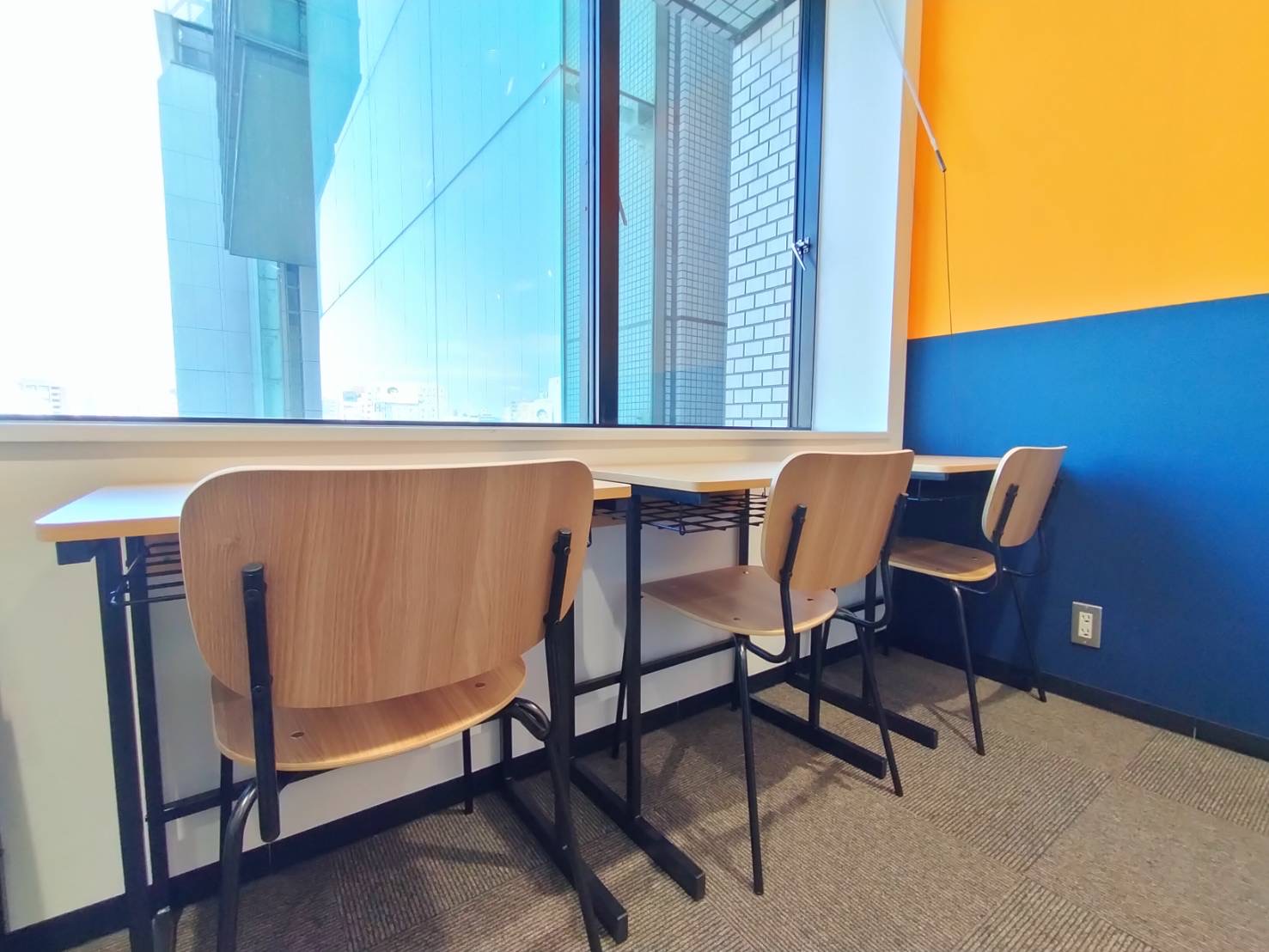
This intensity comes at a cost, in the literal sense. The fees of an advanced juku, compounded over several years and multiplied as exams approach, represent a considerable burden on families. The spending stacks up monthly tuition, intensive holiday courses (the kōshūkai, 講習会, summer or winter sessions), mock exams and the textbooks specific to each brand. For a household aiming at the best schools, the annual bill can exceed that of many universities.
You are not just paying for lessons. You are paying for insurance against the fear of falling behind, and not every family can buy that insurance at the same price.
Hence a question that haunts public debate: inequality. The juku converts parents' purchasing power into an academic advantage for their children. Sociologists of education see in it a powerful engine of social reproduction: over the free, theoretically egalitarian public school is layered a private market that restores, in the dark of evening, the very hierarchies that state schooling claimed to abolish. Affluent families buy their children access to the best exams; the others make do, or give up.
Why juku exist: a cultural reading#
If the juku holds such a place, it is because it fills a function that Japanese public schooling, by construction, does not. The structural cause is the gap already noted: an egalitarian, uniform public education set against selective, technical entrance exams. As long as access to prestigious institutions runs through an exam that ordinary school does not specifically prepare for, a market will exist to fill the void.
To this structural cause is added a deeper cultural dimension: effort. Japanese society prizes , that dogged perseverance which makes endurance a moral virtue as much as a tool of success. Working late, submitting to repetition, bearing pressure: the juku stages and institutionalizes this ideal. The child who goes there is not merely revising; they are learning a certain way of being in the world.
The parallel with South Korea is unavoidable, where the play a structurally identical role, with intensity that is sometimes greater still: the pressure pushed the government to impose a curfew forcing hagwon to close at ten at night in certain regions. The two societies share the same obsession with the exam, inherited from the same tradition of meritocratic testing reaching back, further still, to China's imperial civil-service examinations. The Japanese juku and the Korean hagwon are two dialects of a single East Asian grammar of success.
Pressure, equity and attempts at reform#
The debate over juku turns on two questions: the pressure placed on children and the fairness of the system. Critics point to a shortened childhood, sacrificed sleep, exam stress imposed on pupils of ten or eleven, and the risk that success becomes a matter of parental wallet. Defenders reply that the juku, by personalizing instruction, fills the gaps of a mass school and gives motivated students a framework the public system does not provide.
The authorities have wavered between suspicion and resignation. The major education reform known as , rolled out from the 2000s by MEXT, aimed to lighten curricula and reduce pressure: trimmed content, abolition of Saturday classes. The paradoxical effect: by lightening public school, the reform widened the gap with the exams still further and reinforced reliance on juku, families seeking elsewhere what school no longer offered. The government reversed course around the early 2010s, restoring more demanding content.
Other avenues have been explored, from blurring selection to regulating the chains' advertising practices, without ever durably denting demand. As long as the value of a diploma depends on the prestige of the institution that grants it, and that prestige is won by examination, the lights will go on shining behind the windows of the juku.
There is, in these illuminated buildings, something more than an industry or a social anomaly. There is the image of a society that believes, almost religiously, that effort transforms a destiny, and that has built, alongside its official school, a second architecture of knowledge to prove it. The juku tells the story of contemporary Japan's ambitions, anxieties and inequalities better than any official statement. And when, at ten at night, the last neon goes dark and a child climbs back toward the subway, satchel on their back, it is a whole country that, in them, is still betting on tomorrow.
Frequently asked questions#
What exactly is a juku? A juku (塾) is a private school that Japanese students attend in the evenings and at weekends, on top of ordinary school. There are gakushū juku (academic support and exam preparation) and keiko-goto (non-academic lessons such as the abacus or calligraphy).
What is the difference between a juku and a yobikō? Juku covers the whole range of private after-school schools, from elementary to high school. The yobikō (予備校) is a type specialized in university entrance-exam preparation, attended mainly by final-year high-schoolers and by rōnin, candidates who retake a year after failing.
Who are the rōnin in the school context? A rōnin (浪人) is a candidate who failed the entrance exam of their target university and spends a full year, outside the school system, preparing a fresh attempt, usually in a yobikō. The term originally referred to masterless samurai.
Why do so many Japanese children attend juku? Because the entrance exams of prestigious institutions demand a level and techniques that egalitarian, uniform public school does not teach. The juku fills that gap. To this is added a strong cultural valuation of effort and academic success.
Is the juku system criticized in Japan? Yes. Debates focus on the pressure placed on children, the lengthening of their days, and inequality, with the high cost of juku favoring affluent families. It is a recognized factor of social reproduction, and government reforms to reduce reliance on juku have had limited success.
Photo credits: images from Wikimedia Commons, under a free license.
In this article
The cultural terms covered here, each with a short definition.
- Juku
- Japanese private cram school where pupils study after regular class hours.
- Kumon
- Japanese self-study method and worldwide chain of math and reading worksheets.
- Rōnin
- Masterless samurai; today also a student preparing to retake university entrance exams.
- Yobikō
- Prep school that trains students, often rōnin, to pass university entrance exams.
The Japanese School System: From 6-3-3-4 to Juken
Inside the Japanese school system: the 6-3-3-4 structure, randoseru, kyūshoku, bukatsu, the juken exam war and juku. Equity, discipline and human costs, unflinchingly.
Cover image: tony cassidy · tony cassidy · CC BY-SA 2.0