Gacha Games: The Mechanics and Controversies Explained
Gacha (ガチャ) explains the economics of mobile gaming. Drop rates, tenjō pity, the 2012 komp-gacha scandal, and the worldwide loot-box regulation battle.
La rédaction Kotoba
Studio éditorial
The screen trembles. A blue comet streaks across the black, slows, then bursts into a golden shower: the color millions of players watch for before they even see it. For one second, the thumb hangs suspended above the glass. Will it appear, the unit you've been hunting for three weeks, or will the animation collapse back into the purple of one more common card? Gold wins. A wave of relief, almost physical, sweeps away the accumulated disappointment. You have just "pulled," and the game has just won.
This thrill has a name: , the invisible economic engine that today drives an overwhelming share of mobile gaming. Born from a neighborhood capsule machine and transformed into an algorithm of probabilities, it turned chance into a product. To understand gacha is to understand how "free" games generate billions, why one government had to legislate in emergency, and where the thin line runs between entertainment and gambling.
From a plastic capsule to a digital empire#
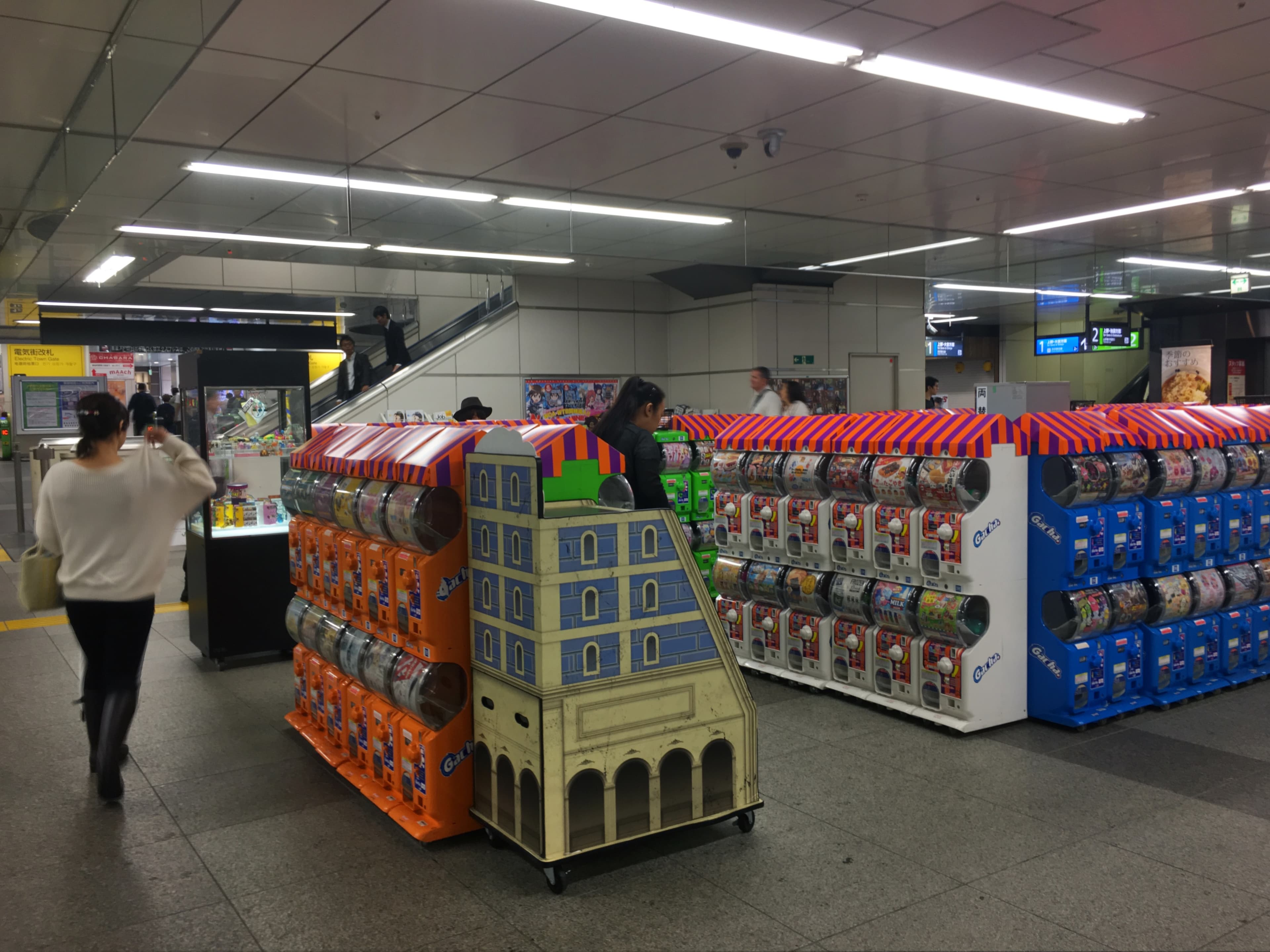
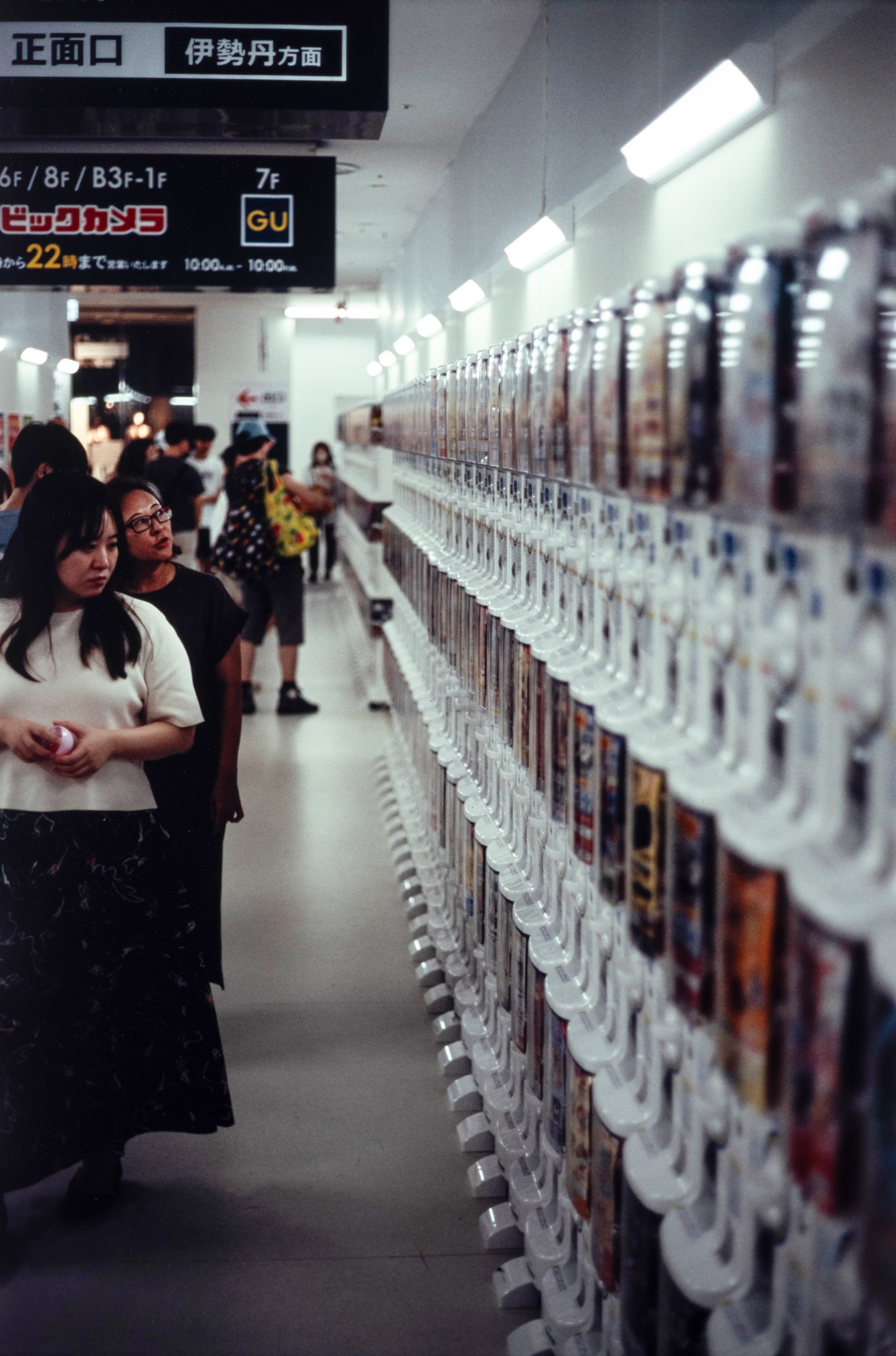
The word "gacha" comes directly from , the plastic capsule dispensers that have populated Japanese streets since the 1960s. The term is onomatopoeic: gacha mimics the sound of the crank you turn, pon the sound of the capsule dropping. You insert a hundred-yen coin, you don't know which figure you'll get, you try your luck to complete a collection. Bandai, which imported and popularized these machines in Japan from 1977, made them an institution: tens of thousands stand across the archipelago, lined up by the hundreds in entire stores.
The psychological mechanic stayed identical when it moved to the screen: you pay for a random draw whose content is hidden until the reveal. Only the medium changed. Where the physical capsule imposed a limit (space, manufacturing cost, the dispenser's stock), the digital gacha is frictionless. A draw costs nothing to produce, can be repeated endlessly, and its "stock" is infinite.
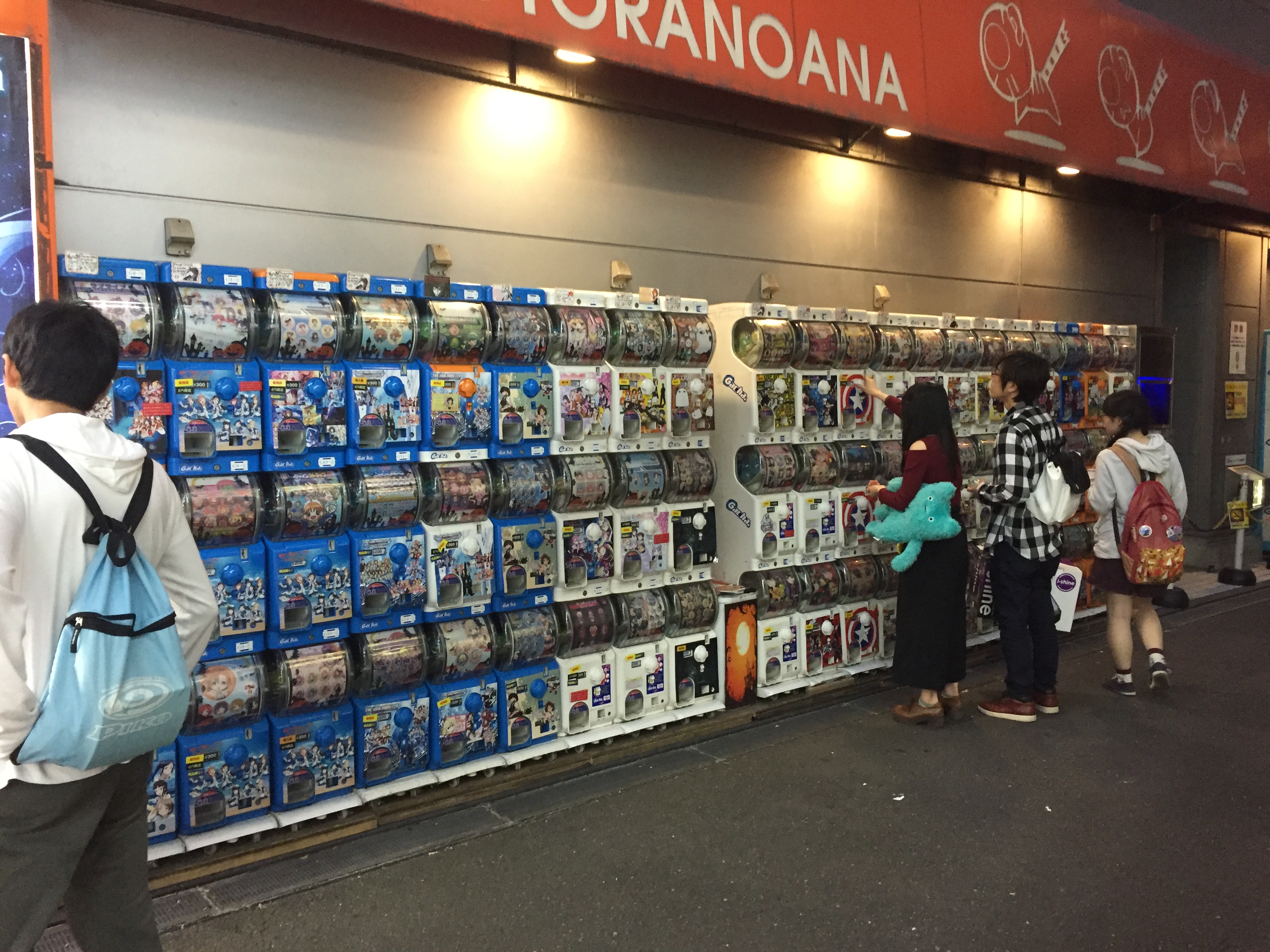
The first true gacha game is generally identified as , launched by Konami in 2010 on DeNA's Mobage social platform. The principle: collect monster cards obtained through paid draws. Success was immediate, with several million players in under a year, and the Japanese industry instantly understood it had stumbled onto a business model of unprecedented profitability. The social platforms Mobage and GREE waged a collectible-card-game war that laid the foundations for everything that followed.
The mobile explosion: when chance became a way of life#
Gacha conquered the world between 2012 and 2020, carried by a handful of titles that became economic phenomena. Everything shifts in 2012 with , by GungHo Online Entertainment, which marries a puzzle game to a gacha monster-collection system. The game would pass 50 million downloads in Japan and, at its peak, generate daily revenues counted in millions of dollars, briefly making GungHo one of the most valuable gaming companies in the country.
The following year, by Mixi took the formula, added a multiplayer slingshot mechanic, and surpassed it: according to data from the analyst App Annie (now data.ai), it spent several years as one of the most profitable mobile games on the planet. Then come the genre's pillars: Fate/Grand Order (2015, Aniplex/Delightworks), whose cumulative revenues would exceed 6 billion dollars according to Sensor Tower; Granblue Fantasy (2014, Cygames); Fire Emblem Heroes (2017), the first gacha venture by Nintendo, long reluctant about the model.
The shift toward the Western mainstream arrives in September 2020 with from the Chinese studio HoYoverse (then miHoYo). The game, with console-grade production values, crossed a billion dollars in mobile revenue in under six months according to Sensor Tower, and proved that a global audience, not just a Japanese one, was ready to spend heavily on a gacha. In its wake, Honkai: Star Rail (2023) from the same publisher, and , which generated over 100 million dollars in its very first month according to Game-i, confirmed the planetary scale of the phenomenon.
Gacha pulled off a remarkable feat: charging for the chance to obtain, not for the obtaining itself. You don't buy a character. You buy a chance.
Anatomy of a pull: the gears of the system#
Beneath the flamboyant animation lies an architecture of probabilities calibrated to the hundredth of a percent. Several mechanics interlock to turn chance into a revenue machine.
Drop rates and rarity#
The 排出率 (haishutsuritsu, drop rate) is the probability, displayed or not, of pulling an item from a given category. Rewards are ranked by rarity tiers, designated by acronyms that have become universal: R (Rare), SR (Super Rare), SSR (Super Super Rare), sometimes UR (Ultra Rare). The more powerful or desirable a unit, the lower its rate, often under 1% for SSRs. A Genshin Impact pull, for instance, offers a base rate of 0.6% for a five-star character. Rarity is no accident: it is the lever that creates desire and justifies spending.
Tenjō, the ceiling that reassures#
The 天井 (tenjō, literally "ceiling") is a guarantee system that ensures a high-rarity unit after a set number of unsuccessful pulls. In Genshin Impact, the featured five-star character is guaranteed by the 90th pull at the latest; some games set this threshold lower, others higher. Introduced to soften the frustration of unlucky streaks, and, incidentally, to get ahead of regulators, the tenjō became a selling point. Gacha's defenders see it as a protection; critics, a purchase price disguised as a safety net, since the cost to reach a tenjō can exceed several hundred euros.
Banners, rate-up, and limited units#
Pulls are organized into banners, temporary events spotlighting specific characters with a boosted rate, the rate-up. Rarity is doubled by a temporal rarity: a "limited" unit is available only a few days, sometimes never reintroduced. This FOMO (fear of missing out) mechanic is the model's emotional fuel: it is not enough to want a character, you must want it now, on pain of never obtaining it again.
Kakin and the figure of the whale#
The 課金 (kakin) means the act of spending real money in a game, generally to buy the premium currency that lets you pull. The spending pyramid is extremely lopsided: according to several industry studies, a tiny fraction of players, the whales, generate the majority of revenue. A frequently cited 2014 Swrve report estimated that under 1% of paying players could account for nearly half of revenue. The model lives not on the many, but on the intensity of a few.
Rerolling#
Rerolling is a player practice: restarting a game over and over, right from installation, to land a rare character in the tutorial's free pulls before truly investing. Delete the account, reinstall, pull again, repeating until the hoped-for result. This habit, born in the Japanese community, illustrates just how thoroughly the initial chance structures the entire experience.
2012: the komp-gacha scandal#
Gacha's founding controversy erupted in Japan in the spring of 2012, around a mechanism called コンプガチャ (komp-gacha, a contraction of complete gacha). The principle: to obtain an ultra-rare reward, the player first had to collect, through successive pulls, a complete set of ordinary items, say the five cards of a series. But the probability of getting the last missing element became infinitesimal, pushing players to multiply their spending to "complete" the grid.
The sums swallowed by some players, sometimes minors, reached alarming amounts: cases of spending of several hundred thousand yen were reported in the Japanese press, including the Yomiuri Shimbun. In May 2012, Japan's ruled that komp-gacha fell under the Act against Unjustifiable Premiums and Misleading Representations, a 1962 law prohibiting certain unfair commercial lotteries, the system resembling the forbidden kuji.
On May 18, 2012, the announcement of the regulation crashed the stock prices of GREE and DeNA, wiping out hundreds of billions of yen in market value in a single day. Chance has a price, and the market had just learned it.
The publishers, getting ahead of a formal ban, voluntarily withdrew komp-gacha before the end of the month. Notably, the Japanese industry then self-organized through the Japan Online Game Association (JOGA), which issued guidelines: display of drop rates and an implicit cap on spending. "Simple" gacha, however, was never banned in Japan. It is precisely this distinction, komp-gacha prohibited but gacha permitted, that still structures the global debate.
Gambling or entertainment? The worldwide loot-box battle#
The central legal question is posed everywhere in the world: is a paid draw with a random outcome a form of gambling? The answer varies radically from one country to another, and gacha finds itself drawn into the broader debate over loot boxes, the random-content "chests" of Western games.
Belgium struck first and hardest. In April 2018, its Gaming Commission concluded that certain paid loot boxes constituted illegal gambling, forcing publishers such as Electronic Arts to pull them from the Belgian market. The Netherlands followed the same year, its gaming authority (Kansspelautoriteit) targeting loot boxes whose contents could be resold; a later court decision nonetheless qualified the reach of the initial FIFA verdict.
China, a key gacha market, imposed a transparency obligation as early as May 1, 2017: publishers must disclose the actual drop rates of every draw. This regulation, from the Ministry of Culture, paradoxically helped normalize rate disclosure worldwide, as publishers preferred a single policy across all markets.
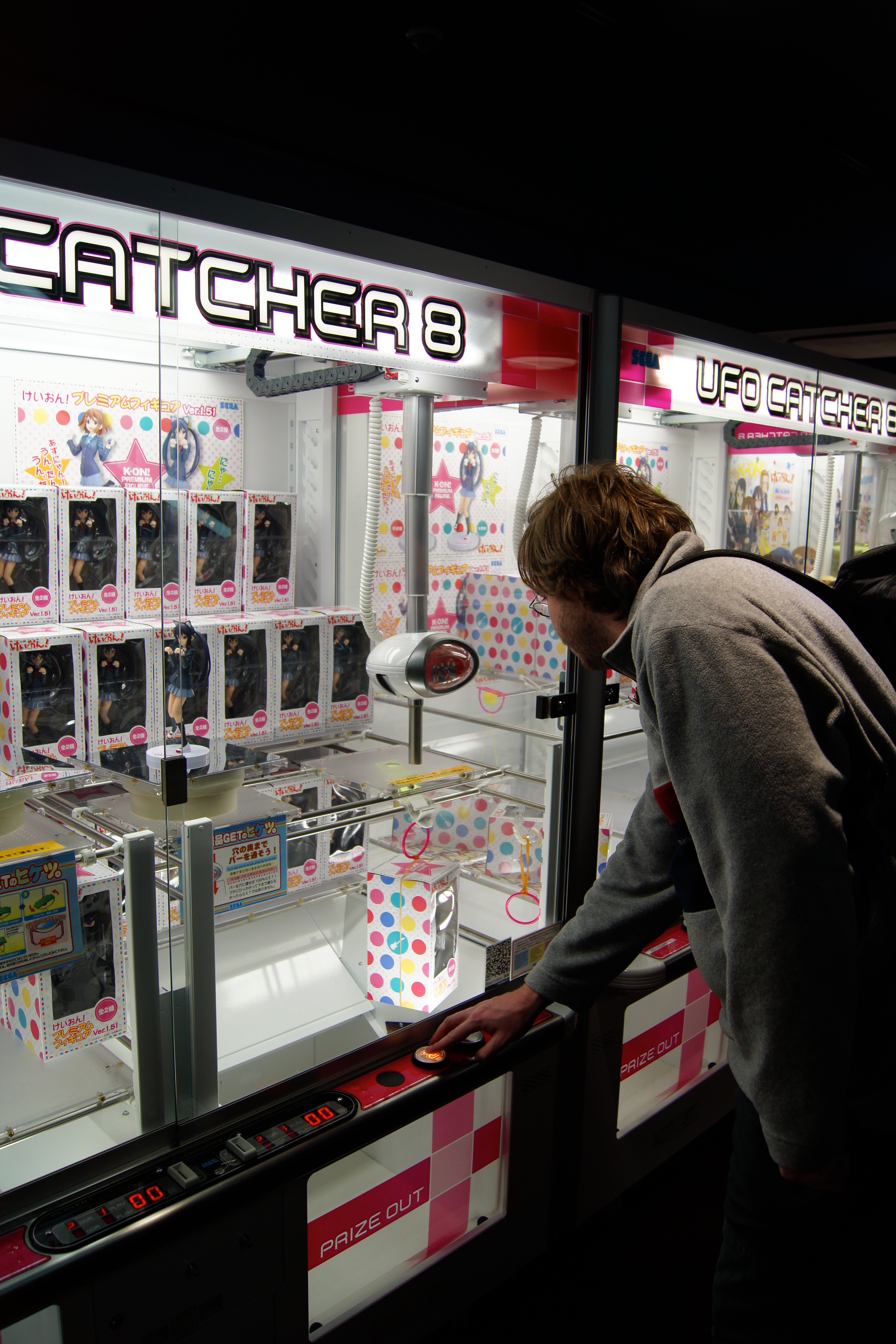
The European Union has debated for years without unified legislation. A European Parliament resolution of January 2023 called on the Commission to better regulate loot boxes and gacha, flagging the risks for consumers and minors, but without direct constraint. In the United Kingdom, a 2022 government inquiry acknowledged a statistical link between loot-box buying and problem-gambling behavior, while choosing self-regulation over a ban. Japan, the birthplace of gacha, paradoxically remains among the most permissive: only komp-gacha is prohibited there.
Spending, the mind, and minors#
At the heart of the criticism lies gacha's psychological design, accused of exploiting documented cognitive mechanisms. Researchers in gambling psychology liken the gacha pull to variable-ratio reinforcement, the mechanism described by psychologist B. F. Skinner: an unpredictable reward, dispensed at irregular intervals, is what creates the most stubborn motivation, the same lever as the slot machine. Uncertainty is not a flaw of the system; it is its function.
Several academic studies, notably those by researcher David Zendle (University of York) on loot boxes, have established a correlation between spending in these systems and indicators of problem gambling. Correlation is not causation, and defenders rightly stress that people predisposed to gambling may simply spend more everywhere, but the weight of evidence was enough to alert regulators in several countries.
The question of minors is the most sensitive. A child does not always grasp the value of the money spent, nor the probabilistic mechanic pushing them to start over. Cases of bills of several thousand euros, run up by children on the family bank card, have made headlines in many countries. Platforms have since strengthened parental controls, but the asymmetry remains between a developing brain and a system designed by entire teams of behavioral analysts.
An economy worth billions#
Gacha is today the dominant model of mobile gaming, not a Japanese niche. According to data from the firm Sensor Tower, several gacha titles rank every year among the most profitable mobile games in the world, ahead of far more heavily publicized Western franchises. The Japanese mobile gaming market, largely structured by gacha, is one of the most lucrative on the planet relative to its population.
This dominance owes to a fearsomely efficient economy. A gacha game is free to install, removing the initial purchase barrier, and then monetizes engagement over time. Where a classic game sells a finished product once, gacha sells chances, limited units, and events continuously. A successful title's lifespan is counted in years, and its cumulative revenue can exceed that of console blockbusters: Fate/Grand Order, with its more than 6 billion dollars according to Sensor Tower, is the dizzying illustration.
Gacha's economic genius is not selling a game. It is selling, every day, the renewed hope that the next pull will be the one.
In defense of the model: access and guardrails#
Reducing gacha to a scam would miss the complexity of the debate. Its defenders advance arguments that deserve a hearing. The first is free access: a player can, without spending a cent, enjoy nearly all of a game like Genshin Impact, hundreds of hours of content, by patiently accumulating the premium currency the game gives away. The free-to-play model has democratized access to very high-quality productions, financed by the minority who choose to pay.
The second argument is the existence of guardrails: the tenjō guarantees a spending ceiling, and the display of drop rates, now widespread, allows an informed decision, unlike the opaque komp-gacha of 2012. The third, and not the least: gacha pays out no real-money winnings. Unlike a casino, you never play to recover money, only to obtain game content, which according to its defenders constitutes a fundamental legal and moral difference from gambling.
Still, these guardrails were born of pressure, regulatory in 2012 and media-driven since. Gacha was never a self-correcting system out of virtue; it adjusted when the alternative was prohibition. That may be the most lasting lesson of this story.
Chance, turned into industry#
In a decade and a half, gacha went from a Japanese social-platform invention to the structuring business model of the largest segment of the global video game market. From the plastic capsule turned by a crank to the 0.6% draw calibrated by analysts, the mechanic of desire has not changed: you pay for uncertainty, you return for the thrill, you hope for the next shot.
The debate it raises goes beyond video games. It questions what we agree to monetize, no longer an object but a probability, and where to set the line between entertaining and exploiting. Japan drew its own in 2012, Europe is still searching for its own, and every player, with every pull, redraws their own in the secret of a thumb suspended above the glass. The blue comet will keep streaking across the black. It falls to each of us to decide whether to watch it, or to pay for it.
What exactly is gacha? Gacha (ガチャ) is a monetization system for mobile games in which the player pays for a random draw whose content, often a character or item, is randomized and ranked by rarity. The term comes from Japanese gashapon capsule dispensers.
Is gacha gambling? Legally, it depends on the country. Belgium and the Netherlands classified certain loot boxes as gambling as early as 2018, while Japan only bans komp-gacha, since 2012. The defenders' central argument is that no real-money winnings are ever paid out.
What is the tenjō (天井)? The tenjō is a guarantee ceiling: after a set number of unsuccessful pulls, obtaining a high-rarity unit is assured. In Genshin Impact, this threshold is 90 pulls for the featured five-star character.
What was the first gacha game? Dragon Collection, launched by Konami in 2010 on DeNA's Mobage platform, is generally recognized as the first true gacha game, based on collecting monster cards through paid draws.
Why are they called "whales"? Whales are the players who spend considerable sums in a game. According to industry studies, a tiny minority of paying players generates the bulk of the gacha model's revenue, which therefore rests on the intensity of a few rather than on large numbers.
Photo credits: images from Wikimedia Commons, under a free license.
In this article
The cultural terms covered here, each with a short definition.
- Gacha
- Video-game mechanic of paying for random virtual rewards, named after capsule-toy machines.
- Gachapon
- Vending machine dispensing toys in capsules, and the toys themselves; named for its turning sound.
- Genshin Impact
- Blockbuster free-to-play game whose gacha system funds its open world.
- Kompu gacha
- Japanese gacha format banned in 2012 for requiring rare full sets to unlock a prize.
- Loot box
- Paid in-game crate giving random items, the Western cousin of gacha and a target of regulation.
Gachapon: Japan's Capsule Toy Culture
The history and culture of gachapon, Japan's capsule-toy machines. Onomatopoeic origins, Bandai, Kaiyōdō, Fuchiko, and an industry worth hundreds of billions of yen.
Cover image: Itsmejames · Itsmejames · CC BY 4.0