Magical Girl: From Sailor Moon to Madoka
A history of the mahō shōjo genre, from Mahōtsukai Sally in 1966 to Madoka Magica. Origins, the henshin codes, Sailor Moon, Cardcaptor Sakura and the great deconstruction.
La rédaction Kotoba
Studio éditorial
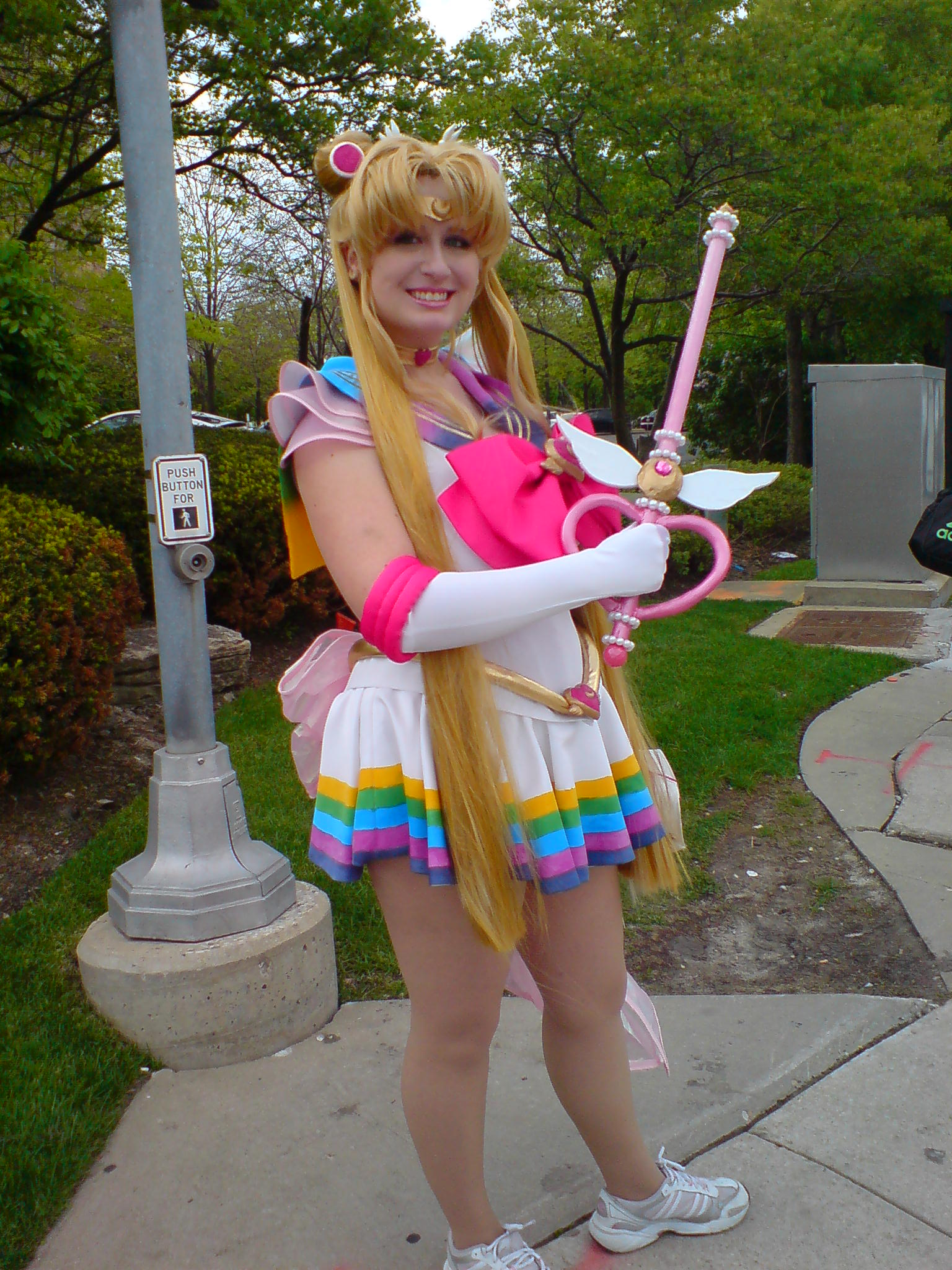
A crescent-moon brooch snaps open in a burst of glitter. A fourteen-year-old schoolgirl raises her arm, calls out a phrase ("Moon Prism Power, Make Up!") and the world around her dissolves into ribbons of light. Her school uniform evaporates, feathers and stars whirl past, and she reappears in a leotard, white boots and a golden tiara. Fifteen seconds later, the transformation lands on a pose. This is the , the beating heart of a Japanese genre that has been turning ordinary girls into wielders of extraordinary power since the 1960s.
The genre is one of the pillars of Japanese animation and manga. Over six decades it has shaped the imagination of generations of children, sold mountains of toys, conquered the world with Sailor Moon, then turned against itself in a twilight work that forced the entire medium to reinvent. To tell the story of mahō shōjo is to tell the story of a Japan that learned to hand little girls weapons made of light, before asking them what a wish truly costs.
The founding witch: Mahōtsukai Sally (1966)#
The first magical-girl anime is , broadcast on TBS from December 5, 1966 to December 30, 1968. Adapted from the manga by , serialized in Shūeisha's Ribon magazine from 1966, it follows Sally, a princess from the magical kingdom of Mahōland who comes down to Earth to live incognito among humans. The series was produced by , which would never again let the genre go.
The inspiration is openly acknowledged: Yokoyama conceived Sally after seeing the American sitcom Bewitched, broadcast in Japan from 1966 under the title Okusama wa majo (奥さまは魔女). The idea of a supernatural being hidden in the everyday life of an ordinary suburb shifted from the American housewife to the Japanese schoolgirl. Yokoyama, already famous for Tetsujin 28-gō (鉄人28号) and Sangokushi, thus almost accidentally signed the birth certificate of an entire genre.
Three years later, Tōei followed up with , broadcast from 1969 and adapted from the manga by , which had run in Ribon since 1962. Akko-chan does not come from a magical kingdom: she is an ordinary girl rewarded by the spirits of a mirror for caring for their object. That mirror lets her transform into anyone. Where Sally concealed a magical nature, Akko-chan introduces the genre's decisive formula: a magical object entrusted to a child of the real world. All the merchandising to come is already contained in that single idea.
Tōei and the era of transformation items#
Through the 1970s, Tōei industrialized the formula, turning each heroine into a living toy catalogue. The commercial break came in 1972 with , the first magical-girl series designed from the outset around merchandise to sell, followed by a long lineage often grouped under the label .
The aesthetic turning point came with , produced not by Tōei but by Studio Pierrot and aired on Nippon TV from 1983 to 1984. Creamy Mami established the motif of the little girl who transforms not into a witch but into an adult pop idol; the transformation becomes a fantasy of emancipation and glamour, set to songs performed by real-life idol . It was here too that the henshin sequence became a ritual: a suspended, spectacular moment in which the camera takes its time filming every stage of the metamorphosis.
This decade locked in the codes the whole genre would later vary: the magic wand or compact, the incantation, the double life (schoolgirl by day, secret heroine) and the promise, addressed to every small viewer, that an innocuous object can contain a world. Tōei's executives understood it before the critics did: they were not selling a story, they were selling a wand.
Give a child a wand that lights up, a phrase to shout and a costume that sparkles, and you are not selling her a toy: you are selling her the conviction that she too can change the world with a single gesture.
Sailor Moon: the fusion that conquered the planet#
The earthquake is called . Created by , the manga ran in Kōdansha's Nakayoshi magazine from 1991 to 1997, while the Tōei Animation anime aired from March 7, 1992 to February 8, 1997 on TV Asahi. Across five seasons and 200 episodes, it became the most influential mahō shōjo in history.
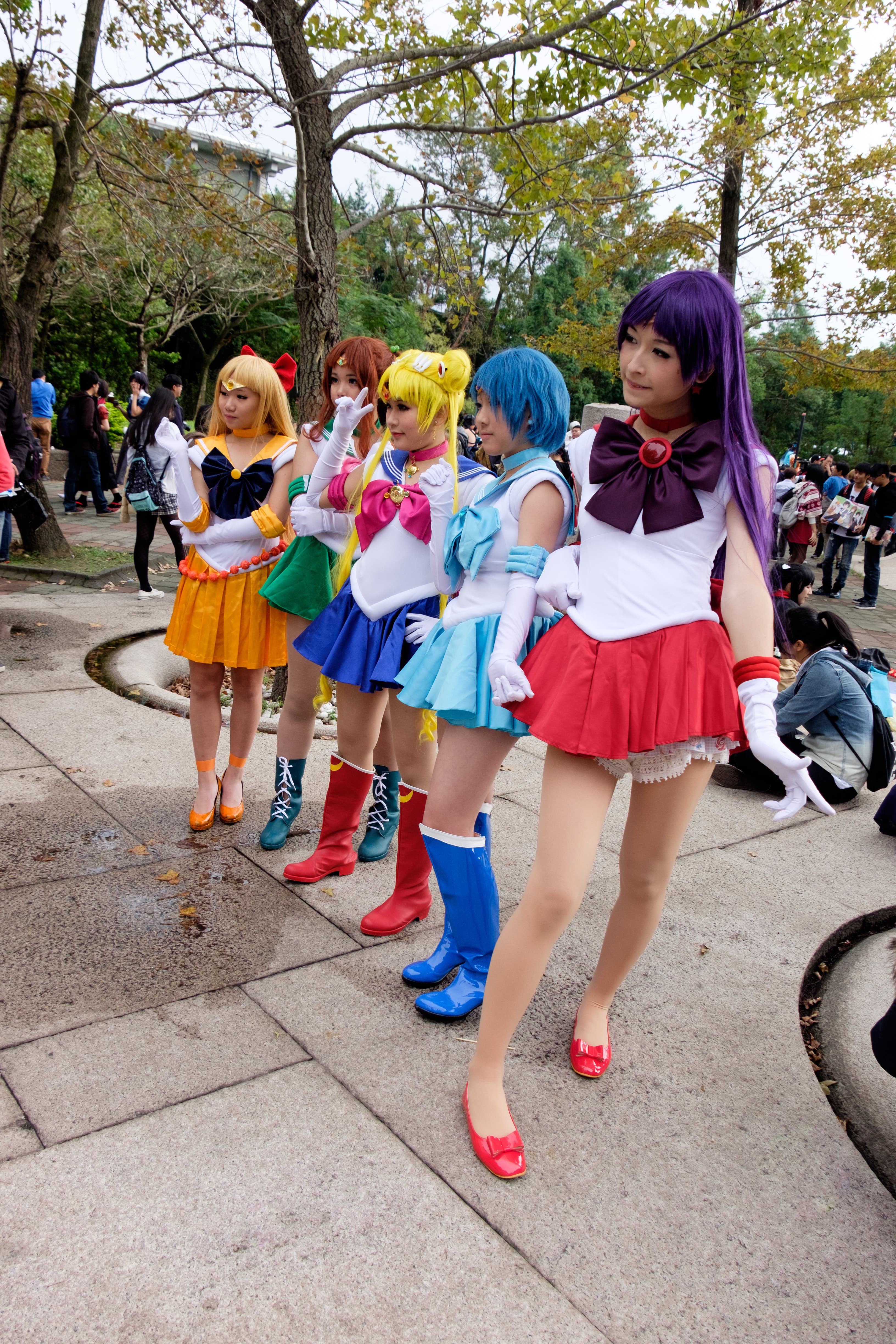
Takeuchi's genius lies in a fusion. Until then, the magical girl acted alone; the collective-action narrative belonged to the , those teams of costumed heroes in the Super Sentai mold (the ancestor of Power Rangers), populated by boys. Sailor Moon weds the two: Usagi Tsukino, a clumsy, weepy schoolgirl, becomes Sailor Moon, then finds herself surrounded by a team (Sailor Mercury, Mars, Jupiter, Venus), each with her color, her planet, her power and her temperament. The lone magical girl becomes a team heroine, and the collective battle, long reserved for boys, passes into the hands of girls.
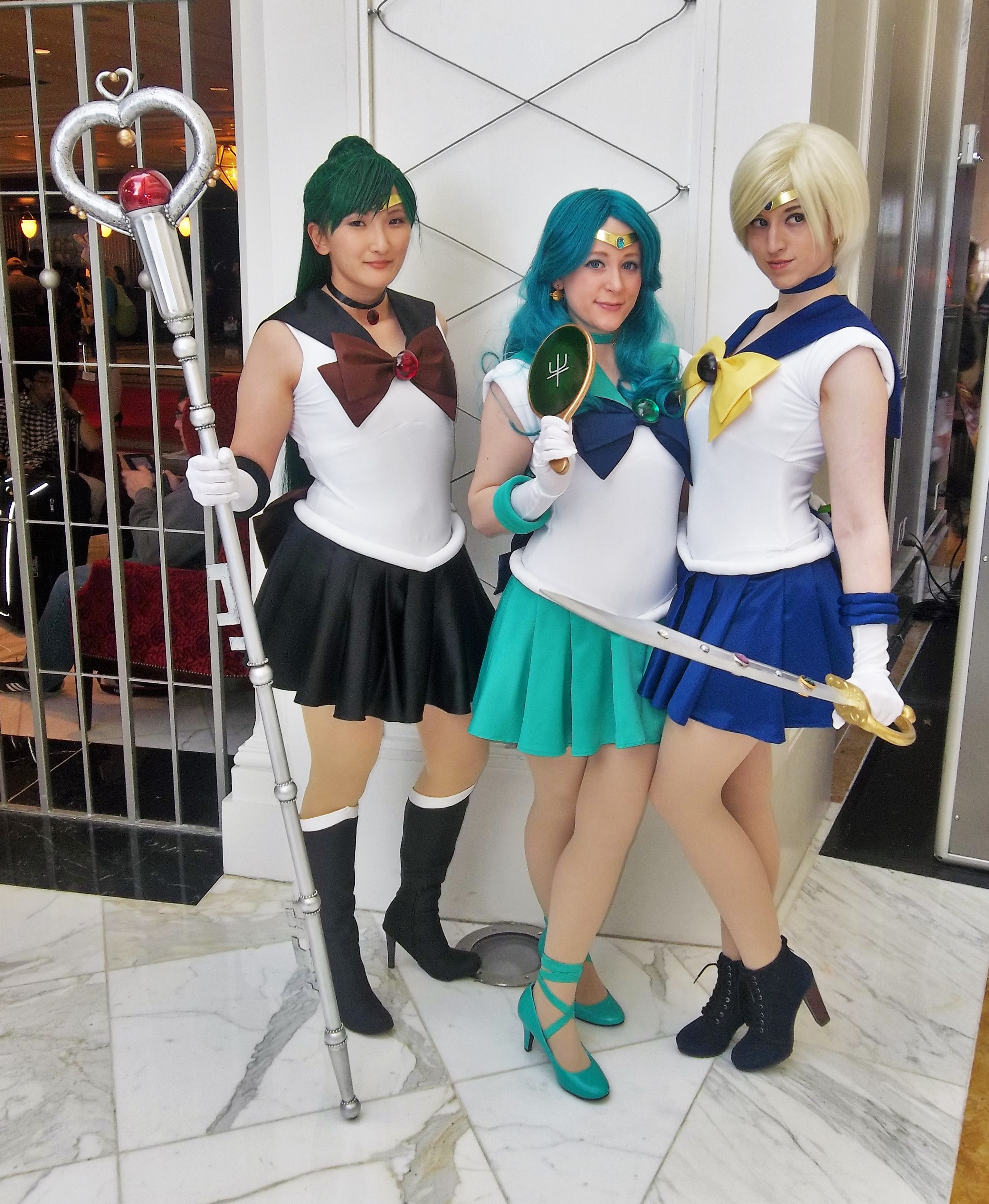
The rest of the genre's vocabulary crystallizes here in its definitive form: the henshin sequence stretched into apotheosis, the compact (the "Moon Prism") and the wand as talismans, the mascot companion (the talking cat Luna), friendship as a narrative engine as much as the romance with the mysterious Tuxedo Mask (タキシード仮面, Takishīdo Kamen). To this Takeuchi adds a sweeping mythology: a past lunar kingdom, reincarnations, a hidden princess. The double life is no longer a gag, it is a destiny.
The export was instantaneous. Dubbed into some forty languages, broadcast from Canada to Italy, from France (on the Club Dorothée from 1993) to Brazil, Sailor Moon introduced an entire generation outside Japan to Japanese animation, often the first action heroine millions of Western girls had ever been able to look up to. The manga has sold over 35 million copies worldwide, and the franchise remains, decades on, an empire of merchandise.
Before Sailor Moon, girls watched boys save the world. After her, they knew they could save it themselves, as a team, in uniform, and without ever ceasing to be themselves.
The anatomy of a mahō shōjo#
Beneath the diversity of series, the genre rests on a stable grammar, a set of codes that every work quotes, modulates or subverts.
The transformation: henshin (変身)#
The henshin is the absolute signature of the genre. In the moment of danger, the heroine activates her magical object and shifts, over the course of a choreographed sequence, from her ordinary life to her warrior identity. Technically, these sequences also served as stock footage: reused from episode to episode, they saved a considerable animation budget while delivering, each week, the expected thrill. Aesthetically, they say what matters most: a girl can become other, more powerful, without ceasing to be herself.
The talismans: compacts and wands#
The magical object (compact, brooch, wand, pendant) is the genre's pivot and its commercial engine. It concentrates the power, triggers the transformation and structures the toy line. In Sailor Moon, the compact evolves from season to season, obliging young fans to rebuy the latest version: the story and the toy aisle advance in lockstep.
The mascot#
The mascot companion, a talking animal or mysterious creature, guides the heroine, reveals her mission and grants her powers. Luna in Sailor Moon, Kero (Cerberus) in Cardcaptor Sakura. Cute, often comic, the mascot is also the messenger of destiny. One work would later turn it into the most chilling face the genre has ever worn.
The double life and friendship#
Finally, the heroine leads a double life: ordinary schoolgirl, secret heroine. That duality dramatizes adolescence itself: the gap between what one appears to be and what one carries within. And the story almost always runs on friendship, sometimes love: power is born of the bond, and solitude is the true threat.
Cardcaptor Sakura: the grace of CLAMP#
In 1996, the all-female collective CLAMP published in Kōdansha's Nakayoshi, the very magazine of Sailor Moon. Twelve volumes, completed in 2000, and a 70-episode Madhouse anime (1998-2000) made Sakura Kinomoto, a Tomoeda schoolgirl tasked with recapturing the scattered Clow Cards, a global icon.
Where Sailor Moon had imposed collective combat, Cardcaptor Sakura reintroduced delicacy. Its antagonists are almost never villainous: conflicts arise from misunderstandings, misplaced love, excessive protectiveness. Sakura does not win by striking, but by understanding. Her mantra, "Zettai daijōbu da yo!" (絶対大丈夫だよ, "everything will be all right, for sure!"), became a rallying cry for a generation.
CLAMP also refined the genre through aesthetics: in every episode, Sakura's cousin Tomoyo sews her a new costume, turning the series into a permanent fashion show and making the henshin an act of style as much as of magic. Cardcaptor Sakura proves that mahō shōjo can be tender without being saccharine, and deep without giving up the fairy tale. The series won the Seiun Award for best manga in 2001, and CLAMP delivered a sequel, Clear Card, completed in 2024.
Pretty Cure: the commercial juggernaut#
In 2004, Tōei Animation launched , the first season of a franchise, Pretty Cure, abbreviated , that has never stopped since. Aired every Sunday morning, it is today the longest-running and most profitable mahō shōjo serial, with a new team of heroines reinvented almost every year.
PreCure's trick lies in a deliberate balance: the franchise re-injects sentai-style physical action into the mahō shōjo. The heroines do not merely cast decorative spells; they punch, dodge and string together hand-to-hand fights. Conceived as the direct commercial successor to Sailor Moon in the Sunday-morning slot, PreCure targets little girls first, and the cash register. Its merchandising (transformation toys, figures, costumes) has made it one of the most lucrative licensing machines in Japanese animation, generation after generation of young viewers.
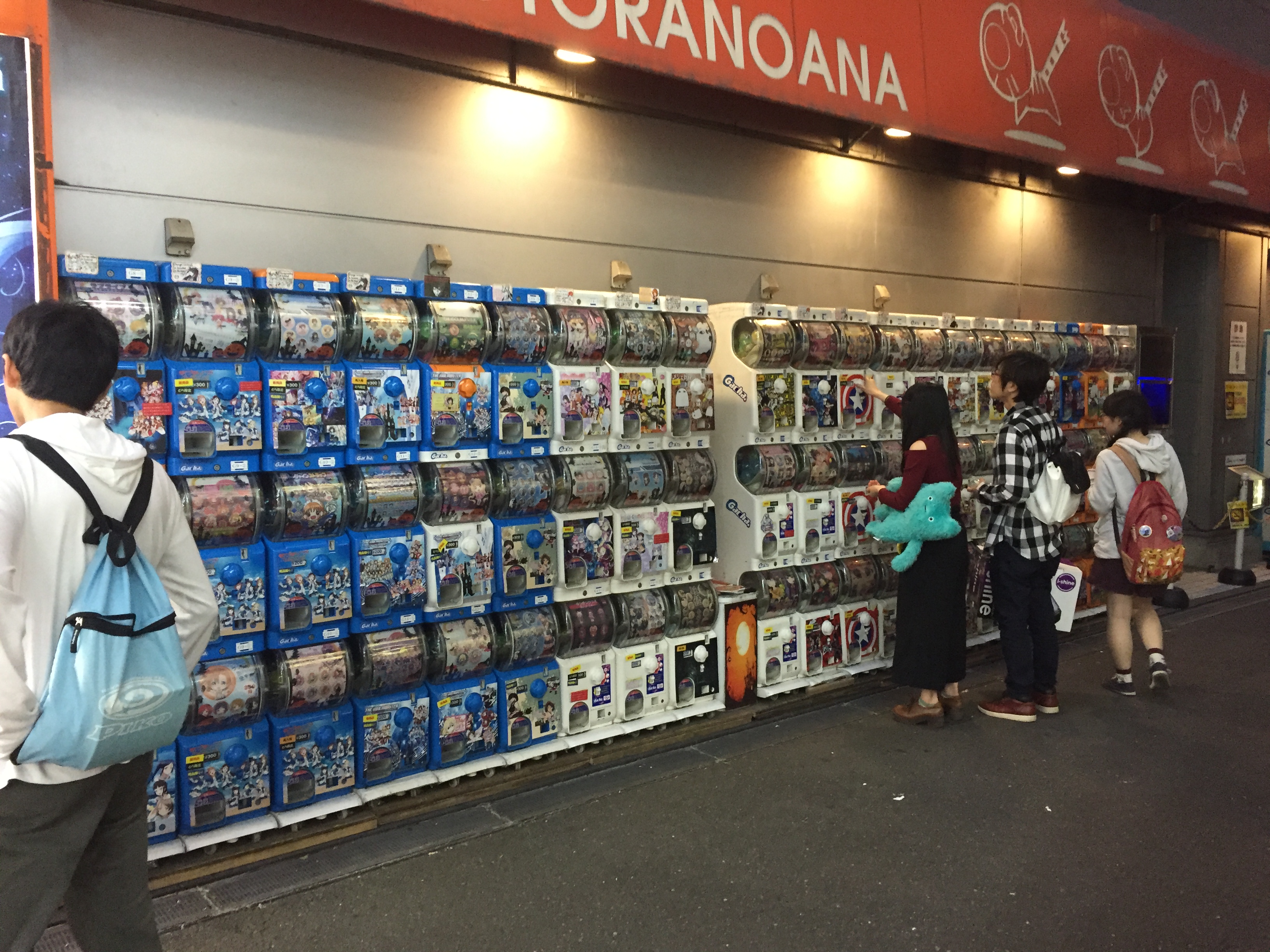
By its very longevity, PreCure embodies the most enduring face of the genre: a weekly ritual, an annual piece of merchandise, and the handing down, from one cohort of little girls to the next, of the founding idea: that one can be gentle and powerful at once.
Puella Magi Madoka Magica: the great deconstruction#
In 2011, mahō shōjo turned against itself. aired from January 7 to April 21, 2011, produced by Studio Shaft, written by playwright , directed by , with character designs by . Twelve episodes that redefined what a magical-girl story could be.
The trap is set from the opening credits. Everything seems familiar: a shy schoolgirl, Madoka Kaname; a mascot creature, , who offers a contract: become a magical girl in exchange for a granted wish. But from the third episode, the work shatters the genre's optimism. The central revelation is terrible: magical girls do not fight monsters from elsewhere; they themselves become when their soul, literally extracted and sealed in a gem, sinks into despair. Kyūbey is no benevolent guide but a cold emissary, harvesting the girls' emotional energy to stave off the universe's entropy. The wish must be paid for. Always.
Madoka Magica inverts every code patiently installed since 1966: the mascot becomes a predator, the transformation a swindle, friendship a trap, and hope (希望, kibō) the raw material of a cosmic exploitation. Critically acclaimed and showered with awards, including the Animation Grand Prize at the 2011 Japan Media Arts Festival, the show spawned films, games and spin-offs, and left a lasting mark on otaku culture. Above all, it proved that the genre, long confined to childhood, could carry a tragedy with Faustian overtones.
For forty-five years, mahō shōjo had promised little girls that power was a gift. Madoka asked the one question nobody dared: what if it was a contract, and who was pocketing the stakes?
Empowerment, otaku and debates over meaning#
Beyond the screen, mahō shōjo carries stakes that extend far past the children's aisle. Three readings intersect and, at times, clash.
The first is that of female empowerment. For millions of girls, these heroines were the first action figures who looked like them: powerful without giving up their femininity, strong through friendship more than violence, masters of their own destiny. At a time when action was male territory, Sailor Moon and her sisters offered an unprecedented model. The transformation, read this way, becomes a metaphor for adolescence and for taking power over oneself.
The second concerns a shift in audience. Since the 2000s, well before Madoka, already with works like Mahō Shōjo Lyrical Nanoha (2004), a significant share of the genre's readership has consisted of adult men, the who consume, collect and analyze series originally conceived for little girls. This audience has fed a parallel market of figures, doujinshi and productions aimed explicitly at adults, and has shifted the creative center of gravity of part of the genre.
From this springs the third debate, over the very meaning of mahō shōjo. Is the genre a tool of emancipation for girls, or an object shaped by and for the adult male gaze? Madoka crystallizes the controversy: a feminist, tragic work about sacrifice, or a cynical exploitation of teenage girls' suffering for a male audience? Critics have never settled it, and that is surely the mark of a living genre, one capable of meaning contradictory things depending on who is watching.
A genre that keeps being reborn#
Sixty years after Sally, mahō shōjo does not merely survive: it reinvents itself relentlessly. PreCure keeps stacking up its annual seasons, Sailor Moon returns regularly (with the Sailor Moon Crystal reboot launched in 2014), and the shockwave from Madoka has spawned a whole wave of "dark magical girl" works that play on the tension between the genre's innocence and the cruelty of its premises.
What makes mahō shōjo so tenacious is that it speaks to a simple, universal truth: the moment a child discovers she can act upon the world. Whether that power is a luminous gift or a poisoned contract, whether it serves to protect her friends or to question the price of hope, the magical girl remains the mirror of a passage, from childhood toward a power one had not suspected. From Yokoyama's witch to Madoka's prayer, the same question always glimmers in the hollow of the wand: what will you do, now that you know that you can?
FAQ#
What is the very first magical-girl anime? It is Mahōtsukai Sally (魔法使いサリー), broadcast by Tōei from 1966 to 1968, adapted from Yokoyama Mitsuteru's manga and inspired by the American sitcom Bewitched. It established the archetype of the girl with magical powers living among humans.
Why is Sailor Moon so important to the genre? Bishōjo Senshi Sailor Moon (1992) by Takeuchi Naoko fused the solitary mahō shōjo with the team structure of sentai series, creating the collective action heroine. Dubbed into some forty languages, it exported the genre and Japanese animation worldwide.
How does Madoka Magica subvert the genre? Puella Magi Madoka Magica (2011, Studio Shaft, written by Urobuchi Gen) reveals that magical girls become witches when they despair, and that their mascot exploits them through a Faustian contract. The work inverts the traditional optimism of mahō shōjo.
What is the henshin? The henshin (変身, "metamorphosis") is the transformation sequence in which the heroine shifts from her ordinary life to her magical warrior identity. It is the genre's visual signature, ritualized notably by Creamy Mami (1983) and Sailor Moon.
In this article
The cultural terms covered here, each with a short definition.
- Cardcaptor Sakura
- Beloved magical-girl series by the studio CLAMP.
- Henshin
- 'Transformation': the iconic sequence where a hero or magical girl changes form.
- Madoka Magica
- 2011 anime that subverted the magical-girl genre with a dark, tragic twist.
- Magical girl
- Anime genre about girls who transform to gain magical powers, like Sailor Moon.
- Mahō shōjo
- Japanese name for the magical-girl genre.
- Pretty Cure
- Long-running magical-girl franchise that pairs cuteness with action fights.
- Sailor Moon
- Naoko Takeuchi's series that defined and popularized the magical-girl genre worldwide.
- Shōjo
- Manga aimed at young female readers, focused on emotions and relationships.
Mecha: A History of Japan's Giant Robots
From Tetsujin and Mazinger to Gundam and Evangelion, the complete history of the mecha genre: super robots, real robots, Gunpla and global influence.