Visual Kei and Rhythm Games: Japan's Music Scene
From flamboyant visual kei to the arcade cabinets of Taiko and beatmania, a journey through two pillars of Japanese music culture and their shared legacy.
La rédaction Kotoba
Studio éditorial
The blacklight flickers on, and the guitarist materializes: platinum mane sculpted skyward with hairspray, eyelids heavy with violet shadow, a velvet coat strapped with silver buckles, high heels clacking against the stage. Three blocks away, in the same city, another spotlight snaps on over an arcade screen: two drumsticks strike a red-and-blue drumhead, notes scroll past in perfect cadence, and the machine bellows a triumphant combo count. Two stages, two crowds, one country, and the same truth: in Japan, music isn't merely heard, it's played, it's worn, it's turned into spectacle.
and 音ゲー (otoge, "music games") seem to belong to two foreign worlds. One is a movement of theatrical rock born in the smoky clubs of the late 1980s; the other, a video-game genre that emerged from arcades in the late 1990s. Yet they share a deep root: the conviction that Japanese music is, above all, a performance, a collective ritual where the body, the costume, and the gesture matter as much as the sound. This article tells those two parallel stories, and the point where they meet.
Visual kei: when rock becomes theater#
refers to a Japanese musical movement defined not by a sound but by an aesthetic: extravagant makeup, sculpted hair, elaborate costumes, deliberate androgyny, and stage theatricality, applied across a wide spectrum from hard rock to metal, pop, and electronica. The term took hold around the turn of the 1990s to describe bands that made their appearance as much a manifesto as their music.
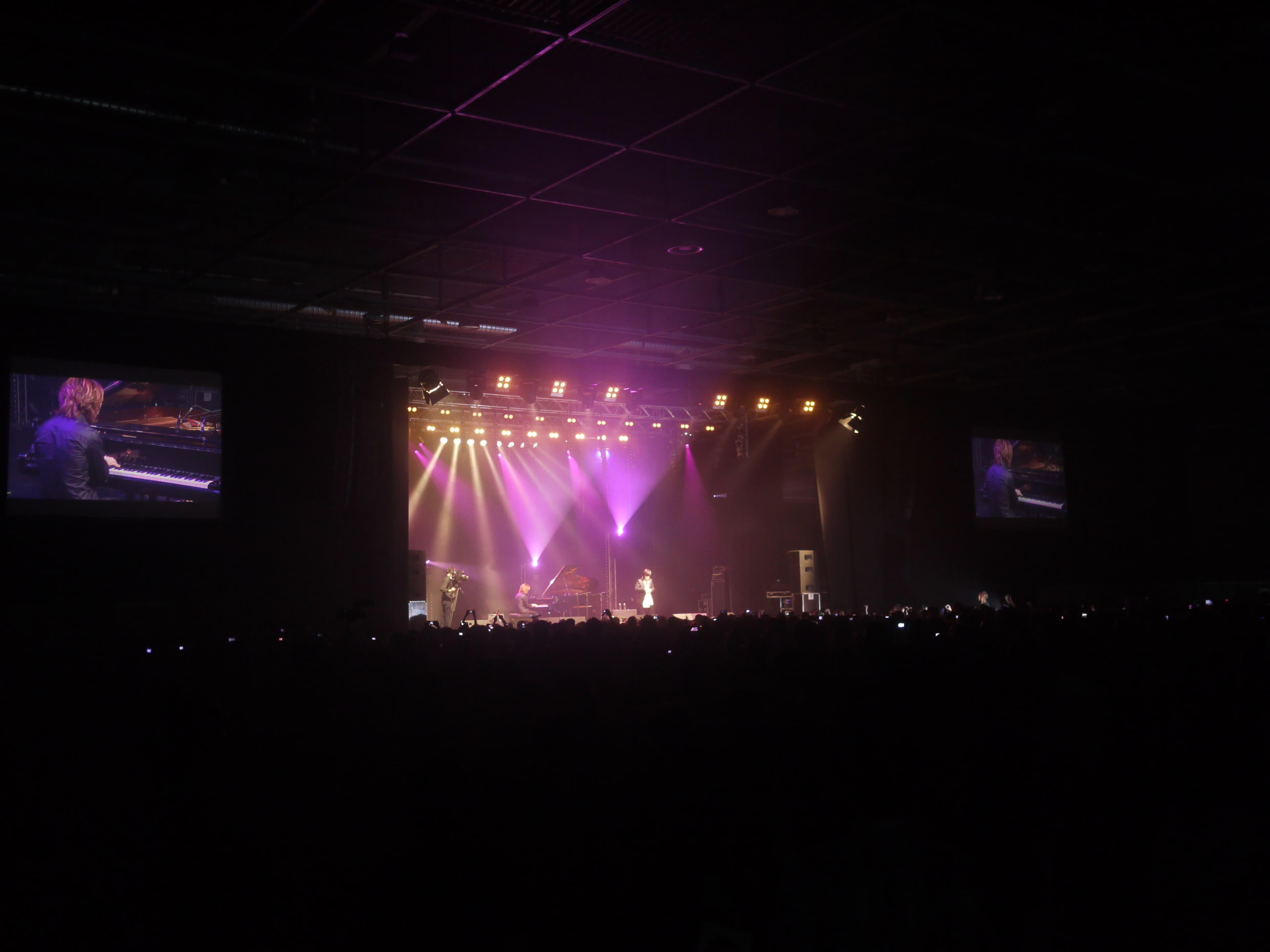
The exact origin of the word is debated, but one trail recurs: the slogan of the band X (later X Japan), "PSYCHEDELIC VIOLENCE CRIME OF VISUAL SHOCK," printed on the cover of their 1989 album Blue Blood. The word "visual" there is often credited with crystallizing a sensibility already in the air. Founded in Chiba in 1982 by drummer and singer Toshi, X Japan laid the genre's foundations: metal virtuosity, gut-wrenching ballads, and an imagery where hairspray-stiffened manes became as recognizable a signature as a riff.
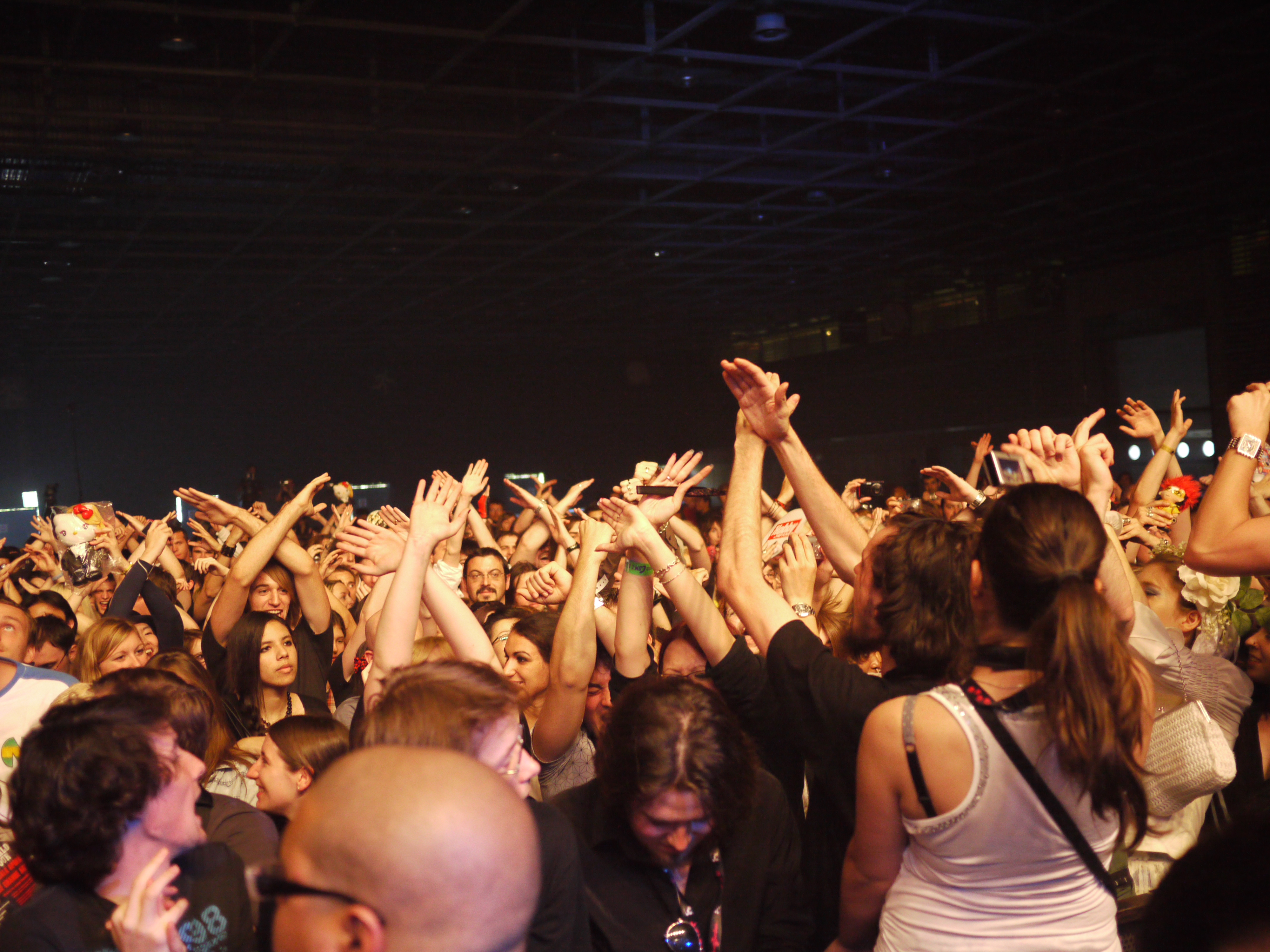
X Japan wasn't alone. , formed in Gunma in 1983, brought a gothic, new-wave elegance; D'erlanger, also founded in 1983, laid a cornerstone of the style with its dark rock and decadent poise. These pioneers initially claimed no shared label, it was the specialist press and the fans who gradually grouped this generation of musicians, refusing the sartorial restraint of Western rock, under the word "visual."
In visual kei, makeup isn't a mask: it's a declaration. You don't disguise yourself to hide who you are; you transform to become what you want to be on stage.
The androgynous aesthetic, in particular, sits at the heart of the movement. Men made up, coiffed, dressed in lace and leather, deliberately blurring the codes of gender: this visual transgression, shocking to the mainstream public of the 1980s, became the identity core of visual kei. It draws on and its tradition of the onnagata (女形, male actors playing female roles), on the Anglo-American glam rock of David Bowie and the New York Dolls, and on a long Japanese tradition of aesthetic ambiguity.
The golden age of the 1990s#
It was during the 1990s that visual kei moved from the underground to the top of the national charts. The turning point came in 1992: X Japan signed to a major label and filled the Tokyo Dome, proving that a band in makeup could sell millions of records. In their wake, an entire generation emerged.
Luna Sea (LUNA SEA), formed in 1986 but breaking through in the early 1990s, became the reference band of a more sober, refined aesthetic. and achieved colossal commercial success that gradually distanced them from the label: should they be counted among visual kei bands, or among the J-rock acts born from it? The debate still stirs the fans. L'Arc-en-Ciel, in particular, publicly distanced itself from the term, illustrating the movement's permanent tension between claimed marginality and mainstream success.
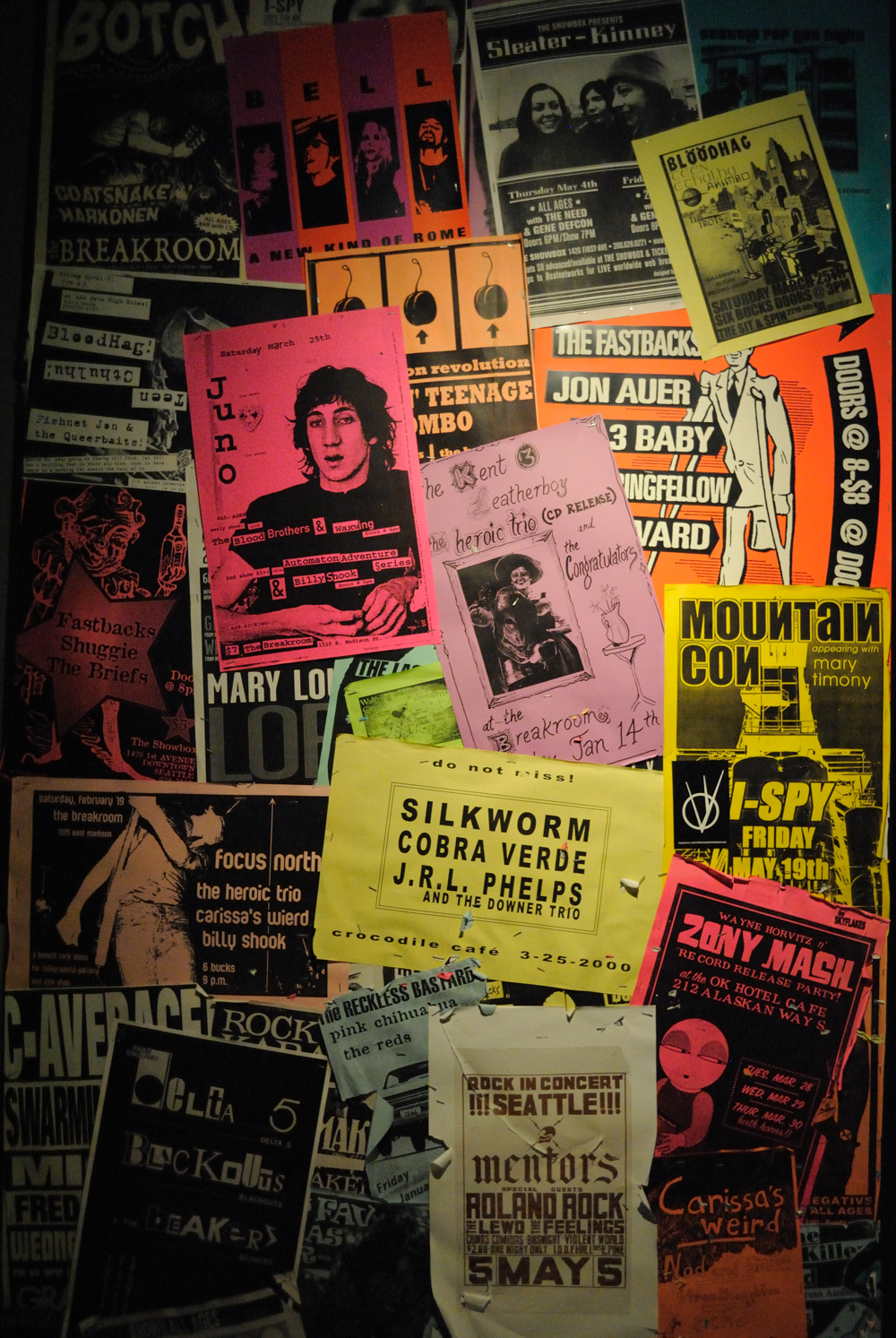
The genre's artistic summit has a name: . Formed in 1992 and led by guitarist , an enigmatic figure who never spoke in public and cultivated the image of a gothic doll in Elizabethan costume, Malice Mizer pushed theatricality to its limit, baroque opera, lavish music videos shot like short films, vampiric aesthetics. Mana also popularized a fashion current, , which today extends well beyond the bounds of music.
At the other end of the spectrum, , formed in 1997, embodied a more brutal visual kei, drifting toward extreme metal and a visceral, sometimes harrowing imagery. The band eventually abandoned makeup while keeping its stage intensity, illustrating how visual kei could serve as a springboard before molting into something new.
Kote-kei, oshare-kei: the grammar of styles#
Visual kei isn't monolithic: it breaks down into aesthetic subgenres that fans distinguish with precision. Two poles structure this spectrum.
Kote-kei, "hardcore" visual kei#
refers to the most extreme and codified style: heavy theatrical makeup, dark and ornate costumes, a gothic or decadent mood, and often dark, dramatic music. This is visual kei in its most recognizable form, the one that shaped the movement's image abroad. The 1990s bands such as Malice Mizer or early Dir en grey are its archetypes.
Oshare-kei, the pop and colorful version#
emerged in the early 2000s as a luminous counter-current: bright colors, a pop, youthful aesthetic, a positive message, more accessible music. Where kote-kei cultivates shadow, oshare-kei celebrates colorful energy and teenage everyday life. Bands like An Cafe embodied its spirit, winning over a younger and broader audience.
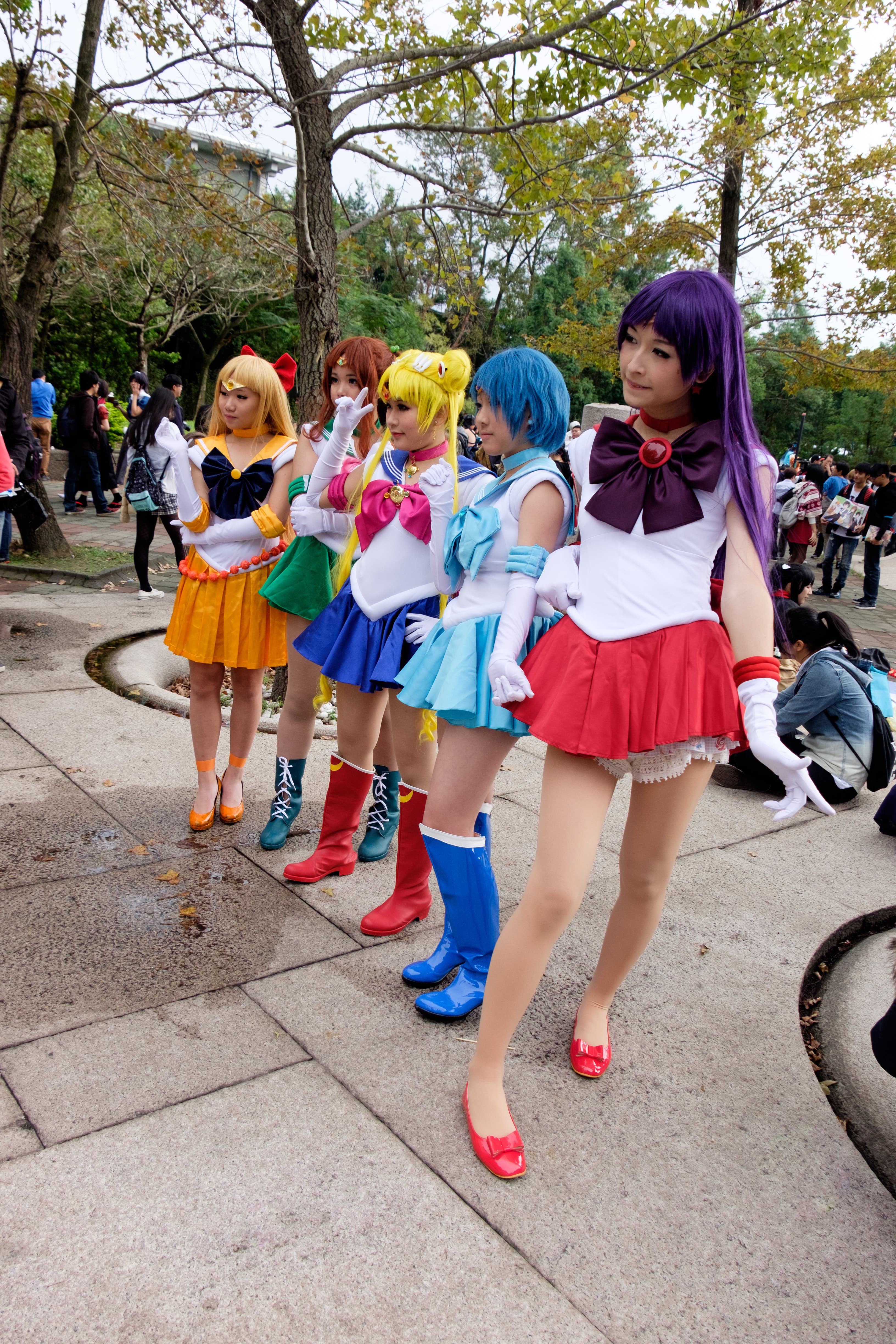
Between these two poles orbit a multitude of nuances, eroguro-kei, angura-kei, nagoya-kei (tied to the Nagoya scene, rawer and more introspective). This meticulous taxonomy testifies to the , musicians whose entire identity, look, attitude, online presence, is part of the work, and whom fans follow with a devotion comparable to that lavished on idols.
💡 Exploring the visual kei scene? Learn to read ヴィジュアル系 (visual kei), バンドマン (bandman), and hundreds of everyday Japanese words with JapaneseSRS, join the waiting list.
Konami, Bemani, and the birth of the otoge#
The 音ゲー (otoge, a contraction of ongaku gēmu, "music games") were born in Japanese arcades in the late 1990s, and a single title is credited with founding the genre: beatmania, released by in 1997. The concept was radically simple: a DJ turntable, five keys, and notes scrolling down the screen that had to be struck in rhythm to mix a track. The success was immediate, and Konami swiftly created an entire division dedicated to these games: Bemani (BEMANI), a contraction of "beatmania."
beatmania spawned a dynasty. beatmania IIDX, launched in 1999 with seven keys and a turntable, became its expert version, still being updated nearly three decades later. But it was another Bemani title that tipped the genre into global culture: , abbreviated DDR, released in 1998. Instead of playing with the hands, the player danced on a sensor pad, stomping arrows on the floor in rhythm. The spectacular cabinet turned the player into a performer, and arcades into improvised stages where onlookers clustered.
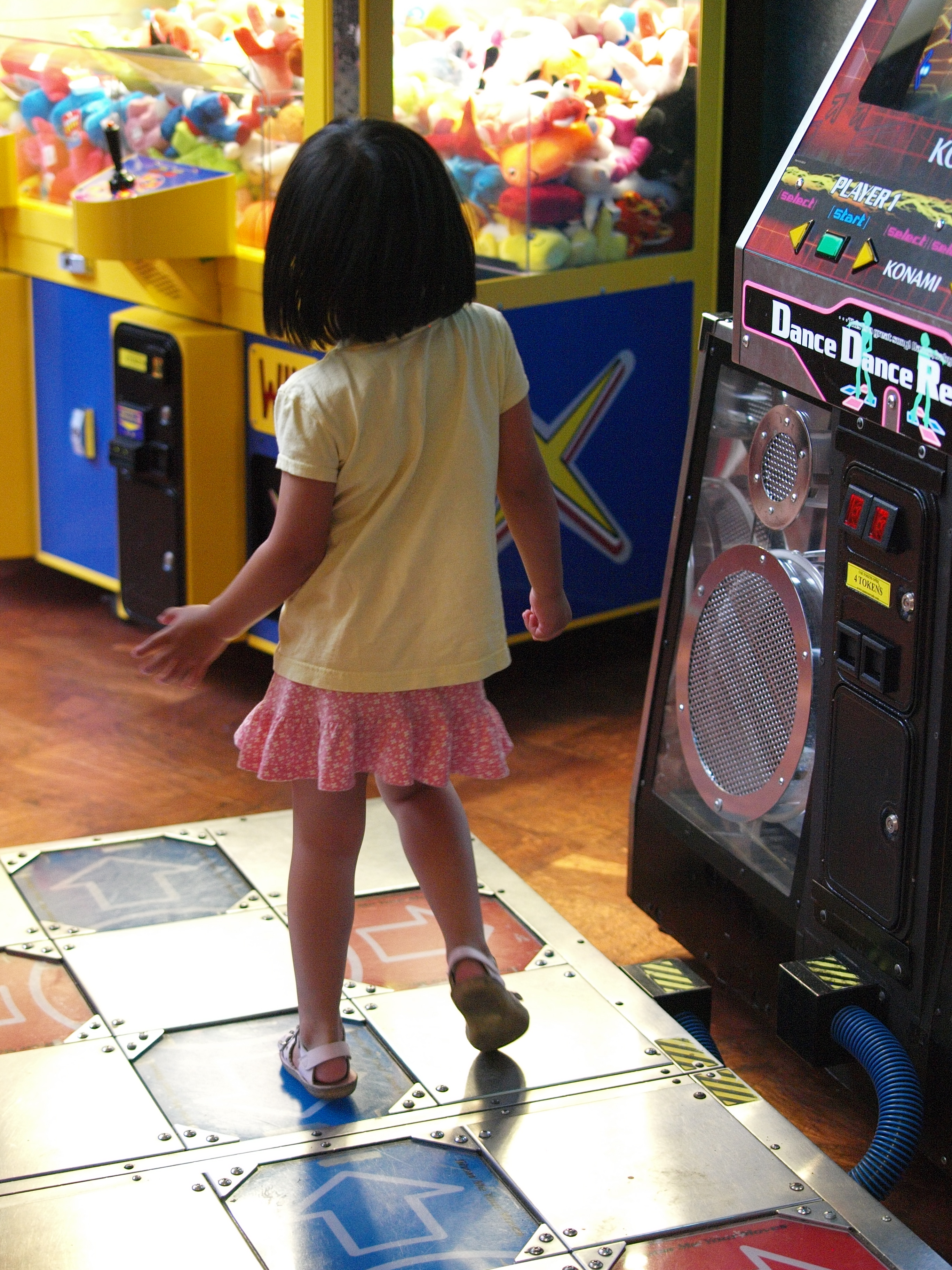
Bemani then declined the concept endlessly. bet on large colorful buttons and an eclectic, candy-coated soundtrack. GuitarFreaks and DrumMania (1998-1999) offered guitar- and drum-shaped controllers, anticipating the Western Guitar Hero phenomenon by several years. Later, played on a grid of sixteen touch panels, and added analog knobs for a hardcore audience. Each title widened the genre's grammar, but all shared the same promise: to turn the listener into a performer.
Taiko no Tatsujin: the drum of an entire country#
If Konami invented the otoge, it was that brought it into homes and family gatherings with , released in arcades in 2001. The game's genius lay in its interface: a replica of the , the traditional Japanese drum, struck with two sticks, on the skin for red notes (don), on the rim for blue notes (ka). Instead of an abstract controller, the player wielded an ancestral instrument, immediately intuitive for a child or a grandparent alike.
This accessibility made Taiko no Tatsujin a national and family phenomenon, where beatmania remained a game for insiders. Its soundtrack mingled, without hierarchy, J-pop hits, anime themes, classical music, video-game tunes, and Japanese folk songs, a unifying repertoire that the whole family could recognize. The game's mascot, the smiling drum , became a familiar figure in Japan's playful landscape.
Striking a taiko is anything but abstract: the gesture comes from the depths of village festivals and temples. Taiko no Tatsujin slipped a thousand-year-old ritual into an arcade cabinet, and nobody needed to be told how to play.
The game then spread to every console, PlayStation, Nintendo DS, Switch, with drum-shaped controllers sold in bundles, extending the arcade experience to the living room. Nearly twenty-five years after its release, the franchise remains a pillar of Japanese arcades and a rare intergenerational touchpoint in the world of video games.
From the arcade to the smartphone#
The rhythm game survived the decline of arcades by migrating to consoles and then to mobile, where it enjoyed a second explosion. The 2000s saw a flowering of notable console titles: Gitaroo Man (2001), Tetsuya Mizuguchi's elegant Rez (2001), and the Project DIVA series featuring the virtual singer , an avatar of the Vocaloid software that became a genuine digital idol.
It was above all on smartphones that the otoge reached its widest audience. Idol and anime rhythm games became a genre in their own right: The Idolmaster, Love Live! School Idol Festival, BanG Dream! Girls Band Party!, and Project Sekai (tied to Hatsune Miku) combine rhythmic gameplay, character collection, and narrative worlds with considerable commercial success. The rhythm game thus mutated into a fandom ecosystem, where musical performance is paired with an attachment to characters and their songs.
Perhaps the most telling trajectory is that of osu!, a free, open-source PC rhythm game created in 2007 by the Australian developer Dean "peppy" Herbert. Its name and core gesture come straight from Osu! Tatakae! Ouendan (おうえんだん), a Nintendo DS rhythm game by the Japanese studio iNiS, in which players tapped circles in time with J-pop hits. osu! ported that mechanic to PC, opened it up to community contributions, and grew a worldwide competitive scene of millions of players. The loop is eloquent: a concept born in a Japanese arcade returns to Japan as a DS game, crosses the ocean to a Western developer, and then comes back to the whole world as free software.
Ouendan (応援団) means the "cheer squads" of Japanese high schools, the uniformed leaders who fire up the crowd at sports games. It is their energy that the Nintendo DS game, and then osu!, asks the player to channel through their fingertips.
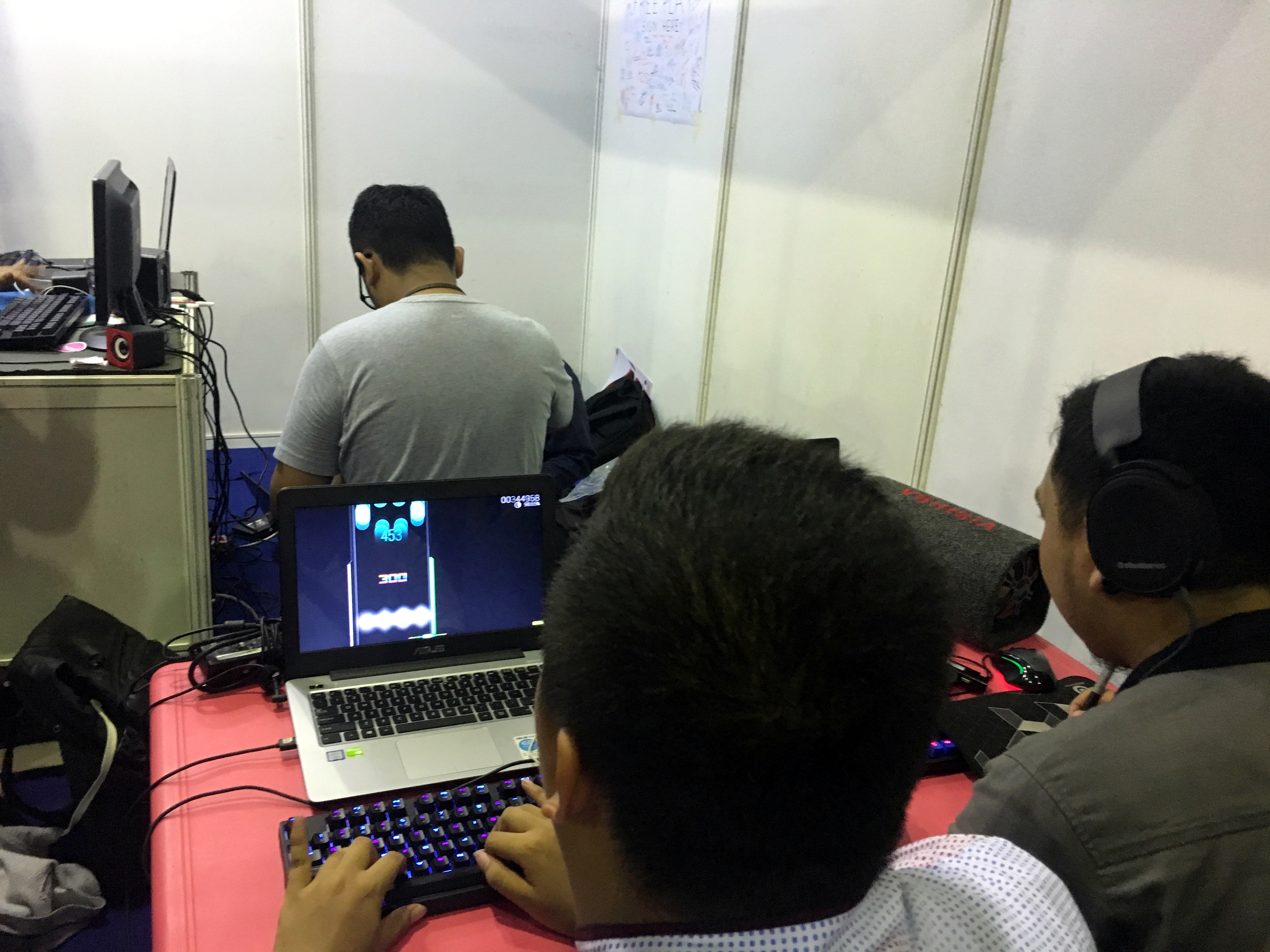
This convergence of music, performance, and community is precisely where visual kei and otoge meet.
The meeting point: music as performance#
Visual kei and rhythm games share one conviction, Japanese music is made to be performed, by the artist and by the audience alike. This kinship isn't merely abstract: it's written into the games themselves, whose soundtracks have repeatedly drawn on J-rock and visual kei.
Bemani's in-house composers, grouped under artist aliases, developed original rock, metal, and electronic tracks that openly borrowed the energy of the J-rock scene. Tracks by J-rock and visual kei bands also appeared in the playlists of Konami's games and of Taiko no Tatsujin, creating direct bridges between the two worlds. For a Japanese teenager of the 2000s, discovering a riff on an arcade cabinet could be the first step toward a club concert.
The itself functions as a cultural space comparable to the visual kei club: a public place where you come as much to play as to be seen, where the best players draw a circle of admiring onlookers, where a community recognizes itself by its codes. The DDR player chaining an expert track under watching eyes and the bandman commanding the stage are, at bottom, performing the same gesture: turning musical mastery into shared spectacle.
Both worlds finally rest on a dense fandom ecosystem, specialist magazines, conventions, merchandise, online communities, leaderboards, and internal hierarchies. Whether you collect concert flyers or climb an otoge's rankings, you belong to the same participatory music culture, where the fan is never a merely passive consumer.
A shared legacy, still alive#
Visual kei didn't vanish with its golden age: it kept molting. , formed in 2002, carried the genre's torch to a new generation with a heavy sound and a sophisticated stage presence. Versailles, founded in 2007, fused symphonic metal with a baroque, aristocratic aesthetic. And , an "air band" that sometimes doesn't even truly play its instruments, turned self-mockery into a trademark with its hit Memeshikute (女々しくて, 2009), proving that visual kei could also laugh at itself.
Abroad, the movement spread well beyond Japan: European and North American tours, local scenes in Latin America, cosplay and Gothic Lolita fashion communities on every continent. Visual kei made Japan an exporter of rock aesthetics in its own right.
Rhythm games, for their part, remain a thriving sector and a cultural ambassador: Taiko no Tatsujin and DDR cabinets equip arcades the world over, and mobile otoge reach millions of players. Both tell the same story, that of a country where listening and doing, watching and participating, sound and gesture, were never truly separated.
In the end, whether it's a made-up guitarist setting a Shibuya club ablaze or a child striking a plastic taiko under a grandmother's gaze, the same truth speaks: here, music isn't an object you consume, it's a role you play.
FAQ#
What exactly is visual kei? Visual kei (ヴィジュアル系) is a Japanese musical movement born in the late 1980s, defined by a flamboyant aesthetic, makeup, elaborate costumes, androgyny, theatricality, applied across a wide spectrum of rock, metal, and pop. It is, above all, a visual style and an attitude, not a single musical genre.
Which band invented visual kei? The term is often attributed to the band X Japan and its 1989 slogan "Psychedelic Violence Crime of Visual Shock," but pioneers such as Buck-Tick and D'erlanger laid the foundations of the style from the early 1980s. The exact origin of the word remains debated.
What is the first Japanese rhythm game? beatmania, released by Konami in 1997, is generally credited with founding the rhythm-game genre (音ゲー, otoge). It gave rise to Konami's Bemani division and to a long lineage of games such as beatmania IIDX, Dance Dance Revolution, and pop'n music.
Why is Taiko no Tatsujin so popular? Taiko no Tatsujin (太鼓の達人), released by Namco in 2001, owes its popularity to its intuitive interface, a real taiko drum struck with sticks, and to its unifying soundtrack blending J-pop, anime, and classical music, which makes it accessible to all generations.
In this article
The cultural terms covered here, each with a short definition.
- Beatmania
- Konami arcade rhythm game that launched the DJ-style music-game craze.
- Bemani
- Konami's music-game division behind Beatmania, Dance Dance Revolution and others.
- J-rock
- Japanese rock music, from mainstream bands to the theatrical visual kei scene.
- osu!
- Free rhythm game inspired by Japanese music games, with a huge community of custom beatmaps.
- Otoge
- Japanese short form for 'rhythm game' (ongaku game).
- Taiko no Tatsujin
- Popular Japanese rhythm game played by drumming on a virtual or physical taiko.
- Visual kei
- Japanese rock movement defined by flamboyant makeup, costumes and androgynous looks.
- X Japan
- Pioneering Japanese band that brought visual kei and power ballads to a mass audience.
City Pop: The Global Revival of a Forgotten Sound
The story of Japanese city pop, the bubble-era sound resurrected by YouTube and TikTok. From Takeuchi Mariya to Matsubara Miki, a worldwide revival decades later.
Cover image: Esby · Esby · CC BY-SA 3.0