City Pop: The Global Revival of a Forgotten Sound
The story of Japanese city pop, the bubble-era sound resurrected by YouTube and TikTok. From Takeuchi Mariya to Matsubara Miki, a worldwide revival decades later.
La rédaction Kotoba
Studio éditorial
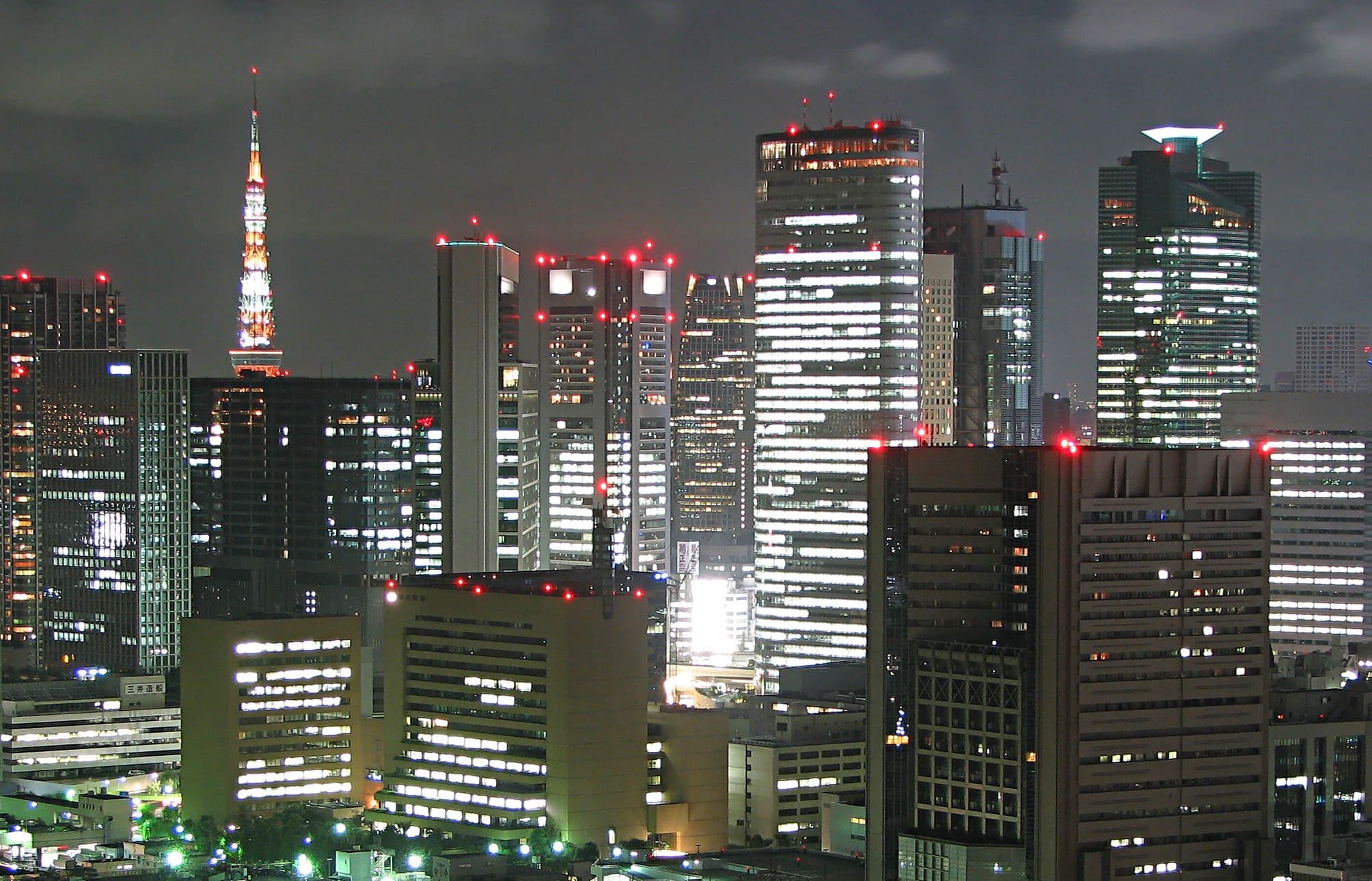
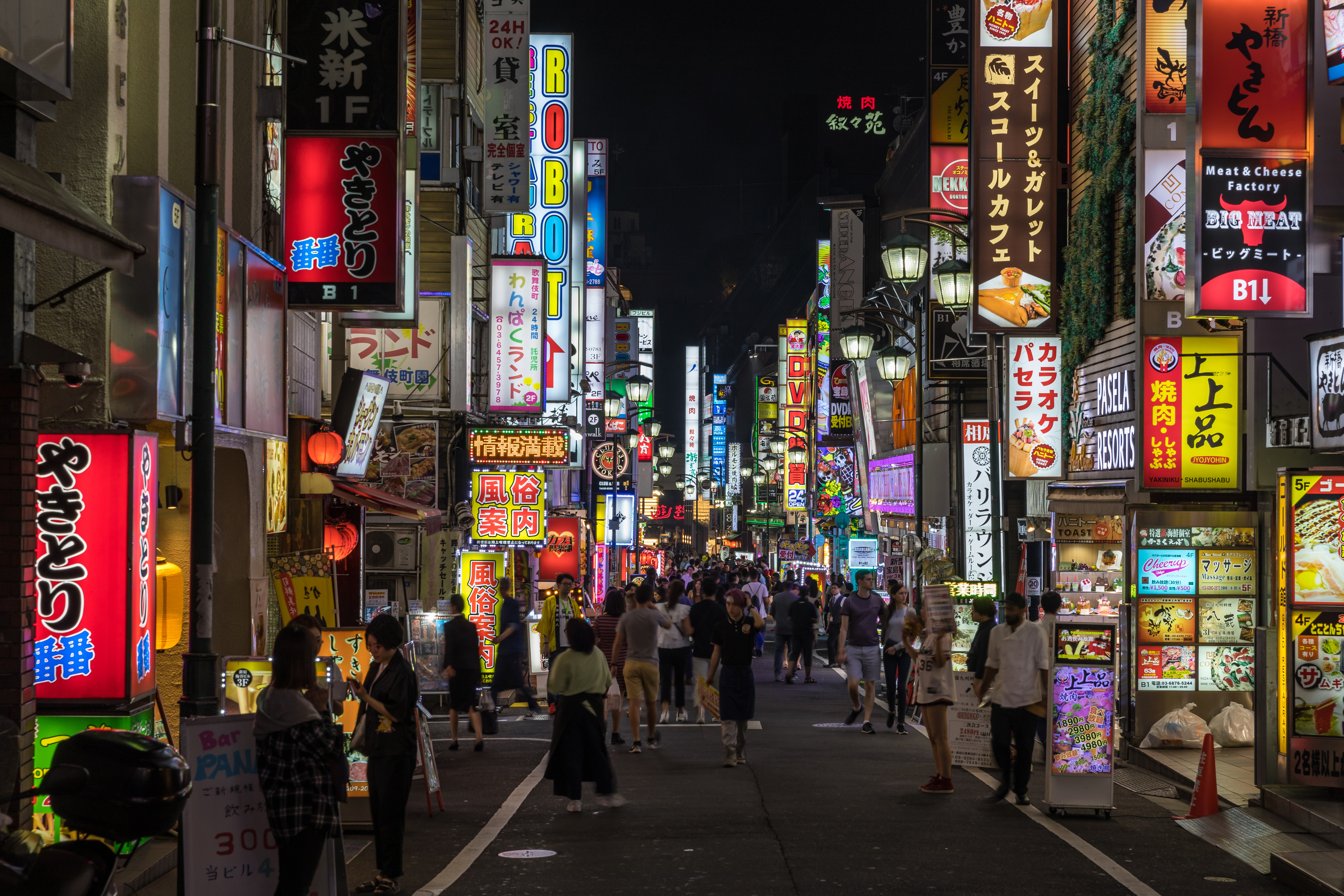
Two in the morning on an elevated Tōkyō expressway. The neon of vending machines slides across the body of a sedan, the air conditioning hums, the car stereo pumps out a slapped bassline, warm pads of synthesizer, a clear female voice singing about a love made of plastic. The city streams past, concrete palms and lit-up towers, and everything in this glossy sound says the same thing: prosperity, the night, gentle speed, the carefree mood of a Japan that believed itself eternally rich. You may never have lived this scene. You may have been born thirty years too late, on another continent. And yet this sound makes you ache for it.
is exactly this paradox: a music of the 1970s and 1980s, intimately tied to the Japanese bubble economy, that millions of young listeners across the world rediscovered and fell in love with in the twenty-first century, without having known the Japan of that era, or sometimes even the genre's existence before an algorithm served it to them. It is the story of a digital resurrection, and of nostalgia for a world one never inhabited.
What is city pop, exactly?#
City pop refers to a current of urban, sophisticated, immaculately produced Japanese pop that flourished from the late 1970s to the mid-1980s. The term never described a rigorously codified genre. It is more of a retrospective label, popularized long after the fact, gathering musicians who shared a sonic aesthetic. It blends American funk and soul, Californian soft rock and AOR (adult-oriented rock), boogie, jazz fusion, R&B and disco, all filtered through a Japanese sense of precision and finish.
What unites these tracks is less a recipe than an atmosphere: that of an urban Japan, prosperous, optimistic, oriented toward the pleasures of consumption. The lyrics and album covers conjure a recurring imaginary: convertibles, beaches, getaways to seaside resorts, neon-lit city nights, the picture windows of modern apartments, cocktails by the pool. City pop is the soundtrack to an affluent metropolitan lifestyle, an air-conditioned dream.
Musically, certain signatures recur: round, singing basslines, precise drumming with an understated groove, electric keyboards (Rhodes, analog synthesizers) with silky textures, brass or synthetic strings, and a production cleanliness that is almost surgical. That clarity is no accident: it reflects the arrival of high-end recording gear and the craft of Japanese studios that no longer had anything to envy in Los Angeles.
Origins: Happy End and the birth of an urban pop#
It all begins with a cult band of the early 1970s: . Active from 1969 to 1972, this quartet brought together four figures who would shape Japanese music for decades: , , and . Their wager: to sing rock in Japanese at a time when the language was judged unsuited to the genre. The era's "rock in Japanese" debate, sometimes called the Nihongo rokku ronsō, was settled in large part by their success.
Happy End was not yet making city pop, but the band laid its foundations: careful writing, a folk-rock sensibility imported from California, and above all a fertile dispersal of its members. After the breakup, Hosono explored a thousand directions (before co-founding the Yellow Magic Orchestra in 1978, a global electro pioneer), while Ōtaki became a producer and arranger obsessed with classic American pop. His solo album A Long Vacation (ロング・バケイション, 1981) remains one of the best-selling and best-loved records of the genre, a peak of sunny, melancholy pop.
Around these figures gathered a scene of virtuoso session musicians, able to play this polished funk with disconcerting ease. The economy did the rest.
The soundtrack of the bubble#
City pop is inseparable from the . In the 1980s, Japan experienced a dizzying expansion: the yen soared, Tōkyō real estate reached deliriously high levels, wages climbed, luxury brands sold out. The country dreamed of being the world's foremost power. This material euphoria needed a music in its own image: elegant, confident, without rough edges.
City pop delivered exactly that. It accompanied drives in imported cars, evenings in the bars of Roppongi, holidays in Hawaii or Okinawa. Its album covers, often illustrated in a vivid graphic style, sold a fantasy of fullness. The iconography is essential: the illustrator , with his blue pools, palm trees and gradient skies inspired by the American West Coast, created some of the genre's most emblematic images, including the cover of A Long Vacation. His "resort" aesthetic became the visual face of an entire era.
City pop did not sing of wealth as vulgarity. It sang of it as light: a promise that tomorrow would always be gentler than today.
Then the bubble burst. At the turn of the 1990s, real estate prices and stock markets collapsed, opening what came to be called the "lost decade." The air-conditioned dream came up short. City pop, its optimism now out of place, seemed dated overnight. Tastes changed, new currents dominated the 1990s, and the genre slid slowly into relative oblivion: preserved by enthusiasts, ignored by the general public, condemned, it was thought, to be nothing more than a memory.
The voices of the golden age#
Several artists embody, on their own, the summit of the genre, and their names recur like a pantheon.
Yamashita Tatsurō, the architect#
, born in 1953, is often considered the absolute master of city pop. A multi-instrumentalist and obsessive perfectionist, he built a body of work of rare coherence. His single Ride on Time (ライド・オン・タイム, 1980), carried by an advertising success, propelled him to the top of the charts and gave its title to an album that became a classic. But it is perhaps his album For You (1982), with cover art by the illustrator , that most perfectly condenses the genre's solar aesthetic.
A curious irony: Yamashita's best-known song around the world is not a summer track but a winter ballad. Christmas Eve (クリスマス・イブ, 1983) became the unavoidable Christmas standard in Japan, replayed every December for decades, notably thanks to a long-running railway advertising campaign. Few Westerners know that this holiday classic comes from the same world as Plastic Love.
Takeuchi Mariya, the song that became a myth#
, born in 1955, the wife of Yamashita Tatsurō (who produces much of her music), is the other essential name. A singer-songwriter with a limpid voice, she enjoyed a long and successful career in Japan. But a single one of her songs would, decades later, make her a global figure: Plastic Love (プラスティック・ラブ, 1984), a track from the album Variety.
On release, Plastic Love was not a major hit. The song, which tells the story of a woman who shields herself from love by treating it as a superficial game, circulated modestly before sinking into the catalog. No one in 1984 could have guessed the destiny that awaited it.
The other great names#
The pantheon does not reduce to this couple. , a former member of the band Sugar Babe (formed with Yamashita), delivered albums of refined elegance, sometimes tinged with European art pop. wrote boogie tracks of formidable efficiency, such as Remember Summer Days and Last Summer Whisper. And , a singer with a powerful timbre, would also experience a posthumous second life through a song from her very debut.
How the internet resurrected city pop#
The city pop revival is one of the most singular cultural phenomena of the digital age: a near-vanished genre, revived not by an official reissue or a documentary, but by online communities, samples and, above all, recommendation algorithms.
Vaporwave and future funk: the conduits#
The first bridge was built by Western underground scenes in the early 2010s. Vaporwave, a micro-genre born on the internet around 2010-2012, recycled 1980s commercial sonorities (smooth jazz, muzak, elevator pop) into a nostalgic, ironic aesthetic. Its more danceable cousin, future funk, drew directly on city pop: producers like Macross 82-99 chopped and sped up forgotten Japanese tracks into euphoric edits.
One figure stands out: , a South Korean producer who specialized in reworking hits of the Shōwa era, his "Showa Groove" edits. By dint of remixing and championing these tracks, he helped reopen an entire forgotten catalog, to the point of later collaborating with the original artists themselves. These scenes, confidential at first, created a demand, a curiosity, a way in.
Plastic Love and the algorithm#
The founding moment came around 2017-2018, when Takeuchi Mariya's Plastic Love went viral on YouTube. An unofficial video of the song, illustrated with a single archival photo of the artist, began to be recommended massively by the platform's algorithm to users who had never searched for Japanese music. View counts climbed into the tens of millions before rights issues led to successive takedowns and re-uploads.
The phenomenon fascinated even the international press, which wondered: why was YouTube pushing an obscure 1984 Japanese song with such insistence? No one ever had the full answer. But the effect was undeniable: a song that had never been a hit on release was becoming, thirty-three years later, the anthem of a global generation.
An algorithm did for a 1984 song what no record label had managed at its release: it made it unforgettable to people who were not even looking for it.
Mayonaka no Door and the TikTok explosion#
The second tremor came from TikTok, in 2020-2021, in the midst of the pandemic. Mayonaka no Door / Stay With Me (真夜中のドア〜stay with me, Mayonaka no Door) by Matsubara Miki, released in 1979 as the singer's very first single, recorded when she was nineteen, became the vehicle for a planetary viral wave. The chorus, reused in countless videos, propelled the track to the top of the global Spotify viral charts, more than forty years after its release.
Tragically, Matsubara Miki had died of cancer in 2004: she never saw this belated triumph. The song, having remained in the shadows for decades, became one of the most popular gateways into city pop, and introduced the genre to millions of young listeners worldwide.
The aesthetic of the revival: nostalgia for a world never known#
The city pop revival is not only a matter of music: it is also the return of an entire visual universe and a state of mind. The illustrations of Nagai Hiroshi, with their turquoise pools, palm trees, neon and pastel gradient skies, have become a graphic language in their own right, endlessly reworked on social networks, on reissue sleeves and in the "retro-futurist" imagery of online communities. To this is added the aesthetic of 1980s anime, the grain of VHS, the interface of old cassette players: a mythology of the past recomposed pixel by pixel.
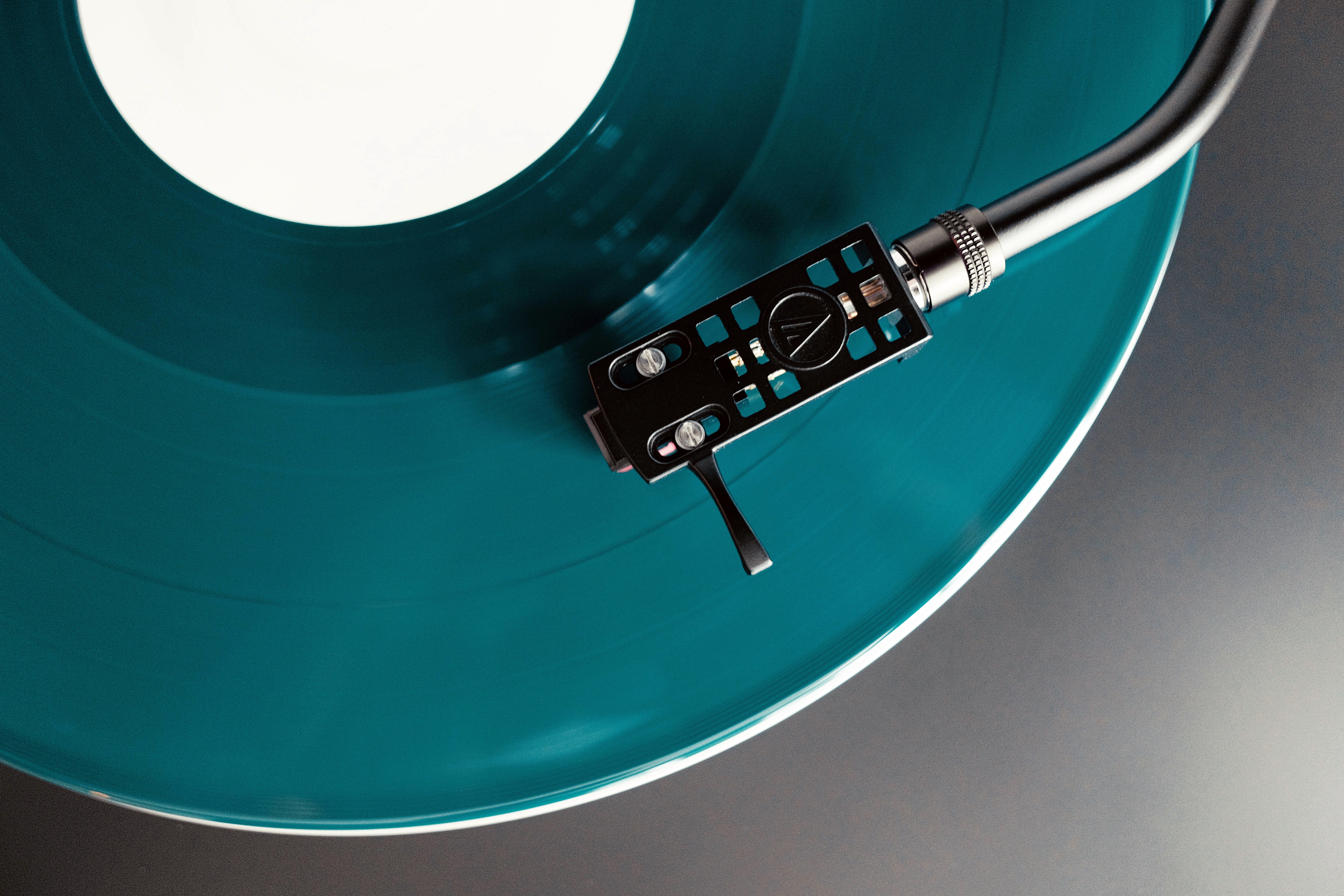
Concretely, the revival also reignited a market. Demand for period vinyl exploded, driving up prices for original pressings; official reissues, long demanded, finally appeared, sometimes internationally for the first time. Living artists like Yamashita Tatsurō and Takeuchi Mariya saw their catalogs win a new audience, young and foreign, where the Japanese industry had regarded them as safe but dated values.
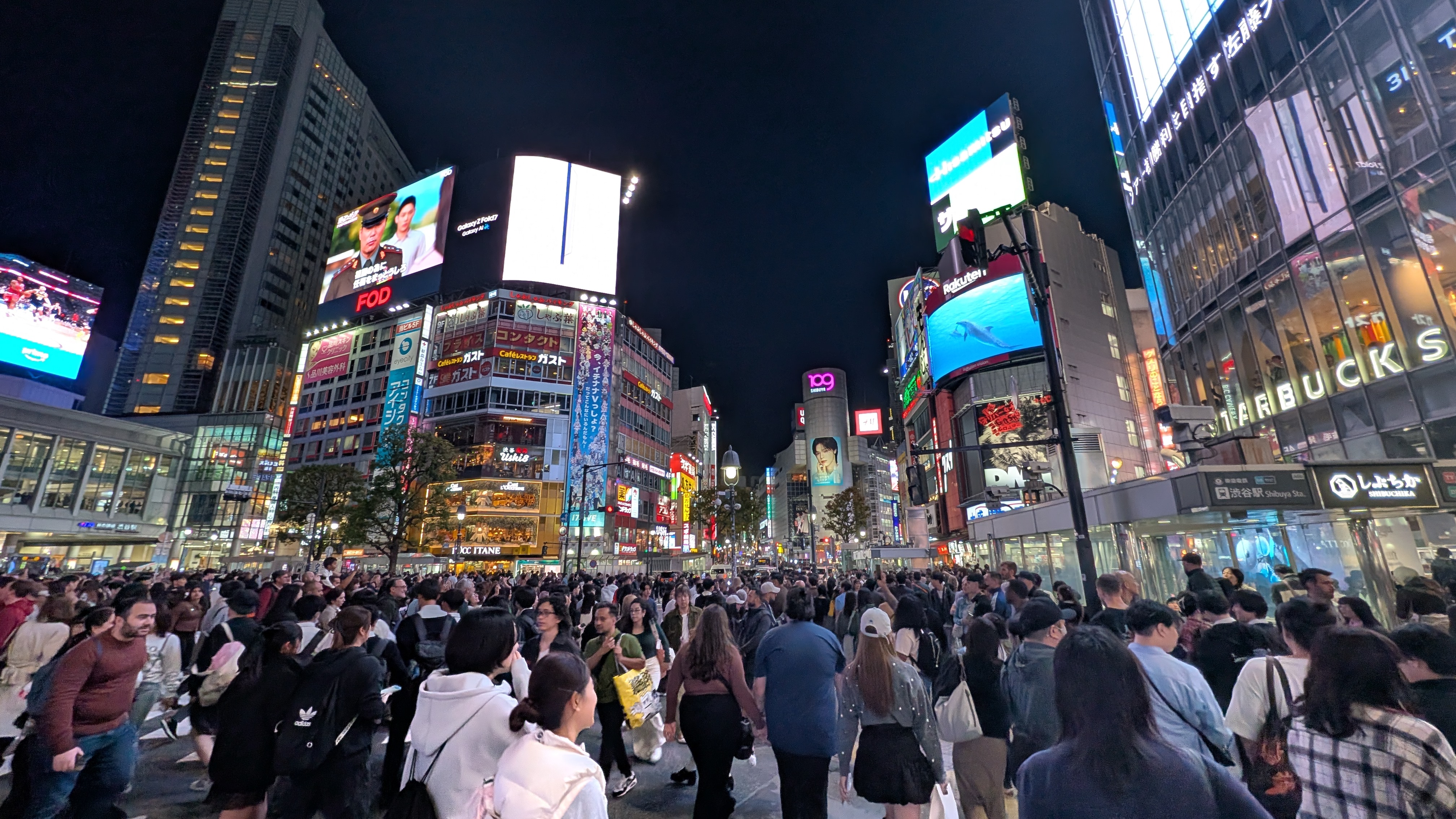
Then comes the most troubling question: how could a generation that never knew the bubble fall in love with its soundtrack? Part of the answer lies in the intrinsic quality of these tracks: a groove that has not aged a day, irresistible melodies, a production that still sounds luxurious today. But another part touches on something deeper.
Anemoia, or the longing for a lost elsewhere#
There is a word, recently coined, for this emotion: anemoia, nostalgia for a time or place one has never known. It is exactly what city pop awakens in its new listeners. A teenager in Lima, São Paulo or Berlin, listening to Plastic Love, remembers nothing: they never drove on a Tōkyō expressway in 1984, never watched the bubble swell or burst. And yet they feel the pull toward that world, like the memory of a life they did not live.
This feeling perhaps says something about our era. Faced with an uncertain present, city pop offers the image of an optimistic future as it was imagined in the past: a "yesterday's tomorrow," confident, luminous, that never fully came to pass. Its quiet melancholy, beneath the sunlit surface, comes from there: we know what these musicians did not know in 1984. We know the bubble burst. To listen to city pop today is to contemplate a happiness from before the fall, with the tenderness of those who know how the story ends.
This is how a music born to celebrate a fleeting prosperity became, decades later, the nostalgic refuge of a global youth that never possessed what it mourns. City pop does not return us to our own past. It returns us to someone else's past, magnified by distance, and that is perhaps why it moves us so deeply.
Frequently asked questions about city pop#
What is city pop exactly? It is a current of urban, sophisticated Japanese pop from the 1970s and 1980s, blending funk, soft rock, AOR, boogie and jazz fusion. Its name is a retrospective label; the genre evokes the prosperous, optimistic Japan of the bubble economy: cars, beaches, city nights.
Why did city pop become popular again? The revival came from the internet. The vaporwave and future funk scenes first sampled the genre in the early 2010s, then Plastic Love went viral on YouTube around 2017-2018, and Mayonaka no Door exploded on TikTok in 2020-2021, introducing city pop to a global audience.
Which song should I start with? Plastic Love (1984) by Takeuchi Mariya and Mayonaka no Door / Stay With Me (1979) by Matsubara Miki are the two essential gateways. To go further: Ride on Time and the album For You by Yamashita Tatsurō, or A Long Vacation by Ōtaki Eiichi.
Why do we love a sound we never knew? This is called anemoia: nostalgia for an era one never lived through. City pop offers the image of an optimistic future dreamed in the past, whose melancholy comes from the fact that we now know the bubble it celebrated eventually burst.
Photo credits: images from Wikimedia Commons, under a free license.
In this article
The cultural terms covered here, each with a short definition.
- City pop
- Glossy Japanese pop of the late 1970s-80s, evoking urban nightlife and seaside leisure.
- Future funk
- Upbeat offshoot of vaporwave built from chopped, danceable city pop samples.
- Mariya Takeuchi
- Japanese singer-songwriter behind 'Plastic Love,' an icon of city pop.
- Mayonaka no Door
- 1979 Miki Matsubara song that went viral worldwide as a city pop anthem.
- Plastic Love
- 1984 Mariya Takeuchi song that became the global emblem of the city pop revival.
- Tatsurō Yamashita
- Japanese musician and producer, a central figure of city pop and husband of Mariya Takeuchi.
- Vaporwave
- 2010s internet music and art genre that samples city pop and 1980s consumer nostalgia.
Visual Kei and Rhythm Games: Japan's Music Scene
From flamboyant visual kei to the arcade cabinets of Taiko and beatmania, a journey through two pillars of Japanese music culture and their shared legacy.
Cover image: imuttoo (Flickr) · imuttoo (Flickr) · CC BY-SA 2.0