Yasuke: The African Samurai Who Served Nobunaga
The documented story of Yasuke (弥助), the African man who entered Oda Nobunaga's service in 1581. Sources, debates and the legacy of a legend.
La rédaction Kotoba
Studio éditorial
Kyōto, spring 1581. A crowd presses around a residence in the temple district, so dense that bystanders are reportedly injured in the crush. Everyone wants to see the man the whole city has talked about for days: a foreigner of colossal stature, with deep black skin, who arrived in the retinue of the priests from the West. They whisper that his skin is painted. They whisper that he is stronger than ten men. And behind the doors, the master of war-torn Japan, , prepares to receive him.
The man history would remember as is one of the most fascinating, and most contested, figures of late sixteenth-century Japan. An African in the service of a Japanese warlord, a witness to one of the archipelago's most famous assassinations, he left a trace clear enough that he cannot be dismissed as legend, yet faint enough that almost everything, from his origins to his final fate, remains open to debate. To tell Yasuke's story honestly is to learn to separate what the sources say from what the centuries have added.
What the sources actually say#
Yasuke is attested by contemporary documents, which is rare for an otherwise anonymous person of that era. His presence is recorded in the , the chronicle of Nobunaga's life written by his vassal , as well as in the correspondence of the Jesuits on mission in Japan, notably the letters of Father Luís Fróis (1532-1597) and the 1582 annual letter attributed to Father Lourenço Mexia. These two bodies of sources, one Japanese, one European, agree on the essentials: a tall African served Nobunaga during his final years.
Beyond that core, the uncertainty begins. No source gives his birth name, his mother tongue, or his date or place of birth with any certainty. "Yasuke" is the Japanese name Nobunaga is said to have given him, not an African surname. Anything claiming to go beyond this documentary frame is interpretation, hypothesis, or sometimes pure later invention.
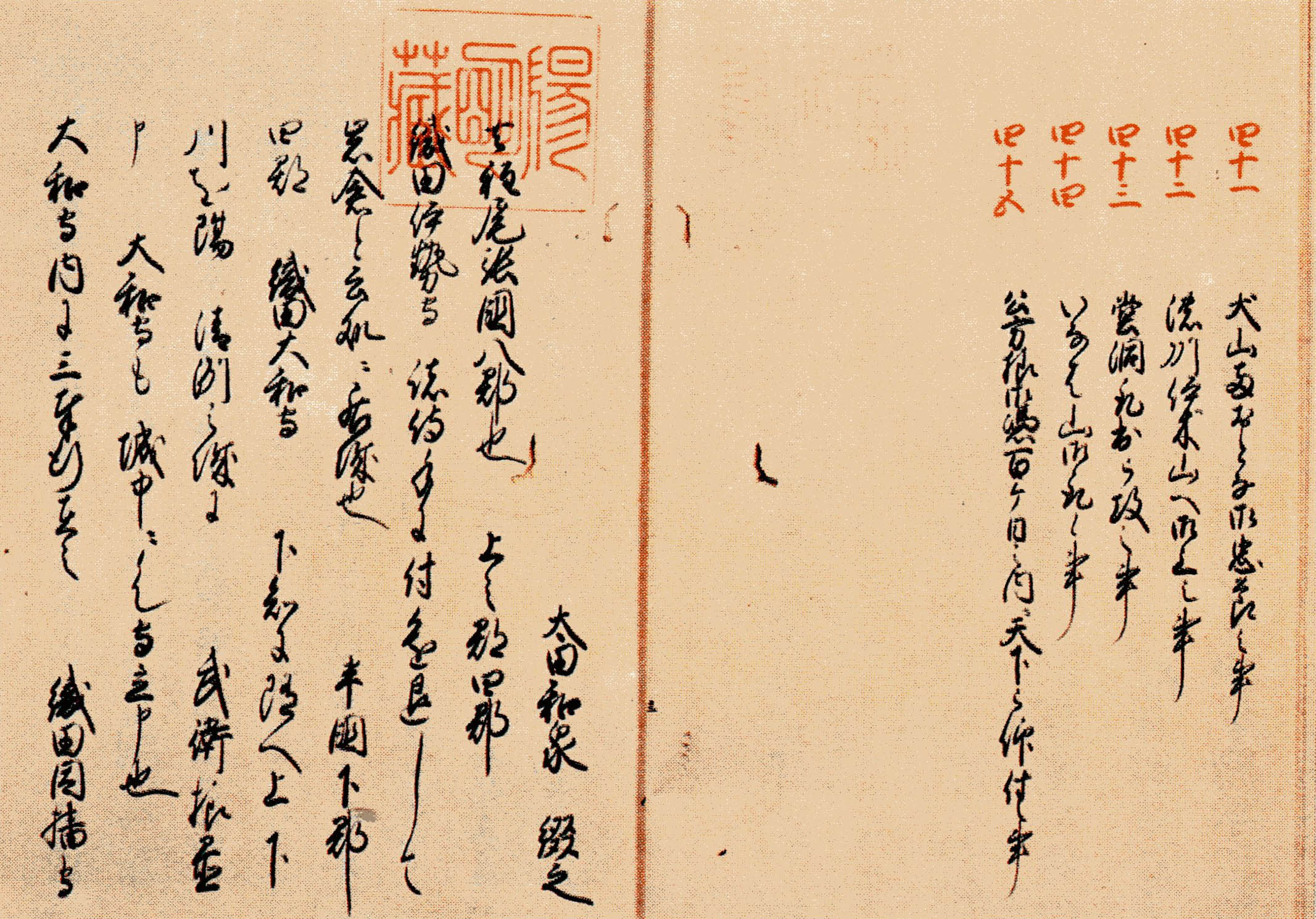
Rigor demands a sharp distinction here. On one side, the bare fact recorded by Ōta Gyūichi and the Jesuits. On the other, the twentieth- and twenty-first-century narratives that have embroidered on this canvas. Between the two lie four centuries of near-total silence: after 1582, Yasuke vanishes from the archives, and no one knows what became of him.
Arrival in the Jesuit retinue#
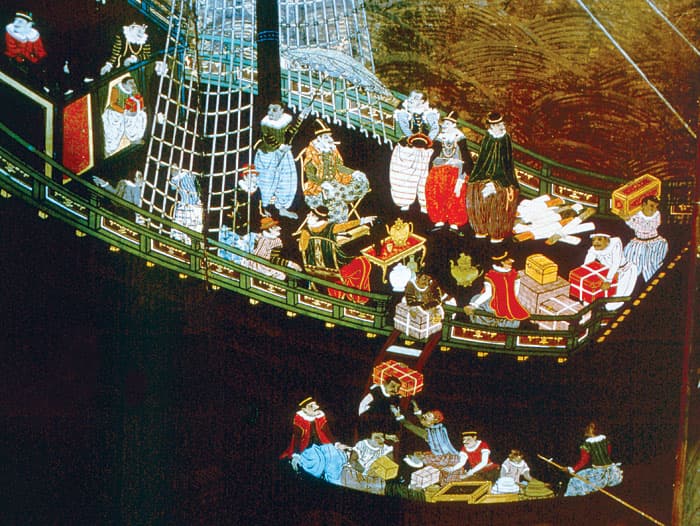
Yasuke arrived in Japan in 1579, in the entourage of the Jesuit visitor Alessandro Valignano (1539-1606). Valignano, an Italian, was the Visitor of the Society of Jesus for the East Indies, meaning the highest authority of the Jesuit mission for all of Asia. He landed at Nagasaki in July 1579 to inspect and reorganize the evangelization of Japan, accompanied by a retinue that included this black man, most likely employed as a bodyguard or servant.
How had Yasuke reached that point? The Jesuits traveled across Asia along the Portuguese trade routes, from Goa to Macao. The most widespread hypothesis holds that he came from East Africa, Mozambique is often suggested, and that he passed through Portuguese or Indian service before joining Valignano's retinue. But these are only conjectures, to which we will return.
A man whose birth name, language and homeland are unknown, yet whose master, height and courage we know: Yasuke is a paradox of the archive, present and elusive at once.
For nearly two years, Yasuke accompanied the Jesuits on their travels across the archipelago. It was in Kyōto, in 1581, when Valignano came to request an audience with Nobunaga before leaving the country, that his path turned. The warlord wanted to see the African whose reputation was spreading.
The meeting with Oda Nobunaga#
The presentation to Nobunaga, in the spring of 1581, was a public event of rare intensity. The sources report that curiosity was such that crowds gathered around the residence, with some descriptions mentioning people injured in the press and roof tiles broken under the weight of onlookers. For the people of Kyōto, a man with black skin was an unprecedented sight.
The most famous anecdote, one to handle with caution, holds that Nobunaga, unable to believe that skin could be so dark, ordered the man scrubbed to verify that it was not painted or dyed with ink. This account appears in the Jesuit sources and echoes in the Japanese tradition. Whether literally accurate or embellished, it conveys a truth: Yasuke's appearance confronted Nobunaga, a curious mind hungry for foreign novelties, with something he had never seen.
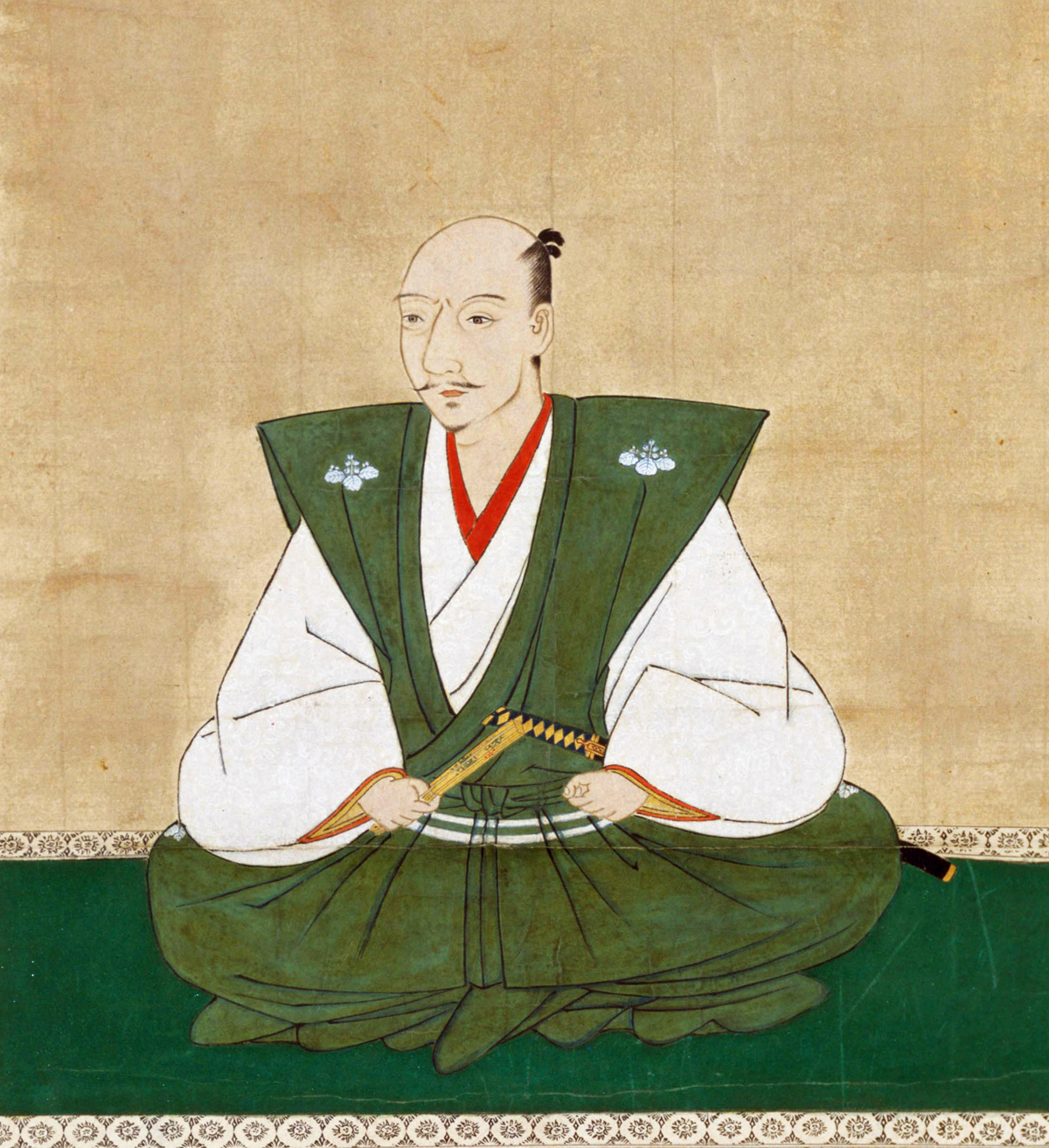
Nobunaga was won over. According to the sources, he took Yasuke into his service. The Shinchō Kōki describes his impressive stature, crediting him with a height on the order of six shaku and more (roughly 1.80 to 1.90 meters, gigantic for the Japan of that time), and the color of his skin compared to ink or to a black ox. The Jesuits note that Nobunaga held him in high esteem and enjoyed conversing with him.
Stipend, residence, perhaps a sword#
What exactly did Yasuke receive from Nobunaga? The sources agree on several points: a stipend (a regular payment), a residence, and, the most debated detail, perhaps a short sword, the . According to some traditions, Nobunaga even considered making him a , a dignitary of his entourage, and entrusted him with carrying his weapons, an honorable function at a lord's side.
These elements, pay, lodging, a weapon, direct service to a daimyō, form the heart of the debate over Yasuke's status. They sketch a man integrated into Nobunaga's warrior household, not a mere curiosity on display. The name "Yasuke," transcribed in various ways (弥助, 弥介, and other spellings), was given to him on this occasion; its ending in -suke is typical of Japanese male names, the mark of a deliberate onomastic naturalization.
To receive a name, a roof, a salary and perhaps a blade: Nobunaga did not treat Yasuke as a sideshow, but as a man of his house.
Measure is still required, however. The chronicles of the time are not administrative ledgers; they record what strikes the eye, sometimes with embellishment. The material reality of Yasuke's service escapes us in its detail. What can be affirmed is that he was an active member of Nobunaga's entourage during his final months, and that he stayed with him to the end.
The Honnō-ji Incident#
On 21 June 1582, the 2nd day of the 6th month of Tenshō 10 in the calendar of the day, Yasuke witnessed the catastrophe that ended Nobunaga's rule: the , the "Honnō-ji Incident." That night, the general , one of Nobunaga's principal vassals, turned his troops against his lord and surrounded the temple in Kyōto, where Nobunaga was staying with a small guard.
Cornered, Nobunaga took his own life in the burning temple. Yasuke was among his entourage and, according to the Jesuit sources, fought during the attack. After Nobunaga's fall, he joined his son and heir, , who was trying to organize resistance at nearby castle. There too the forces of Akechi prevailed; Nobutada perished in turn, and Yasuke was captured.
It is the outcome of the capture that strikes the most. According to the Jesuit sources, Akechi Mitsuhide, to whom Yasuke was brought, refused to have him executed. He is said to have dismissed him by declaring that he was not Japanese, even calling him an "animal," a phrase that, in context, conveys both contempt and bewilderment before a being from elsewhere. Mitsuhide ordered that he be taken to the Jesuit church of Kyōto, the . There the thread breaks: after 1582, Yasuke disappears entirely from the records.
Three great historical debates#
Yasuke's story resists definitive statements. Three questions in particular remain open, and honesty requires laying them out without artificially settling them.
His origins#
Yasuke's homeland is unknown. Mozambique comes up most often in the hypotheses, owing to the Portuguese routes of the Indian Ocean. Makua, Dinka or Yao origins, peoples of East Africa and Sudan, have also been proposed, but these suggestions rest more on geographic deduction than on direct evidence. Some historians suggest he had passed through Portuguese India, where Africans served as soldiers and servants. No source settles the matter.
His name and identity#
"Yasuke" is a Japanese name, not an original identity. His birth name, his first religion, his story before 1579 are completely unknown to us. The few physical descriptions, his great height, the darkness of his skin, the strength attributed to him, are nearly all that contemporaries judged worth recording.
Was he really a "samurai"?#
This is the sharpest debate, and the most treacherous. Yasuke bore a sword, received a stipend and served a lord directly: attributes that, in the Japan of the Sengoku period (戦国, "warring states"), could characterize a warrior in a daimyō's service. But the word 侍 (samurai) referred to a social category whose contours, at that time, remained fluid and lacked the hereditary rigidity it would acquire under the Tokugawa. Applying the modern label "samurai" to Yasuke is therefore an approximation: some historians find it defensible given his armed role at Nobunaga's side, others find it anachronistic. The exact title he held, if he held one, is not documented.
Lockley, Netflix, Assassin's Creed: memory inflamed#
Worldwide interest in Yasuke owes much to recent works, and these have, in turn, blurred the line between history and fiction. In 2019, the historian Thomas Lockley, with Geoffrey Girard, published African Samurai: The True Story of Yasuke, a book that popularized the figure for the general English-speaking public. The book fueled the enthusiasm, but it also drew controversy: several historians fault it for presenting as established certain elements that are hypothetical, and for filling the silences of the sources with speculative reconstructions.
That same year, Netflix released Yasuke, an animated series produced by studio MAPPA, with director LeSean Thomas and the voice of LaKeith Stanfield: an openly fantastical reimagining, mixing mechas and magic, that makes no claim to historical accuracy but brought the name to millions of viewers. Then, in 2024, Ubisoft's video game Assassin's Creed Shadows made Yasuke one of its two playable characters, triggering an international controversy in which legitimate historians' debates mingled with the noise of a "culture war" on social media.
The danger is not that Yasuke inspires fiction, every great figure does, but that fiction and controversy substitute themselves for the sources and make us forget what we truly know, and what we do not.
Untangling these layers is precisely the historian's task. The primary sources, the Shinchō Kōki, the letters of Fróis and the 1582 annual letter, say little, but that little is solid. Later embellishments, whether they come from old edifying tales, from Lockley, or from video-game writers, must be taken for what they are: extensions, not proofs.
A silhouette that crosses the centuries#
Today, Yasuke holds a singular place in the Japanese and global imagination. He embodies a truth often overlooked: sixteenth-century Japan, far from hermetically closed, was crossed by the trade and missionary routes that linked Africa, India, China and Europe. The presence of an African beside the most powerful lord of the archipelago is not a romantic anomaly but a symptom of this early globalization, the era of trade.
His silhouette has long nourished Japanese popular culture, well before Western productions. It is said that had expressed interest in the figure. Yasuke has inspired novels, manga, plays, and the Netflix anime carried his name beyond the archipelago's borders. Each era reinvents him to its own measure: symbol of otherness, of integration, of courage, or simply of mystery.
What history bequeaths us, in the end, is not a complete portrait but an undeniable presence: a man come from afar, noticed by one of Japan's greatest warlords, witness to his fall, spared by his killer, then vanished into silence. To acknowledge the limit of our knowledge does not diminish Yasuke, it restores him to his archival truth, which is also his greatness: that of a real man whose trace, faint but indelible, was enough to cross four centuries and feed the imagination of an entire world.
Frequently asked questions#
Did Yasuke really exist? Yes. His presence is attested by independent contemporary sources: the Japanese chronicle Shinchō Kōki by Ōta Gyūichi and the correspondence of the Jesuits in Japan, including the letters of Luís Fróis. He is one of the few Africans of that era documented in Japanese archives.
Where did Yasuke come from? This is not known with certainty. The most common hypothesis points to East Africa, perhaps Mozambique, with a passage through Portuguese or Indian service before his arrival in Japan in 1579 with the Jesuit Alessandro Valignano. No source specifies his exact origin or his birth name.
Was Yasuke a samurai? The debate remains open. He bore a sword, received a stipend and served Oda Nobunaga directly, attributes of a warrior in a lord's service. But in the Sengoku period the word "samurai" did not yet have the rigid definition of later centuries: applying the modern label is an approximation debated by historians.
What became of him after Nobunaga's death? After the Honnō-ji Incident in 1582, Yasuke was captured by Akechi Mitsuhide's men, who spared him and had him taken to the Jesuit church in Kyōto. Beyond that date he disappears entirely from the archives; his final fate remains unknown.
In this article
The cultural terms covered here, each with a short definition.
- Honnō-ji incident
- The 1582 coup in which Oda Nobunaga was betrayed and died at the Honnō-ji temple.
- Oda Nobunaga
- Warlord who began the unification of Japan in the 16th century, master of Yasuke.
- Sengoku period
- Era of civil wars (15th-16th c.) when rival warlords fought to unify Japan.
- Yasuke
- African man who served Oda Nobunaga and is remembered as Japan's first foreign-born samurai.
The 47 Rōnin: history and legend of a revenge
The true story of the 47 rōnin and its legend, the Chūshingura. From the 1701 Akō incident to the seppuku at Sengaku-ji: facts, dates and the myth of samurai Japan.
Cover image: Kano Domi · Kano Domi · Public domain