Mecha: A History of Japan's Giant Robots
From Tetsujin and Mazinger to Gundam and Evangelion, the complete history of the mecha genre: super robots, real robots, Gunpla and global influence.
La rédaction Kotoba
Studio éditorial
A cockpit flickers to life, green screens crackle, and the roar of a reactor shakes the pilot's seat. Outside, a forty-metre silhouette rises above the rubble, a steel hand as wide as a building, two searchlight eyes sweeping the horizon. Inside, curled in his seat, a teenager grips the controls. The metal is not alive, but the fate of the world now rests in his trembling hands. This image, a child, a titanic machine, a war too large for him, is the DNA of an entire genre born in Japan: .
Mecha are piloted by a human. Over seven decades, the genre has travelled from tin toy to metaphysical theatre, from children's entertainment to a meditation on war, adolescence and the fusion of man and machine. It has sold billions of figures, exported heroes to every continent, and shaped the global imagination of science fiction all the way to Hollywood. Here is how robots of ink and plastic became a mythology.
Before the pilot: Tetsujin 28 and remote-controlled machines#
Japanese manga's first iconic giant robot was born in 1956, drawn by : , known in the West as Gigantor. Conceived as a secret weapon during the Second World War, the steel colossus is controlled by a young boy, Shōtarō, by means of a remote. The crucial detail: the robot is not inhabited. It is a machine steered from a distance, its morality entirely dependent on who holds the control box.
That nuance establishes one of the genre's enduring themes, technology is neither good nor evil; only its use is. Adapted into an animated series in 1963, Tetsujin 28 paved the way for the robots of the small screen. It belongs to a postwar imagination in which Japan, traumatised by the bomb and fascinated by the machine, projected its anxieties and hopes onto steel giants.
Yokoyama did not invent the fictional robot, Karel Čapek had coined the word robot back in 1920, and Osamu Tezuka brought Astro Boy (鉄腕アトム, Tetsuwan Atom) to life in 1952. But Astro Boy was a robot-character, an artificial child with a soul. Tetsujin is a vehicle, a tool of war. This distinction, the machine as a prosthesis of human will rather than an autonomous being, would become the signature of mecha.
Mazinger Z: climbing inside the iron god#
Mecha as we know it truly begins in 1972, with by . The innovation is decisive: for the first time, the pilot does not steer his robot from afar but sits inside it. Kōji Kabuto climbs into a small craft, the Hover Pilder, which locks onto the giant's skull; from that moment, man and machine are one.
Nagai says the idea struck him in a traffic jam: "What if the car could stand up and walk over the others?" This fusion of driver and vehicle gives birth to the , the 1970s archetype: a near-invincible colossus armed with weapons whose names are bellowed at full volume, the Rocket Punch, the Breast Fire. Mazinger is forged from , a fictional metal that would lend its name to a legendary line of die-cast toys launched by Bandai/Popy.
"With Mazinger, the human no longer commands the machine from a distance: he becomes its heart, its brain, its fear." This is where the genuine emotional charge of mecha is born.
The success is colossal. Mazinger spawns a whole lineage: Great Mazinger (1974), then , known in France as Goldorak. Broadcast on Antenne 2 from July 1978, Goldorak triggered a cultural tidal wave: ratings peaks of millions of young viewers, playgrounds echoing with battle cries, and a national debate about violence in children's television. In Italy, the robot of Actarus enjoyed the same triumph. For entire generations of Europeans, mecha was Grendizer before it even had a name.
Getter Robo and the age of super robots#
The super robot dominates the 1970s, and its conceptual masterpiece appeared in 1974: , born of a collaboration between Nagai Gō and . Its wild idea, three flying machines that combine into three different robots depending on the order of assembly, invented the combining and transforming robot, the template for every Voltron and Power Ranger to come.
The super-robot aesthetic obeys a recognisable grammar. The machines are gigantic and indestructible; they draw their power from fantastical sources (photonic energy, Getter rays). The enemies are subterranean empires, aliens, mad scientists. Above all, the story is moral and frontal: good battles evil, the finishing move is a scream, victory is total. It is a heroic puppet theatre, tailored to sell toys and galvanise children.
Behind the spectacle runs a fierce commercial engine: the robot's sponsor is often a toy manufacturer, and the mecha's design is conceived to become a die-cast figure. The genre is, from its very origins, an alliance between imagination and industry. This dependence on the toy market would be both a blessing and a constraint, and it is precisely against it that one man would rebel at the end of the decade.
Gundam and the real robot revolution#
Everything shifts on 7 April 1979, with the first broadcast of , created by for Nippon Sunrise studio. Gundam breaks abruptly with the super robot: here, the robot is no longer an invincible hero but a mass-produced weapon, a factory-built military machine that breaks down, runs out of ammunition and can be destroyed. This is the birth of the .
The action unfolds in the , a precise fictional timeline in which humanity has colonised space inside vast orbital cylinders. The war pits the Earth Federation against the self-proclaimed Principality of Zeon. The hero, Amuro Ray, is a civilian teenager who ends up at the controls of the RX-78-2 Gundam prototype by accident, then drags his terror and battle trauma from one engagement to the next. His adversary, Char Aznable, "the Red Comet", is an antagonist of unprecedented moral complexity. The war no longer has a purely good side or a purely evil one.
A historical paradox: Gundam was at first a ratings failure. Deemed too dark and too adult by the children it targeted, the series was cut short, forty-three episodes instead of the planned fifty-two. It was reruns, word of mouth among high-school and university students, and above all an unexpected piece of merchandise that saved it.
Gunpla: when the toy becomes art#
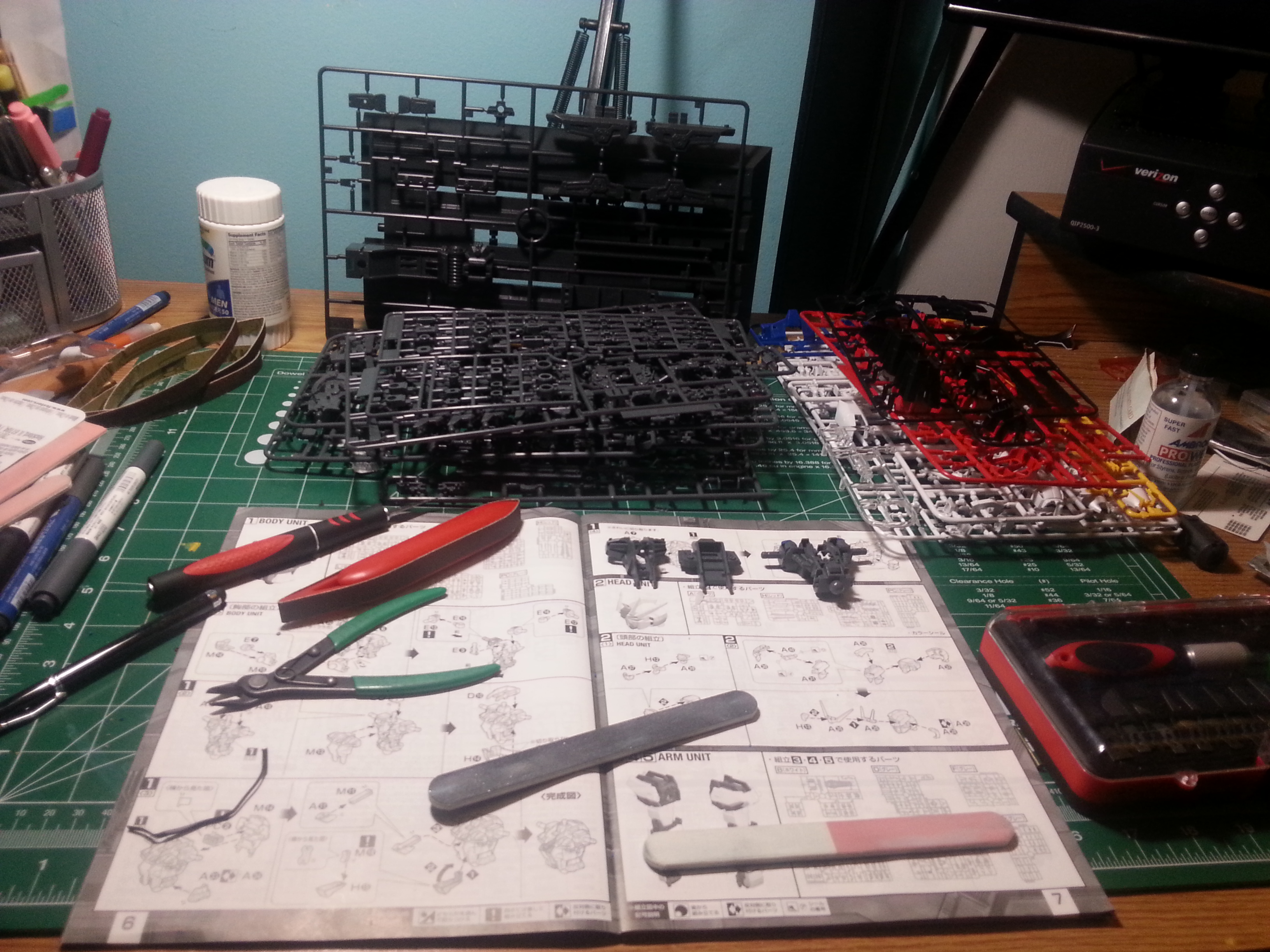
That merchandise is . Launched by Bandai in 1980, these snap-together plastic kits met with phenomenal success, several hundred million boxes sold since. Where the super robot sold die-cast figures for children, the real robot sells model kits that demand patience, paint and craft, appealing to teenagers and adults alike.
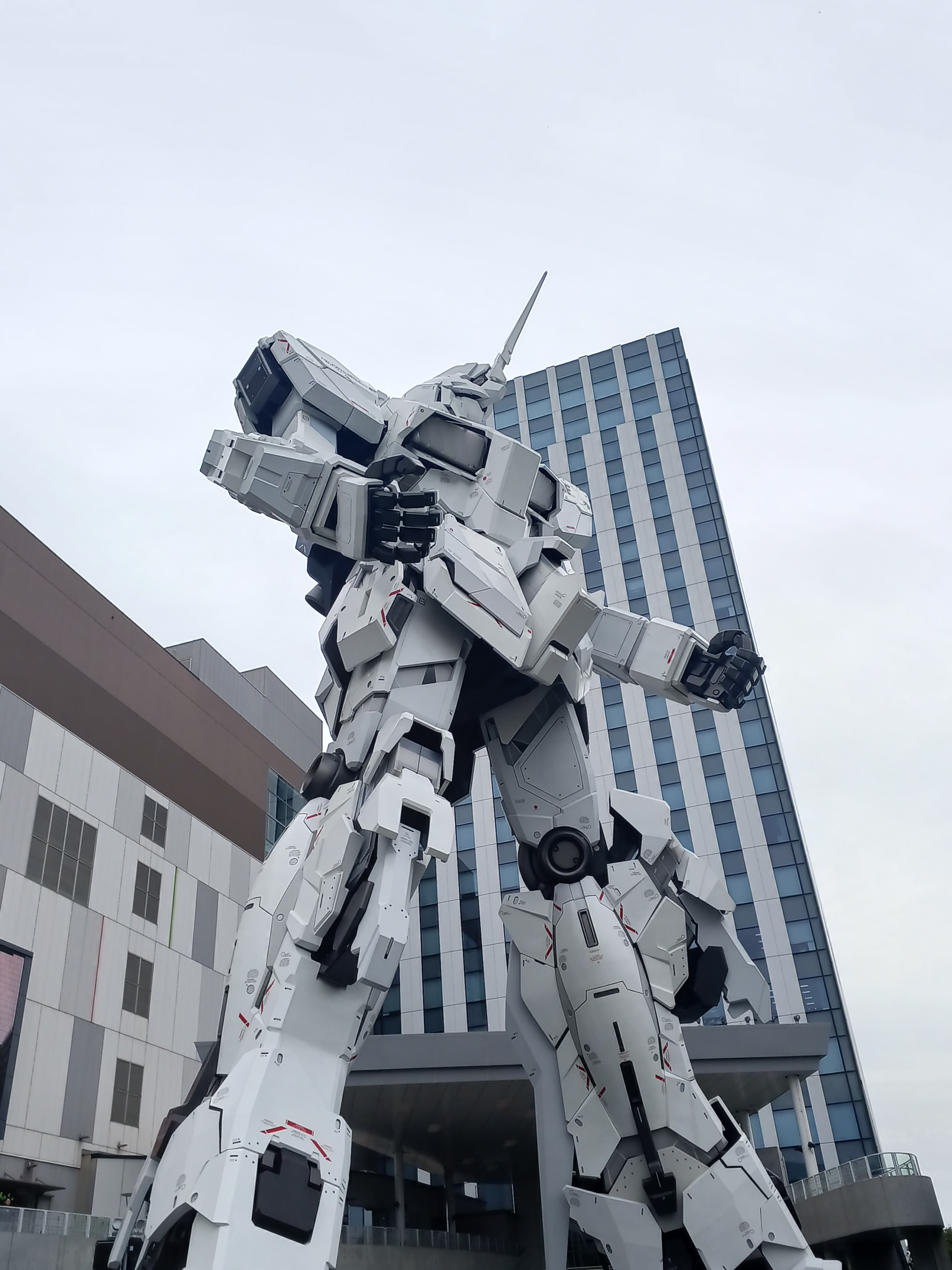
Gunpla transforms the relationship to mecha: the fan no longer merely watches but builds the machine. It is one of the lasting economic foundations of the entire franchise, culminating in Gundam Factory Yokohama, where a life-sized, eighteen-metre articulated Gundam capable of movement welcomed visitors from 2020 to 2024.
Macross, Robotech and the transformable mecha#
In 1982, , conceived by Studio Nue and , added two new ingredients to the real robot: transformation and music. The Valkyrie VF-1 fighter shifts in mid-combat from jet fighter (Fighter mode) to humanoid robot (Battroid mode) via an intermediate stage, a feat of mechanical design that still fascinates engineers.
But Macross's boldest idea is thematic: faced with a warlike alien race, the decisive weapon is not the cannon but the song. The pop of an idol, Lynn Minmay, literally disarms the enemy. The love triangle between the pilot, the singer and the officer becomes as central as the space battles. Macross founded a great tradition: mecha as melodrama, where war serves as a setting for stories of love and music.
In the United States, Macross enjoyed a second life as Robotech (1985), an edit that fused three separate Japanese series into a single saga. For many American viewers, Robotech was the gateway to Japanese animation, the equivalent of what Grendizer had been for France and Italy. Mecha quietly became one of the great global ambassadors of Japanese pop culture.
Evangelion: deconstructing the genre#
In 1995, , created by at Gainax studio, blew the genre apart from within. On the surface, it is a classic mecha narrative: teenagers pilot giants to defend Tokyo-3 against mysterious invaders, the Angels (使徒, shito). In reality, Evangelion turns every convention against itself.
The robots, the EVA units, are not machines but constrained organic beings, harnessed in armour. The hero, Shinji Ikari, is not a courageous pilot but a depressive, terrified teenager, crushed by an absent father who sees him only as a tool. The famous "get in the robot, Shinji" becomes the inverse of a call to heroism: it is the command of an adult world that throws its children into the war machine.
Where Mazinger asked "can you save the world?", Evangelion asks "why should you, and what will it cost you?"
Anno, who was himself going through depression, injected the series with an unheard-of psychological, religious and philosophical charge, decorative Judeo-Christian symbolism, plunges into the characters' psyches, and a 1995 television finale so abstract and introspective that it unleashed as much admiration as fury. The film The End of Evangelion (1997) offered an alternative ending, apocalyptic and devastating.
Evangelion redefined what a mecha could say. After it, it was impossible to pilot a giant robot on screen without interrogating the pilot's psyche. The franchise also remains a commercial colossus: the Rebuild of Evangelion film tetralogy, completed in 2021, won over a new generation, proving that deconstruction could itself become a classic.
Super robot versus real robot: two souls of one genre#
The great fault line of mecha sets two philosophies against each other. To understand this duality is to hold the key to the entire genre.
The super robot: the machine-hero#
The treats the mecha as a character in its own right, almost a god. The machine is unique, overpowered, animated by fantastical energy, and the story follows a mythological logic: a hero, named attacks, an enemy to defeat. Mazinger Z, Getter Robo and Grendizer are its pillars. The emotion is direct, the imagination unbridled, the morality clear. Later, works such as would rekindle this flame with a jubilant sense of excess, robots so large they hurl galaxies.
The real robot: the machine-tool#
The treats the mecha as a credible piece of military equipment: mass-produced, maintained, vulnerable, embedded in a fictional geopolitics. Gundam, Macross and are its references. The emphasis falls on war, politics and the human cost of conflict. The pilot is not a chosen one but a soldier, sometimes a victim.
The boundary is not airtight: Macross blends real robot with musical melodrama, Evangelion inhabits a real robot of metaphysical dread, and Gurren Lagann embraces the super robot with knowing irony. But this founding tension (is the machine a hero or a tool?) runs through every major work of the genre.
The contemporary age: politics, youth and renewal#
Since the 2000s, mecha has diversified without renouncing its roots, absorbing the lessons of Gundam and Evangelion. The opening question of every major new work could be: how do you pilot a giant once everything has already been said?
blends real robot, political intrigue and character design by the CLAMP collective. Its hero, Lelouch, is not a pilot but a manipulative strategist leading a revolution against an empire, the mecha becomes the instrument of a Shakespearean tragedy about power and rebellion.
marries mecha with surf culture against the backdrop of a teenage coming-of-age tale. Tengen Toppa Gurren Lagann (2007) reinvents the super robot in an epic of cosmic ascension. More recently, 86 (Eighty Six) (2021) revisits the Gundam-era theme of dehumanisation through war, following a youth sacrificed and rendered invisible by a segregationist state.
And the parent franchise keeps reinventing itself. is the first main Gundam television series whose central character is a young woman, Suletta Mercury, and which places a relationship between two heroines at the heart of the story. More than forty years after Amuro Ray, mecha keeps widening who can step into the cockpit.
The great themes: war, adolescence, man-machine#
Three obsessions run through mecha from Tetsujin to The Witch from Mercury, and explain why the genre far transcends a mere spectacle of robots.
The first is war. Born in a postwar Japan marked by Hiroshima and the occupation, mecha has never stopped interrogating armed conflict. Gundam turns it into a tragedy in which no one is entirely right; Tomino's pacifism, which depicts war as a destructive absurdity, infuses the whole genre. The giant robot, the ultimate weapon, is also an allegory of the atomic bomb: a power that exceeds the wisdom of those who wield it.
The second is adolescence. The mecha pilot is almost always a young person, ordered to bear an outsized burden. The cockpit becomes a metaphor for the passage to adulthood: to enter the machine is to confront the world of responsibility, fear and loss. Evangelion pushes this idea to its limit by making the robot an echo chamber for Shinji's innermost anxieties.
The third is the fusion of man and machine. From Mazinger's Hover Pilder to Evangelion's neural interfaces, mecha explores what it means to extend the human body through technology. Where does the pilot end and the machine begin? In an age of prosthetics, drones and artificial intelligence, these questions have never felt more current.
A global imprint: from Hollywood to worldwide toys#
Japanese mecha spread far beyond the archipelago. As early as the 1980s, Transformers, an American franchise born of a partnership between Hasbro and the Japanese toy maker Takara, directly recycled designs of transformable Japanese mecha (notably those of the Diaclone line). The grammar of the metamorphosing robot, invented by Getter Robo and Macross, became a multibillion-dollar global phenomenon.
In cinema, the most explicit homage is Pacific Rim (2013) by Guillermo del Toro, an avowed love letter to Japanese mecha and kaijū: giant robots, the Jaegers, piloted by two humans in neural symbiosis, battle monsters rising from the ocean. Del Toro has repeatedly cited Mazinger and Evangelion as direct inspirations. Mecha has also fed films such as Avatar (the combat exosuits) and The Matrix Revolutions (the APUs).
Born from a remote-controlled tin toy, Japan's giant robot has become a universal language of science fiction, spoken in Tokyo, in Hollywood and in every child's bedroom.
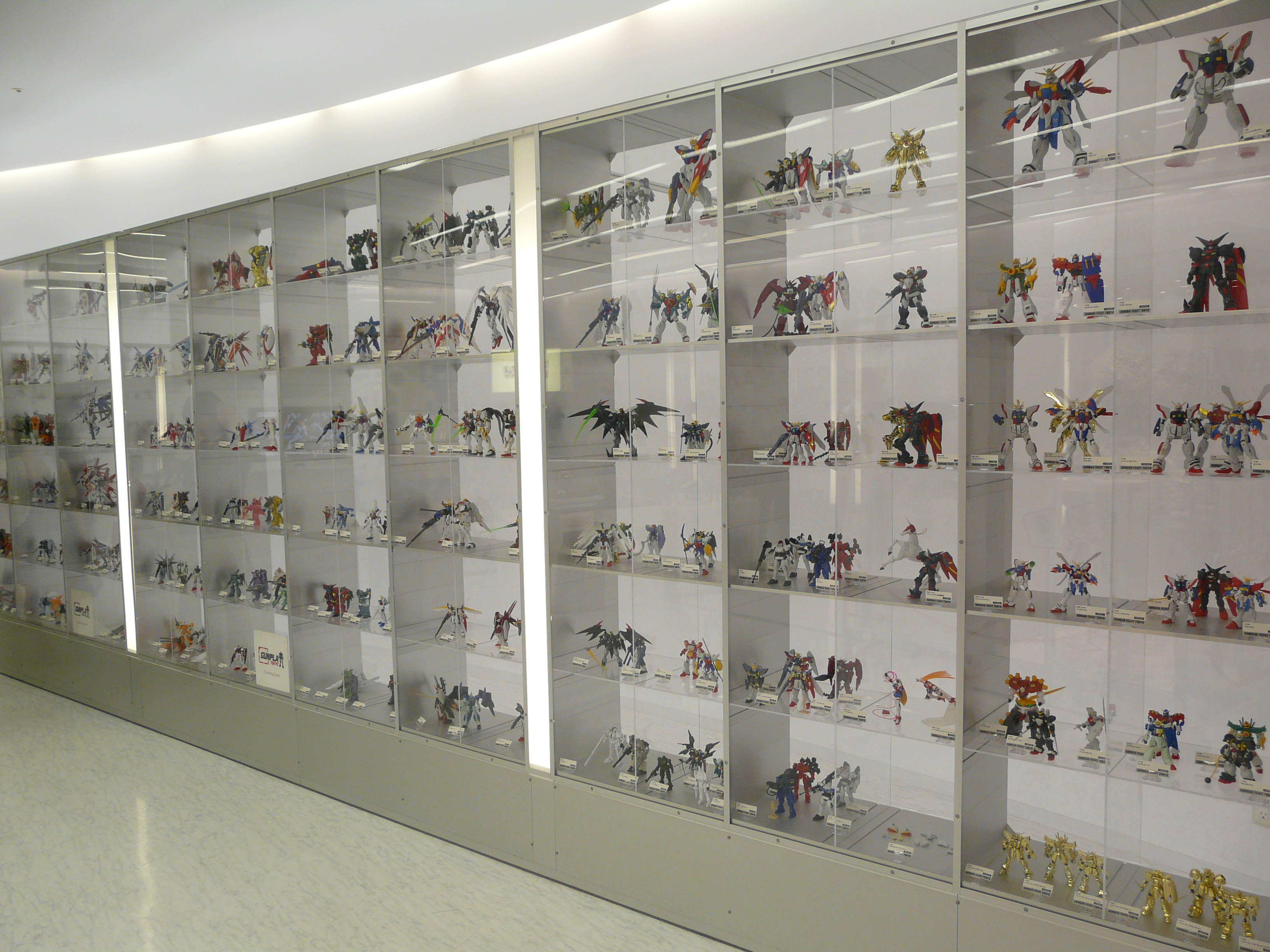
The commercial engine has never faltered: Gunpla, chōgōkin, figures, video games (the Super Robot Wars saga has, since 1991, gathered dozens of robots from different series into a single crossover), theme parks and life-sized statues. Mecha is one of the rare genres in which the object, the model kit sitting on the shelf, physically extends the fiction.
From the roar of a reactor in a fictional cockpit to the eighteen-metre statue bowing over Yokohama bay, the giant robot always tells the same story: that of tiny humans who, by climbing into the machine, must decide what kind of world they want to save. That is why, after seventy years, the child still grips the controls, and why we still hold our breath.
What is the difference between a super robot and a real robot? The super robot (Mazinger Z, Getter Robo) is an overpowered, near-invincible machine-hero animated by fantastical energy, set in a moral, frontal story. The real robot (Gundam, Macross) is a mass-produced military weapon, vulnerable and embedded in a realistic geopolitics, where the emphasis falls on war and politics.
What was the first true mecha piloted from the inside? Mazinger Z (マジンガーZ), created by Nagai Gō in 1972, is regarded as the first giant robot piloted from a cockpit located inside the machine. Tetsujin 28-gō (1956) precedes it, but its robot is steered by remote control, with no pilot aboard.
Why is Gundam so important? Mobile Suit Gundam (1979) by Tomino Yoshiyuki invented the "real robot" by treating the robot as a vulnerable mass-produced weapon rather than an invincible hero, by introducing a politically complex war (the Universal Century), and by launching the Gunpla model-kit industry, one of the economic pillars of Japanese animation.
What makes Evangelion unique? Neon Genesis Evangelion (1995) by Anno Hideaki deconstructs the genre by replacing the courageous hero with a depressive, traumatised teenager, by making the robots organic beings rather than machines, and by charging the narrative with psychological, religious and philosophical depth unprecedented in mecha.
Is Grendizer (Goldorak) a Japanese manga? Yes: Goldorak is the French name of UFO Robo Grendizer (1975), a series by Nagai Gō. Broadcast in France from 1978, it triggered a major cultural phenomenon there and was, for millions of European viewers, the first encounter with Japanese animation.
In this article
The cultural terms covered here, each with a short definition.
- Grendizer
- Gō Nagai mecha series that became a cultural phenomenon in France and beyond.
- Gundam
- Japanese science-fiction franchise built around piloted giant robots, or "mecha."
- Gunpla
- Plastic model kits of the robots from the Gundam saga.
- Mazinger Z
- Gō Nagai's 1972 series that pioneered the piloted giant-robot (super robot) genre.
- Mecha
- Japanese genre featuring large combat robots piloted by humans.
- Neon Genesis Evangelion
- Hideaki Anno's 1995 anime that reinvented mecha with psychological depth.
- Real robot
- Mecha subgenre treating giant robots as realistic war machines, as in Gundam.
- Super robot
- Mecha subgenre of invincible, heroic giant robots, as in Mazinger Z.
Gunpla: The Culture of Gundam Model Kits in Japan
From Bandai's first 1980 boxes to today's Real Grades, a deep dive into Gunpla, the Japanese hobby where assembling a Gundam becomes a meditative art.
Cover image: Pelpinosas R. Justin James · Pelpinosas R. Justin James · CC0