Japanese Minimalism: Danshari, the Art of Letting Go
Danshari, the Japanese minimalism that turns decluttering into a spiritual path. Yoga and Zen roots, three characters, Yamashita Hideko, Marie Kondō.
La rédaction Kotoba
Studio éditorial
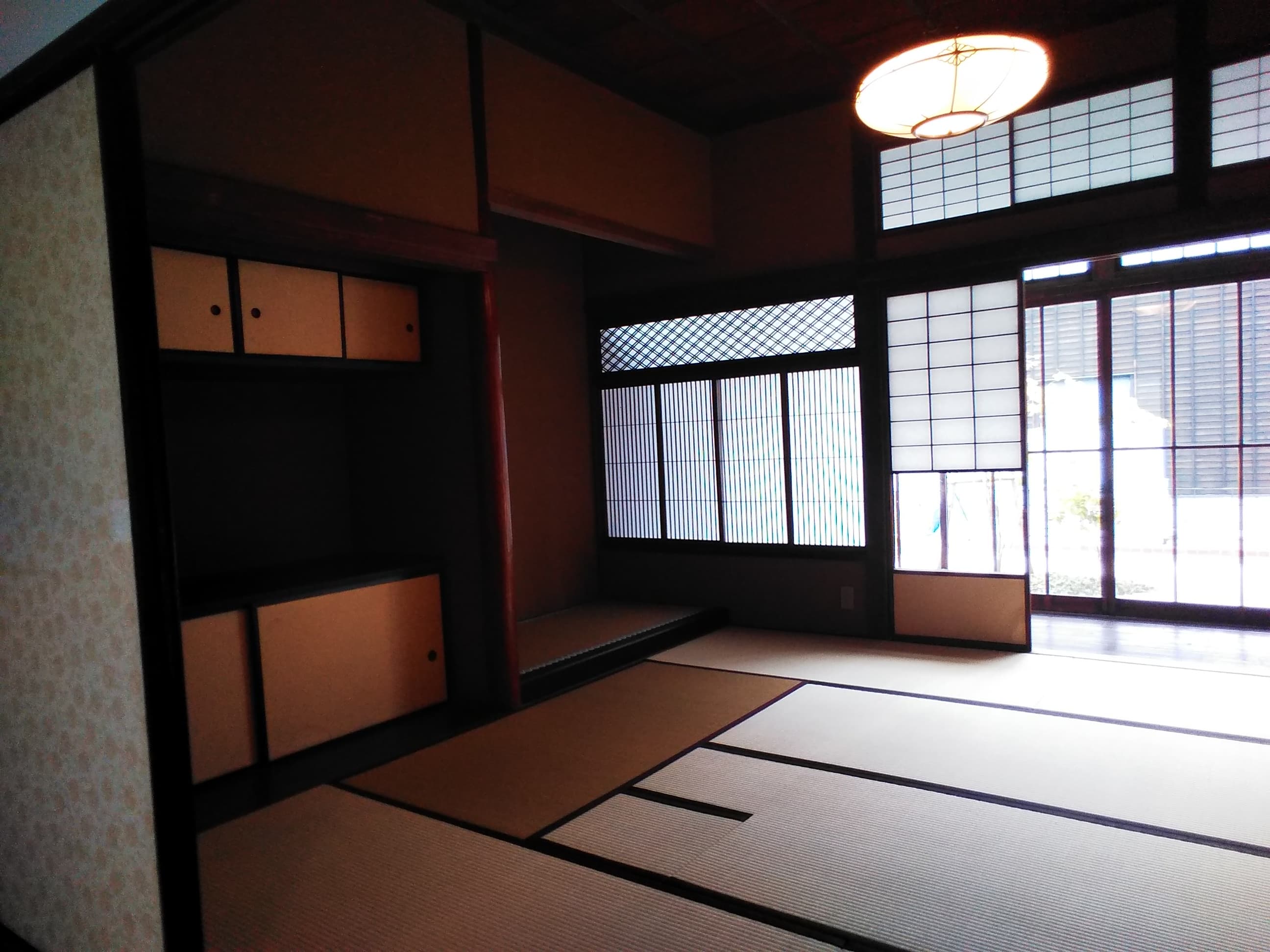
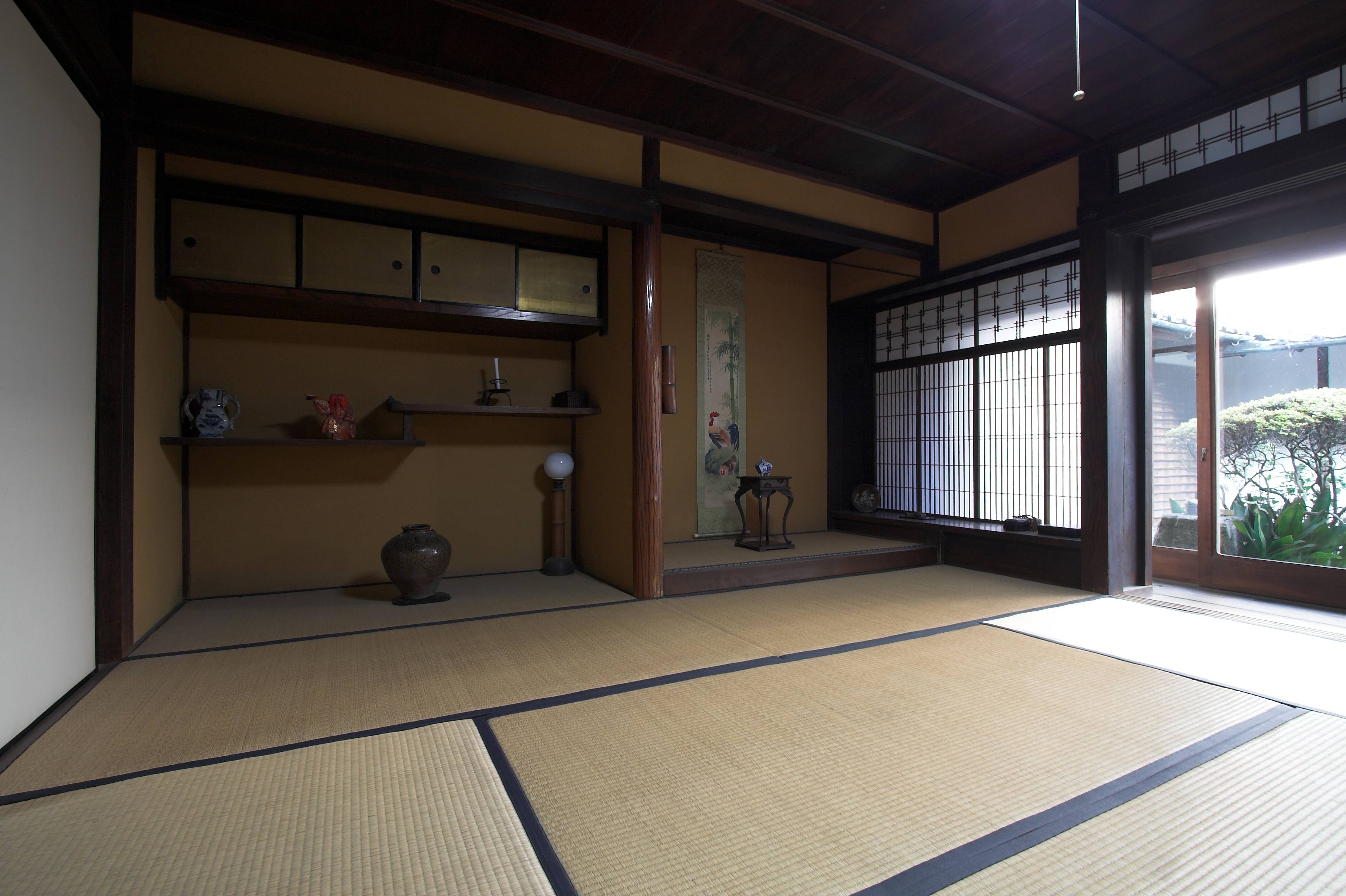
An eight-tatami room, almost empty. On the floor, a mat of woven straw whose dry-grass scent still hangs in the air. On the paper wall, light filtered through a draws a pale rectangle that slides across the hours. In the alcove, the , a single object: a painted scroll, a pine branch in a bronze vase. Nothing else. And yet the room is not poor; it breathes. The emptiness here is not an absence but a presence, the space where the eye rests and the mind settles.
This relationship with less is one Japan has cultivated for centuries, long before a single word turned it, around 2010, into a global phenomenon. That word is . Three characters, three gestures, and one unsettling promise: tidy your home in order to know yourself better. Japanese minimalism is not merely an aesthetic of empty cupboards and white shelves. It is the heir to a long meditation on what we own, on what our possessions make of us, and on the beauty of what is missing.
Danshari: three characters for an inner decluttering#
is a method and a philosophy of decluttering formalized by the Japanese consultant in a 2009 book that became a bestseller in Japan. Its originality lies in its structure: three ideograms borrowed from the vocabulary of yoga, describing not an act of housekeeping but a journey.
The first, 断 (dan), means "to break" or "to refuse." It addresses the inflow: ceasing to bring into the home objects one does not need, resisting compulsive buying, shutting the door on things before they pile up. The second, 捨 (sha), means "to discard," "to throw away." It tackles the stock: parting with what already clutters the space, without guilt or regret. The third, 離 (ri), "to separate," "to detach," reaches deepest, detachment from the very desire to possess. This is the culmination: no longer managing one's objects, but freeing oneself from the hold they exert over the mind.
These three characters did not appear from nowhere. Yamashita borrowed them from the yogic concept of , an ascetic discipline drawn from her yoga practice, in which dan-gyō, sha-gyō and ri-gyō designate the disciplines of refusal, abandonment and detachment. Tidying then becomes a spiritual exercise: the object is only a pretext, the real subject is the person who owns it.
Danshari is not about choosing which objects to throw away. It is about choosing, through them, the person you want to become.
The central idea overturns the usual logic of sorting. The question is not "is this object still usable?" but "does this object serve me, here and now?" The axis shifts from the thing to the person, from the past to the present. A wearable garment never worn, a gift kept out of duty, a book bought and never opened: all fail the test, for they clutter a life without serving it.
An ancient root: Zen, wabi-sabi and the praise of emptiness#
Japanese minimalism does not date from 2009: it draws on an aesthetic and a spirituality many centuries old, of which danshari is only a contemporary reformulation. Its matrix is Buddhism, brought to Japan from China in the 12th and 13th centuries by monks such as Eisai and Dōgen, one of whose pillars is detachment from material goods.
The Zen temple, the monk's cell, the dry rock garden of Ryōan-ji in Kyōto, fifteen stones set on a bed of raked gravel, never all visible at once, embody a discipline of bareness. To own little, to desire little, is to free the mind for contemplation. This asceticism finds its most refined expression in the tea ceremony, the , codified in the 16th century by the master . The ideal tea room, cramped and softly lit, holds only the essential: a bowl, a bamboo whisk, a flower. Rikyū made bareness an art, , the beauty of sobriety and the humble.
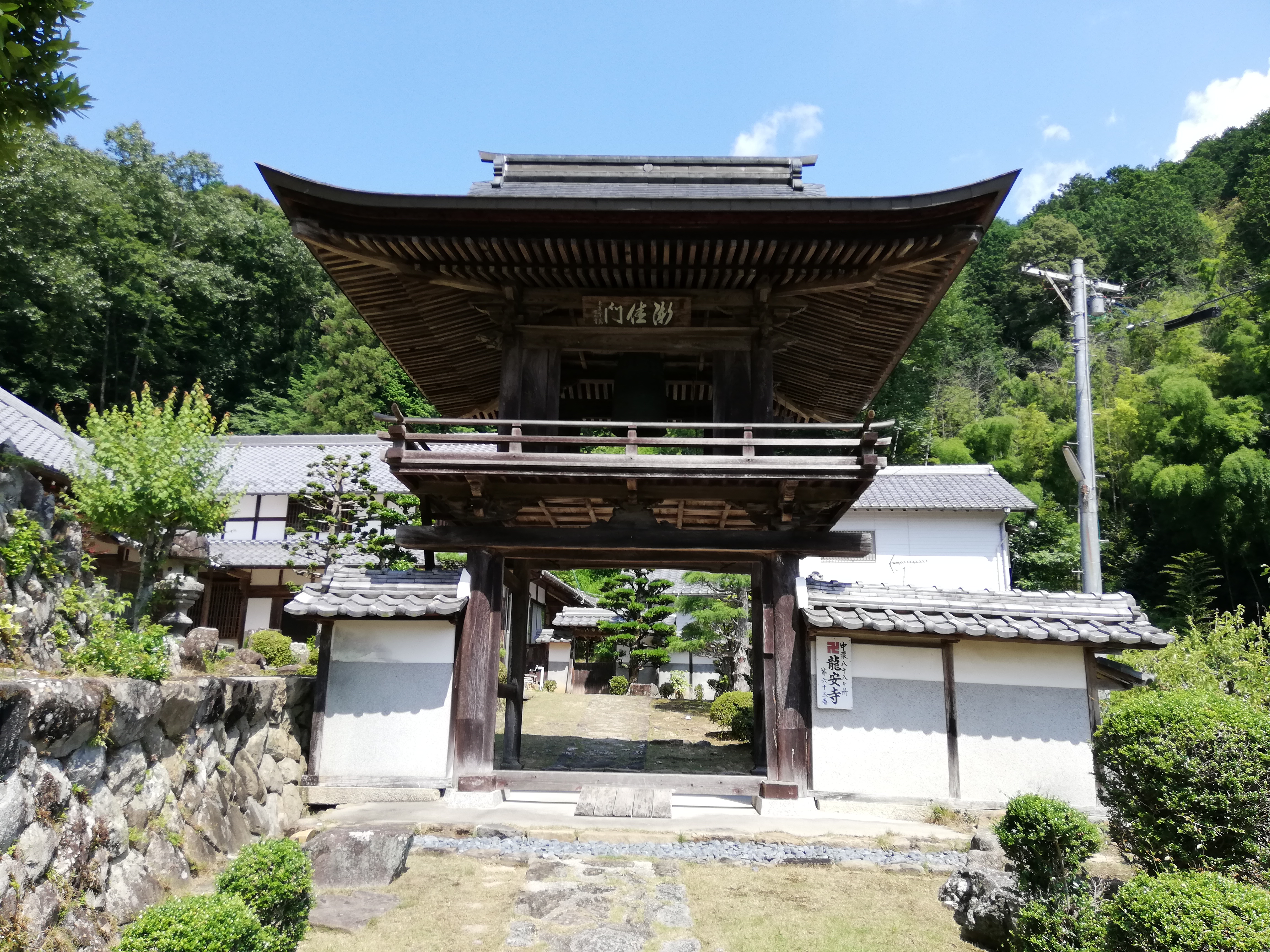
From this sensibility comes , perhaps the most difficult Japanese aesthetic concept to translate. It denotes the beauty of what is imperfect, impermanent and incomplete: the crack of a bowl repaired with gold (kintsugi, 金継ぎ), the patina of aged wood, the asymmetry of a piece of pottery. Where the West long sought the perfect, the new and the symmetrical, wabi-sabi celebrates wear, aging, the mark of time. To own less, but objects bearing this silent beauty: here lies a part of the soul of Japanese minimalism that the marketing of "tidying" often forgets.
To this beauty of the imperfect answers another notion, more spatial: , the interval, the void charged with meaning. In music, ma is the silence between two notes; in architecture, the unfilled space of a room; in painting, the white left on the paper. The Japanese void is never a gap to be filled, but a fullness in itself. The traditional interior, floor of , sliding paper partitions, a folded away by day, makes bareness an elegance and emptiness a luxury.
One last thread remains, more melancholy: , "the poignant awareness of things," the feeling of the world's fragile and fleeting beauty, theorized in the 18th century by the scholar . All passes, all fades, the cherry blossom in three days, life in a breath. To understand impermanence is to hold one's possessions with a light hand.
The modern trigger: small apartments, earthquake and consumer fatigue#
If danshari exploded at the turn of the 2010s, it was because it answered precise material and historical conditions. The first is the cramped Japanese home: in big cities such as Tōkyō or Ōsaka, apartments are often measured in a few dozen square meters, and every superfluous object weighs physically on daily life. Minimalism there is no magazine whim but a necessity of space.
The second factor was a national trauma. On 11 March 2011, the magnitude 9.0 earthquake off the Tōhoku coast, followed by a devastating tsunami and the Fukushima nuclear disaster, the event the Japanese name by its date, 3.11, swept away thousands of lives in minutes, and countless homes with everything they held. Many drew a brutal lesson from it: possessions protect from nothing; they can even become deadly projectiles during an earthquake. Several figures of Japanese minimalism, including Sasaki Fumio, have explicitly tied their conversion to bareness to this post-3.11 awakening.
After the earthquake, I understood that my things did not make me happier. They only made me heavier, more anxious, more of a prisoner.
To this is added a more diffuse weariness: consumer fatigue. After the lavish decades of the 1980s economic bubble, when Japan piled up gadgets and luxury brands, the bursting of the bubble and the stagnation of the "lost decades" fed doubt about the equation that wealth equals happiness. The generation born into recession no longer believes happiness can be bought at the department store. Danshari and minimalism offer a way out: no longer to own more, but to own better, or less.
Three faces of contemporary Japanese minimalism#
Japanese minimalism of the 2010s has not one prophet but several, with distinct methods. To confuse danshari, KonMari and Sasaki Fumio's radical minimalism is to confuse three philosophies that almost everything sets apart.
Yamashita Hideko and danshari: tidying to know oneself#
is the mother of the term danshari, which she turned into a popular method with her 2009 work, translated into many languages (in English under titles evoking the art of discarding and decluttering). A yoga student in the 1970s, she discovered there the notion of danshari and spent decades applying it to the domestic space. For her, the object is never the subject: it is a mirror. A cluttered home betrays a cluttered mind; to sort through it is to confront one's attachments, fears and "just-in-case" reflexes. Danshari is, in her vocabulary, a path of self-knowledge disguised as housework.
Kondō Marie and the KonMari method: keep only what sparks joy#
, often called "Marie Kondo" internationally, popularized her own method, KonMari, in The Life-Changing Magic of Tidying Up (人生がときめく片づけの魔法, published in Japan in 2010), sold in millions of copies worldwide and carried by a Netflix series in 2019. Her criterion has become famous: keep only the objects that "spark joy," the , that small flutter felt at the touch of a beloved thing. Where danshari emphasizes refusal and detachment, KonMari insists on gratitude, one thanks each object one parts with, and on a strict procedure, by categories (clothes, books, papers, miscellaneous komono, mementos) rather than by rooms. Gentler, more emotional, more ritualized, the KonMari method shares with danshari the idea that sorting transforms the practitioner, but it speaks of love for objects where Yamashita speaks of freeing oneself from them.
Sasaki Fumio and radical minimalism: saying goodbye to things#
embodies the most radical fringe. A former editor living in a small Tōkyō apartment saturated with books, DVDs and objects, he recounts his metamorphosis in Goodbye, Things (ぼくたちに、もうモノは必要ない, Bokutachi ni, mono wa mō hitsuyō nai, "We no longer need things," 2015). His version of minimalism, directly influenced by the American minimalists and by the word ミニマリスト (minimarisuto, "minimalist") imported into Japanese, pushes bareness to the extreme: a few clothes, a futon, a table, almost no furniture. For Sasaki, expressly marked by the 2011 earthquake, fewer objects mean less comparison with others, less time lost to upkeep, and more mental availability. His book, translated into more than twenty languages, has made him one of the international faces of Japanese minimalism.
Three figures, three nuances: Yamashita's spiritual detachment, Kondō's selective joy, Sasaki's avowed bareness. All three are Japanese, contemporary, and all three have conquered the West, yet none of them says quite the same thing.
Danshari, KonMari and "minimalism": do not blur them together#
Japanese minimalism and the global minimalist movement resemble one another but are not the same. Western "minimalism," popularized in the 2010s by American authors and bloggers, is first of all an individual and often aesthetic choice of life: fewer possessions for more freedom, time and money. It readily weds clean design, white interiors and costly "iconic" objects.
Danshari, for its part, sinks its roots into yoga and Buddhism: its declared aim is not aesthetics but inner detachment, the 離 (ri). One can practice danshari in a room full of patinated wood and imperfect objects, provided each one has meaning, the opposite of a catalogue interior. Likewise, the KonMari method, founded on tokimeki and gratitude, springs from a near-animist relationship to objects, inherited from Shintō, in which each thing deserves to be thanked. To reduce these traditions to one and the same "trendy tidying" erases what gives them their depth.
One must also distinguish traditional Japanese minimalism, that of the tatami, the tokonoma, the tea ceremony, from these contemporary methods. The first is an art of space and impermanence, handed down over centuries; the latter are techniques of personal development born in the urban Japan of the 21st century. The common thread is this ancient dialogue between being and having, but the practices answer different eras and needs.
When Japan exported its emptiness#
From 2014 onward, Japanese minimalism became a considerable cultural export. The trigger was the English translation of Kondō Marie's book, The Life-Changing Magic of Tidying Up, in 2014, followed by planetary success: millions of copies sold, a place on the New York Times bestseller lists, and a television enshrinement with the series Tidying Up with Marie Kondo on Netflix from 2019. The English verb "to konmari" entered usage; tokimeki, rendered as "spark joy," became a worldwide watchword.
Japanese minimalism then irrigated decoration, design, wellness and even fashion. The brand , founded in 1980, became its commercial ambassador: sober, logoless, functional objects, sold worldwide as the embodiment of a pared-down art of living. The word danshari itself spread beyond Japan, taken up in book titles, decluttering channels and a vocabulary of material "letting go."
But this globalization has a flip side, and honesty demands that it be named. Minimalism, having become a magazine and Instagram aesthetic, has sometimes betrayed its source. Several critics, in Japan as in the West, point out that commodified "minimalism" can be a privilege: to get rid of everything presumes the ability to buy it all back if needed, and an empty interior furnished with design pieces often costs more than a home cluttered with cheap objects. Chosen bareness has nothing to do with imposed destitution. When emptiness becomes an object of consumption, one more white shelf, an overpriced handmade bowl, it turns into its opposite.
True danshari cannot be bought. It is what remains when you stop, precisely, buying.
There are therefore two Japanese minimalisms. One, the marketing kind, sells the image of less: white walls, neutral palette, photogenic objects. The other, the spiritual kind, more discreet and more demanding, comes from Zen, wabi-sabi and Yamashita's danshari, it is measured not by the number of objects discarded but by the quality of the relationship one keeps with what one keeps. The first fills home-decor stores; the second, far older, goes on whispering in the temples of Kyōto and in a tatami room where a single branch, set in the tokonoma, is enough to tell the turning of the seasons.
This is perhaps danshari's most lasting lesson: to detach is not to deprive oneself, but to stop confusing what one has with what one is. In an almost empty room, bathed in the light of a shōji, only the essential remains, and the essential, suddenly, is enough.
Frequently asked questions about danshari and Japanese minimalism#
What exactly does the word danshari mean? Danshari (断捨離) is made of three characters: 断 (dan, to break with what comes in), 捨 (sha, to discard what clutters) and 離 (ri, to detach from the desire to possess). The term, borrowed from the vocabulary of yoga, describes a decluttering that is at once material and inner, popularized by Yamashita Hideko in 2009.
What is the difference between danshari and the KonMari method? Yamashita Hideko's danshari emphasizes refusal and spiritual detachment, inherited from yoga and Zen. Kondō Marie's KonMari method rests on and gratitude toward objects. One seeks to free oneself from things, the other to keep only those one loves.
Is Japanese minimalism really ancient? Yes. Long before the danshari of 2009, Japan cultivated bareness through Zen Buddhism, Sen no Rikyū's tea ceremony, the aesthetics of wabi-sabi (the beauty of the imperfect) and ma (meaningful emptiness), as well as the traditional interior of tatami and shōji.
Why did minimalism take hold in Japan in the 2010s? Several factors converged: the cramped urban housing, consumer fatigue after the economic bubble, and above all the earthquake of 11 March 2011 (3.11), which pushed many Japanese to reconsider their relationship to material possessions.
In this article
The cultural terms covered here, each with a short definition.
- Danshari
- Japanese decluttering philosophy: refuse, discard and detach from excess belongings.
- Hideko Yamashita
- Japanese author who coined danshari, the decluttering philosophy.
- Marie Kondo
- Japanese tidying expert whose KonMari method keeps only what 'sparks joy.'
- Wabi-sabi
- Japanese aesthetic that finds beauty in imperfection, impermanence and simplicity.
- Zen
- School of Buddhism centered on meditation, shaping Japanese arts and the taste for simplicity.
Vending Machines in Japan: Why Are They Everywhere?
Four million machines, from city corners to mountain trails. The history, the reasons, and the wild variety of Japan's vending machines.