Maid Café: Origins and Codes of the Japanese Meido Kafe
History and rituals of the Japanese maid café (メイドカフェ): birth in Akihabara, moe culture, the okaerinasaimase welcome, cheki photos, etiquette and variants.
La rédaction Kotoba
Studio éditorial
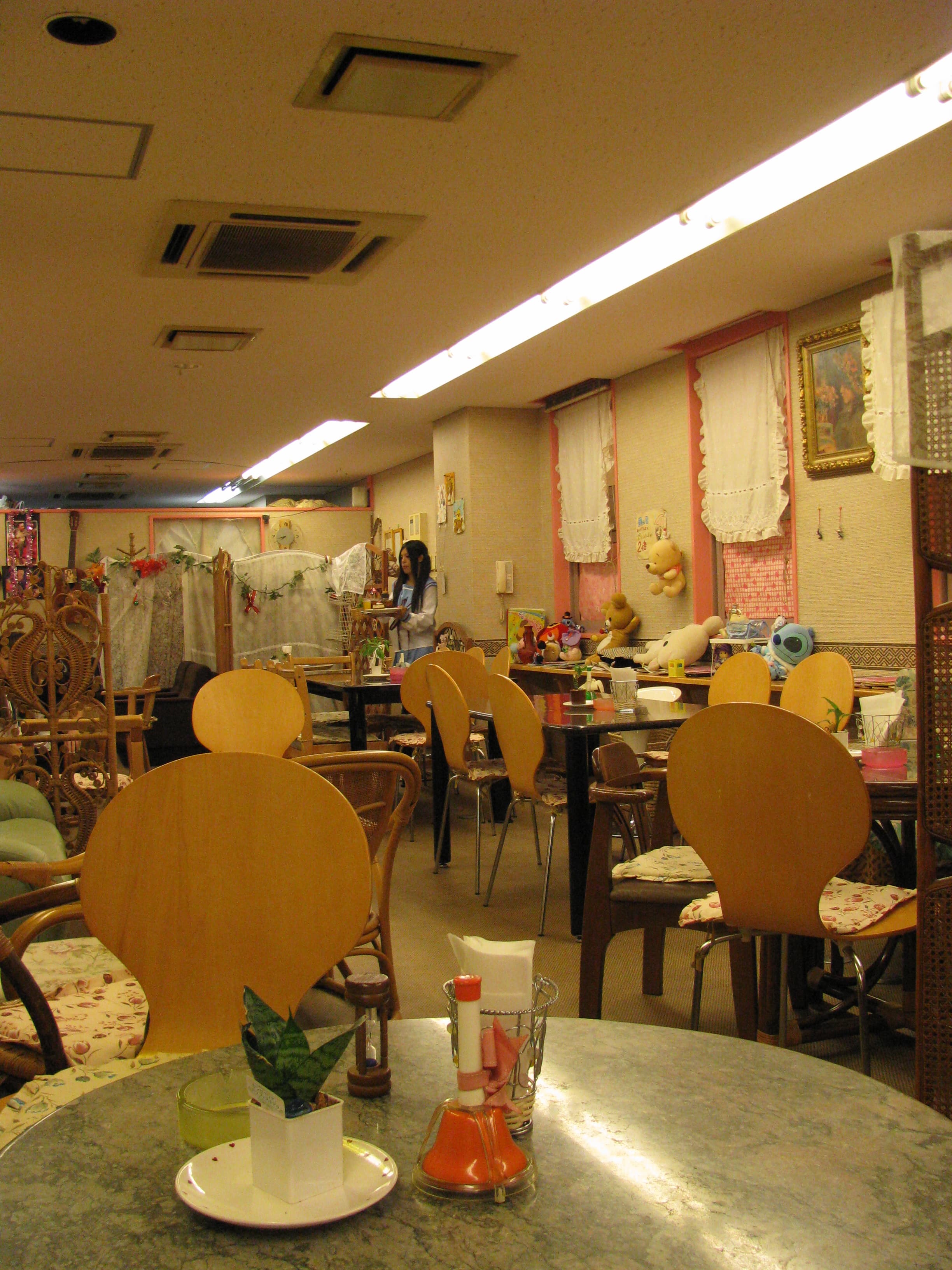
The door slides open, a bell chimes, and a lilting voice greets you before your eyes adjust to the pink light: "Okaerinasaimase, goshujin-sama!", welcome home, master. Before you stands a young woman in a black dress with a starched white apron, a billowing petticoat and a lace headband, bowing in a curtsy she has repeated a thousand times. You have not walked into a restaurant. You have come home, to a fictional household where, for the span of a coffee, you are the lord of the house. Welcome to the sixth floor of a narrow building in , inside a .
The maid café is no mere tourist curiosity: it is a social theater scripted down to the millimeter, born of the otaku culture of the 1990s and, within two decades, one of contemporary Japan's most exported icons. Behind the knowing kitsch lies a precise machinery (a script, rituals, an economy) that deserves to be read without condescension.
At the roots: moe, bishōjo and planet otaku#
The maid café is the direct child of the culture of the 1990s. The word moe, which literally means "to bud" or "to sprout," denotes the intense affective attachment, tender, protective, idealized, that a fan feels toward a fictional character, most often a fictional young girl. This sensibility, theorized by critic in Otaku: Japan's Database Animals (動物化するポストモダン, 2001), fed on anime, manga and above all on , the PC dating sims peopled with archetypal female characters.
The figure of the maid in her black-and-white costume emerged there as a moe icon in her own right. A lineage of dating sims popularized the aesthetic of the devoted maid-servant during the decade. The costume itself blends two heritages: the English Victorian housemaid and the nineteenth-century French bonne, recast by the Japanese imagination into a fantasized uniform that never actually existed, as such, in any real bourgeois household.
Before the first café, then, came the fantasy. In the late 1990s, themed pop-up cafés began appearing at video game trade shows: to promote a bishōjo game, the publisher would dress hostesses in maid costumes. The 1998 Tokyo Character Show and various booths, at Tōkyō's gigantic dōjinshi convention, tested the formula. The otaku public, until then confined to screens, discovered the physical embodiment of its favorite character. All that was missing was a permanent place.
Cure Maid Café: Akihabara's founding act#
The world's first permanent maid café, the , opened its doors in March 2001 in Akihabara, on the seventh floor of the Gee Store building. Run by the company Infinia, it marks the genre's official birth. Far from the boisterous establishments that would follow, the Cure Maid Café chose hushed elegance: a European tearoom décor, classical music, discreet waitresses in sober Victorian uniforms. The atmosphere aimed at an English manor house, not an amusement park.
That initial refinement is essential to understanding the playful drift that followed. The Cure Maid set the stage (the maid, the attentive service, the deferentially treated guest), but it was competition that, within a few years, turned this quiet parlor into interactive spectacle.
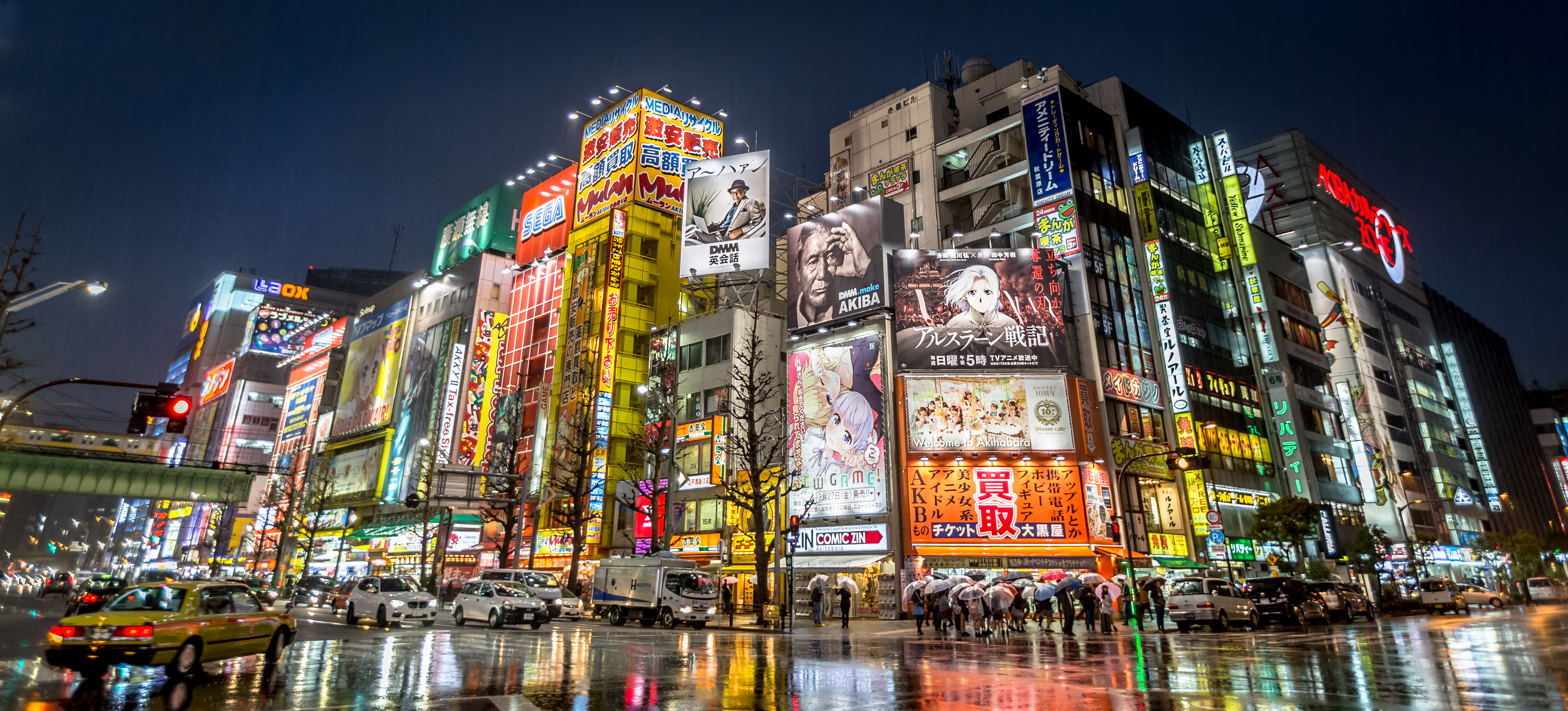
The timing was no accident. Akihabara, long the post-war electronics district (the famous Denki-gai, 電気街, "electric town"), had been reinventing itself since the 1990s as a sanctuary of otaku culture: figurine shops, dōjinshi stores, arcades, video game stalls. The district, familiarly nicknamed , offered the maid café its natural ecosystem: a passionate, already-gathered public hungry for experiences the "normal" world did not provide.
Akihabara did not host the maid café: it secreted it. District and concept shaped one another until they became inseparable in the global imagination of pop Japan.
By the mid-2000s, dozens of establishments crowded a few-block radius. The maid café had become Akiba's flagship attraction, to the point that costumed waitresses handing out flyers at intersections are now the district's most recognizable image.
The grammar of a visit: master, mistress and a fictional home#
The maid café's founding principle fits in a shared fiction: the waitress is a servant, the customer is the master of the house. From the moment they enter, the customer becomes if a man, if a woman. The waitress, for her part, is never an anonymous employee: she plays the role of a devoted meido (メイド) who has been waiting for you and rejoices at your return.
This polite inversion of the service relationship rests on a theatrical convention accepted on both sides. No one is fooled, neither maid nor master, yet each plays their part. The customer is not a demanding boss: they are a benevolent guest in a world of gentleness, and it is precisely this softening of the commercial hierarchy that gives the experience its savor. You do not pay for a coffee; you pay for a parenthesis inside an imaginary home.
The distinction is crucial, and often misread abroad: the maid café is not, in its classic form, a place of seduction or a trade in desire. It is a trade in attentive presence, in emotional comfort, in light conversation. More ambiguous variants exist, and we will return to them, but Akihabara's dominant model cultivates a claimed innocence, almost childlike, that jars with hasty Western interpretations.
The rituals: okaerinasaimase, moe-moe kyun and cheki#
The welcome: "okaerinasaimase"#
Everything begins with the greeting , "welcome home, master." This salutation, which replaces the ordinary irasshaimase (いらっしゃいませ, "welcome") of regular shops, sets the fiction at once: you are not visiting an establishment, you are coming home. As you leave, the maid will see you off with , a phrase addressed to a loved one leaving the house. The entire vocabulary of the home is mobilized.
The spell: moe-moe kyun#
The most emblematic ritual is the , a "spell" the maid casts on your dish or drink before you consume it. Hands forming a heart or held out toward the plate, she chants a childlike incantation, often "moe moe kyun!" with choreographed gestures, meant to infuse the dish with love and make it "more delicious." The customer is usually invited to repeat the gestures. This moment, at once absurd and tender, crystallizes the spirit of the place: the adult agrees to play, and it is in that agreement that the pleasure is born.
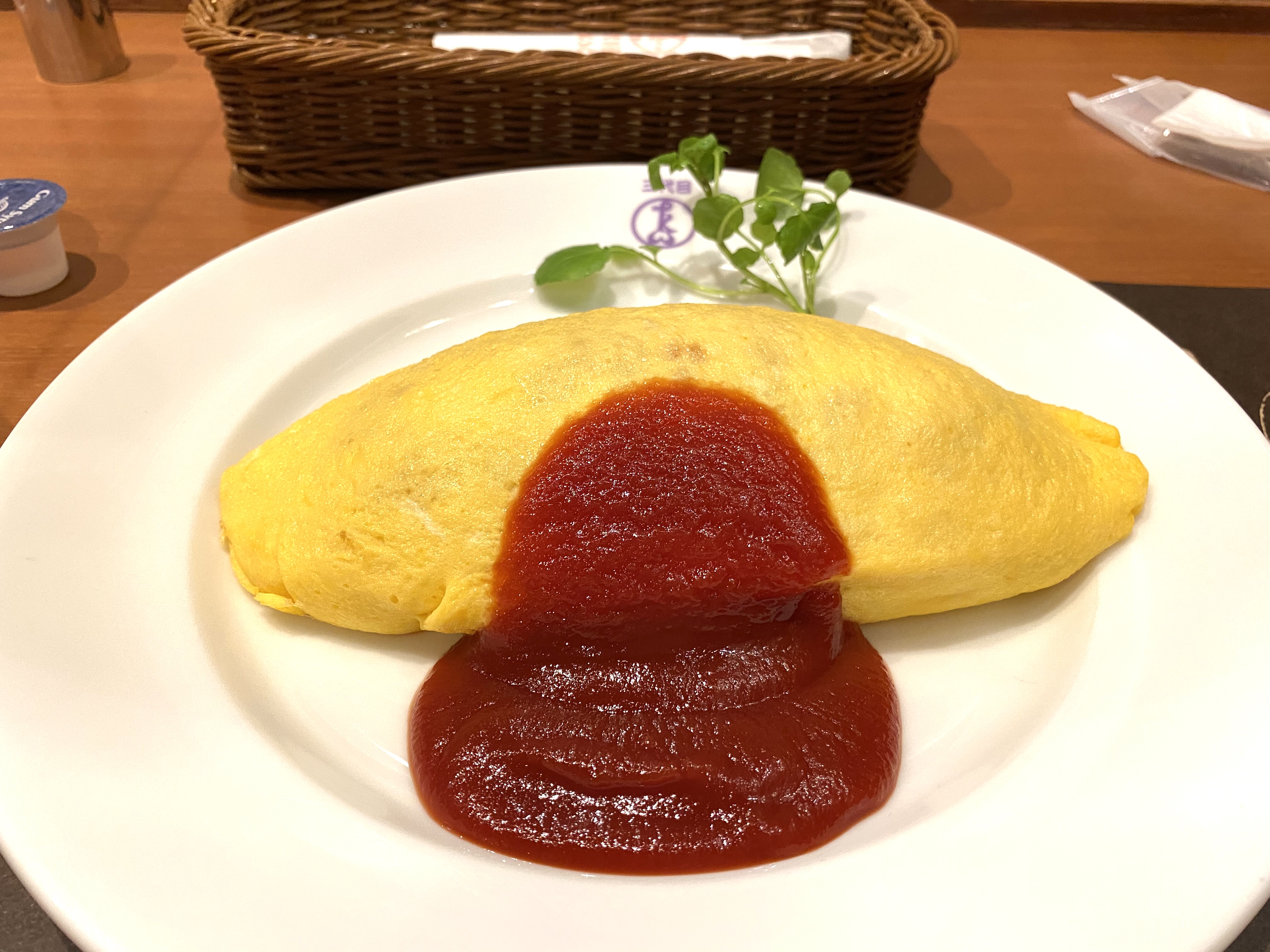
The , an omelette wrapped around fried rice, is its favored vehicle: the maid draws on it in ketchup: a heart, a cat, a message ("moe ♡" or your name), sometimes before your eyes. The dish is less a meal than a relational object, proof of personalized attention.
The keepsake: the cheki#
The , named after Fujifilm's brand of instant cameras, is the Polaroid photo taken with a maid for an extra fee. The customer poses beside the waitress, who then decorates the print with markers: drawings, hearts, a message, the date. The cheki is the tangible memory of the visit, and one of the establishment's main sources of supplementary revenue. Some maids thus build a base of loyal customers who come to collect prints and sustain an ongoing, almost idol-like, relationship.
Etiquette: what the master is not allowed to do#
Contrary to the fantasized image, the maid café is governed by strict rules that protect the waitresses. The first and most inviolable: you do not touch the maid. No physical contact is tolerated; even in cheki photos, a distance is generally maintained. The maid is not an escort, and the confusion is severely discouraged.
The other prohibitions structure the experience: no free photography in the room (only paid cheki are allowed, to preserve the anonymity of waitresses and other customers); no requests for personal information (real name, address, phone number); no attempt to meet a maid outside the establishment. These rules, posted and recalled at the entrance, are no formality: they define the nature of the contract. You buy a fiction of closeness, never real intimacy.
The no-contact rule is not a constraint on the game: it is its condition. Precisely because nothing can cross the footlights, the theater stands.
This etiquette also explains the model's longevity. By locking the relationship into a playful, emotionally non-transactional frame, the maid café set itself apart from the mizu shōbai (水商売, "the water trade," the night industry) and was able to welcome families, tourists, couples and the curious without scandal.
The bill: time-based pricing and surcharges#
The maid café most often runs on a time-based pricing model, distinct from the simple cost of food and drink. On entry, the customer usually pays a cover charge (入場料, nyūjōryō) or table charge covering a set duration (often one hour) beyond which a new slot is billed. To this are added the consumables, then the options: cheki, mini-performance, a game with a maid, a dedicated song.
This fee structure often surprises foreign visitors, who think they are buying only a coffee. In reality, the bill for a full visit (entry, drink, omurice, one or two cheki) can reach several thousand yen. The maid café sells time and attention far more than catering; its cuisine, generally simple and sweet, is a pretext for the ritual.
The performances round out the offering. On a small stage, maids sing and dance songs drawn from idol culture, sometimes with choreography the room takes up in chorus (the famous wotagei, the synchronized arm movements of fans). The line between maid café and idol concert blurs, a slippage that structures part of the industry.
The concept café ecosystem and its variants#
The maid café is only the best-known branch of a far larger family: the , where the service rests on a theme embodied by the staff. The inversion logic, a pampered customer inside a fictional scenario, declines endlessly.
The butler café: the version for women#
The most direct counterpart is the , designed for a female clientele. The first major one, the , opened in 2006 in the district, the "women's Akihabara" centered on the Otome Road shopping street. There, butlers (shitsuji) in immaculate livery greet the customer with a "welcome back, ojō-sama" and serve her with refined deference, in a European-manor décor. Swallowtail cultivates a deliberate theatrical luxury (reservation required, strict etiquette) a world away from the cheerful kitsch of Akiba's maid cafés.
Animals, cosplay and offshoots#
The ecosystem spills well beyond. dress their staff as nurses, schoolgirls, anime characters or historical figures. Animal-themed cafés, whether cats (neko café), owls, hedgehogs or even reptiles, belong to a cousin logic of comfort-through-presence, even if their public and motivations differ. There are also tsundere cafés (where the waitress berates you affectionately), little-sister (imōto) cafés, and establishments themed on a single franchise. The constant: selling a scripted relational experience, not merely a drink.
The industry: @home café and the age of idol-maids#
If one brand embodies the sector's professionalization, it is , opened in Akihabara in 2004 by the company Heartfelt. Having become Japan's largest maid café chain, with multiple floors and several addresses in the district, it pushed the fusion of maid café and idol culture to its limit. Its star maids release singles, give concerts, sign autographs and amass thousands of fans.
Its emblematic figure is , the @home café star maid who became a genuine celebrity, the symbol of this bridge between service and stardom. The model spawned a parallel economy: merchandise, paid events, maid popularity rankings, loyalty systems: the whole machinery of the idol industry transposed to the scale of a café.
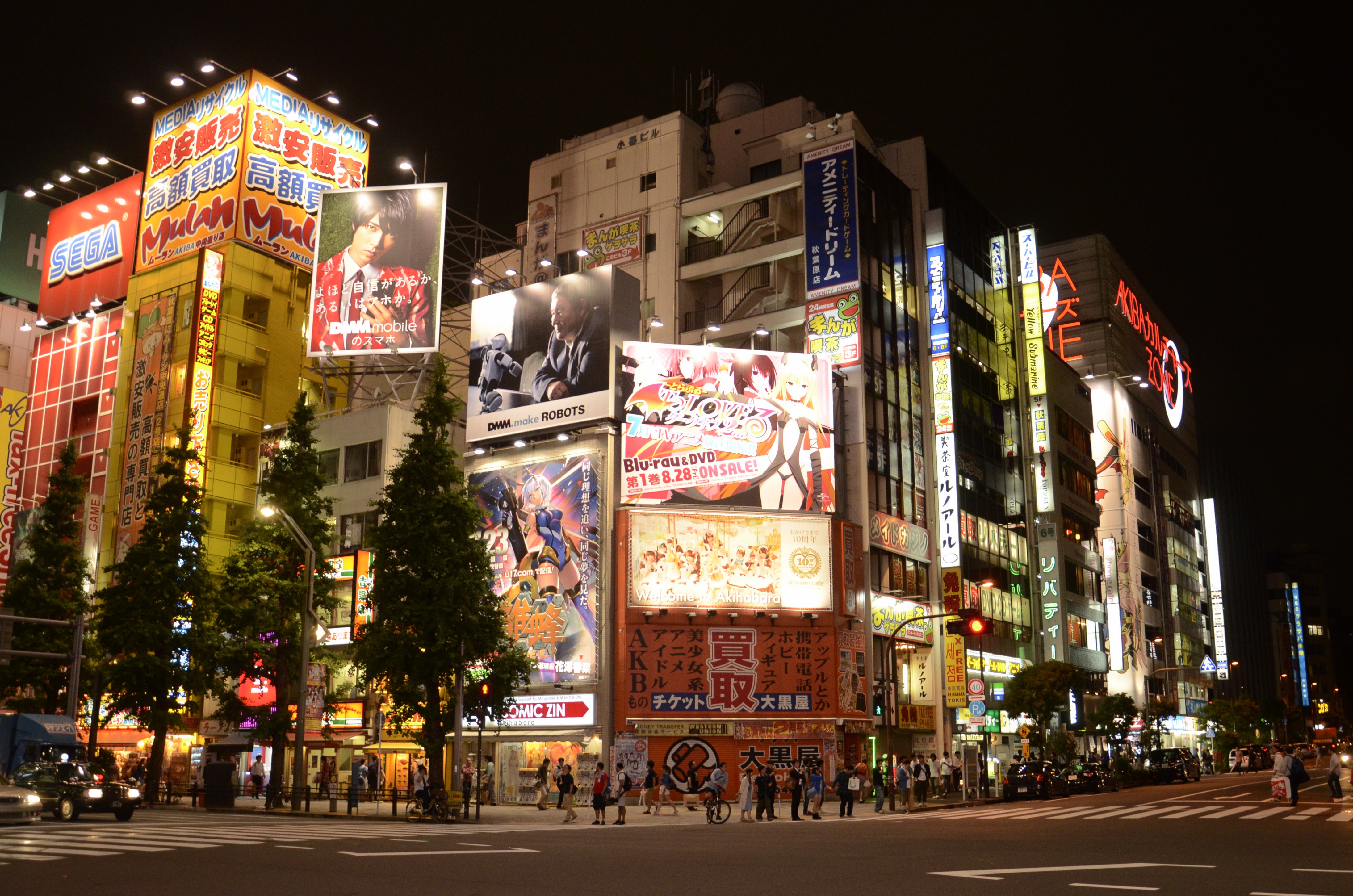
This professionalization also cemented Akihabara as a destination. The maids handing out flyers at crossings, the vertical signs stacked up façades, the queues of tourists: the maid café has become a draw of Japanese tourism, recommended in every guidebook, folded into the official Akiba circuits.
The appeal: comfort, escapism and a manufactured bond#
Why do millions of people cross a maid café's threshold? The answer lies largely in a demand for comfort and escapism. In a Japanese society marked by urban solitude, professional pressure and emotional isolation, phenomena documented by many sociologists of the contemporary, the maid café offers a space where one is welcomed, awaited, valued unconditionally. The "welcome home" is addressed to those who may have no one else to say it to.
The experience belongs to a scripted intimacy: everyone knows the affection is performed, yet the performance produces a real effect, a genuine soothing. This tension, knowing it is fake while drawing a sincere emotional benefit from it, lies at the heart of the appeal, and brings it close to other Japanese forms of "rentable bond," from cuddle cafés to friend- and family-rental services.
The public is more diverse than one might imagine. The historic otaku have been joined by curious tourists, groups of female friends, families, couples, and, notably, a growing female clientele, drawn by the décor, the costumes and the gentleness of the service. The maid café has largely detached from its niche origins to become a mainstream experience.
A clear-eyed view: labor, image and gray zones#
The maid café does not escape criticism, and it would be dishonest to pass over it in silence. The first concerns working conditions. The maid's job, often held by young women, rests on intense emotional labor (constant smiling, energy, attention) for modest pay. The frequently precarious, part-time status, and the pressure of popularity (in the idolized models), raise real social questions, underscored by Japanese gender-studies scholars.
The second criticism targets the sector's gray zones. Alongside Akihabara's respectful, family-friendly establishments, some newer konkafe blur the line with the night trade: pressure to consume, "regular customer" systems pushing emotional spending, drifts close to the host/hostess club. Japanese media have documented cases of young customers falling into debt, and local authorities monitor these practices. Distinguishing the classic maid café from these opportunistic variants is essential to any honest reading.
Finally, the view of the representation of women is divided. For some, the maid costume and the posture of playful submission perpetuate a problematic imaginary; for others, these maids practice an assumed performance craft, negotiate a persona and find on stage a form of agency and community. The debate remains open, and is not settled by a single phrase.
The maid café beyond Japan#
The maid café began exporting itself in the mid-2000s, carried by the globalization of anime culture. Establishments opened in Taipei, Seoul, Shanghai and Hong Kong, where the concept found culturally proximate ground. In the West, the spread was more erratic: short-lived permanent cafés in Los Angeles, Toronto or Mexico City, but above all temporary maid cafés set up at anime conventions, from the American Anime Expo to Japan Expo in France, where costumed volunteers recreate the welcome and the moe-moe kyun for an already-initiated audience.
Abroad, the concept often sheds its substrate (the Akihabara ecosystem, the idol economy, the strict etiquette) to keep only the aesthetic and the playful ritual. It becomes a festive gateway to Japanese pop culture rather than a social institution. But it is also through it that millions of visitors heard "okaerinasaimase" for the first time and understood, for the span of a coffee, what Japan means by moe.
From the Cure Maid's hushed parlor in 2001 to the idolized stages of @home café, the maid café has traveled a singular path: turning a paper fantasy into a living ritual, and making a popular art out of a curtsy. Behind the lace and the ketchup, a very contemporary question is at play: the need to be awaited somewhere, if only on the sixth floor of a building in Akihabara.
FAQ#
What exactly is a maid café? A maid café (メイドカフェ, meido kafe) is a Japanese themed café where waitresses costumed as Victorian or French maids treat customers as masters of the house (goshujin-sama). Born in Akihabara in 2001, it sells a playful relational experience (welcome, rituals, attention) more than mere catering.
What was the first maid café? The Cure Maid Café, opened in March 2001 in Akihabara, is considered the world's first permanent maid café. Its hushed European-tearoom atmosphere contrasted with the more playful, idolized style of the establishments that appeared afterward.
Is a maid café a place of seduction? No, in its classic form. A strict no-contact rule protects the waitresses, and any request for personal information or an outside meeting is forbidden. The maid café sells a fiction of closeness, not real intimacy, which sets it apart from the night trade.
What does "moe-moe kyun" mean? "Moe-moe kyun" (萌え萌えキュン) is the playful incantation the maid utters, hands forming a heart, over your dish or drink to make it "more delicious." It is the maid café's most emblematic ritual, derived from the concept of moe (萌え), the tender attachment to fictional characters.
Are there equivalent cafés for women? Yes: butler cafés (執事喫茶), where butlers serve a female clientele treated as ojō-sama (young lady). The most famous, the Swallowtail, opened in 2006 in Ikebukuro, a district nicknamed the "women's Akihabara."
In this article
The cultural terms covered here, each with a short definition.
- Akihabara
- Tokyo district that is the global hub of otaku culture, anime goods and electronics.
- Concept café
- Themed café offering an immersive world, of which the maid café is the best-known.
- Cosplay
- Hobby of dressing up as characters from manga, anime or games.
- Maid café
- Themed café, born in Akihabara, where waitresses in maid costumes treat guests as masters.
- Moe
- Feeling of tender affection fans hold for cute or endearing anime characters.
- Otaku
- Devoted fan of manga, anime or games, and the subculture built around that passion.
Vending Machines in Japan: Why Are They Everywhere?
Four million machines, from city corners to mountain trails. The history, the reasons, and the wild variety of Japan's vending machines.
Cover image: Vitalie Ciubotaru · Vitalie Ciubotaru · CC BY 3.0