Speedrunning and Esports in Japan: RTA, Daigo, JeSU
From RTA to fighting-game legends, how Japan became the source of the games the world competes on while charting its own road to organized play.
La rédaction Kotoba
Studio éditorial
Three in the morning in a Tōkyō hall, and the screen never shakes. A player threads pixel-perfect jumps through a forty-year-old Super Mario Bros., thumb welded to the controller, eyes locked on a timer counting hundredths of a second. Behind him, a couch full of spectators holds its breath while a commentator murmurs the names of techniques (flagpole glitch, wrong warp) like a liturgy. On the chat, tens of thousands watch live, and a donation counter climbs for charity. The player crosses the finish line. The room erupts. He has just shaved a few tenths off a world record.
This scene has a name in Japan: . And it says something deep about the country's singular place in competitive gaming. Japan lives a paradox: a gaming superpower that gave the world Mario, Zelda and Street Fighter, it was nonetheless a latecomer to organized esports, held back by its own laws. To understand why, you have to follow two threads, the stopwatch and the arcade, to the point where they meet.
RTA, or the Japanese art of finishing a game too fast#
A speedrun means completing a video game as quickly as possible, and in Japan it goes by , for real-time attack: the clock runs in real time, from the first input to the final screen. The term, popularized in the Japanese community from the early 2000s on platforms such as Nico Nico Douga (ニコニコ動画), took hold so firmly that Japanese players say "doing an RTA" where an English speaker says "speedrun."
The discipline rests on one obsession: optimization. A run breaks down into codified categories. Any% aims for the ending by any means, glitches included; 100% demands collecting everything; glitchless forbids exploiting the code. This taxonomy is arbitrated worldwide by the reference site speedrun.com, founded in 2014, which hosts official leaderboards for tens of thousands of games and settles disputes over the rules. A record only exists once it is verified there, video proof attached.
What strikes you about the global speedrunning canon is how overwhelmingly Japanese it is. The most-run games (Super Mario Bros. (1985), The Legend of Zelda: Ocarina of Time (1998), Mega Man (ロックマン, Rockman, 1987), Super Metroid (1994), the early Final Fantasy titles) come almost entirely from Nintendo, Capcom or Square. Japan did not merely feed gaming culture: it supplied the playing field the whole world races across. Ocarina of Time in particular became a kind of flagship discipline, where discoveries like "stale reference manipulation" let runners trick the console's memory into warping straight to the ending in minutes.
A speedrunner is not playing the game you are playing. They are playing against the code itself, and they know the seams the developers thought were invisible.
Glitches, TAS, and the edge of the possible#
At the summit of this technical pyramid sits the TAS (tool-assisted speedrun). Here the human player vanishes: an emulator is programmed frame by frame to execute a sequence of inputs of inhuman precision, sometimes accurate to a sixtieth of a second. TAS does not compete in the same categories as live runs (that would be absurd), but it serves as a laboratory. TAS authors map a game's flaws, expose what is theoretically possible, and human players then strive to reproduce by hand a fraction of those feats. The boundary between the two worlds is porous, built on mutual respect.
RTA in Japan, the marathon that moved a country to joyful tears#
Since 2016, Japanese speedrunning has had its high mass: RTA in Japan, a biannual charity marathon that gathers the elite of the Japanese community to run games live, day and night, for several days. The event has become a fixture of winter and summer, broadcast on Twitch, where simultaneous viewer counts routinely pass the tens of thousands and donations pour toward charitable causes.
The model is patterned on a phenomenon born in the United States: Games Done Quick (GDQ), created in 2010, whose Awesome Games Done Quick (winter) and Summer Games Done Quick editions have together raised, by GDQ's published tallies, more than $50 million for organizations such as Doctors Without Borders and the Prevent Cancer Foundation. The idea is luminous: turn a niche performance into a generous spectacle where each donation can unlock a challenge: finishing a game blindfolded, choosing a character's name.
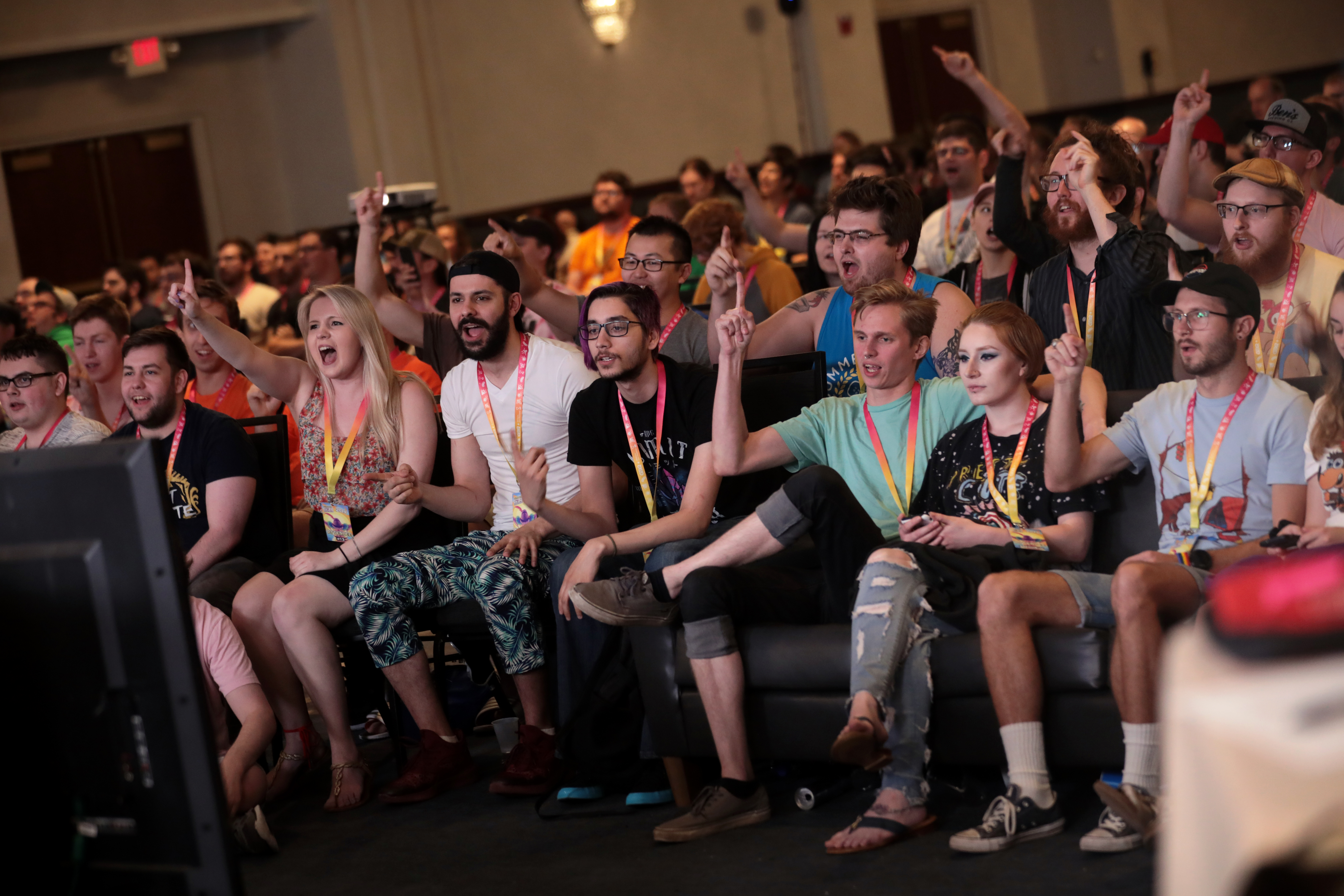
RTA in Japan imported that mechanic and shaped it to local culture: Japanese commentary, an obviously heavy presence of Japanese games, and a communal fervor that turned the event into a case study. Where classic esports stages a clash between two opponents, the speedrun marathon stages the human against the machine and against time: a competition against oneself, celebrated collectively. Perhaps that is why this culture took root so well in Japan, long before institutional esports found its footing there.
eスポーツ: why the gaming giant arrived so late#
The term eスポーツ (e-supōtsu, esports) refers in Japan to organized competitive gaming, and the country came to it late, not for lack of talent, but because of a legal obstacle. The chief reason is a law: the 景品表示法 (keihin hyōji hō), the "Act against Unjustifiable Premiums and Misleading Representations," enacted in 1962 to protect consumers from lotteries disguised as sales promotions.
In practice, this law, combined with the authorities' reading of gambling rules, was long understood to cap the prize money a tournament organizer could offer a player, especially when the game's publisher was also a sponsor of the competition. People often spoke of an effective ceiling of around ¥100,000 (a few hundred dollars), trivial next to the six- and seven-figure prize pools handed out in South Korea, China or the United States. A Japanese champion could dominate a game worldwide yet be unable, at home, to pocket the sums his rivals earned abroad.
Japan invented half the games the planet competes on, then forbade itself from making a paying profession of them. Few countries have nursed such a paradox with their own genius.
The workaround: JeSU and pro licenses#
To untangle this knot, the industry created, in February 2018, the 日本eスポーツ連合 (Nihon e-supōtsu rengō, Japan e-Sports Union, or JeSU), formed from the merger of several pre-existing bodies. Its most discussed solution: a system of professional licenses. By issuing an official license to a player recognized as "professional," JeSU could frame winnings not as a promotional premium (governed by the keihin hyōji hō) but as payment for work, compensation tied to professional skill, thereby escaping the cap.
The scheme drew debate. Critics saw a barrier to entry, a gatekeeper deciding who may earn a living; some international tournaments awarded prizes to unlicensed players, blurring the lines. But JeSU had the merit of breaking the deadlock and giving Japan an institutional interlocutor, a precondition for entering the global game. Japan's own Ministry of Economy (METI) has since published reports underscoring the economic potential of eスポーツ, a sign of the state's shifting gaze.
Fighting games, a land of Japanese dominance#
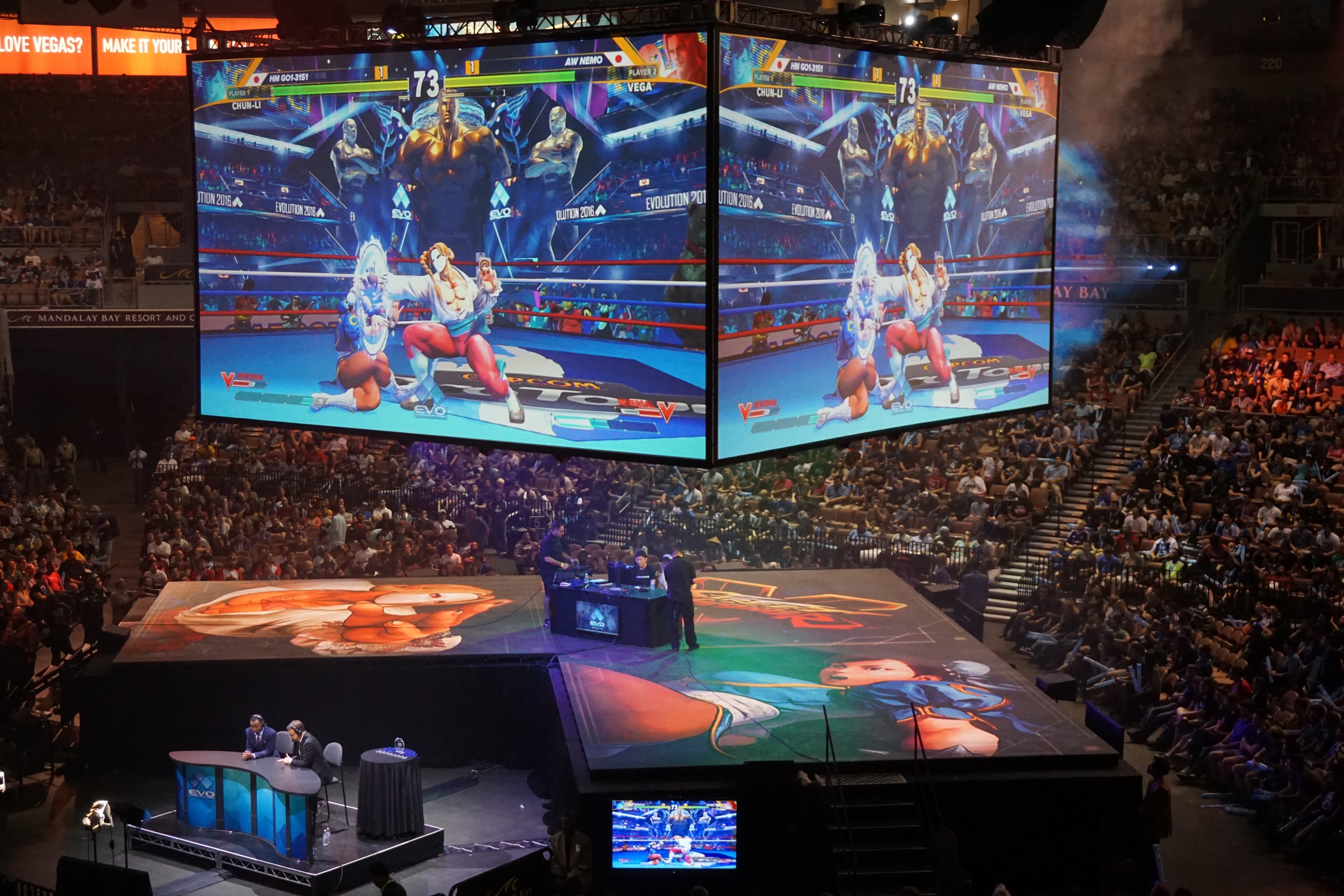
If there is one genre where Japan never needed permission to reign, it is the 格闘ゲーム (kakutō gēmu, the fighting game). Capcom's Street Fighter II (1991), Namco's Tekken (鉄拳, 1994), Sega's Virtua Fighter (1993), and later Arc System Works' Guilty Gear (ギルティギア, 1998): these founding series were born in Japan, and with them a competitive scene of unmatched depth. The country has dominated the global fighting game for decades, to the point that winning a tournament without facing a Japanese player is the exception.
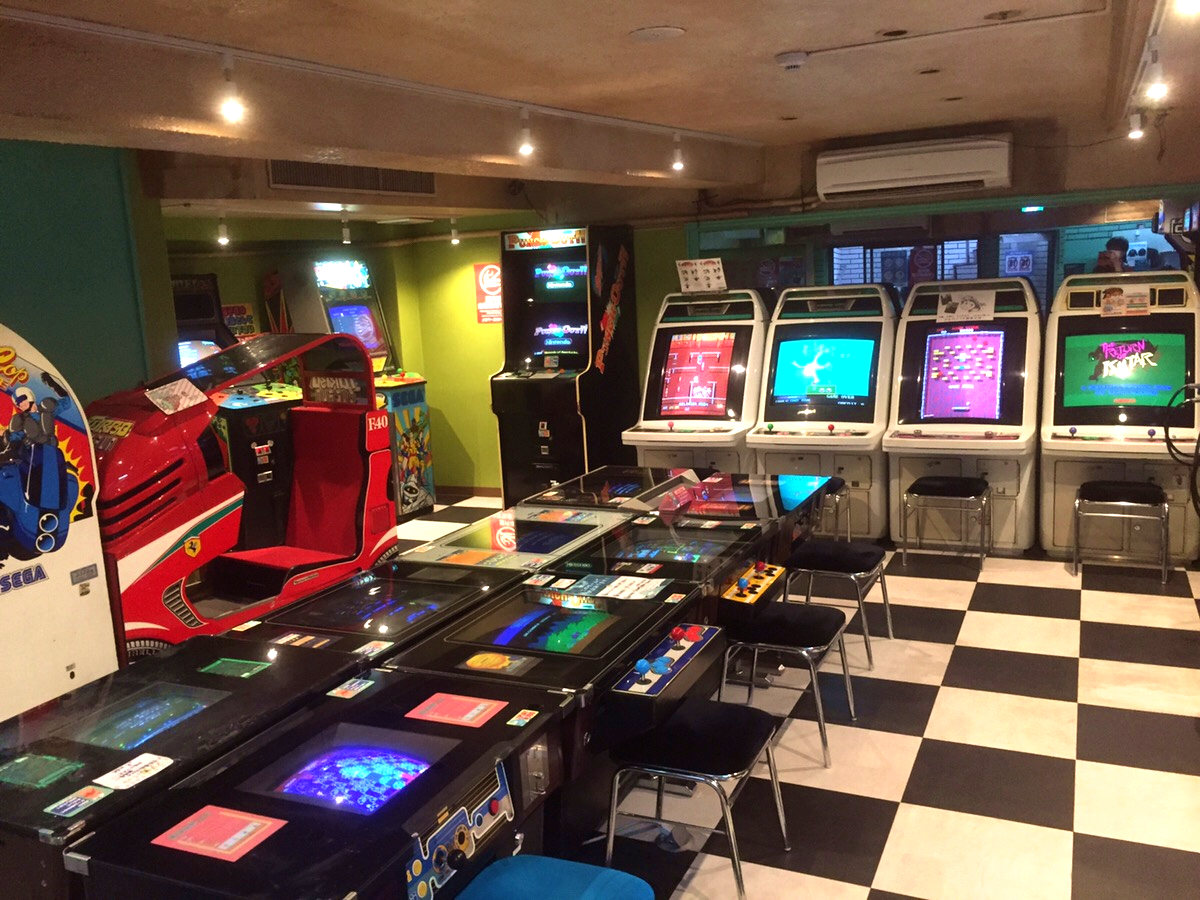
This supremacy has a physical root: the ゲームセンター (gēmu sentā, the arcade, or "game center"). In the 1980s and 1990s, these halls, Shinjuku's, the legendary Mikado in Tōkyō, were arenas where players faced off cabinet against cabinet, hundred-yen coin after hundred-yen coin. To lose was to surrender your seat; to stay, you had to win. That selective pressure, that Darwinism of the arcade counter, forged generations of players of fearsome technical rigor, while the West played mostly on home consoles.
Daigo Umehara and "Evo Moment 37"#
No player embodies this tradition better than , born in 1981, nicknamed "The Beast" and the first fighting-game player listed in the Guinness Book of Records as the "most successful player in competitive fighting games." His name is forever tied to the most famous sequence in the genre's history: Evo Moment 37, which occurred in 2004 at the Evolution Championship Series (Evo) in Los Angeles.
That day, on Street Fighter III: 3rd Strike, Daigo played Ken against the Chun-Li of American Justin Wong. Cornered, his health bar down to a single pixel, he faced Chun-Li's "Houyoku Sen" super art, a barrage of fifteen successive hits. A single touch meant defeat. Daigo parried, that is, blocked with perfect timing, all fifteen hits in a row, to the fraction of a second, then counterattacked and won. The room screamed. The video, watched tens of millions of times, became the universal symbol of what a fighting game can produce at its most sublime.
Daigo is not alone. , whose real name is Tanigawa Hajime, a graduate of the prestigious University of Tōkyō, is one of the "five gods" of Japanese fighting games and won Evo on Street Fighter V in 2017. Beside them, a new generation shines on Tekken, Guilty Gear Strive and Nintendo's Super Smash Bros., where Japanese players, such as those on the Tekken World Tour circuit, regularly sit at the top of the world rankings.
A scene shifting into high gear#
Since JeSU's creation, Japanese eスポーツ has seen sustained growth that industry analysts estimate in the tens of billions of yen of annual market value, driven by sponsors, streaming, and the arrival of powerful domestic players. Top-tier companies (telecom operators, carmakers, beverage brands) now sponsor teams and events, where the sector once struggled to find funding because of regulatory uncertainty.
The clearest sign of this legitimation came from above. The hosting of major events, the interest sparked around the Asian Games (where esports was recognized as a medal discipline in Hangzhou in 2023) and recurring discussions about possible entry into the Olympic movement have placed eスポーツ on the public agenda. The International Olympic Committee announced in 2025 the creation of the Olympic Esports Games, whose first edition is slated for Saudi Arabia, confirming that competitive gaming is institutionalizing on a planetary scale.
A fertile tension remains, peculiar to Japan. On one side, the country is opening up, liberalizing, professionalizing. On the other, its deep culture of competitive play, that of the arcade, of RTA, of solitary perfectionist performance, never waited for institutions to exist. Daigo paraded through Shinjuku's game centers long before a license decreed who was professional; speedrunners broke Super Mario records long before a sponsor took notice.
Japan thus offers the world a double face: it is the source, the maker of the games the planet competes on, from Mario to Street Fighter, and the late student, learning to monetize, regulate and celebrate a competition it already practiced with an intensity few others match. Between the RTA stopwatch and Daigo's parry, the same thing is at stake: the obsessive pursuit of perfection within a system of rules, until it becomes an art.
Frequently asked questions#
What is the difference between RTA and speedrunning? None in substance: RTA (アールティーエー, real-time attack) is simply the term used in Japan for speedrunning, the art of finishing a game as fast as possible. The clock runs in real time, and the Japanese community has used the term since the mid-2000s.
Why was esports slow to develop in Japan? Mainly because of the keihin hyōji hō (景品表示法) law of 1962, long interpreted as capping tournament prize money to prevent disguised lotteries. The creation of the Japan e-Sports Union (JeSU) in 2018 and its professional-license system made it possible to work around the obstacle.
Who is Daigo Umehara? Umehara Daigo (梅原大吾), born in 1981, is Japan's most famous fighting-game player. He authored "Evo Moment 37" (2004), parrying fifteen consecutive hits at one pixel of health on Street Fighter III, a sequence that became legendary in esports history.
Why are so many speedrun games Japanese? Because the foundational titles of video gaming (Super Mario Bros., Zelda, Mega Man, Final Fantasy) come from Japanese studios (Nintendo, Capcom, Square). Japan supplied the canon of games on which the global speedrunning community was built.
In this article
The cultural terms covered here, each with a short definition.
- Daigo Umehara
- Legendary Japanese fighting-game player, known for the 'Evo Moment 37' comeback.
- Evo Moment 37
- Famous 2004 Street Fighter comeback by Daigo Umehara, a milestone of esports history.
- Games Done Quick
- Major charity speedrunning event series broadcast worldwide.
- RTA in Japan
- Japan's biggest speedrunning marathon, raising money for charity.
- Speedrun
- Challenge of finishing a video game as fast as possible, often by exploiting glitches.
- Tool-assisted speedrun
- Speedrun built frame by frame with software for theoretically perfect, superhuman play.
Vending Machines in Japan: Why Are They Everywhere?
Four million machines, from city corners to mountain trails. The history, the reasons, and the wild variety of Japan's vending machines.
Cover image: Nelo Hotsuma · Nelo Hotsuma · CC BY 2.5