Yin and Yang: the Chinese Philosophy of Balance
Yin and yang explained without the clichés: their roots in the Yijing, the taijitu symbol, the five phases, and their uses in medicine, feng shui and martial arts.
La rédaction Kotoba Interactive
Studio éditorial
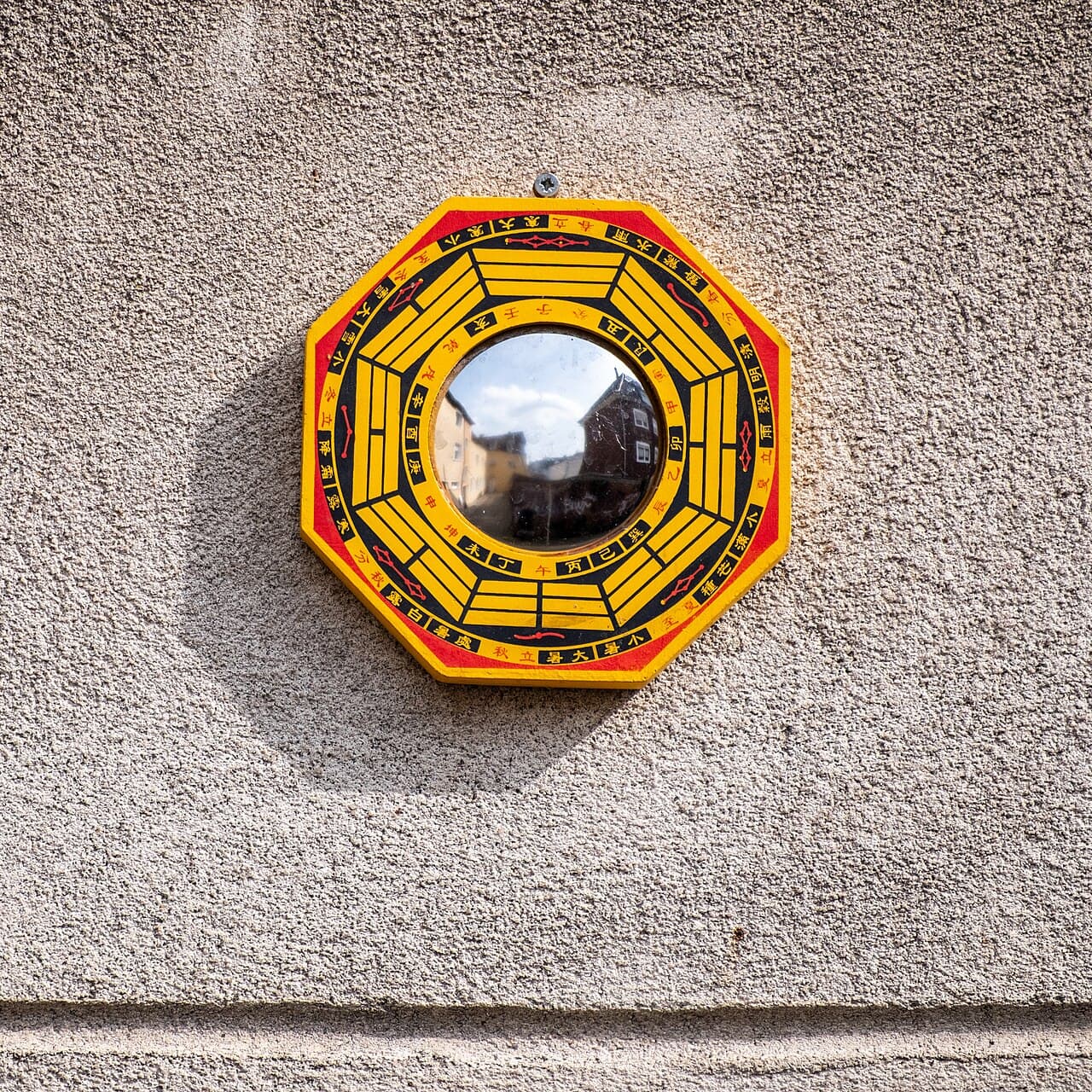
The symbol is not black and white. Look closely at a real taijitu (太极图, tàijítú) painted on a bagua mirror or carved into a temple: a bright dot glows in the dark half, and a dark dot sleeps in the bright half. That detail, so often erased on t-shirts and tattoos, holds the whole of the Chinese idea of yin and yang. Nothing is ever pure. Each force carries within it the seed of its opposite, and the whole keeps turning.
Yin and yang (阴阳, yīnyáng) form one of the oldest and most misunderstood concepts in Chinese thought. People often see in it a battle between good and evil, an Eastern version of the devil and a benevolent God. That is a misreading. Yin and yang do not fight each other: they complete one another, take turns and transform into each other, like day and night. Grasping that difference means understanding why this idea has run through Chinese medicine, cooking, martial arts and the art of living for more than two thousand years.
Two forces that complete each other, never oppose#
Yin and yang name two complementary qualities present in every phenomenon. evokes shadow, cold, rest, moisture, the receptive, the moon, the feminine, the interior. evokes light, heat, activity, dryness, the expansive, the sun, the masculine, the exterior. Originally, the two characters referred very concretely to the two sides of a hill: the shaded slope and the sunlit slope. The philosophical meaning came later, by generalising this ordinary experience of the landscape.
The most widespread mistake is to file yin under "evil" and yang under "good". Chinese thought does not work that way. A night of restorative sleep is as necessary as a day of action; winter prepares spring. Neither force is superior. What matters is their right proportion, and that proportion shifts constantly.
Yin and yang do not fight: they dance. Where one is spent, the other is born, and this continual passage is what the Chinese call life.
Two principles govern their relationship. First, interdependence: yin exists only in relation to yang, just as up makes sense only in relation to down. Neither can be defined without the other. Then transformation: pushed to its extreme, each pole tips into its opposite. The peak of the day announces the decline toward night; the heart of winter already holds the turn back toward lengthening days. This cyclical tipping is the core of the doctrine, and it forbids seeing it as a frozen dualism.
The taijitu, a diagram more recent than you might think#
The familiar symbol, two black and white commas locked together in a circle, is called the , literally "diagram of the supreme ridgepole". Contrary to a common intuition, it is not timeless: its present form is attributed to the philosopher , under the Song dynasty, in a short treatise titled Taijitu shuo (太极图说), "Explanation of the Diagram of the Supreme Ridgepole". Zhou describes there how the taiji (太极), the supreme ridgepole, engenders through its movement and rest the two primordial breaths, yin and yang, from which then flow the five phases and then the ten thousand beings.
Reading the diagram is precise. The S-curve that separates the two halves says that the border is never straight nor fixed: it ripples, it slides. The two dots, light within dark and dark within light, remind us that each force harbours the seed of the other, ready to grow when its hour comes. The circle that wraps the whole figures the unity from which duality is born and to which it returns. Nothing in this image is decorative: every element expresses a cosmological thesis.
Taiji (太极) means "supreme ridgepole" or "ultimate main beam". In Chinese cosmology the term designates the original undifferentiated state from which yin and yang emerge. It gave its name to taiji quan (太极拳), "supreme ridgepole boxing", better known in the West as tai chi.
The diagram must be distinguished from the idea. Yin and yang as a concept are far older than Zhou Dunyi's taijitu. The symbol took centuries to settle into the form we know, and it was popularised worldwide in the twentieth century, to the point of appearing, for instance, at the centre of the flag of South Korea. Confusing the old principle with its late emblem is a frequent source of error.
Want to read these ideas in the original? The characters 阴阳 (yīnyáng), 太极 (tàijí) and 道 (dào) turn up everywhere in Chinese culture. Learn the hanzi, the pinyin and the vocabulary of Chinese thought with ChineseSRS, the spaced repetition that lets you stop guessing and start understanding.
Roots in the Yijing and Zhou cosmology#
The oldest traces of the yin-yang polarity go back to the Zhou dynasty (around 1046-256 BCE) and crystallise in the , the "Book of Changes", one of the oldest Chinese texts. This work of divination rests on continuous and broken lines: the solid stroke represents yang, the cut stroke yin. Combined by threes, these strokes form the eight trigrams (八卦, bāguà), and by sixes, the sixty-four hexagrams that describe every possible situation in the world and their mutations.
That is where the master idea plays out: reality is not made of stable things but of processes. The very title of the book, yi (易), means "change". Nothing remains; everything transforms according to regular cycles that the sage learns to read. Yin and yang are the two beats of this universal pulse.
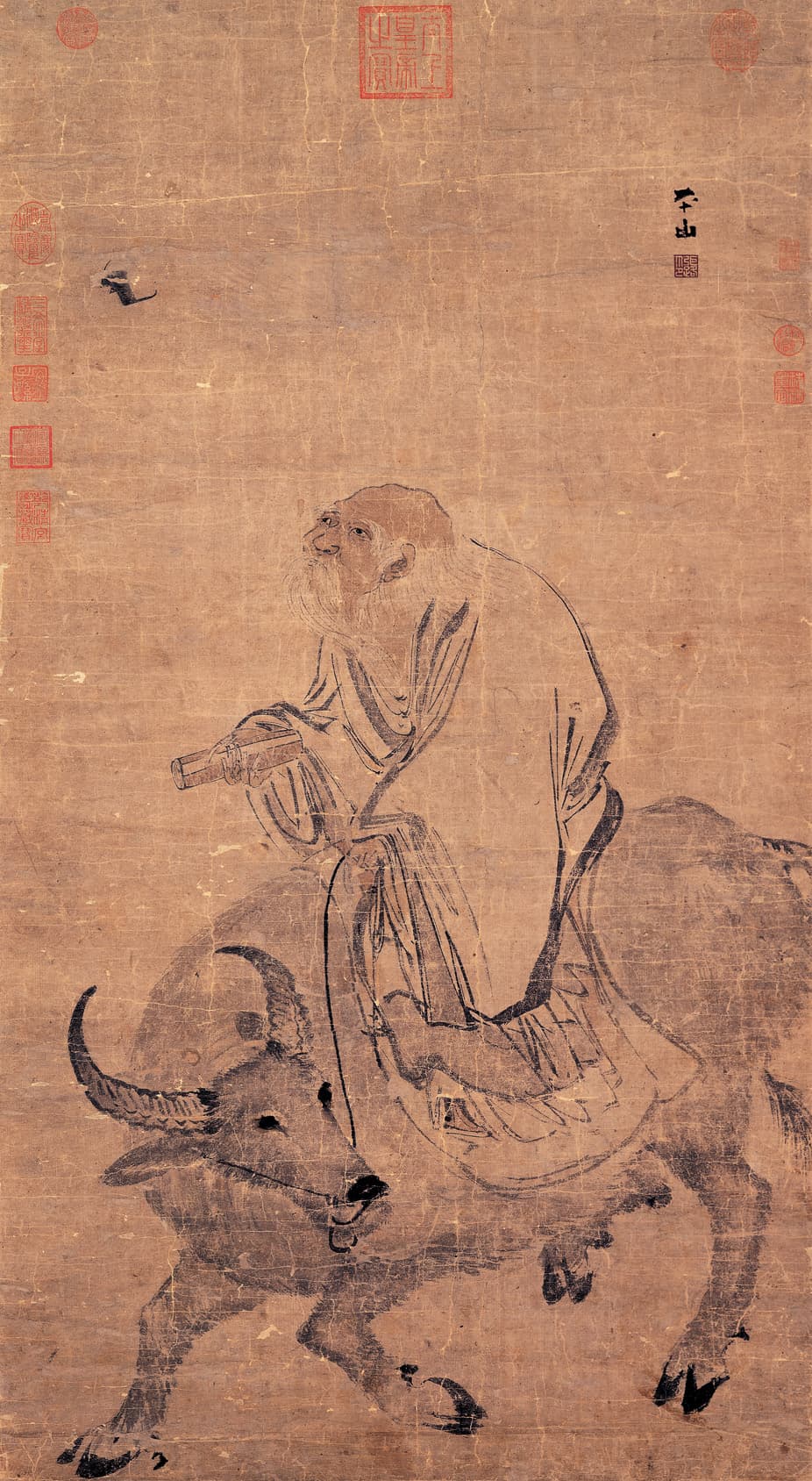
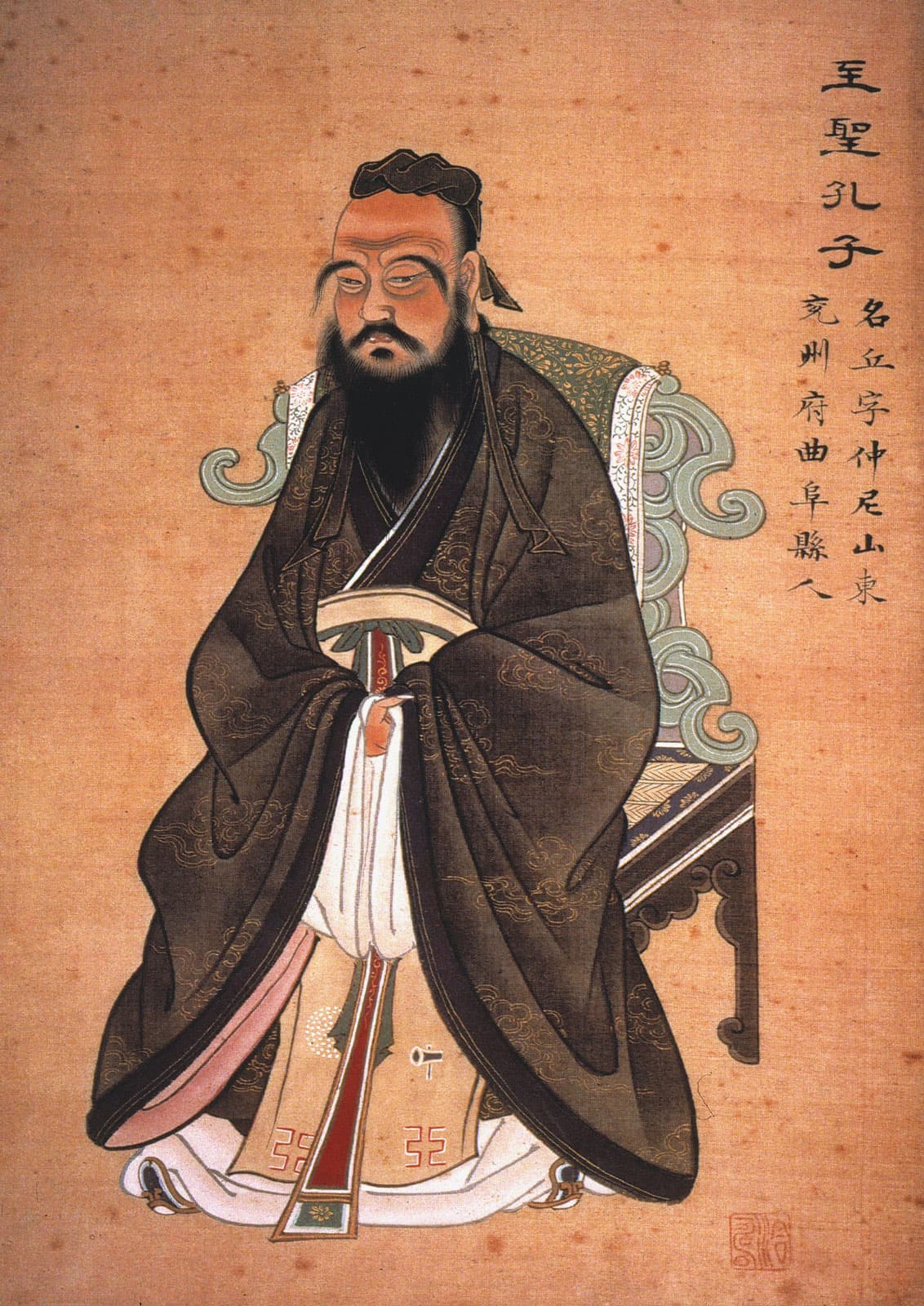
This thinking belonged to no single school. Taoism made it the bedrock of its cosmology, with the dao (道), the Way, as the first source from which the polarity proceeds. The Daodejing attributed to Laozi teaches that "the ten thousand beings carry yin on their backs and embrace yang". Confucian thinkers, from the Song onward, took up Zhou Dunyi's diagram to build their own metaphysics. The naturalist is often credited with systematising the link between yin-yang and the five phases. The polarity is a shared possession of Chinese civilisation, claimed by traditions that were sometimes rivals.
The link with the five phases#
The five phases (五行, wǔxíng) extend the logic of yin and yang. They are Wood (木), Fire (火), Earth (土), Metal (金) and Water (水), not materials but five dynamics or moments of a cycle. They engender one another (Wood feeds Fire, Fire produces ash and therefore Earth, Earth holds Metal, Metal condenses Water, Water grows Wood) and control one another (Water puts out Fire, Fire melts Metal, and so on). Where yin-yang sets two poles, wuxing draws from it five regimes of transformation, and the two systems are found nested together in medicine as in the calendar.
These notions form a small lexicon found in every text:
| Term | Pinyin | Meaning |
|---|---|---|
| 阴阳 | yīnyáng | The two complementary forces, shadow and light |
| 太极 | tàijí | The "supreme ridgepole", the original undifferentiated state |
| 太极图 | tàijítú | The "diagram of the supreme ridgepole", the symbol of two interlocked commas |
| 易经 | Yìjīng | The "Book of Changes", the oldest foundation of the polarity |
| 八卦 | bāguà | The eight trigrams formed of yin and yang strokes |
| 五行 | wǔxíng | The five phases: Wood, Fire, Earth, Metal, Water |
| 道 | dào | The Way, the first source from which the polarity proceeds |
A principle that governs the body, the table and the gesture#
In Chinese medicine, health is defined as a dynamic balance between yin and yang. Illness signals an excess or a depletion of one of the two: too much "fire" (excess of yang) brings on fever, agitation, flushing; a depletion of yang gives way to chilliness and fatigue. The practitioner seeks to restore the balance through acupuncture, herbal medicine or diet, tonifying what is lacking and dispersing what overflows. The founding classic, the Huangdi Neijing (黄帝内经), the "Inner Classic of the Yellow Emperor", compiled around the 2nd century BCE, already makes yin and yang the key to all physiology.
The table obeys the same grammar. Chinese cooking classifies foods as "hot" (yang) and "cold" (yin), regardless of their actual temperature: ginger and lamb warm, cucumber and crab cool. A good meal, like good health, seeks the balance between these qualities according to the season and the constitution of the guest. This logic is nothing folkloric for the hundreds of millions of people who still apply it daily.
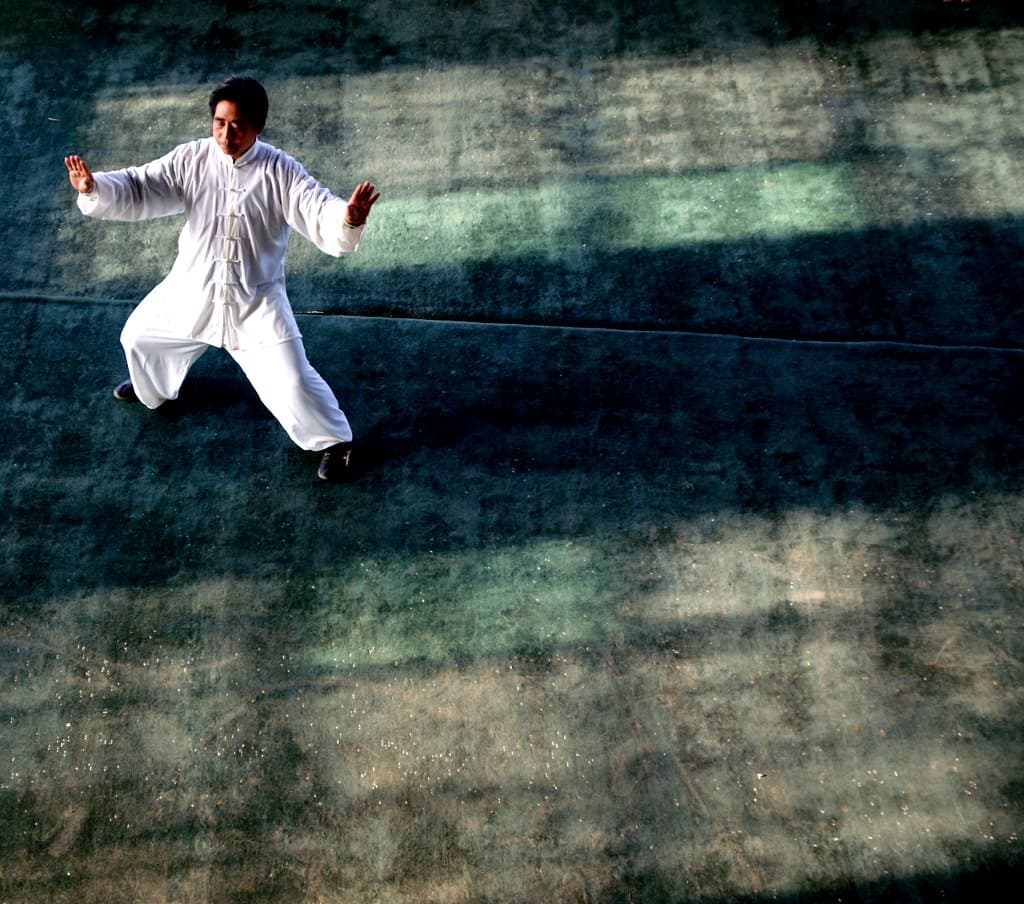
The gesture, finally. The internal martial arts, foremost among them , make yin and yang a bodily method: yield in order to return better, empty one side to fill the other, transform the force received rather than meet it head-on. Feng shui, for its part, seeks to make a place neither too yin (dark, stagnant) nor too yang (noisy, overloaded). The traditional calendar, geomancy, astrology: everywhere, the same pair serves as a reading key.
The national flag of South Korea, adopted in its current form in 1948, places a red and blue taijitu at its centre, surrounded by four trigrams from the Yijing. The symbol of yin and yang there becomes an emblem of state, a rare case of a Chinese philosophical concept raised to the rank of national flag.
One caveat remains. The New Age vogue has often reduced yin and yang to a wellness slogan: "find your inner balance", set a gentle femininity against a conquering masculinity. These shortcuts betray the original idea. Yin and yang are not two fixed essences one might possess to a greater or lesser degree, but two phases of a single movement, in perpetual tipping. The balance sought is not a motionless point of arrival: it is a continual adjustment, never secured for good.
Read alsoTaoism: Laozi, the Dao and the art of not forcingYin and yang proceed from the dao, the Way: dive into the Taoism of Laozi and his vision of a world in motion.
Feng shui applies the yin-yang balance concretely to the space we live in: discover the Chinese art of harmonising places.
The Confucian thinkers of the Song took up the diagram of the supreme ridgepole: explore the other great current of Chinese thought.
FAQ#
Do yin and yang represent good and evil? No, and this is the most common misreading. Yin and yang are two complementary, non-moral forces: shadow and light, rest and activity, cold and heat. Neither is superior to the other. Chinese thought values their right proportion and their alternation, not the victory of one over the other.
What do the two dots in the taijitu symbol mean? The light dot in the dark half and the dark dot in the light half mean that each force carries within it the seed of its opposite. Pushed to its extreme, yin tips into yang and vice versa. These dots remind us that no quality is ever pure nor definitive, and that transformation is permanent.
Where does the concept of yin and yang come from? It goes back to the Zhou dynasty (around 1046-256 BCE) and to the Yijing, the "Book of Changes", where the solid and broken strokes stand for yang and yin. The taijitu symbol, for its part, is later: its form is attributed to the philosopher Zhou Dunyi in the 11th century, under the Song.
What is the link between yin-yang and the five elements? The five phases (wuxing): Wood, Fire, Earth, Metal, Water, extend the logic of yin and yang. According to Zhou Dunyi's cosmology, the supreme ridgepole engenders yin and yang, which in turn engender the five phases. The two systems nest together and serve jointly in medicine and in the calendar.
How do yin and yang apply to everyday life in China? They structure medicine (rebalancing an excess or a depletion), cooking ("hot" and "cold" foods), the internal martial arts like taiji quan (yield then return), feng shui and the calendar. Far from being an abstraction, the pair remains a practical reading grid for hundreds of millions of people.
Yin and yang do not offer an answer to the world: they offer a way of reading it as a movement rather than as a collection of frozen things. At a time when we look everywhere for stable balances, this old Chinese intuition reminds us that a living balance is never motionless, and that this is precisely why it holds.
Photo credits: images in this article come from Wikimedia Commons under free licenses.
Taoism: Laozi, the Dao and the art of not forcing
Discovering Taoism: Laozi and the Dao De Jing, the dao, wu wei (non-action), Zhuangzi and the butterfly, philosophical and religious Taoism, against Confucianism.
Cover image: Dietmar Rabich · Dietmar Rabich, via Wikimedia Commons · CC BY-SA 4.0