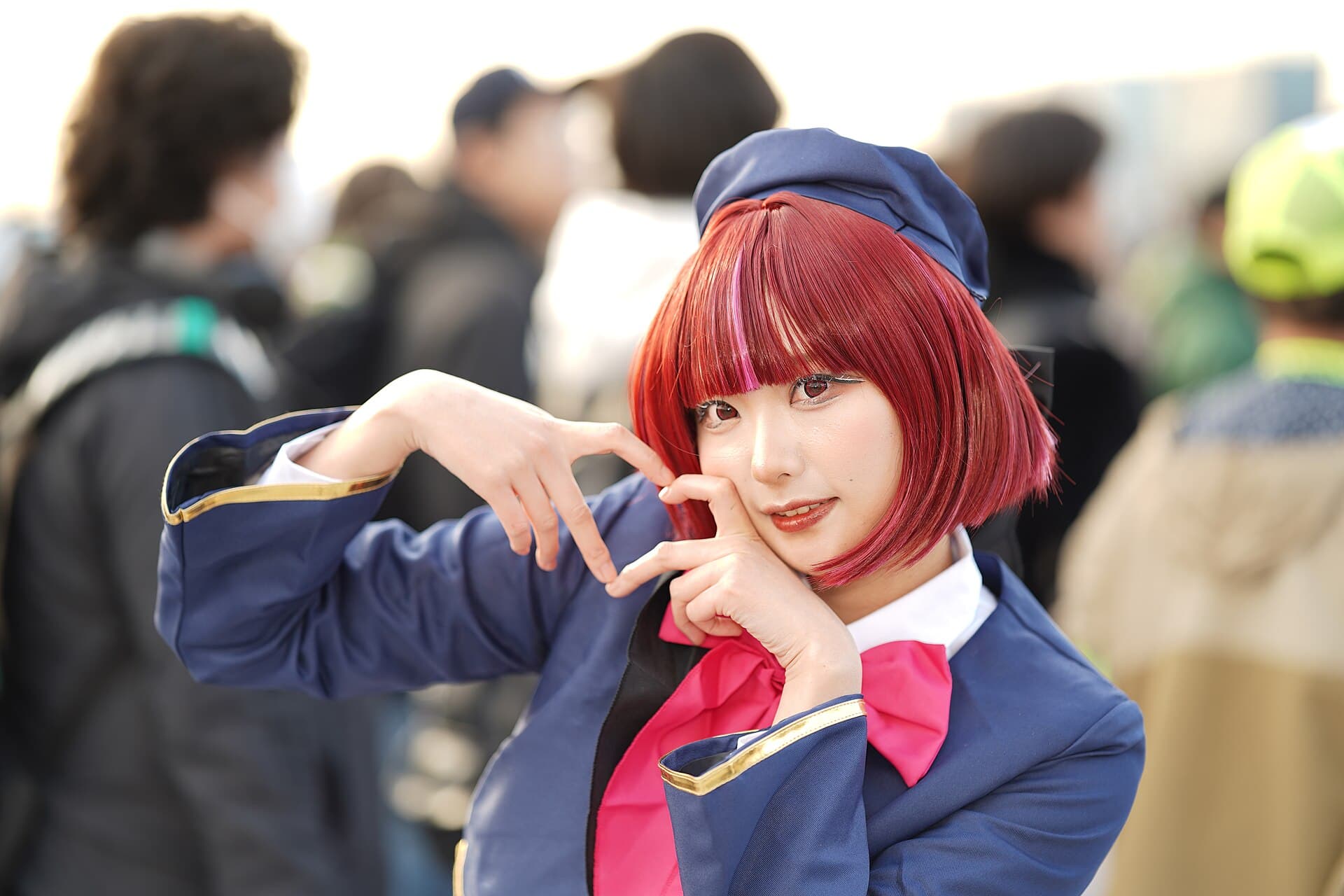
Gyaru: The Japanese Fashion Subculture That Defied Convention
A complete guide to gyaru (ギャル): from Shibuya's kogal girls to ganguro, the history of a rebellious Japanese subculture, its styles, its magazines, and its lasting influence on global fashion.
La rédaction Kotoba
Studio éditorial
Shibuya, mid-1990s. In front of the cylindrical facade of , groups of high school girls with deep tans and platinum-bleached hair, perched on fifteen-centimeter platform boots, loiter noisily at the most traversed intersection on Earth. They wear school uniform skirts shortened to mid-thigh, pooling in thick folds around their ankles, white makeup around their eyes, and glittering lip gloss. They laugh loudly, speak in slang, crowd into purikura (プリクラ) photo booths, and spend their pocket money in the boutiques of the 109. Passersby watch with a mixture of fascination and disapproval. The girls could not care less. They are , and they are busy blowing up every Japanese beauty standard in sight.
comes from the English word gal, imported to Japan through the American jeans brand GALS, launched in 1972 by Wrangler for the Japanese market. The word became a catch-all term for young women who adopted a flashy style of dress, a pronounced tan, and a carefree attitude, in total rupture with the traditional Japanese feminine ideal: pale skin, dark hair, modesty, and obedience.
Origins: An Aesthetic Rebellion#
Against Japanese Beauty Standards#
To understand gyaru, you must understand what it rebelled against. In Japan, the feminine beauty ideal has rested for centuries on the concept of : skin pale as porcelain, straight black hair, understated makeup, modest behavior. Geisha powdered their faces white. Cosmetics advertisements promoted skin-lightening creams. The beautiful woman was the one who effaced herself.
In the 1980s, the first cracks appeared. Japan's economic bubble produced a generation of young women with purchasing power and an appetite for Western fashion. Women's magazines imported American trends. The nightclubs of Roppongi attracted an urban youth eager to have fun, to spend, to be seen. The ground was fertile.
Precursors: Bodikon and One-Gal#
Before gyaru came the , women of the 1980s who wore tight-fitting dresses in nightclubs like Juliana's Tokyo. There were also the early , flashy television presenters. But the true gyaru movement was born in the streets of Shibuya in the early 1990s, carried by teenagers who had nothing to do with the adult nightlife scene. They were high school students. They were fifteen, sixteen, seventeen years old. And they wanted to be seen.
The Kogal Wave: Shibuya's High School Girls#
The Kogal Phenomenon#
The were the first mass incarnation of the gyaru movement. The prefix means "child" or "small": these were the "little gals," the high school girls who adopted gyaru style. Their battle uniform consisted of shortened school skirts, -- thick socks that fell in folds around the ankles, purchased from the brand E.G. Smith -- a tanned complexion achieved through UV booths, bleached or dyed hair, and bold makeup.
Loose socks became so popular in the mid-1990s that American manufacturer E.G. Smith saw its Japanese sales explode by 2,000% between 1994 and 1996. The girls used sock glue (ソックタッチ, Sock Touch) to keep them in place despite their weight.
Shibuya 109: The Gyaru Cathedral#
, a cylindrical shopping complex built in 1979 by the Tokyu Group, became the absolute sanctuary of gyaru fashion in the 1990s. Its ten floors housed dozens of specialized boutiques: Cecil McBee, EGOIST, Moussy, SLY, Liz Lisa. The salesgirls, called , were themselves gyaru fashion icons, selected as much for their style as for their sales ability. To be a salesgirl at the 109 was to be a star.
The building functioned as a trend laboratory. Brands tested collections in ultra-rapid cycles -- well before Western fast fashion. Gyaru flocked there on weekends, browsed the floors, bought accessories, and posed for photographs. The 109 became a pilgrimage site, a symbol, an urban legend.
The Galaxy of Sub-Styles#
Ganguro: Extreme Tanning#
emerged in the late 1990s and pushed gyaru logic to its extreme. The word literally means "black face" (顔黒). Ganguro girls sported very dark tans achieved through intensive UV sessions and self-tanner, white or silver makeup around the eyes and on the lips (shiro nuri, 白塗り), hair bleached to blonde, orange, or silver, and brightly colored clothes. The aesthetic was deliberately provocative: the goal was to distance oneself as far as possible from the bihaku ideal.
Yamanba and Manba: Beyond Ganguro#
In the early 2000s, ganguro spawned even more radical sub-styles. -- named after the mountain witch of Japanese folklore -- and pushed the white makeup all the way to the lips, added colorful stickers to the face, wore multicolored hair extensions, and dressed in fluorescent clothing. The visual effect was striking, almost carnivalesque. Japanese media oscillated between fascination and condemnation.
takes its name from , a creature from Japanese folklore, an old mountain woman with dark skin and wild white hair. The connection, ironic and deliberate, illustrates the gyaru desire to reclaim the codes of traditional beauty in order to subvert them.
Agejo: Hostess Glamour#
The style -- literally "rising princess" -- drew inspiration from the of Kabukicho and Roppongi. Voluminous curled hair, spectacular false eyelashes, form-fitting dresses, towering heels, elaborate makeup: agejo was a sophisticated, glamorous version of gyaru. Its bible was , launched in 2005, which became a bestseller with print runs exceeding 300,000 copies.
Himegyaru: The Princess Style#
adopted an aesthetic inspired by European Rococo: frilly pink dresses, pearls, tiaras, bows, ribbons, references to Marie Antoinette. The emblematic brand was Jesus Diamante. Himegyaru crossed gyaru with the most exuberant kawaii, creating a fairy-tale aesthetic transplanted onto the streets of Tokyo.
Onee-Gyaru: The Grown-Up Gal#
represented the mature, elegant version of the movement. Less tanning, more sophistication. Onee-gyaru wore designer clothes, high heels, and polished but still bold makeup. It was the style adopted by gyaru who were growing up and entering the workforce without entirely abandoning their identity.
Kuro-Gyaru and Shiro-Gyaru#
The gyaru community also divided along tanning lines. maintained the tradition of dark skin, while kept a lighter complexion while adopting the makeup, hairstyles, and attitude of gyaru. This division reflected the movement's evolution toward greater stylistic diversity.
The Magazines: Bibles of Gyaru Culture#
Magazines played a central role in structuring and spreading gyaru culture. Each sub-style had its reference publication, and readers followed trends with near-religious devotion.
- : launched in 1995, it was the founding magazine of gyaru culture. It documented Shibuya street styles, featured snap photos of real gyaru, and set trends. It ceased print publication in 2014, before being reborn as a digital publication in 2018.
- : a magazine for teenage gyaru, launched in 1980, which shaped generations of readers and launched models who became celebrities, such as .
- : the bible of agejo style, launched in 2005, famous for its flamboyant covers and hostess makeup tutorials.
- : a magazine aimed at younger gyaru, focused on accessible fashion and daily outfits.
The magazine egg was so influential that its fashion editors, often former gyaru from the 109, could launch or kill a trend in a single issue. Brands paid considerable sums to appear in its pages, and readers would cut out outfit coordinates to reproduce them exactly.
Para Para and Gyaru Circles: Group Culture#
Para Para Dancing#
is a synchronized dance practiced in the nightclubs and venues of Shibuya, inseparable from gyaru culture of the 1990s and 2000s. The movements are codified: each eurobeat song has its official choreography, which dancers perform in lines facing a screen. Para Para is a collective phenomenon, a form of rhythmic communion that spilled out of clubs to invade shopping malls, parks, and street events.
Gyaru Circles#
were organized groups of gyaru, often affiliated with universities or neighborhoods. They functioned as social clubs with hierarchies, regular meetings, group outings, and Para Para performances. The most famous, such as Black Diamond and Angeleek, had dozens of members and organized public events. The television drama starring Toda Erika popularized the phenomenon among the general public.
Gyaru-o: The Male Equivalent#
The gyaru movement was not exclusively feminine. adopted an equivalent male style: bleached or dyed hair, pronounced tan, clothing from gyaru men's brands, flashy accessories. Their home turf was also Shibuya, and their reference magazine was , launched in 1999. Gyaru-o shared with gyaru the same philosophy of aesthetic rebellion and hedonistic pleasure, in a Japanese society where men face their own conformity pressures (dark suits, black hair, discretion).
Read alsoCosplay: From American Sci-Fi to Japanese Pop Culture PhenomenonLike gyaru, cosplay is a Japanese subculture in which appearance becomes an act of identity transformation, a way of inventing a persona through clothing and makeup.
The Decline of the 2010s#
Normalization#
Starting around 2010, gyaru culture began a gradual decline. Several factors converged. Social media -- first Mixi, then Twitter and Instagram -- replaced magazines as the arbiters of trends. Gyaru fashion, once transgressive, was absorbed into the mainstream: false eyelashes, light tanning, and dyed hair became common practices among young Japanese women without any gyaru connotation.
The K-Beauty Influence#
The rise of K-beauty (Korean cosmetics) in the 2010s imposed a new aesthetic ideal in Japan: luminous skin, natural-looking makeup, the "no-makeup makeup" look. This ideal, called in Korean, was diametrically opposed to gyaru aesthetics. Young Japanese women turned to Korean beauty tutorials, and tanning lost its appeal.
The Closure of the Magazines#
Gyaru magazines ceased publication one after another. egg ended its print edition in 2014. Ageha suspended publication in 2014 as well. Ranzuki disappeared in 2016. Men's egg closed in 2013. Shibuya 109 repositioned itself toward a broader clientele, gradually replacing its gyaru boutiques with international fast fashion chains.
The 2020s Revival#
The TikTok Renaissance#
Starting in 2020, an unexpected phenomenon emerged: gyaru was reborn on TikTok. Young women from Japan, but also from the United States, Europe, and South America, rediscovered gyaru aesthetics through magazine archives, vintage photographs, and makeup tutorials. The hashtag #gyaru accumulated hundreds of millions of views. Neo-gyaru blended classic codes (false eyelashes, heavy eyeliner, pronounced blush) with contemporary elements.
International Communities#
The gyaru revival was carried by international communities connected through Discord, Reddit, and Instagram. Groups like Gyaru Secrets and International Gyaru Network shared tutorials, outfit coordinates, and advice. Gyaru became a worldwide phenomenon, adopted by women of all backgrounds who found in it a universal message: beauty has no single standard.
In 2022, the egg brand launched a collaboration with international TikTok creators, producing a capsule collection sold online in 15 countries. The pieces sold out in 48 hours, proving that the brand retained its power of attraction with a new generation.
The Gyaru Legacy#
Gyaru left a deep imprint on Japanese society and on global fashion. By refusing traditional beauty standards, gyaru opened a space of freedom for Japanese women. They showed that one could be loud, visible, and exuberant in a society that prizes discretion. They invented practices that became universal: individual-fiber false eyelashes, facial contouring, fantasy hair coloring, selfie culture (via purikura), and short-cycle fast fashion.
Gyaru also influenced Western fashion. Designers like Jeremy Scott and John Galliano have cited gyaru as a source of inspiration. Streetwear brands regularly integrate gyaru elements into their collections. And the gyaru philosophy -- building a visual identity outside established norms -- resonates deeply with contemporary movements of personal expression.
Read alsoSanrio and Hello Kitty: The Global Empire of Japanese KawaiiKawaii and gyaru represent two opposite facets of contemporary Japanese femininity: gentle cuteness versus provocative exuberance. Yet both movements share the same desire to express identity through aesthetics.
Like city pop, gyaru is experiencing a worldwide revival driven by social media and nostalgia for 1990s Japan.
Vocabulary#
| Term | Japanese | Romanization | Meaning |
|---|---|---|---|
| Gyaru | ギャル | gyaru | "Gal," female fashion subculture |
| Kogal | コギャル | kogyaru | High school gyaru |
| Ganguro | ガングロ | ganguro | "Black face," extreme tanning |
| Yamanba | ヤマンバ | yamanba | Extreme style named after the mountain witch |
| Manba | マンバ | manba | Variant of yamanba |
| Agejo | アゲ嬢 | agejo | Glamorous hostess style |
| Himegyaru | 姫ギャル | himegyaru | Princess-style gyaru |
| Onee-gyaru | お姉ギャル | onee-gyaru | Mature, elegant gyaru |
| Kuro-gyaru | 黒ギャル | kuro-gyaru | Dark-tanned gyaru |
| Shiro-gyaru | 白ギャル | shiro-gyaru | Light-skinned gyaru |
| Gyaru-o | ギャル男 | gyaruo | Male equivalent of gyaru |
| Para Para | パラパラ | parapara | Synchronized eurobeat dance |
| Purikura | プリクラ | purikura | Decorated photo booth |
| Bihaku | 美白 | bihaku | "White beauty," aesthetic ideal |
| Loose socks | ルーズソックス | ruzu sokkusu | Thick slouching socks |
FAQ#
What distinguishes gyaru from other Japanese fashion subcultures like lolita or visual kei? Gyaru is defined by an aesthetic of tanning, bleached hair, and bold makeup, in direct opposition to traditional Japanese beauty standards. Unlike lolita (Victorian modesty and elegance) or visual kei (androgynous rock), gyaru celebrates extroverted femininity and joyful provocation.
Does gyaru still exist in Japan today? Yes, in an evolved form. The neo-gyaru of the 2020s, driven by TikTok and online communities, blends classic codes with contemporary influences. Shibuya 109 still houses gyaru fashion boutiques, and regular events bring the community together.
Can you be gyaru outside of Japan? Absolutely. The movement has been international since the 2010s, with active communities in North America, Europe, Latin America, and Southeast Asia. Gyaru is now a global aesthetic identity, not solely a Japanese one.
Is gyaru a feminist movement? Gyaru was never an explicitly feminist movement, but it carries significant subversive weight. By rejecting patriarchal beauty standards, claiming the right to be loud and visible, and carving out a space of freedom in a highly normative society, gyaru accomplished a political act -- even if its practitioners would more likely describe it as fun.
Which gyaru magazines are still active? Most of the historic magazines have ceased print publication. egg continues as a digital publication and on social media. Popteen is still published but with a broader positioning. Gyaru culture is now transmitted primarily through TikTok, Instagram, and YouTube.
Yokai: The Supernatural Bestiary That Haunts Japan's Imagination
A complete guide to Japanese yokai: kitsune, tanuki, tengu, kappa, oni, and other supernatural creatures. Origins, cultural significance, from Toriyama Sekien to Pokemon and Ghibli.