Cosplay: From American Sci-Fi to Japanese Pop Culture Phenomenon
From 1930s American science fiction conventions to a multi-billion dollar global phenomenon, the complete history of cosplay, its Japanese transformation, major events, and worldwide cultural impact.
La rédaction Kotoba
Studio éditorial
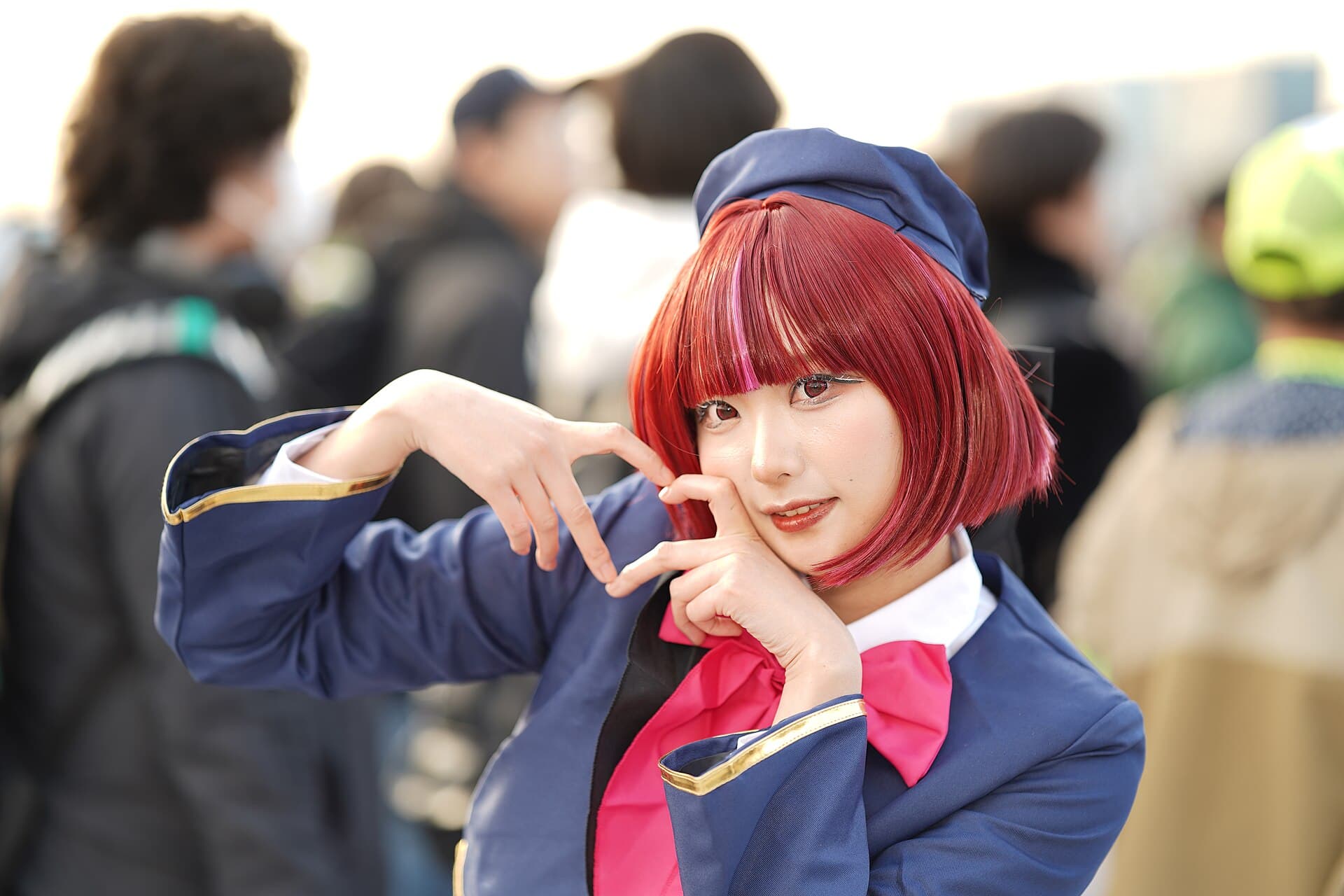
Every summer and winter, inside the cavernous halls of , tens of thousands of people transform themselves into characters from manga, anime, video games, and films. Foam armor, impossibly colored wigs, theatrical makeup, hand-sculpted props: cosplay has become one of the most visible cultural expressions of contemporary Japan. Yet this practice was not born in the Land of the Rising Sun. Its story is one of a round trip between America and Japan, a cultural borrowing that became a total reinvention, an amateur hobby that grew into a global industry worth billions of dollars.
is a portmanteau of the English words costume and play. The term was coined in Japan in 1984 by journalist Nobuyuki Takahashi to describe what he had witnessed at the Worldcon in Los Angeles. The irony is rich: a Japanese word naming an American practice, which would then become synonymous with Japanese culture worldwide.
American Origins: Science Fiction and Masquerades#
The First Conventions (1930s-1940s)#
The history of cosplay begins long before the word existed. In 1939, at the first World Science Fiction Convention (Worldcon) in New York, two fans, Forrest J Ackerman and Myrtle R. Douglas, appeared in futuristic costumes inspired by H.G. Wells' film Things to Come. They were the only ones in costume among 200 attendees, but the seed was planted. By the 1940s, masquerades (costume contests) had become a recurring feature of American science fiction conventions.
The Rise of the 1960s-1970s#
With the explosion of geek culture in the 1960s, driven by Star Trek (1966) and then Star Wars (1977), conventions multiplied and costumes grew more sophisticated. San Diego Comic-Con, founded in 1970, featured costumed fans dressed as Marvel and DC Comics superheroes from its earliest editions. The phenomenon remained, however, a niche hobby associated with Anglo-American science fiction and comic book fan circles.
The Masquerade: Ancestor of the Cosplay Contest#
Masquerades were stage competitions where participants paraded before a jury. They were judged on construction quality, character accuracy, and stage presentation. This format would directly inspire the Japanese cosplay contests of the following decades.
1984: Japan Takes Over#
Nobuyuki Takahashi and the Birth of a Word#
In 1984, Japanese journalist , editor of My Anime magazine, attended the 42nd Worldcon in Los Angeles. Struck by the participants' costumes, he wrote an enthusiastic article upon his return to Japan. He coined the neologism , a contraction of costume play, to describe the practice. The word immediately entered the vocabulary of Japanese fans and never left.
Takahashi later explained that he had considered using the English word masquerade, but found it too strongly associated with European masked balls. He wanted a term that evoked play and playful transformation, not mere concealment.
Comiket and the Cosplay Explosion#
, founded in 1975 in Tokyo, is the world's largest doujinshi (fanzine) convention. By the early 1980s, participants had begun dressing as manga and anime characters. After Takahashi's 1984 article, the practice exploded: Comiket designated a dedicated cosplay area, then photography zones, then strict rules governing the practice.
By the summer Comiket of 1985, there were already several hundred cosplayers. By 1990, there were thousands. Today, each Comiket session (summer and winter) hosts between 25,000 and 30,000 cosplayers among more than 500,000 total visitors.
Harajuku, Akihabara, and Cosplay Culture#
Harajuku: The Street as Stage#
The district in Tokyo became an epicenter of Japanese alternative fashion in the 1990s. Every Sunday, the Jingu-bashi bridge (神宮橋) transformed into an impromptu runway: gothic lolita, visual kei, decora, and cosplayers came to display themselves and be photographed. Cosplay stepped outside convention halls to become a street phenomenon, a form of identity expression visible in public space.
Akihabara: The Electric Town#
, historically Tokyo's electronics district, transformed in the 2000s into a temple of otaku culture. proliferated, with staff costumed as manga maids, while specialized cosplay shops opened one after another. The Chuo-dori street, pedestrianized on Sundays, became a cosplay photography hotspot until it was banned in 2008 for safety reasons.
Dedicated Studios and Spaces#
Tokyo today has dozens of where one can rent sets, lighting, and changing rooms. Chains like Hacostadium offer themed spaces (school, castle, forest, spaceship) available by the hour. Cosplay has become a service industry.
The Craft#
Fabric and Sewing#
The foundation of cosplay remains sewing. Japanese cosplayers learn to pattern, cut, and sew often complex costumes: school uniforms, ball gowns, textile armor, fantasy kimonos. Technical fabrics (lycra, neoprene, faux leather, organza) are chosen for their visual and photographic properties as much as for comfort.
Wigs and Makeup#
are a central element of Japanese cosplay. Specialized brands like Arda Wigs and Airily offer hundreds of colors and cuts. Cosplayers sculpt, lacquer, and stack them to reproduce the impossible hairstyles of anime characters. Makeup, drawing on theatrical techniques and Korean stage makeup, transforms faces: eye enlargement, nose redefinition, extreme contouring.
Armor and Propmaking#
The fabrication of armor and accessories (props) is an art form in its own right. The materials of choice are EVA foam (ethylene-vinyl acetate), Worbla (thermoplastic), resin, and 3D printing. Cosplayers build two-meter swords, articulated wings, full-body armor with integrated LEDs. Propmaking has become a recognized technical discipline, with YouTube tutorials, online courses, and professional artisans.
Some cosplayers spend more than 500 hours on a single costume. The budget can exceed 300,000 yen (roughly $2,000 USD) for a complete suit of armor with embedded electronics. At the World Cosplay Summit, judges inspect interior seams and invisible finishing details.
Major Events#
The World Cosplay Summit (Nagoya)#
The was founded in 2003 in Nagoya by the television network TV Aichi. It is the most prestigious international cosplay competition in the world. Each year, teams of two cosplayers represent their country (over 40 participating nations) in a contest judged on construction quality, stage performance, and character accuracy.
The finals take place every summer at Oasis 21 in Nagoya before thousands of spectators. Japan has won the competition multiple times, but countries like Brazil, Italy, China, and Mexico have also claimed the title, demonstrating the globalization of the practice.
Comiket (Tokyo)#
Comiket remains the world's most massive cosplay event in terms of participants. Cosplayers gather on the rooftop and outdoor spaces of Tokyo Big Sight. Rules are strict: no realistic weapons, no costumes obstructing circulation, mandatory changing rooms (arriving in costume via public transport is forbidden).
Japan Expo (Paris)#
Japan Expo, founded in 1999 in Paris, is the largest Japanese culture festival outside Japan. With over 250,000 visitors per edition, it hosts a European cosplay competition (ECG, European Cosplay Gathering) whose winners qualify for the WCS. Cosplay is omnipresent, making Japan Expo a major cultural bridge between Japan and Europe.
Other Major Events#
- Anime Expo (Los Angeles): North America's largest anime convention
- Comic Market Special (Tokyo): special edition of Comiket
- Cosplay Mania (Manila): Southeast Asia's largest cosplay event
- Niconico Chokaigi (Chiba): multimedia festival with a massive cosplay area
Photography and Social Media#
The Cosplay Photographer: A Role in Its Own Right#
In Japan, the is an amateur or professional photographer specializing in cosplay. The relationship between cosplayers and photographers is codified: polite request before shooting, exchange of business cards, sharing of retouched photos on social media. Photographers like TOKIN and Kira have become celebrities in the scene.
Japanese Social Networks#
Before the Instagram era, Japanese cosplayers used Cure WorldCosplay (now WorldCosplay.net), a platform founded in 2001 specifically for sharing cosplay photos. Then Twitter (now X) became the dominant network in Japan for cosplay, followed by Instagram and TikTok. Cosplayers post work-in-progress (WIP) shots, before/after makeup transformations, and elaborate photo sessions.
Photo Editing and Cosplay Photography#
Cosplay photography is a genre unto itself, with its own aesthetic codes: dramatic lighting, natural or urban settings chosen to evoke the character's universe, heavy retouching (smoothed skin, enlarged eyes, digital special effects). The final result often resembles illustration more than documentary photography.
Professional Cosplayers and the Industry#
Cosplay as a Career#
In Japan, cosplay has become a fully viable career. Professional cosplayers like , , and Alodia Gosiengfiao (Philippines) make a living from combined revenues of modeling, event appearances, brand partnerships, photobook sales, and paid content platforms.
Enako, widely considered Japan's most famous cosplayer, has reported annual earnings exceeding 100 million yen (approximately $650,000 USD). She appears on magazine covers, in television commercials, and on merchandise packaging.
The Cosplay Industry#
The global cosplay market is estimated at over $4.5 billion as of 2025. It encompasses:
- Ready-to-wear costume sales (Chinese brands like Uwowo, Miccostumes)
- Crafting materials (EVA foam, Worbla, wigs, colored contact lenses)
- Photography studios
- Events and conventions
- Digital content (tutorials, photobooks, fan platforms)
Cosplay in Japanese Media#
Japanese television regularly features cosplay segments. magazine, founded in 2002, is the leading print publication in the scene. Manga series like Sono Bisque Doll wa Koi wo Suru (その着せ替え人形は恋をする, My Dress-Up Darling, 2018) have helped popularize cosplay among the general public, with its anime adaptation airing in 2022 to considerable success.
The manga My Dress-Up Darling by Shinichi Fukuda caused a measurable spike in EVA foam and cosplay wig sales in Japan during its anime adaptation broadcast in January 2022. Specialized Akihabara shops reported a 30% increase in beginner customers.
Global Spread and Cultural Exchange#
The Export of Japanese Cosplay#
From the 2000s onward, Japanese cosplay spread worldwide via the Internet, international conventions, and Japanese cultural soft power (manga, anime, video games). Countries like Brazil, Thailand, Mexico, Italy, and France developed massive cosplay communities, often with their own local specificities.
Cross-Pollination#
Global cosplay is not a simple copy-paste of the Japanese model. Western cosplayers brought propmaking techniques from the film industry (resin, fiberglass, industrial-grade 3D printing), while Japanese cosplayers excelled in sewing, makeup, and stylized photography. The exchange is constant: tutorials circulate on YouTube and TikTok in every language.
Cosplay as Cultural Diplomacy#
The Japanese government has officially recognized cosplay as a vehicle for cultural diplomacy. The World Cosplay Summit receives support from Japan's Ministry of Foreign Affairs. In 2015, the government launched the Cool Japan program, which explicitly includes cosplay among the creative industries to be promoted internationally.
Read alsoSanrio and Hello Kitty: The Global Empire of Japanese KawaiiLike cosplay, the Sanrio universe illustrates Japan's ability to transform cultural products into global phenomena driven by fan passion.
FAQ#
Is cosplay only related to Japanese culture? No. Cosplay encompasses all fictional universes: American comics, films, TV series, Western video games, historical figures. However, anime and manga characters remain the most represented at conventions, and Japan is considered the country that structured the modern practice.
Do you have to make your own costume? Not necessarily. Many cosplayers buy ready-to-wear costumes and customize them. However, in competitions, handmade craftsmanship is highly valued and often required by the rules.
Is cosplay a viable career? For a small minority of highly popular cosplayers, yes. Most practice cosplay as a hobby, sometimes an expensive one. Professional income comes from partnerships, appearances, online content, and merchandise sales.
What are the basic rules at conventions? Ask before photographing someone, do not touch costumes without permission, respect circulation areas, do not carry realistic weapons, and change in designated changing rooms.
Is crossplay (dressing as a character of the opposite gender) accepted? Yes, crossplay is widely accepted and practiced in both the Japanese and international cosplay communities.
Credits and Sources#
- Takahashi, N. (1984). Original article in My Anime Magazine
- Winge, T. (2006). Costuming the Imagination: Origins of Anime and Manga Cosplay, Mechademia Vol. 1
- Okabe, D. (2012). Cosplay, Learning, and Cultural Practice, In Fandom Unbound
- World Cosplay Summit — official website (worldcosplaysummit.jp)
- Comiket — Comic Market Committee (comiket.co.jp)
- COSPLAY MODE Magazine — archives 2002-2025
- Bruno, M. (2002). Cosplay: The Illegitimate Child of SF Masquerade, Millennium Philcon
In this article
The cultural terms covered here, each with a short definition.
Boys Over Flowers: How a Japanese Manga Became a Korean and Global Phenomenon
From Hana Yori Dango to Boys Over Flowers, a look back at the history of a franchise that crossed borders, languages, and screens, from shojo manga to the most widely exported K-drama of the 21st century.
Cover image: Wikimedia Commons contributor · Wikimedia Commons · CC BY-SA 4.0