Ondol: the Korean floor heating that invented a way of life
History and workings of Korean ondol: the underfloor heating that shaped architecture, sleeping habits, cuisine and daily life in Korea.
La rédaction Kotoba
Studio éditorial
Step into a Korean home in winter and the first thing you feel is not the warmth of the air but the warmth of the floor. Remove your shoes, place a foot on the wood, and a deep warmth rises through the sole, climbs the legs, fills the body. Then you understand why Koreans sleep on the floor, eat on the floor, sit on the floor: the floor is not a surface, it is a radiator, and it has been one for two thousand years. This is ondol.
is the traditional underfloor heating system of Korea, one of the oldest in the world. An external hearth burns wood or coal; the smoke and hot air circulate under the floor through stone channels, warming the entire surface before escaping through a chimney. Simple in principle, revolutionary in consequence: ondol did not merely heat Korean homes, it shaped an entire way of life.
Two thousand years beneath the floor#
The earliest archaeological traces of underfloor heating in Korea date to the Three Kingdoms period (57 BCE - 668 CE), in the north of the peninsula. The kingdom of , facing the harsh winters of Manchuria, developed a system of channels beneath dwelling floors. Excavations at the former capital Gungnae have revealed heating structures dating to the early centuries of the common era.
The system was refined under the Goryeo dynasty (918-1392) and the Joseon (1392-1897), eventually becoming the norm across the entire peninsula. Traditional ondol uses flat stone slabs (구들장, gudeuljanq) laid on stone pillars that create channels. The hearth (agungi, 아궁이), located outside or in the kitchen, served both to heat the house and to cook food, in a remarkable economy of energy.
Ondol does not heat the air: it heats the body through the floor, through contact. It is warmth that rises from below, like a hot spring beneath your feet, and it changes every relationship with domestic space.
The floor as centre of life#
Ondol explains why floor culture is so deeply rooted in Korea. When the floor is the warmest surface in the house, it is logical to sleep on it, eat on it, work on it, receive guests on it. The , the thin mattress unrolled at night and stored in the morning, is a direct consequence of ondol: no need for a bed when the floor is one.
The low Korean table, the or , is designed for diners seated on the floor. Cushions, low armrests, the absence of chairs in traditional homes — all flow from ondol. Even the Korean sitting posture, that art of sitting cross-legged or with knees folded, is a legacy of the heated floor.
The obligation to remove shoes on entering is also linked to ondol: the floor is an intimate, clean living space, an extension of the body, and walking on it in outdoor shoes is unthinkable. This rule, which foreigners discover on their first trip to Korea, is not mere politeness: it is a necessity born of architecture.
combines on (온, "warm") and dol (돌, "stone"). The word says it all: a warm stone underfoot. The system is also called , from the old Korean word for the stone slabs of the channel.
From wood fire to hot water#
Traditional ondol, fuelled by wood and later coal briquettes (yeontan, 연탄), posed safety problems: carbon monoxide fumes, when channels were poorly maintained, caused sometimes fatal poisonings every winter. The phrase 연탄가스 중독 (yeontan gaseu jungdok, "briquette gas poisoning") was grimly familiar to Koreans until the 1980s.
Modernisation transformed ondol without abolishing it. Since the 1970s-1980s, Korean underfloor heating has shifted to embedded in a concrete screed beneath the floor covering. The principle remains the same — heat still rises through the floor — but the fuel has changed: city gas, electricity, and increasingly heat pumps.
What is remarkable is that Korea never abandoned underfloor heating, even while modernising. Where the West adopted wall radiators and then forced-air central heating, Korea simply upgraded its ondol. Every Korean apartment, from the student studio to the Gangnam penthouse, has a heated floor. The thermostat controls the floor temperature, not the air.
Ondol in the hanok#
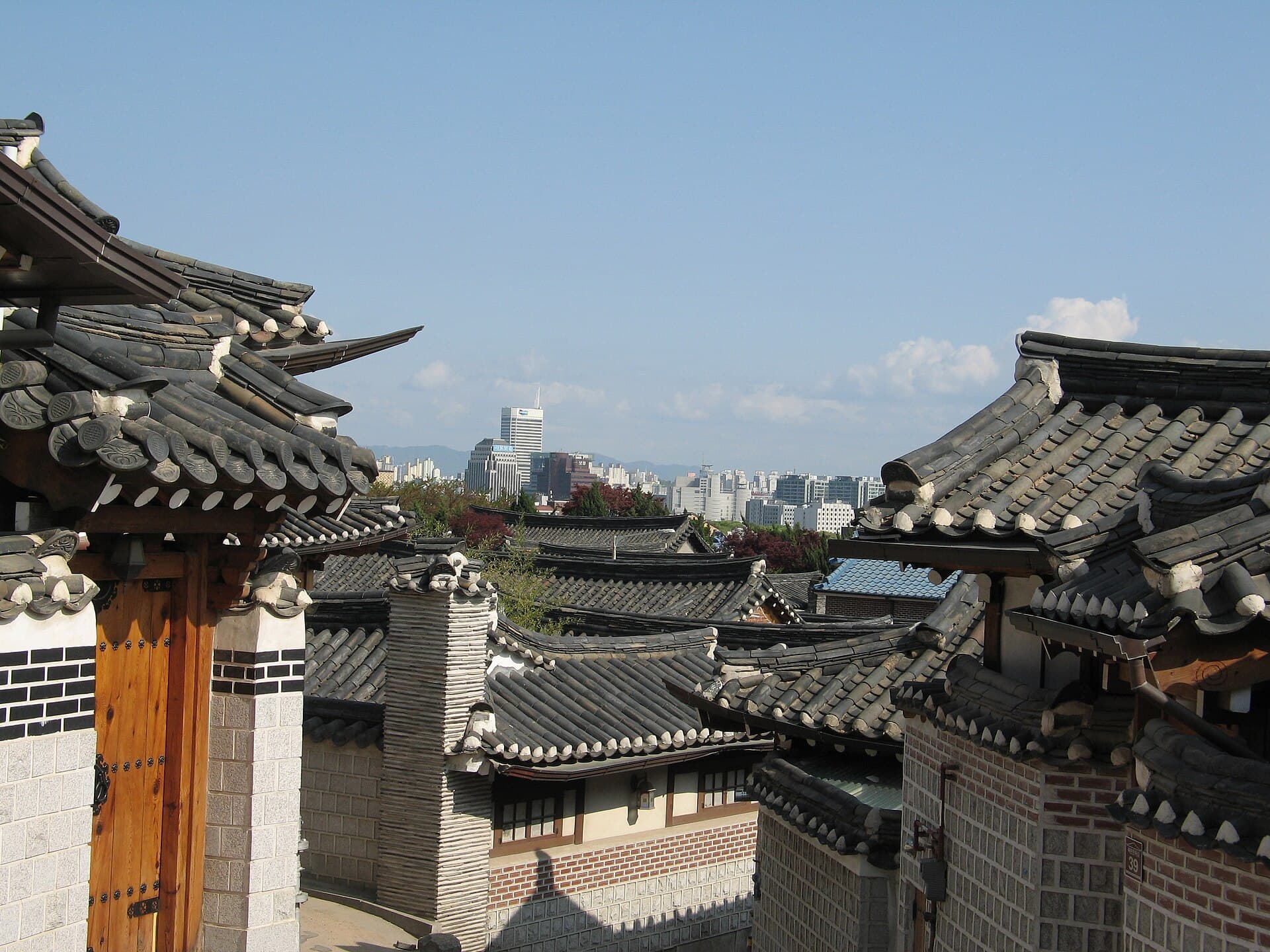
In a traditional Korean house, the , ondol works in tandem with the , the raised, unheated wooden veranda. The hanok thus combines two complementary spaces: ondol rooms, warm and enclosed for winter, and the maru, cool and open for summer. This thermal duality is the genius of traditional Korean architecture, which conceives the house not as a fixed space but as an organism that adapts to the seasons.
Read alsoThe hanok: the genius of the traditional Korean houseThe hanok, with its ondol and its maru, is the original architectural setting of the Korean way of life. To understand the house is to understand why Koreans live on the floor.
A worldwide legacy#
Korean ondol has influenced underfloor heating across Northeast Asia. The Chinese of northern China is a close cousin, though its principle differs slightly (a raised platform rather than an entire floor). Modern underfloor heating, adopted worldwide as "radiant floor heating," owes much to the Korean concept, even if the direct lineage is rarely acknowledged.
To discover ondol is to understand that a heating system can shape an entire civilisation: the way people sleep, eat, sit, host guests and think about space. To learn Korean is also to grasp these words, ondol, gudeul, maru, which say that in Korea, everything begins with the floor beneath your feet.
FAQ#
What is ondol? Ondol (온돌, "warm stone") is Korea's traditional underfloor heating system. An external hearth heats channels beneath the floor, warming the entire surface. The principle has existed for over 2,000 years.
Why do Koreans sleep on the floor? Because of ondol: when the floor is the warmest surface in the house, it is natural to sleep, eat and live on it. A thin mattress (yo) is unrolled at night and stored in the morning.
Does ondol still exist in modern apartments? Yes. All modern Korean dwellings have underfloor heating, fed by hot-water pipes beneath the floor covering. The ondol principle was never abandoned, only modernised.
Why do you remove shoes in Korea? Because the floor, heated by ondol, is an intimate living space where people sleep, eat and sit. Walking on it in outdoor shoes is unthinkable — a necessity born of architecture as much as a rule of politeness.
Photo credits: the images used in this article come from Pexels and Unsplash and are royalty-free.
The hanok: the genius of the traditional Korean house
History and secrets of the hanok, the traditional Korean house: ondol underfloor heating, maru wooden floor, curved tiled roofs, hanji paper and harmony with nature.