Pojangmacha: under Korea's orange street food tents
Discovering Korean pojangmacha: history, atmosphere, signature dishes (tteokbokki, odeng, somaek) and their place in popular culture and K-dramas.
La rédaction Kotoba
Studio éditorial
Night falls on Seoul and the pavements glow with a weary orange. Under a tarpaulin strung between two metal poles, a makeshift counter faces a row of plastic stools. Steam rises from a pot where fish-cake skewers float, the smell of chilli sauce mingles with the winter cold, and a man in a suit orders a glass of soju while loosening his tie. This is a pojangmacha, and nothing is more Korean than this scene.
are the street-food tents that dot Korean pavements from nightfall onward. Half canteen, half bar, these precarious stalls offer hot food, cheap alcohol and something modern Korea struggles to find elsewhere: a space to decompress, free of hierarchy and judgement, where the exhausted office worker and the broke student share the same counter.
The origin: feeding post-war Korea#
Pojangmacha were born in the devastated Korea of the 1950s, after the war. In a country in ruins, small street vendors set up covered carts to sell simple, cheap food to a hungry population. The model was that of the Japanese , the street stalls of Tokyo and Osaka, but Korea made it its own by adapting it to its own flavours and rhythm of life.
Over the decades, the pojangmacha evolved from a mobile cart into a semi-permanent tent, erected in the evening and taken down at dawn. The orange or red tarpaulins became their visual signature, unmistakable in the Korean urban landscape. The pojangmacha has never been a restaurant: it is an in-between, a temporary space that exists only at night, like a secret the city shares only after sundown.
A pojangmacha is not a restaurant: it is a refuge. A place where you eat standing or perched on a stool, where soju flows, where masks fall with the night.
The menu: warmth and comfort#
A pojangmacha menu is short, hot and comforting. The signature dishes are almost always the same from one end of the country to the other.
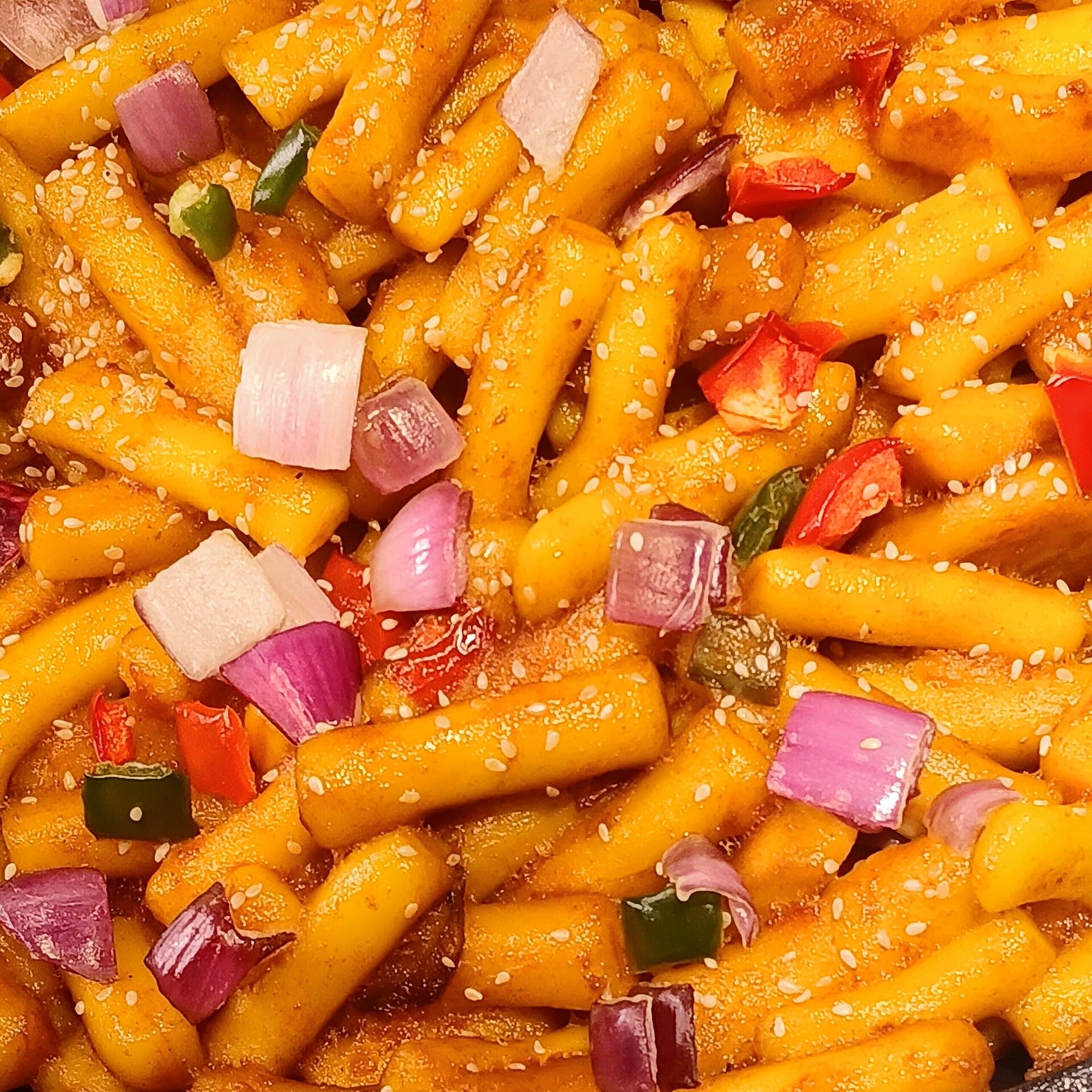
, cylinders of rice cake sauteed in a red, sweet-spicy gochujang sauce, is the king of Korean street food. You eat it with toothpicks, standing, blowing on each piece to avoid burning your mouth. or , fish-cake skewers served in a clear, steaming broth, warms the hands as much as the stomach during Seoul's glacial winters.
, Korean blood sausage stuffed with glass noodles and pork blood, is a classic often served with salt and chilli sauce. , sweet egg bread, and , pancakes stuffed with brown sugar and seeds, round out the sweet offerings.
combines pojang (포장, "covered, wrapped") and macha (마차, "wagon, cart"). The name describes exactly the thing: a covered cart, a makeshift shelter on wheels that became an urban institution.
Somaek: the national cocktail#
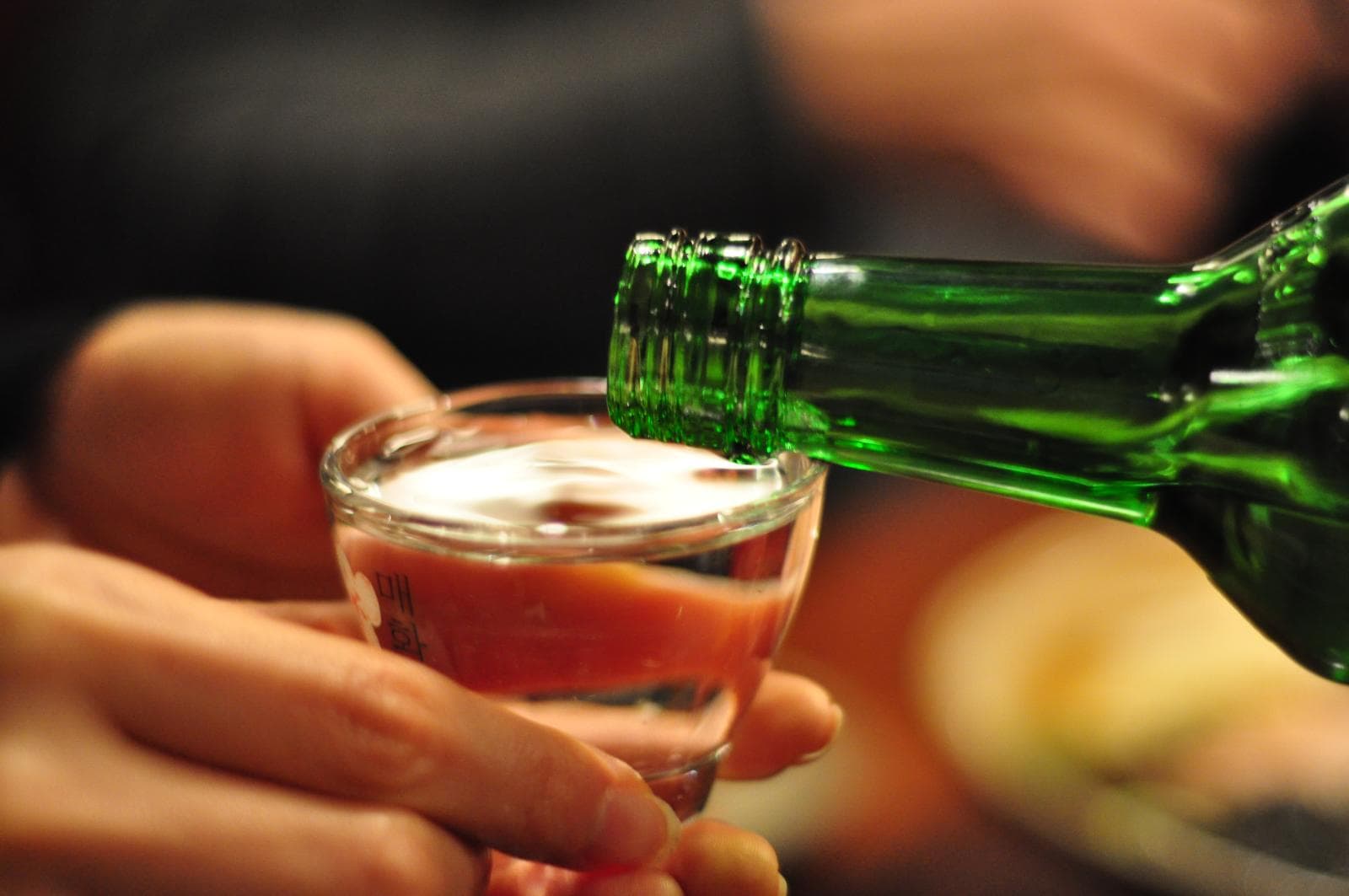
You do not go to a pojangmacha just to eat: you go to drink. , Korean rice spirit, flows freely in these tents, served in small green glasses downed in one shot. Korean beer (maekju, 맥주) accompanies the soju, and their mix, , is the unofficial cocktail of Korean nightlife.
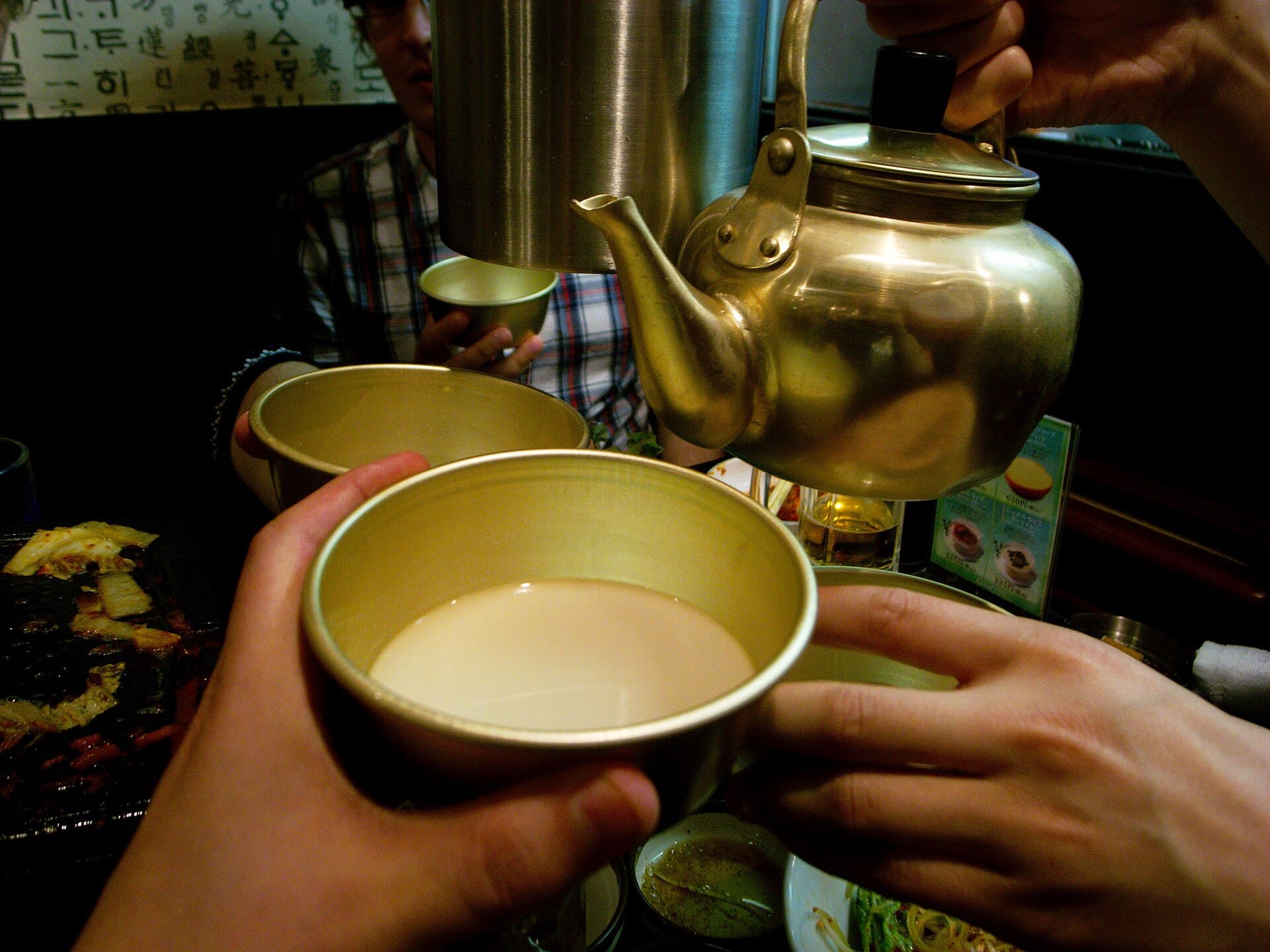
Drinking culture at a pojangmacha follows tacit social rules. You never pour your own drink: someone else fills your glass, and you fill theirs in return. You turn your head when drinking in front of an elder, out of respect. And when the pojangmacha owner shouts "한 잔 더!" (han jan deo!, "one more glass!"), nobody refuses.
Read alsoSoju: The History and Etiquette of Korea's National SpiritSoju, the liquid soul of the pojangmacha, has its own fascinating history. Distilled for centuries, it has become the world's best-selling spirit.
The pojangmacha in K-dramas#
If you have watched a K-drama, you have seen a pojangmacha. It is the most classic scene in Korean television: the protagonist, heartbroken or overwhelmed by problems, sits alone under the orange tent, orders a soju and ends up confessing everything to a stranger or to the love interest who happens to pass by.
This staging is no empty cliche: it says something true about the social function of the pojangmacha. Under the tarpaulin, conventions loosen. You speak to strangers, cry without embarrassment, laugh too loudly. The pojangmacha is a liminal space, suspended between day and night, between the formal and the intimate, and it is this quality that makes it such a powerful dramatic setting.
Threats and nostalgia#
Pojangmacha are in decline. Since the 2000s, Korean municipalities, concerned with hygiene and urban order, have restricted licences and moved tents to designated zones. Seoul has led several "clean-up" campaigns that wiped out dozens of historic pojangmacha. Health regulations, neighbourhood complaints and competition from modern restaurants reduce their numbers year by year.
Yet the nostalgia is immense. Koreans over forty remember a time when every street corner had its orange tent, and younger generations, raised on K-dramas, mythologise a place they have sometimes never visited. A few neighbourhoods hold out: Jongno, Euljiro and the area around Seoul Station still harbour clusters of pojangmacha standing firm, like sentinels from another age.
An irreplaceable institution#
A pojangmacha is not a restaurant, not a bar, not a food truck. It is a unique social space, born of necessity and become tradition, where food is a pretext and conversation the real dish. To discover the pojangmacha is to understand that Korea is not only its skyscrapers and screens: it can also be read under an orange tarpaulin, a glass of soju in hand, in the steam of an odeng pot. To learn Korean is also to hear these words, pojangmacha, tteokbokki, somaek, which say that in Korea the best things are eaten at night, standing up, feet in the cold.
FAQ#
What is a pojangmacha? A pojangmacha (포장마차) is a Korean street-food tent, set up in the evening and taken down at dawn. It serves street food (tteokbokki, odeng, sundae) and alcohol (soju, beer) in a relaxed atmosphere.
What do you eat at a pojangmacha? The classics are tteokbokki (떡볶이, rice cakes in spicy sauce), odeng (오뎅, fish-cake skewers in broth), sundae (순대, Korean blood sausage) and sweet snacks like hotteok. Soju and beer accompany everything.
Why do pojangmacha appear in K-dramas? Because they represent a unique social space where conventions dissolve. Under the tent, characters confide, cry, drink and form bonds, making it a powerful dramatic setting.
Do pojangmacha still exist in Seoul? Yes, but their numbers are declining due to urban and health regulations. They can still be found in neighbourhoods like Jongno, Euljiro and near Seoul Station, though far fewer than before.
Photo credits: the images used in this article come from Pexels and Unsplash and are royalty-free.
Tteokbokki: the rice cake that sets Korea ablaze
History and codes of tteokbokki, Korean street food: rice cake sticks in a sweet-and-spicy gochujang sauce, from royal kitchens to the street stall, its cult variants.