Sichuan cuisine: mala, the fire that numbs the tongue
Understanding Sichuan cuisine and its mala flavour: Sichuan pepper, chilli, mapo tofu, dandan noodles, Chengdu and Chongqing and the art of Chinese heat.
La rédaction Kotoba
Studio éditorial
The first bite deceives you: a scent of red oil, a rising heat. Then comes the other sensation, the one nothing had prepared you for — an electric tingling on the lips and the tip of the tongue, a vibration that gently numbs the mouth while the chilli burns. You no longer know whether you are suffering or revelling. Welcome to the cuisine of Sichuan, and to its reigning enigma: mala.
, one of the great culinary traditions of China, is known worldwide for its mala flavour (麻辣): the meeting of the burning heat of the chilli and the numbing of Sichuan pepper. Far more than a strong taste, it is a true architecture of sensation. To understand mala is to enter a cuisine that does not seek to please at first, but to electrify.
Mala: two fires that answer each other#
The word mala says it all. It is formed of two characters: , "numb, tingling," and , "spicy, burning." Sichuan cuisine rests on this marriage of two distinct sensations, which have nothing to do with each other: one lulls the mouth to sleep, the other sets it ablaze.
The heat comes from the ; the numbing is the signature of , which is not a pepper but the dried berry of a local shrub. Its active molecule, sanshool, acts on the touch receptors of the mouth and provokes that anaesthetic vibration, halfway between a prickle and a slight electric shock. Mala is therefore less a taste than a nervous experience.
Mala does not seek sweetness: it seizes you, numbs you, burns you — and it is precisely this vertigo of the senses that the Sichuanese call pleasure.
Sichuan pepper, the ingredient that exists only here#
is the identity heart of Sichuan cuisine. A small reddish berry with a fragrant husk, it is toasted, ground, infused in oil. Its aroma evokes citrus and pine, and it is its husk — not the black seed inside — that carries the numbing effect.
This berry is so characteristic that it was at one time banned from import into the United States, for fear it might carry a citrus disease: American Sichuan restaurants had to improvise, and authentic mala suffered until the embargo was lifted in 2005. Proof that there is no Sichuan cuisine worthy of the name without its flower pepper.
joins má (麻), "numbness, tingling," and là (辣), "spicy." The Chinese language thus clearly distinguishes two sensations that English often blurs under the word "hot." The huājiāo brings the má, the chilli brings the là: their balance defines the soul of each Sichuan dish.
The emblematic dishes#
is doubtless the totem dish of Sichuan: cubes of silken tofu in a red sauce of chilli and fermented bean paste, sprinkled with Sichuan pepper and minced meat. Its name — "the tofu of the pockmarked old woman" — is said to refer to a Chengdu innkeeper who supposedly invented it in the nineteenth century.
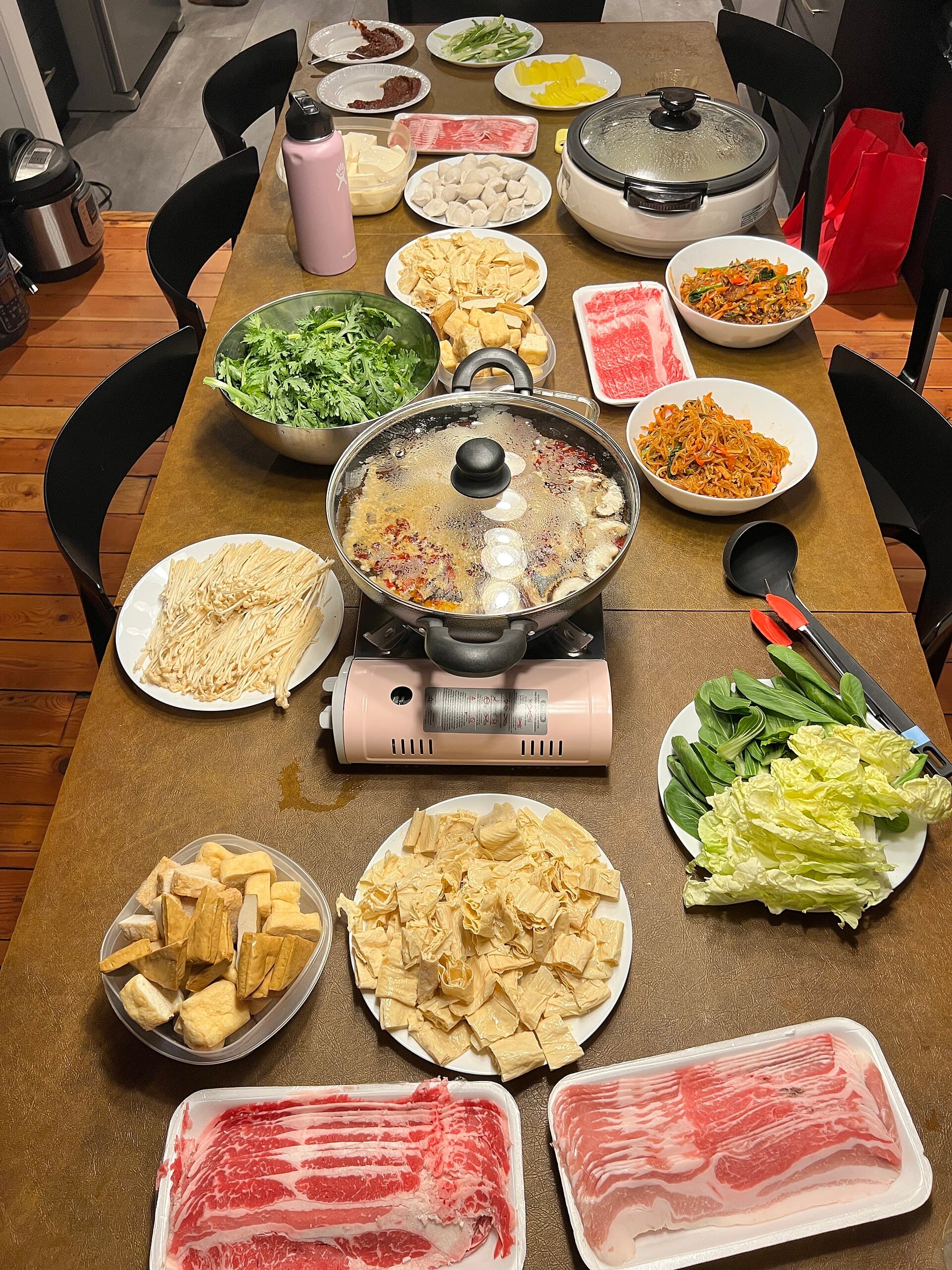
owe their name to the carrying poles (dàn) of the street vendors who sold them: noodles coated in a spicy sauce of sesame and chilli oil. To this are added kung pao chicken (宫保鸡丁, gōngbǎo jīdīng) with peanuts and dried chillies, and the Sichuan huoguo, that hotpot where one plunges the food into a red, incandescent broth bristling with floating huājiāo.
Read alsoChinese Hotpot: The Bubbling Feast That Unites ChinaSichuan hotpot, that incandescent broth in which each morsel is cooked, is the most convivial expression of mala: a whole art of eating together.
A cuisine shaped by its climate and history#
Why so much heat in Sichuan? The answer lies partly in the climate: the Sichuan basin is damp, misty, with little sun. Traditional Chinese medicine sees chilli as a way to drive out the body's "dampness," and spice makes one sweat, helping to bear the humidity. Chilli thus found there a land of election.
Yet chilli is not Chinese in origin: it comes from the Americas and reaches China only toward the end of the sixteenth century, along the Portuguese trade routes. Before it, Sichuan heat rested chiefly on Sichuan pepper, ginger and garlic. The rapid and massive adoption of chilli redefined the region's cuisine within a few centuries — a reminder that the most "ancestral" traditions are often recent alchemies.
Beyond mala: the cuisine of a hundred flavours#
To reduce Sichuan to heat would be a mistake. Local cooks claim a repertoire of flavours of rare diversity, summed up by the adage . Mala is only one profile among others: there is also yúxiāng (鱼香, "fish fragrance," with no fish), guàiwèi (怪味, "strange taste" blending sweet, salty, sour, spicy and numbing), or sweet and sweet-and-sour.
The secret ingredient of many dishes is , a paste of fermented broad beans and chillies, the best of which comes from the town of Pixian. It is this long-matured fermented base that gives depth to the sauce of mapo tofu and so many other dishes. The heat is never gratuitous: it rests on a patiently built foundation of umami.
Chengdu, capital of Sichuan, was designated a "city of gastronomy" by UNESCO in 2010 — the first in Asia to receive the title. Its neighbour and rival Chongqing, for its part, claims paternity of the most incendiary hotpot in China, born, it is said, on the docks of the Yangtze among the boatmen.
Mala sets out to conquer the world#
Long confined to its province, mala has become a national and then a global phenomenon. In China itself, Sichuan hotpot chains are among the most popular brands, and mala seeps into snacks, instant noodles, down to the malatang (麻辣烫) ladled out on street corners. A whole generation grew up associating the tingle of huājiāo with the most addictive of pleasures.
Abroad, Sichuan cuisine has gone beyond the cliché of the "mild Chinese" to impose its intensity. From London to New York, enthusiasts hunt for the real mala, the one that makes the lips vibrate. To discover this cuisine is to accept being shaken — and to learn Chinese is also to know how to read these words, mala, huājiāo, doubanjiang, that open the doors of a table where fire is savoured as an art.
FAQ#
What does "mala" mean? Mala (麻辣) combines má (numbness, tingling) and là (spicy, burning). It is the signature flavour of Sichuan: Sichuan pepper numbs the mouth while the chilli burns it, creating a unique double sensation.
Is Sichuan pepper a real pepper? No. Huājiāo (花椒) is the dried berry of a local shrub, with no botanical link to black pepper. Its active molecule provokes an anaesthetic tingling rather than heat: it is a tactile effect, not merely a gustatory one.
What are the best-known Sichuan dishes? Mapo tofu (麻婆豆腐), dandan noodles (担担面), kung pao chicken (宫保鸡丁) and Sichuan hotpot are among the most famous, all marked by chilli oil and Sichuan pepper.
Is Sichuan cuisine always very spicy? Not necessarily. Though mala dominates its image, the Sichuan repertoire claims "a hundred dishes, a hundred tastes": sweet, sweet-and-sour, or the famous yúxiāng and guàiwèi flavours. Heat is only one of this cuisine's many profiles.
Photo credits: the images used in this article come from Pexels and Unsplash and are royalty-free.
In this article
The cultural terms covered here, each with a short definition.
- Sichuan cuisine
- Chinese cuisine known for its heat and the numbing sensation called "mala."
Dim sum: the Cantonese art of touching the heart
Discovering dim sum and Cantonese yum cha: the origin of tea houses, the iconic bites, the ritual of the trolleys and the culture of the Chinese brunch.