Chinese Tea and Gongfu Cha: The Ancient Art of Brewing
The history of Chinese tea and gongfu cha: the legend of Shennong, Lu Yu's Classic of Tea, the six great families, the Yixing teapot and the art of infusion.
La rédaction Kotoba
Studio éditorial
In a back room in Chaozhou, a man pours simmering water over a few rolled leaves packed at the bottom of a tiny clay teapot. Thirty seconds, not one more. He decants the amber liquor into cups no bigger than a thimble, turns one in the light, breathes it in, drinks it in one go. Then he begins again — a second time, a fifth, a tenth, because those same leaves still have much to say. This patient ballet has a name: gongfu cha, the Chinese art of brewing tea.
was born in China millennia ago, and it is there that it was most deeply meditated upon, classified, ritualized. Before becoming the most drunk beverage in the world after water, it was a remedy, an offering, the subject of treatises and the companion of poets. To understand Chinese tea, its six great families and the art of gongfu cha, is to go back to the source of an entire civilization of taste.
Origins: Shennong and the leaf that fell from the sky#
Legend fixes the discovery of tea at a dizzying date: 2737 BCE, under the mythical reign of Emperor , the "Divine Farmer," father of Chinese agriculture and medicine. According to the story, leaves from a wild shrub fell into the water he was boiling; charmed by the fragrance and liveliness of the infusion, he praised it. The mythical share is immense, but it tells a truth: for the Chinese, tea is first a plant of health and wakefulness.
Tea enters written history under the Han dynasties, but it is under the Tang (618-907) that it becomes an art. Around 760-780, the scholar composed the , the "Classic of Tea," the world's first treatise entirely devoted to the plant: cultivation, harvest, utensils, waters, gestures. Lu Yu raised the simple infusion to the rank of an aesthetic and moral discipline. He has been venerated since as the "Sage of Tea."
For Lu Yu, tea was a matter of measure and attention: the quality of the water, the shape of the fire, the sound of the boil. To drink became an exercise of presence in the world.
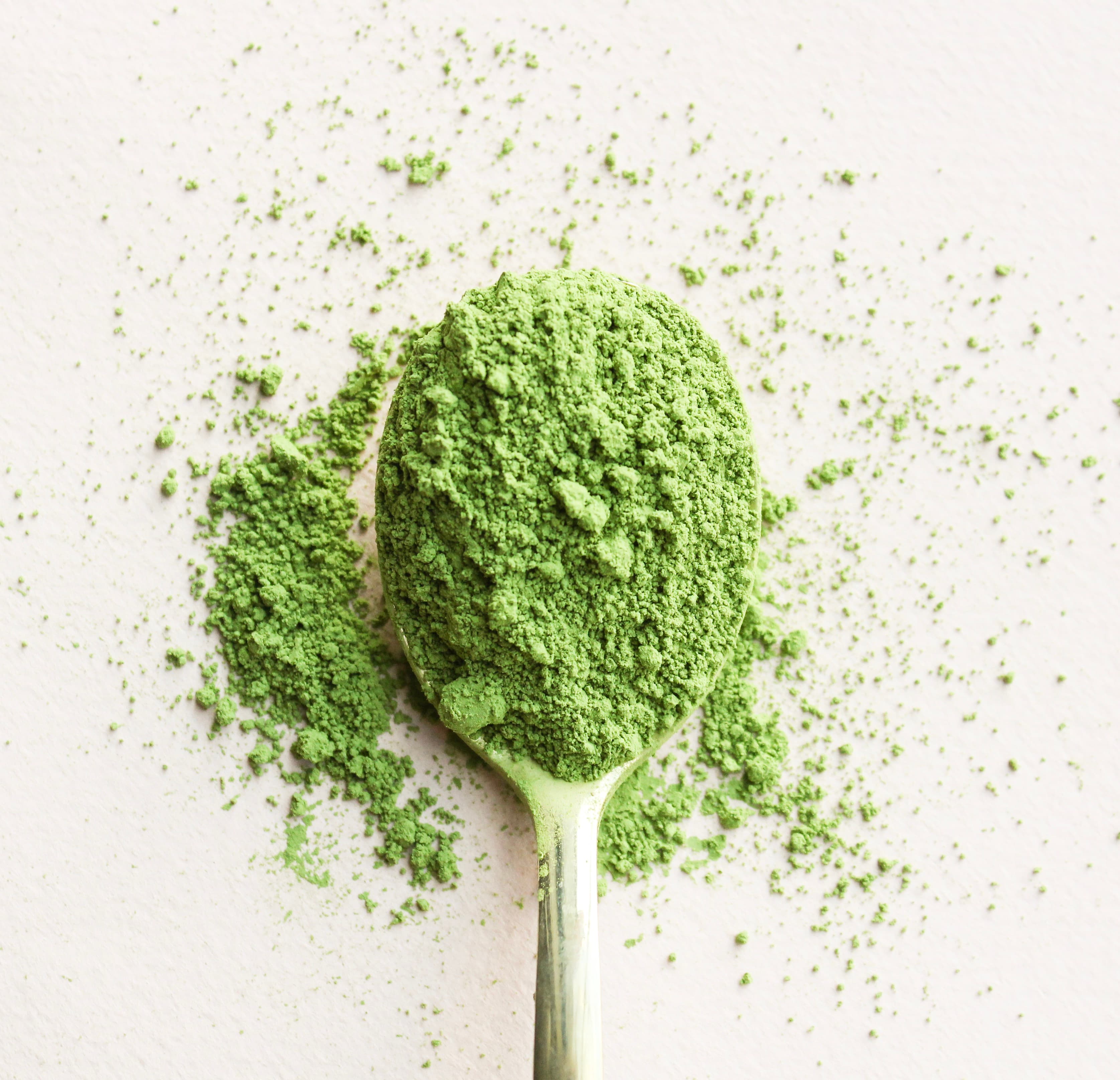
Under the Song (960-1279), tea was whisked as a powder in the bowl, a technique that would spread to Japan and become matcha. Then, under the Ming (1368-1644), an imperial edict favored infused leaf tea, which supplanted powder in China and gave rise to the methods still in use today.
The six families of tea#
Contrary to a widespread idea, green tea, black tea and white tea do not come from different plants. All come from the same shrub, Camellia sinensis; what distinguishes them is the degree of oxidation of the leaves after picking. China traditionally classifies tea into six great families, by color.
, unoxidized, is heated right after picking to fix its vegetal freshness; it is the most drunk tea in China, like Longjing from West Lake. , barely withered, is the least processed. , rare, undergoes a light yellowing. , semi-oxidized, occupies a vast territory of flavors between green and black. , fully oxidized, is what the West simply calls "black tea." Finally , post-fermented — including the famous of Yunnan — can age for decades like a great wine.
The word traveled with the plant. Languages that received tea by the land route say "cha" (Persian chai, Hindi chai, Russian chai); those that received it by sea from the port of Xiamen say "te" (tê in the Fujian dialect), hence the English "tea" and the French "thé."
Gongfu cha: brewing as an art#
is not a fixed ceremony but a brewing method born in the Chaoshan region, in eastern Guangdong, and in neighboring Fujian. Its name means "tea made with application, with skill" — the same gongfu as in the martial arts: excellence acquired through practice.
The principle inverts that of the large Western teapot: you use many leaves, little water, very short infusions, repeated many times. The first infusion sometimes lasts only a few seconds. With each pass, the leaf releases a new facet; a good oolong or a pu'er can thus hold ten infusions or more, telling a story that evolves cup by cup.
The signature utensil is the small purple-clay teapot of , the . This porous, unglazed earth "remembers" the tea: over the years, a teapot dedicated to a single type of tea becomes steeped in its fragrance. The is also used, a lidded bowl that serves as both infuser and cup. The whole is orchestrated on a tray that collects the water, in a precise choreography of pourings and rinsings.
Before drinking, the leaves are often rinsed with a first water immediately discarded: this is the "awakening of the tea." For an aged pu'er, this rinse rids the leaf of the dust of the years and opens aromas that have been asleep, sometimes for several decades.
Chinese tea and Japanese tea: two philosophies#
Gongfu cha is often confused with the Japanese tea ceremony, the chanoyu. Both descend from a single Chinese root but have diverged. The chanoyu, inherited from Song whisked tea, is a ceremony codified down to the smallest gesture, centered on a single bowl of matcha and steeped in Zen Buddhism. Chinese gongfu cha is more supple, more convivial, more turned toward tasting and conversation: you compare infusions, discuss the harvest, laugh around the tray.
Read alsoMatcha: History and Secrets of Japanese Green TeaFrom Song whisked tea to the Zen ceremony: how China passed tea to Japan, which turned it into matcha.
Tea today: living tradition and new wave#
China remains by far the world's leading producer and consumer of tea. But the beverage is endlessly reinventing itself there. Traditional teahouses (chaguan, 茶馆) sit alongside a youth that has made bubble tea (born in Taiwan in the 1980s) a global phenomenon, and a learned taste for great harvests, vintage pu'er and the art of gongfu cha is blossoming again.
To learn Chinese tea is to learn a language in its own right: that of harvest names, gestures, waters and temperatures. The vocabulary of tea — chá, gaiwan, cha dao (茶道, the "way of tea") — is an ideal door into Chinese, intimate and sensory.
From the leaf that fell into Shennong's cauldron to the tenth infusion of an aged pu'er, Chinese tea teaches a single truth: patience has a taste. You need only pour the water, and wait.
FAQ#
Do green tea and black tea come from different plants? No. All teas come from the same shrub, Camellia sinensis. It is the degree of oxidation of the leaves after picking that distinguishes the six families, from unoxidized green tea to fully oxidized black tea.
What is gongfu cha? It is the Chinese brewing method born in Chaoshan: many leaves, little water, very short, repeated infusions in a small Yixing clay teapot or a gaiwan. The name means "tea made with skill."
What is the difference from the Japanese tea ceremony? The Japanese chanoyu is a codified Zen ceremony around a bowl of whisked matcha. Chinese gongfu cha is a more supple and convivial tasting of leaf tea, infused many times.
What is pu'er tea? A post-fermented dark tea from Yunnan (普洱), which can age for decades, gaining depth like a great wine. It is ideally enjoyed in gongfu cha, after a brief rinse of the leaves.
Photo credits: the images used in this article come from Pexels and Unsplash and are royalty-free.
In this article
The cultural terms covered here, each with a short definition.
- Tea ceremony
- The Japanese way of tea (chanoyu), a ritual of hospitality around a bowl of matcha.
Matcha: History and Secrets of Japanese Green Tea
From the emerald powder of Zen monks to the global matcha latte, a deep dive into the history, production, and secrets of Japan's most iconic tea.